
Why Homeowners Are Rethinking the Traditional Tub-Shower Setup in 2026
The modern residential landscape is currently undergoing a profound architectural and psychological shift, moving away from the utilitarian “all-in-one” bathroom
An alcove tub is a bathtub installed into a three-walled recess in your bathroom. It is the most common bathtub type in American homes, accounting for roughly 70% of residential bathtub installations (source: Rosenberry Rooms). The standard tub-and-shower combo found in most apartments, rental units, and family bathrooms is an alcove tub.
Standard alcove tub dimensions are 60 inches long, 30-32 inches wide, and 14-16 inches deep. Sizes range from 48 inches (compact) to 72 inches (extra large), with the 60-inch model fitting the 5-foot alcove opening found in the majority of US bathrooms.
Alcove tubs are popular for good reason: they are affordable (starting under $300), space-efficient, easy to install, and compatible with shower-tub combo configurations. They are the go-to choice for budget-conscious renovations, secondary bathrooms, and any space where practicality matters more than visual drama.
An alcove bathtub is designed to sit flush against three walls, with one long side (the “apron” or “skirt”) exposed and finished. The apron gives the tub a clean front face while concealing the plumbing behind the walls. A shower curtain or glass door is typically added across the open side.
The three-wall installation is what makes alcove tubs so practical. The walls provide structural support, simplify plumbing (all pipes run through the back wall), and create a natural splash barrier. This is also why alcove tubs are the default choice for shower-tub combos: the enclosed space makes it easy to add a showerhead and curtain rod.
For a comparison of how alcove tubs stack up against other installation types, see our guide to alcove vs. freestanding bathtubs.
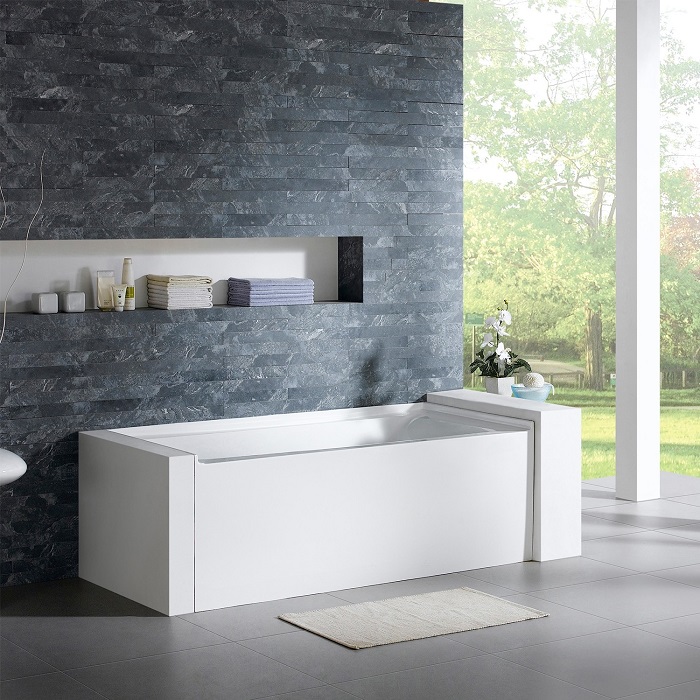
Alcove tubs come in a narrower range of sizes than freestanding or drop-in tubs, because they must fit into a standard wall opening. Here are the most common sizes:
| Size | Dimensions (L x W x D) | Water capacity | Best for |
|---|---|---|---|
| Compact | 48 x 28 x 14 inches | ~30 gallons | Very small bathrooms, half baths, children’s tubs |
| Small | 54 x 30 x 15 inches | ~35 gallons | Older homes, guest baths, tight layouts |
| Standard | 60 x 30-32 x 14-16 inches | ~40 gallons | Most US bathrooms (fits the standard 5-foot alcove) |
| Large | 66 x 32 x 18 inches | ~50 gallons | Primary bathrooms, taller bathers |
| Extra large | 72 x 36-42 x 20 inches | ~60 gallons | Spacious primary baths, deep soaking |
The 60-inch standard is dominant for a reason. It fits the 5-foot stud-to-stud alcove opening that has been the residential building standard for decades. If you are replacing an existing tub and want the simplest, most affordable project, staying with a 60-inch model avoids any framing, plumbing, or tile modifications. This alone can save $1,000-$3,000 compared to changing the tub size (source: Horow).
For taller bathers (over 5’10”): A 60-inch tub has only about 54-56 inches of usable interior space, which means bent knees for most adults. If space allows, a 66 or 72-inch alcove tub provides significantly more comfort.
For a full breakdown of dimensions across all bathtub types, see our bathtub dimensions guide.
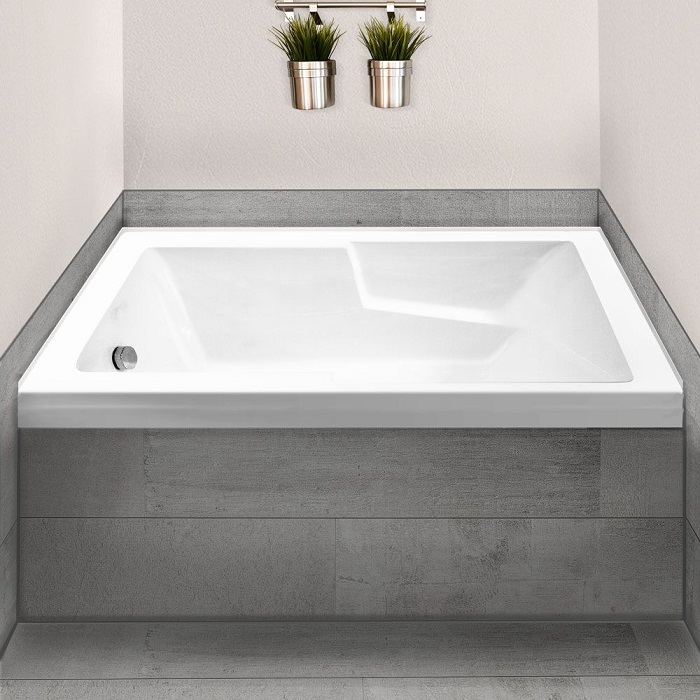
Before deciding if an alcove bathtub is the right choice for your bathroom, it’s important to consider both the benefits and limitations. The table below outlines the key pros and cons of alcove bathtubs, providing a clear overview to help you make an informed decision.
Affordable. Alcove tubs are the most budget-friendly bathtub type. Basic fiberglass and acrylic models start at $200-$300, with quality acrylic tubs in the $400-$700 range (source: Bathtubber). By comparison, freestanding tubs start at $500 and typically run $1,500-$5,000+.
Space-efficient. The three-wall design maximizes usable floor space by tucking the tub into a recess. This is why alcove tubs are the default in apartments, condos, and bathrooms under 50 square feet.
Easy to install. Alcove tubs are designed for straightforward installation. The standard sizing means they drop into existing alcove openings with minimal modification. A like-for-like replacement (same size, same drain position) can be completed in a day by a plumber and typically costs $1,500-$3,000 all-in (source: Horow; source: Badeloft ->).
Shower-tub combo compatible. Alcove tubs are purpose-built for dual use. The three walls provide a natural enclosure for a showerhead, and adding a curtain rod or glass door is simple. This makes them the most practical option for bathrooms that need to serve as both a shower and a bath.
Built-in storage potential. The walls surrounding an alcove tub create natural surfaces for built-in recessed shelving, corner caddies, or ledges for toiletries. This is especially useful in smaller bathrooms where freestanding storage would take up floor space.
Accessible. The standard 14-16 inch rim height is lower than most freestanding tubs (which can be 20+ inches), making alcove tubs easier to step in and out of. Grab bars, textured floors, and hand-held showerheads can be added easily to improve safety.
Resale value. Having at least one bathtub in the home is considered essential for resale in most US markets, especially for families with young children. A clean, functional alcove tub satisfies this requirement at minimal cost. For more on this topic, see our guide to bathtub vs. shower resale value ->.
Limited design options. Alcove tubs are rectangular by necessity. They do not offer the sculptural shapes, curves, or visual drama of freestanding tubs ->. If aesthetics are a priority, alcove tubs will feel utilitarian.
Fixed placement. Because they must sit within a three-wall recess, alcove tubs cannot be repositioned without significant construction. Your layout options are limited to wherever the alcove exists.
Shallow soaking depth. Standard alcove tubs are 14-16 inches deep, which provides only about 12-13 inches of actual water depth once you account for the overflow drain. This is adequate for a quick bath but falls short of the shoulder-deep immersion that soaking tubs, Japanese ofuro tubs ->, or deep freestanding tubs offer. Some newer alcove models feature deeper wells (18-20 inches) that partially address this limitation.
Standard material quality. Most alcove tubs on the market are made from fiberglass or basic acrylic, which are affordable but less durable than cast iron, stone resin, or premium acrylic. Budget fiberglass tubs can flex underfoot, scratch easily, and discolor within 5-10 years. For more on how materials compare, see our guide to common bathtub materials.
| Material | Price range (tub only) | Durability | Weight | Notes |
|---|---|---|---|---|
| Fiberglass | $200-$500 | 10-15 years | 60-80 lbs | Most affordable. Lightweight, easy to install. Prone to scratching and flexing. |
| Acrylic | $300-$1,500 | 10-15 years | 60-100 lbs | Best balance of price and quality. Wide range of sizes. Non-porous surface. |
| Enameled steel | $200-$600 | 15-25 years | 75-120 lbs | Durable, affordable. Can chip on impact. Noisy when filling. |
| Cast iron | $500-$2,000+ | 50+ years | 250-400 lbs | Most durable. Excellent heat retention. Very heavy; may need floor reinforcement. |
| Porcelain-enameled cast iron | $600-$2,500+ | 50+ years | 300-500 lbs | Premium option. Classic look. Requires professional installation due to weight. |
The total cost of an alcove tub project depends heavily on whether you are doing a like-for-like replacement or changing the layout:
| Scenario | Typical cost range | What’s included |
|---|---|---|
| Like-for-like replacement (same size, same drain) | $1,500-$3,000 | Tub, removal of old tub, basic plumbing, installation |
| Replacement with new surround or tile | $3,000-$6,000 | Tub, removal, new wall surround or tile, plumbing, finishing |
| New alcove tub with layout changes | $5,000-$8,000+ | Tub, plumbing relocation, framing modifications, tile, finishing |
For a complete cost breakdown across all bathtub types, see our bathtub cost guide.
As the alcove bathtub is seen as the mainstay or standard bathtub model, many are outfitted with a shower, blending the form and functionality of a shower with the compact nature of the alcove design. Even if you have just a normal alcove tub in your home, installation of a shower is quite simple and will add increased value to your home. But beyond just saving you space in your bathroom, alcove bathtubs come in a variety of different styles for a more therapeutic role-customizable and powered jets exist on a few models, ensuring a more relaxing bathing experience.
While there are a few with a deeper water height, giving you a deeper soak, which is useful for bathing with oils or muscle relaxation. The great thing about all of these types is that they all fall into the size range as discussed earlier, so you can retain the added benefit of higher-end bathtubs even if your bathroom is of modest size.
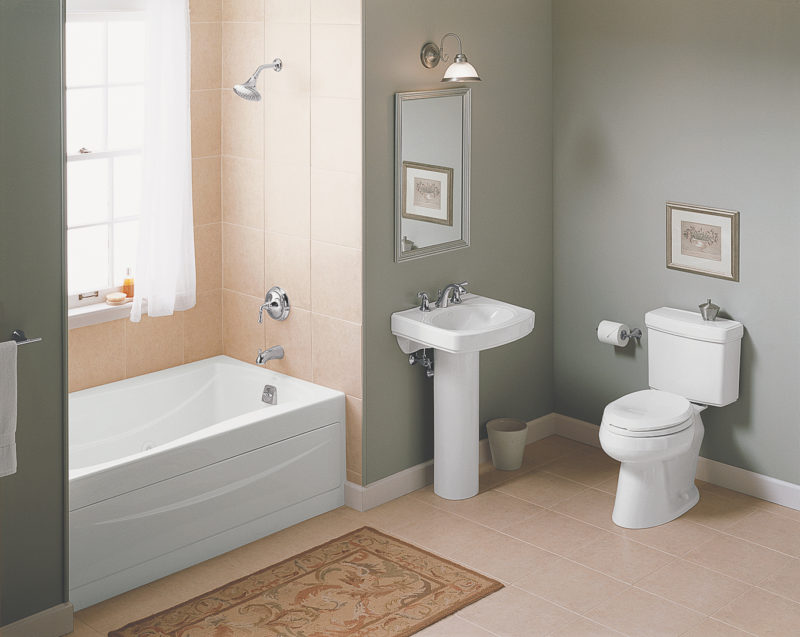
The material you choose affects durability, feel, weight, and long-term maintenance. Here is a closer look at the most common options:
Fiberglass is the most affordable option. Fiberglass tubs are made from layers of polyester resin reinforced with glass fiber and finished with a gel coat. They are lightweight (60-80 lbs), easy to install, and readily available. However, fiberglass is the least durable alcove tub material. The gel coat scratches easily, the surface can become porous over time, and the tub may flex underfoot, giving a less solid feel than heavier materials. Expect a lifespan of 10-15 years.
Acrylic is the most popular alcove tub material and represents the best value for most homeowners. Acrylic tubs are formed from heated sheets of acrylic reinforced with fiberglass on the underside. They are lightweight, non-porous (resistant to stains and mildew), and available in a wide variety of sizes and colors. Quality acrylic tubs feel solid underfoot and retain heat moderately well. Lifespan is 10-15 years with proper care.
Enameled steel offers a step up in durability at a similar price point to acrylic. These tubs are made from stamped steel coated with a porcelain enamel finish. They are heavier and more rigid than acrylic, with a smooth, glossy surface that resists scratches. The main drawbacks: the enamel can chip if struck by a heavy object (exposing the steel to rust), and the tub is noticeably noisier when filling with water.
Cast iron is the premium option for alcove tubs. A 60-inch cast iron alcove tub weighs 250-400 lbs, so floor support should be verified before installation. In return, you get a tub that will last 50+ years, retains heat well, and feels exceptionally solid. For a deep dive, see our cast iron bathtub guide ->.
When shopping for an alcove tub, these brands consistently earn strong reviews from both homeowners and plumbers:
Kohler offers the widest range of alcove tubs across all price points, from the budget-friendly Villager (around $350) to the premium Archer line with deep soaking depth. Kohler’s cast iron alcove tubs (like the Bellwether) are considered among the best on the market.
American Standard is the go-to for affordable, reliable alcove tubs. Their Princeton and Cambridge lines are popular choices for rental properties, guest baths, and budget renovations. Pricing typically falls in the $300-$800 range.
Sterling (by Kohler) offers mid-range acrylic and fiberglass alcove tubs with a focus on practical features like slip-resistant floors and easy-to-clean surfaces. Good value for family bathrooms.
Maax is a Canadian manufacturer known for quality acrylic tubs at competitive prices. Their Cocoon and Exhibit lines offer deeper soaking options than standard alcove tubs.
Delta provides solid mid-range options with a focus on ease of installation and compatibility with their own faucet and shower systems.
For a broader look at bathtub brands across all types, see our bathtub brands guide ->.
| Feature | Alcove tub | Freestanding tub | Drop-in tub |
|---|---|---|---|
| Installation | Three-wall recess | Anywhere in the room | Built into a deck or platform |
| Starting price | $200 | $500 | $400 |
| Space needed | Minimal (fits existing alcove) | Large (needs clearance on all sides) | Moderate (needs custom framing) |
| Shower combo | Yes (ideal for this) | Possible but less common | Possible with modifications |
| Design impact | Practical, understated | Statement piece, visual focal point | Seamless, built-in look |
| Soaking depth | 14-16 inches (standard) | 15-24 inches | 14-20 inches |
| Best for | Budget renovations, family baths, small spaces | Primary baths, spa-inspired designs, open layouts | Custom bathrooms, deck/platform installations |
If you are weighing alcove against freestanding, our detailed guide covers the comparison in depth: alcove vs. freestanding bathtub ->.
Measure before you buy. Measure the alcove opening wall-to-wall (length), front wall to back wall (width), and floor to the desired rim height. A standard 60-inch tub needs a 60-inch opening. Add 1/4 inch on each side for expansion clearance.
Confirm the drain position. Alcove tubs come with left-hand or right-hand drain configurations. Stand facing the tub: if the drain is on your left, it is a left-hand drain. Matching the drain to your existing plumbing avoids costly relocation.
Check the floor. For fiberglass and acrylic tubs (under 100 lbs), floor support is rarely a concern. For cast iron alcove tubs (250-400 lbs), verify that the subfloor and joists can handle the loaded weight (600-800+ lbs with water and bather), especially on upper floors.
Plan your surround. The three walls around the tub need a waterproof surface. Common options include acrylic surround panels ($200-$600, quick to install), ceramic tile ($500-$2,000+, more labor-intensive), and solid surface panels ($800-$1,500). The surround choice often costs more than the tub itself.
For help sizing your bathroom for the right tub, see our guide to common bathroom sizes and dimensions ->.
An alcove tub is the right choice if:
Consider a different option if:
An alcove bathtub is installed into a three-walled recess (alcove) in your bathroom, with one finished side (the apron) facing the room. It is the most common bathtub type in US homes, typically measuring 60 x 30 x 16 inches.
The standard alcove tub is 60 inches long, 30-32 inches wide, and 14-16 inches deep. This fits the 5-foot alcove opening found in most American bathrooms. Smaller models (48-54 inches) and larger models (66-72 inches) are also available.
The tub alone ranges from $200 (basic fiberglass) to $2,000+ (cast iron). A complete like-for-like replacement project, including removal and installation, typically costs $1,500-$3,000. Projects that include new tile or surround work run $3,000-$6,000.
An alcove tub sits within a three-wall recess and has one finished side. A freestanding tub is finished on all sides and sits independently, away from walls. Alcove tubs are more affordable and space-efficient. Freestanding tubs offer greater design flexibility and are typically the visual focal point of a bathroom.
Yes. Alcove tubs are the most common choice for shower-tub combinations. The three-wall enclosure provides a natural splash barrier, and adding a showerhead, curtain rod, and diverter valve is straightforward for any plumber.

Eric is the founder and president of Badeloft USA. He has been the president of Badeloft’s US division for over ten years and oversees all marketing and branding aspects of Badeloftusa.com.
His expertise lies in small business development, sales, and home and bathroom industry trends and information.
Contact us with any business related inquiries.
Badeloft is dedicated to helping homeowners make informed decisions about their bathrooms. We adhere to strict editorial guidelines to ensure our content is accurate, trustworthy, and useful.
Request free stone resin and stainless steel material samples. Delivered to your door.
The modern residential landscape is currently undergoing a profound architectural and psychological shift, moving away from the utilitarian “all-in-one” bathroom
Acrylic bathtubs have become one of the most widely used materials in modern bathrooms, offering a balance of affordability, comfort,
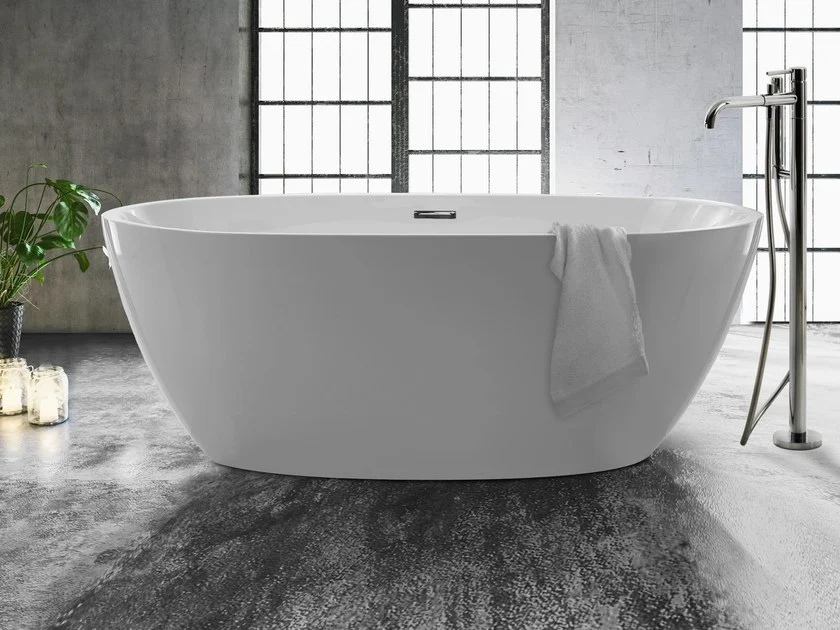
When you’re shopping for a freestanding bathtub, the material matters just as much as the shape or size. It changes
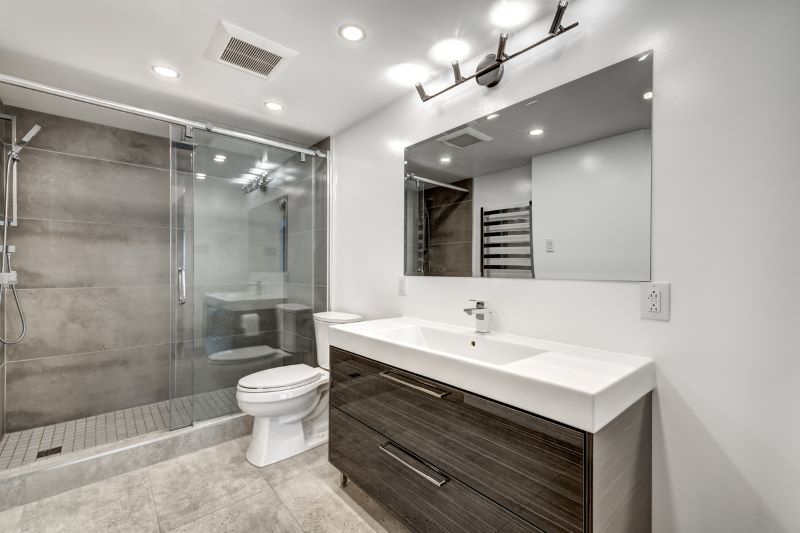
A well-designed bathroom begins long before fixtures are selected or materials are introduced. It starts with understanding the space itself.
Request your free material sample below. By submitting, you agree to receive occasional product updates and offers from Badeloft. Unsubscribe anytime.
"*" indicates required fields
3 thoughts on “What Is an Alcove Tub? Sizes, Pros, Cons & Best Picks”
Interesting, but not quite specific enough for the lay-person. Some side-by-side pictures of each style would have been a lot more helpful. I’m still confused about what the difference is.
Thanks for the recommendation, we’ll look to get some photos up.
Interesting, but not quite specific enough for the layperson. Some side-by-side pictures of each style would have been a lot more helpful. I’m still confused about what the difference is.