
Why Homeowners Are Rethinking the Traditional Tub-Shower Setup in 2026
The modern residential landscape is currently undergoing a profound architectural and psychological shift, moving away from the utilitarian “all-in-one” bathroom
When people shop for a toilet, they often think it’s as simple as picking one they like and installing it. But in reality, toilet size matters a lot. In this guide, we’ll explain what a standard toilet size really is and the most important measurements you need to check. Along the way, you’ll learn how to choose the right toilets for small bathrooms, standard homes, and luxury spaces.
I’ve spent over ten years helping homeowners, builders, and real estate professionals choose bathroom fixtures that actually fit and last. At Badeloft, we design modern bathroom fixtures, including luxury freestanding bathtubs, sinks, faucets, and smart toilets for modern homes.
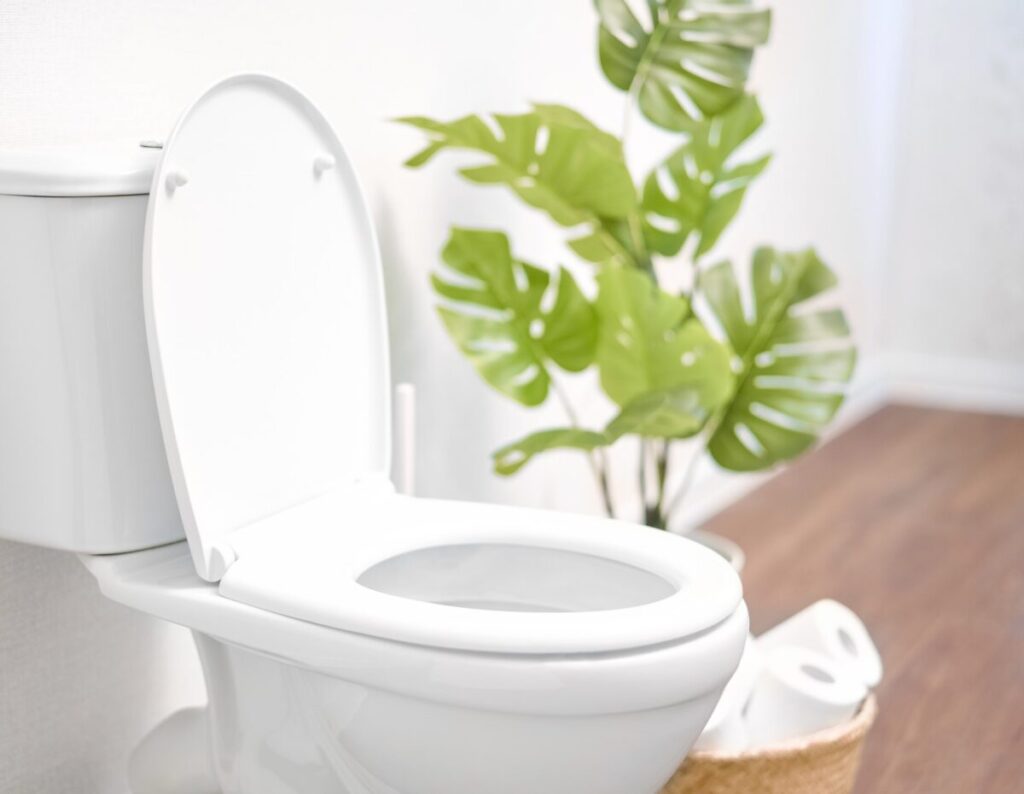
There is no single “one-size-fits-all” toilet. However, there are standard ranges that work for most homes. These measurements help you know what will fit and what will feel comfortable.
The table below shows the standard toilet measurements.
The typical standard toilet measurements are:
| Toilet Component | Inches | Metric (cm) | Details |
|---|---|---|---|
| Overall Depth | 28–30 in | 71–76 cm | Front of bowl to back of tank |
| Overall Width | Around 20 in | ~51 cm | Side-to-side measurement |
| Overall Height | 27–32 in | 69–81 cm | Floor to top of the tank |
| Rough-in Size | 10, 12, or 14 in | 25–36 cm | Wall to center of waste pipe (12 in is most common) |
| Seat Height | 16–17 in | 41–43 cm | Floor to top of seat |
| Bowl Height | 14–16 in | 36–41 cm | Floor to top of bowl (without seat) |
| Comfort Height (ADA) | 17–19 in | 43–48 cm | Easier for seniors and those with mobility issues |
| Round Bowl | Standard length | Shorter by ~5 cm | More compact for smaller bathrooms |
| Elongated Bowl | ~2 in longer | ~5 cm longer | Offers more seating space and comfort |
When choosing a toilet, you need to understand the most important measurements. You don’t have to be an expert or know fancy terms. These are just the basics that help you avoid buying something that doesn’t fit or doesn’t feel right once it’s installed.
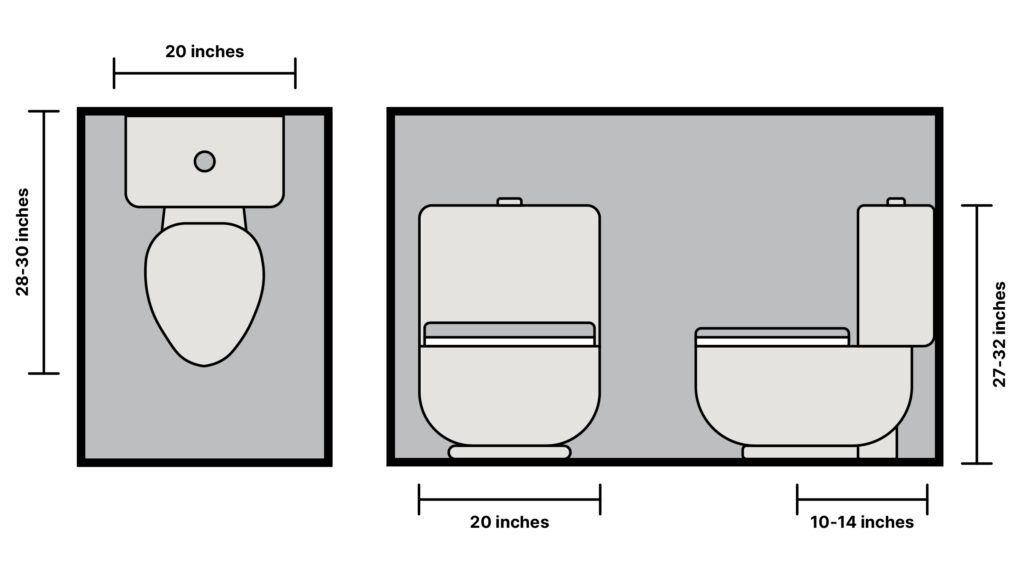
Length is how far the toilet sticks out from the wall. It’s usually the first thing that affects how a bathroom feels when you walk in.
If the bathroom is small, having a longer toilet can crowd the space or get in the way of the door. In larger bathrooms, a shorter round bowl can feel a bit undersized and less comfortable. That’s why I always recommend measuring the available space first and then choosing the bowl shape that fits naturally.
Most toilets are between 14 and 20 inches wide, but how it feels overall depends a lot on the design. For instance:
So even if two toilets have the same measurements, one can feel bulky while the other feels light and open. This matters most in tighter bathrooms.
Height affects comfort more than people expect, especially if the toilet is used every day by adults.
Higher seats are easier to sit down on and stand up from. That’s one reason comfort height toilets are now the choice in many newer homes and remodels.
The rough-in is the distance from the finished wall to the center of the drain on the floor. This is the most important number of all.
You can’t guess the rough-in measurement. To measure it correctly:
If the rough-in doesn’t match the toilet, it simply won’t fit. I’ve seen people return perfectly good toilets because this one measurement was off. Everything else has some flexibility, but the rough-in doesn’t.
The space around the toilet determines whether the bathroom feels usable or frustrating. I’ve seen well-built bathrooms fail simply because the toilet area was planned too tightly.
So when you are choosing a toilet, you need to focus on more than the fixture itself. Clearance affects safety and comfort.
Residential building codes vary from state to state. They set minimum clearances to make sure a toilet can be used safely. Minimum code requirements are not comfort standards but the lowest acceptable limits.
According to the International Residential Code (IRC), a toilet must have at least 21 inches of clear space. Many designers recommend 24 inches because those extra three inches make standing, sitting, and moving around feel noticeably easier.
On the sides, codes require 15 inches from the center of the toilet to any wall, vanity, or fixture. This spacing prevents people from feeling squeezed in and ensures the toilet can actually be used without twisting or bumping into anything.
These measurements have been put there because tight toilet layouts increase the risk of falls and make bathrooms harder to use for children, older adults, and guests.
Meeting the code means it’s legal. Going beyond it improves daily comfort.
Code minimums work, but they’re tight. Bathrooms that feel good usually exceed them.
In small bathrooms under 40 square feet, compact toilets make a real difference. Round bowls or compact elongated designs help preserve floor space and keep doors and vanities from feeling cramped. In these rooms, even one extra inch of projection can affect how the whole bathroom functions.
In standard bathrooms between 40 and 100 square feet, elongated toilets usually fit comfortably and improve usability. This size range covers most family homes, and it’s where good spacing pays off the most.
According to remodeling studies, bathrooms that balance comfort and layout perform better in resale than those that only meet minimum specs.
In large or luxury bathrooms over 100 square feet, space allows for comfort-height toilets, smart toilet features, and wider clearances. These layouts also match long-term trends.
Industry data shows that over 60% of homeowners now consider aging-in-place or future accessibility when remodeling bathrooms, even if they don’t need it immediately.
One thing I’ve learned over the years is that people almost never complain about having too much space. They do complain about bathrooms that feel tight every single day.
Different bathrooms serve different purposes, and toilet sizing should reflect that.
A half bath or powder room benefits from compact toilets with shorter projections. These rooms are about efficiency, and the goal is to keep the space feeling open despite limited square footage.
A full bathroom works best with a standard elongated toilet. It provides better comfort and fits naturally alongside a tub or shower without crowding the room.
In a master suite, comfort and experience matter more. Elongated bowls, comfort-height seating, and smart toilet features feel appropriate here, especially in homes designed for long-term living.
For ADA or universal design, spacing becomes even more important. Comfort-height toilets and wider clearances improve accessibility and usability for people of all ages.
Homes that include these features are also more attractive to buyers because, as mentioned earlier, accessibility has become a stronger resale factor.
Bathroom remodels already offer strong returns, often recouping around 60–70% of their cost at resale. Layouts that feel spacious and thoughtful always tend to perform better than those that simply check the box on fixtures.
The toilet bowl shape affects a lot more than how a toilet looks. It changes how much space the toilet takes up, how comfortable it feels to use, and how well it fits into the room.
I’ve seen bathrooms where everything was done right on paper, but the toilet still felt off because the bowl shape didn’t match the space.
This is one of those choices that seems small, but you notice it every single day.
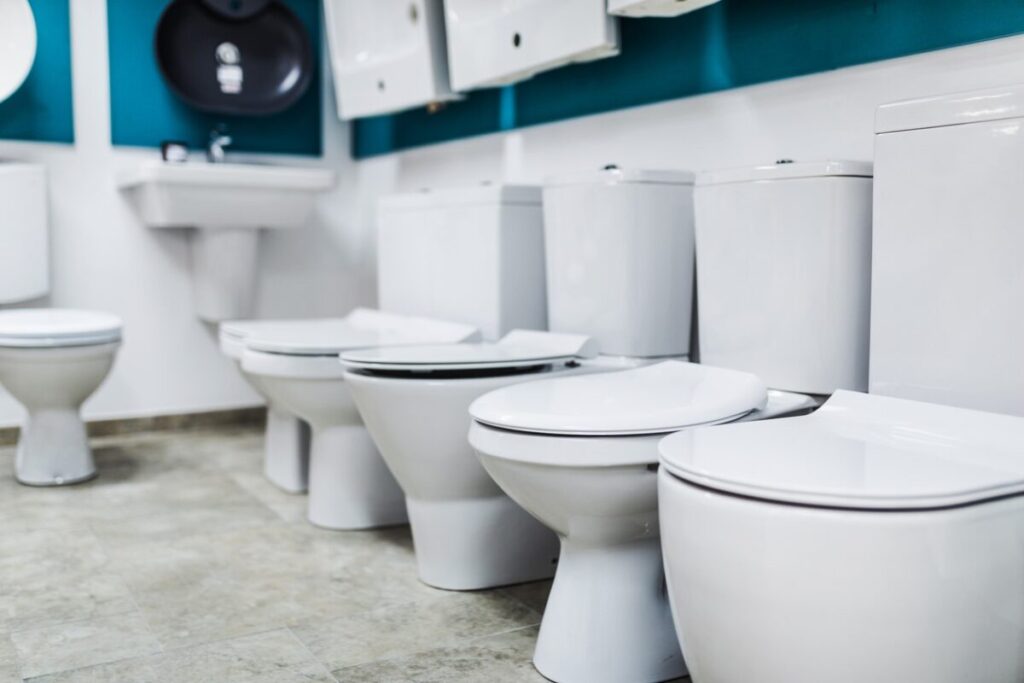
Round bowls are the most compact option. They usually extend 25–28 inches from the wall, which makes them a practical choice when space is limited.
I see round bowls most often in powder rooms, guest bathrooms, and older homes where the layout doesn’t leave much extra room. For example, in a small half bath where the door swings inward, a round bowl can be the difference between the door opening comfortably or hitting the toilet every time.
Pros
Cons
Round bowls do the job well, but they’re more about efficiency than comfort.
Elongated bowls extend farther from the wall, around 29–31 inches, and that extra length makes a noticeable difference in comfort.
This is the most common choice for full bathrooms and master bathrooms. In homes where there’s enough space, elongated bowls feel more natural to use and are often preferred by adults.
I’ve had many homeowners switch from round to elongated and tell me they didn’t realize how much more comfortable it would be until they made the change.
Pros
Cons
If space allows, this is often the safest and most comfortable option.
Compact elongated bowls are designed to offer the comfort of an elongated bowl without taking up as much space. They usually measure 28–29 inches, sitting right between round and full elongated designs.
These work especially well in smaller bathrooms that still want a premium feel. I often recommend compact elongated toilets in remodels where homeowners want more comfort but can’t move walls or change the layout. It’s a smart compromise that doesn’t feel like one.
Pros
Cons
This one really is the best of both worlds, and it’s also one of the most popular choices we see today, especially in newer homes.
When someone tells me they’re not sure which toilet will fit, the first thing I ask is whether they’ve measured the space.
Most problems I see come from guessing instead of measuring. The good news is you don’t need special tools or technical knowledge. This is the exact process I use when helping customers, and it usually takes less than ten minutes.
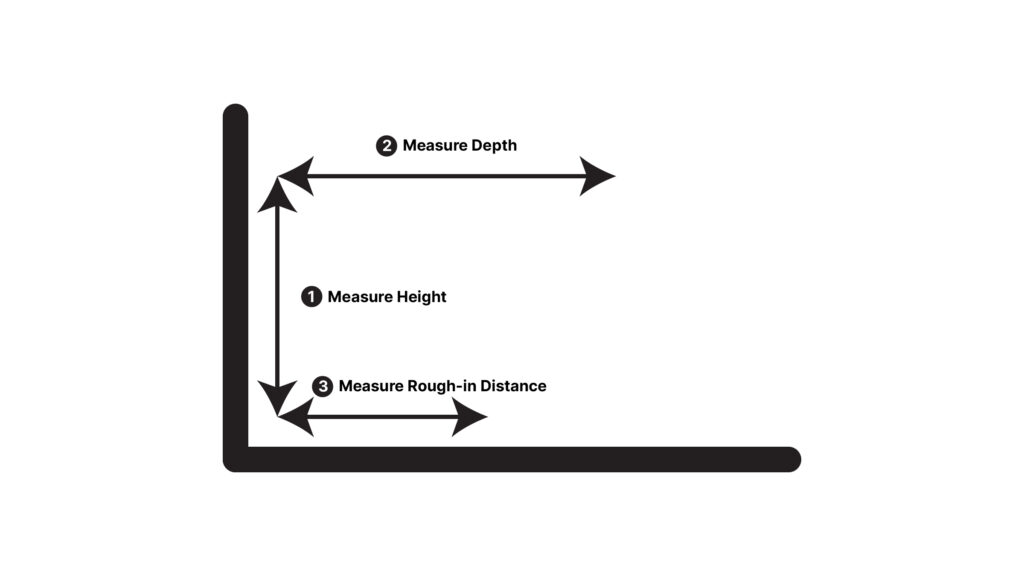
You don’t need anything complicated to do this right.
I always recommend taking a quick photo of the space after measuring. It helps when comparing options or asking for advice later.
Five minutes of careful measuring can save you weeks of frustration, returns, and second-guessing. It’s one of the simplest steps in the process, and easily one of the most important.
This determines whether a toilet will fit at all. Measure from the finished wall to the center of the bolts at the base of your current toilet.
Don’t measure from the baseboard, and don’t round the number. Most homes are 12 inches, but older houses and some remodels use 10 or 14 inches. If this number is wrong, nothing else matters.
This is the distance from the wall behind the toilet to the nearest obstacle in front of it, such as a door, vanity, or shower. This measurement tells you whether you can use a round, elongated, or compact elongated bowl.
For example, if you only have about 54 inches total, an elongated bowl may technically fit, but feel tight once the door swings open.
Look at the distance between side walls, vanities, tubs, or any other fixtures near the toilet. You want to make sure the toilet will sit comfortably without feeling squeezed in. This is especially important in bathrooms where the toilet is next to a vanity or a tub.
This step gets overlooked all the time. Open the door fully and see how close it comes to the toilet area. I’ve seen many bathrooms where the toilet technically fits, but the door hits it or forces you to squeeze past.
A few inches here can completely change how the room feels.
Make sure there’s at least 21 inches of space in front of the toilet and enough room on the sides to meet code. If you can go beyond the minimum, do it.
Bathrooms feel noticeably better with just a little extra breathing room.
Measurements on paper don’t always translate perfectly to real life. If your numbers are right on the edge, choose the more compact option.
That extra inch of space often matters more than a slightly larger bowl.
Smart toilets are becoming more common, especially in modern homes and higher-end bathroom remodels. I’m seeing more homeowners ask about them, and it’s not because they want something flashy, but because they want comfort, cleanliness, and a better daily experience.
In size, smart toilets are similar to standard toilets, but there are a few differences worth planning for.
Most smart toilets are slightly longer than traditional models. That extra length comes from built-in features like integrated bidets, drying systems, and concealed components. In a spacious bathroom, this usually isn’t an issue. In tighter layouts, it’s something you want to measure for before committing.
Smart toilets also require access to power. That usually means a nearby outlet behind or beside the toilet. If you’re remodeling, this is easy to plan for. If you’re upgrading an existing bathroom, it’s still manageable, but it’s something you don’t want to discover after the toilet arrives.
Many smart toilets come in one-piece designs, which helps keep the look clean and modern. Fewer seams also mean easier cleaning, which is one of the reasons people choose smart toilets in the first place.
From an installation standpoint, the basics still matter. You’ll need the correct rough-in, usually 12 inches, and enough clearance around the toilet. You also need a layout that allows the lid and seat to open fully without hitting a wall or vanity. When those details are handled upfront, installation is usually straightforward.
At BadeloftUSA, we design our smart toilets to work with standard rough-ins, so they fit naturally into most homes without complicated changes.
They’re built to complement the same clean, modern aesthetic as our freestanding bathtubs, making it easy to create a bathroom that feels comfortable and thoughtfully designed.
If you’re already investing in your bathroom, a smart toilet is one of those upgrades you notice every day and one that fits just as much into practical planning as it does into modern design.

Eric is the founder and president of Badeloft USA. He has been the president of Badeloft’s US division for over ten years and oversees all marketing and branding aspects of Badeloftusa.com.
His expertise lies in small business development, sales, and home and bathroom industry trends and information.
Contact us with any business related inquiries.
Badeloft is dedicated to helping homeowners make informed decisions about their bathrooms. We adhere to strict editorial guidelines to ensure our content is accurate, trustworthy, and useful.
Request free stone resin and stainless steel material samples. Delivered to your door.
The modern residential landscape is currently undergoing a profound architectural and psychological shift, moving away from the utilitarian “all-in-one” bathroom
Acrylic bathtubs have become one of the most widely used materials in modern bathrooms, offering a balance of affordability, comfort,
When you’re shopping for a freestanding bathtub, the material matters just as much as the shape or size. It changes
A well-designed bathroom begins long before fixtures are selected or materials are introduced. It starts with understanding the space itself.
Request your free material sample below. By submitting, you agree to receive occasional product updates and offers from Badeloft. Unsubscribe anytime.
"*" indicates required fields