
Why Homeowners Are Rethinking the Traditional Tub-Shower Setup in 2026
The modern residential landscape is currently undergoing a profound architectural and psychological shift, moving away from the utilitarian “all-in-one” bathroom
A good bathroom rug does more than catch water. It protects your flooring, keeps your feet off cold tile, and adds a real design element to a room that often gets overlooked. But picking the right one is not as straightforward as grabbing the first one you see at the store. Size, material, shape, and placement all matter.
This guide covers everything you need to know about bathroom rug sizes, the best materials for different bathroom conditions, where to place your rugs, and what colors and styles are popular heading into 2026.

People use these terms interchangeably, but they serve slightly different purposes. A bath mat is the more functional option. It sits right outside the shower or tub, absorbs water, and almost always has a non-slip backing. Mats tend to be smaller, thinner, and designed to dry quickly.
A bath rug is more of a decorative piece. It is usually larger, plusher, and designed to make the bathroom feel warmer and more pulled together. Rugs do not always have non-slip backing and are not always as absorbent, so they work best in drier areas like in front of the vanity or in a powder room.
Many homeowners use both. A mat near the tub or shower for safety and absorbency, and a rug near the vanity or in the center of the room for comfort and style.
Bathroom rugs come in a range of standard sizes. The one you need depends on where you plan to put it and how much floor space you are working with. Here is a breakdown of the most common options:
|
Size |
Best Placement |
Works Well In |
Notes |
|
17″ x 24″ |
In front of toilet, pedestal sink, or small shower stall |
Powder rooms, half baths, compact bathrooms |
The smallest standard size. Good when floor space is tight |
|
20″ x 30″ |
Outside a standard tub or regular-sized shower |
Most bathroom types |
The most popular all-purpose bath mat size |
|
21″ x 34″ |
In front of a single vanity or beside a bathtub |
Guest baths, family bathrooms |
Considered the standard bath mat dimension |
|
24″ x 36″ |
Outside a larger tub or open shower |
Medium to large bathrooms |
Gives a bit more coverage for stepping out |
|
24″ x 40″ |
Beside a bathtub or in front of a wider vanity |
Full baths, primary bathrooms |
Starter size for a “large” bath rug |
|
24″ x 60″ (Runner) |
Along a double vanity or down the length of a narrow bathroom |
Primary baths, double-sink setups |
Covers more ground without needing two separate rugs |
|
27″ x 45″ and up |
Center of room or covering a large open floor area |
Large primary bathrooms, spa-style layouts |
Acts more like an area rug than a bath mat |
The average bath mat measures somewhere between 17 to 24 inches wide and 24 to 30 inches long. If you are unsure, 21″ x 34″ is the safest bet for most standard bathrooms.

These are your smallest bathrooms, usually just a toilet and a sink. A 17″ x 24″ rug placed in front of the sink is all you need. Make sure it does not block the door from opening and closing. In a very small space, a rug that is too large will look cramped and make the room feel even smaller.
A 20″ x 30″ or 21″ x 34″ mat outside the shower is the sweet spot here. You want enough coverage that wet feet land on the rug, not the bare floor, but not so much that the rug takes over the room. If the bathroom also has a separate vanity area, you can add a second smaller rug (17″ x 24″) in front of the sink.
For a standard tub, a 21″ x 34″ or 24″ x 36″ rug placed parallel to the long side of the tub gives you good stepping-out coverage. If you have a larger soaking tub or freestanding tub, go up to a 24″ x 40″ or a runner-style rug that covers more of the tub’s length.
You have a couple of good options here. One is a single runner rug (about 24″ x 60″) that stretches across the full length of the double vanity. The other is two matching rugs (20″ x 30″ or 21″ x 34″) placed in front of each sink. The runner approach gives the room a more unified look, while two separate rugs let you define each person’s space.
If you have a spacious primary bathroom with a lot of open floor, standard bath mats can look lost in the middle of the room. This is where larger area rug sizes come in. A 3′ x 5′, 4′ x 6′, or even 5′ x 8′ rug can anchor the space and make it feel more like a designed room rather than just a functional one. Round rugs in 4′ or 5′ diameters also work well as a centerpiece in larger layouts.
The material you choose matters just as much as the size. Your bathroom is a wet, humid environment, and not every rug material handles that well. Here is how the most popular options compare:
|
Material |
Pros |
Cons |
Best For |
|
Cotton |
Affordable, soft, machine-washable, huge variety of colors and styles |
Absorbs a lot of moisture, can discolor over time, dries slowly |
Well-ventilated bathrooms; frequent washing |
|
Microfiber |
Very soft underfoot, quick-drying, lightweight |
Stains easily, shows dirt, traps less grime than it appears |
Guest baths, vanity areas |
|
Memory Foam |
Extremely comfortable, non-slip, good cushion on hard floors |
Retains moisture, limited size and color options, heavier |
Tub-side placement; anyone who wants thick cushion underfoot |
|
Bamboo |
Durable, naturally antimicrobial, clean modern look |
Hard surface (no cushion), limited styles, needs cleaning to avoid mold buildup |
Modern and spa-style bathrooms |
|
Chenille |
Plush and luxurious feel, highly absorbent, wide color range |
Needs more frequent washing, dries slowly in humid rooms |
Primary baths, vanity areas with good airflow |
|
Polypropylene / Polyester |
Water-resistant, quick-drying, mold-resistant, many are machine-washable |
Less soft than natural fibers, can feel synthetic |
High-moisture bathrooms, families with kids |
|
Recycled PET |
Eco-friendly, durable, water-resistant, surprisingly soft in newer versions |
Quality varies by brand |
Sustainability-focused homeowners, high-traffic baths |
A quick note on damp bathrooms: If your bathroom does not have great ventilation or a window, stay away from cotton and chenille. They hold moisture and become breeding grounds for mold and mildew if they cannot dry out properly. Synthetic materials like polypropylene, polyester, or bamboo handle humidity much better.
Rectangular: The most common shape and the easiest to place. Rectangles work in front of sinks, tubs, showers, and along vanities. They are the default for a reason.
Square: A good option for smaller bathrooms or when you want to fill a more evenly proportioned floor area. Square rugs also pair well with square-shaped rooms and fixtures.
Round or Oval: These add visual interest and soften the look of a bathroom filled with straight lines and hard edges. A round rug works especially well as a centerpiece in a larger bathroom or tucked in front of a pedestal sink. Oval rugs offer similar flexibility with a slightly more traditional feel.
Runner: Long and narrow, runners are made for double vanities and elongated floor plans. They give you continuous coverage without breaking the space up with multiple smaller mats.
Contoured (Toilet Rugs): These are cut with a U-shape to fit snugly around the base of a toilet. Typically about 20″ x 24″, they are purpose-built for that one spot.

Placement is about both function and looks. The main goal is to put your rug where water is most likely to end up, so the rug catches it instead of your floor. The three most common spots are:
In larger bathrooms, you can also place an area rug in the center of the room as a design anchor. This is especially effective in primary bathrooms where you have open floor space between the tub, vanity, and shower.
Different bathtub styles create different needs when it comes to rug size, shape, and color. Here is how to pair them:
Freestanding Bathtubs
Freestanding tubs sit in the open with floor visible on all sides, which means the rug you choose will be highly visible too. You have a lot of freedom with shape here since you can place a rug on any side of the tub. A 24″ x 36″ or 24″ x 40″ rectangular rug works well, or try a round rug for a softer, more relaxed look. For color, consider contrast. A white freestanding tub pairs nicely with a darker rug like charcoal or sage green. A black or gray tub looks great with a lighter rug in cream or warm beige.
Alcove Bathtubs
Since alcove tubs are enclosed on three sides, you only have the front opening to work with. A rectangular rug (21″ x 34″ or 24″ x 36″) placed parallel to the tub is the natural fit. It gives you a wide landing zone when you step out. Match the rug color to contrast with your tub. Bright-colored tubs look sharp with darker rugs, and standard white tubs pair well with warmer tones.
Clawfoot Bathtubs
Clawfoot tubs are statement pieces, so the rug should complement without competing. A larger rug (24″ x 40″ or bigger) placed underneath or beside the tub adds warmth to the look. Since most clawfoot tubs come in white or cream, a darker rug in navy, forest green, or charcoal provides a nice visual anchor.
Oval and Japanese Soaking Tubs
These tubs are often compact but sit in open floor space. A round or oval rug can mirror the tub’s shape nicely. If the tub sits on a rectangular base or platform, a rectangular rug is a cleaner match. These tubs tend to come in white, so gray, black, or earthy greens make for strong pairings.
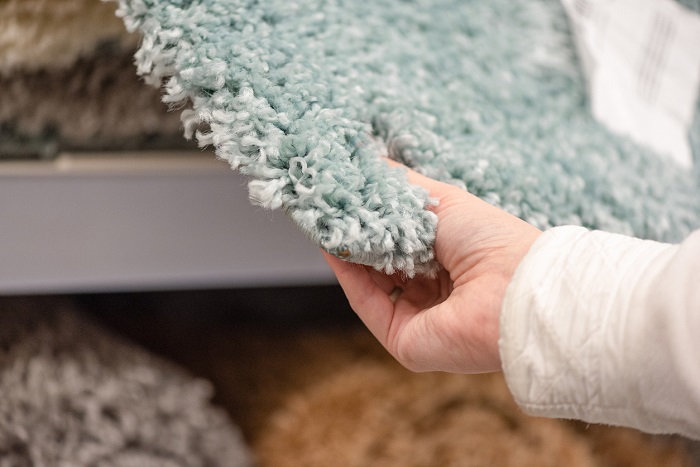
Bathroom color palettes are shifting in 2026. The cool grays and stark whites that dominated recent years are giving way to warmer, earthier tones that feel more grounded and inviting. Here are the colors gaining the most traction:
General color rule: Match your rug to your bathroom’s overall tone, or provide a deliberate contrast. A rug that is close to but not quite the same color as your floor tends to look like a mistake. Either coordinate intentionally or go bold with a contrasting shade.
One of the more noticeable shifts in bathroom design for 2026 is that homeowners are moving away from the standard plush bath mat and toward proper rugs. The reasoning is straightforward. Traditional bath mats hold moisture, can grow mold, and often look dated. Modern bathroom rugs, especially those made from quick-drying synthetic materials like polypropylene and recycled PET, offer better hygiene, more style options, and many are fully machine-washable.
Brands like Ruggable and others now make rugs specifically designed for bathrooms. You get the look of a real area rug with the practical benefits of a bath mat. This trend fits naturally with the broader 2026 move toward bathrooms that feel like designed rooms rather than purely functional spaces.
If you go this route, just make sure whatever rug you choose has non-slip backing or that you place a non-slip pad underneath. Style is great, but safety on a wet bathroom floor always comes first.
Getting the right size starts with measuring the specific spot where the rug will go. Here is a simple process:
A quick sketch of your bathroom floor plan with dimensions noted can save you from buying something that ends up looking too big or too small once it is on the floor.
Every rug or mat in your bathroom should have non-slip backing or sit on a non-slip pad. This is not optional. Wet feet on smooth tile or stone flooring are a recipe for falls, and the bathroom is one of the most common places for slip-and-fall injuries in the home.
Most dedicated bath mats come with rubberized non-slip backing built in. If you are using a decorative rug that does not have it, pick up an inexpensive non-slip rug pad cut to size. They cost a few dollars and make a real difference in safety.
Bathroom rugs take a beating. Between moisture, foot traffic, hair, and dust, they need regular upkeep to stay hygienic and looking good. Here is what works:
What is the most popular bath mat size?
The 21″ x 34″ size is considered the standard and fits the majority of bathrooms. If you can only buy one, this is a safe pick.
Can I use a regular area rug in the bathroom?
Yes, as long as it handles moisture well. Synthetic materials like polypropylene and polyester are water-resistant and work great. Avoid wool or silk rugs, which can be damaged by humidity and water. Always use a non-slip pad underneath if the rug does not have its own backing.
How many rugs should a bathroom have?
It depends on the size. A small powder room needs just one. A full bathroom with a tub and separate vanity usually benefits from two. A large primary bath can easily handle two or three, or one larger area rug as a centerpiece.
How often should I wash my bath mat?
Every one to two weeks is a good baseline. If your bathroom is heavily used or stays humid, wash them more often. A bath mat that stays damp for long stretches will develop mold and bacteria faster than you might expect.
Should the rug match the towels?
It does not have to, but it should look intentional. Coordinating colors or complementary tones (not an exact match) usually looks better than a perfect set. A little contrast keeps the room from feeling like everything came in a boxed set.
The right bathroom rug pulls the room together. It keeps your floors dry, your feet comfortable, and adds a real design touch to a space that deserves more attention than it usually gets. Start by measuring your space, pick a material that can handle your bathroom’s moisture level, and choose a color that either coordinates with or confidently contrasts your existing fixtures and tile.
And if the rug you have right now is looking flat, discolored, or a little tired, take it as a sign. Swapping out a bath rug is one of the cheapest, fastest upgrades you can make to a bathroom, and it makes a bigger difference than most people expect.

Eric is the founder and president of Badeloft USA. He has been the president of Badeloft’s US division for over ten years and oversees all marketing and branding aspects of Badeloftusa.com.
His expertise lies in small business development, sales, and home and bathroom industry trends and information.
Contact us with any business related inquiries.
Badeloft is dedicated to helping homeowners make informed decisions about their bathrooms. We adhere to strict editorial guidelines to ensure our content is accurate, trustworthy, and useful.
Request free stone resin and stainless steel material samples. Delivered to your door.
The modern residential landscape is currently undergoing a profound architectural and psychological shift, moving away from the utilitarian “all-in-one” bathroom
Acrylic bathtubs have become one of the most widely used materials in modern bathrooms, offering a balance of affordability, comfort,
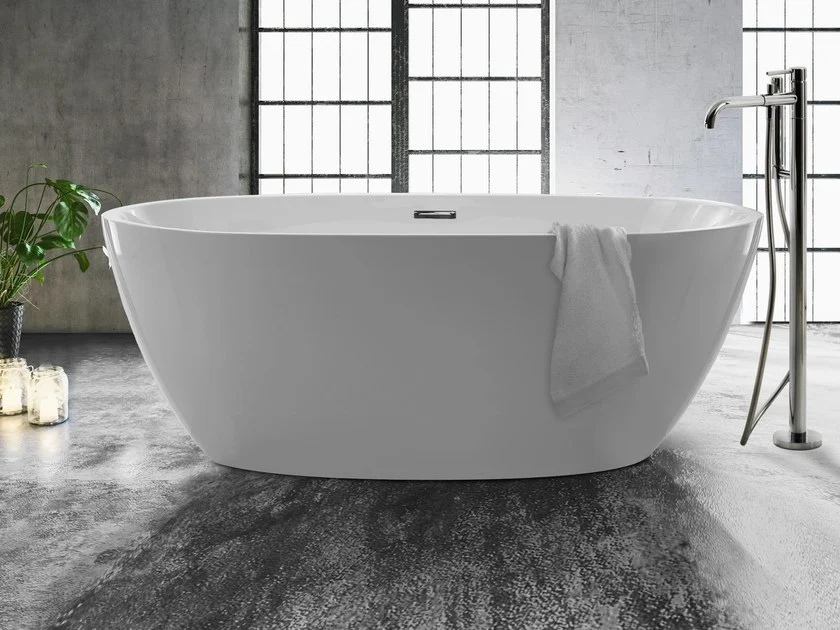
When you’re shopping for a freestanding bathtub, the material matters just as much as the shape or size. It changes
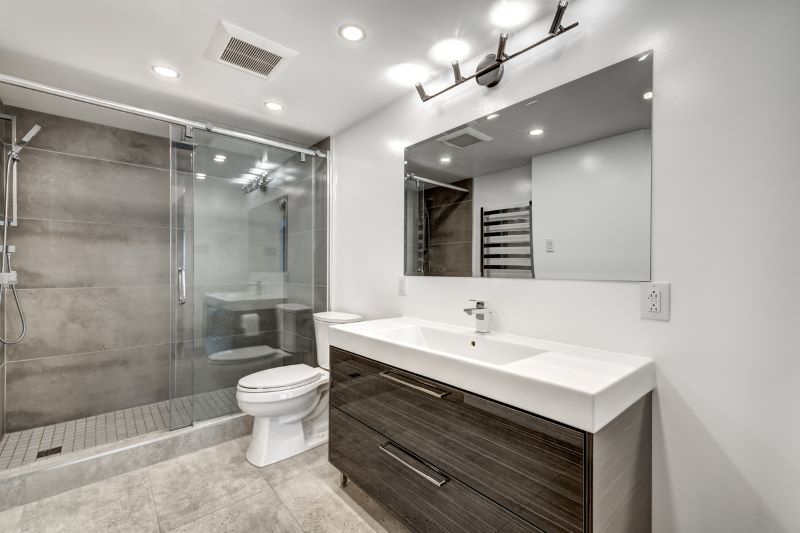
A well-designed bathroom begins long before fixtures are selected or materials are introduced. It starts with understanding the space itself.
Request your free material sample below. By submitting, you agree to receive occasional product updates and offers from Badeloft. Unsubscribe anytime.
"*" indicates required fields