
Why Homeowners Are Rethinking the Traditional Tub-Shower Setup in 2026
The modern residential landscape is currently undergoing a profound architectural and psychological shift, moving away from the utilitarian “all-in-one” bathroom
An ofuro is a traditional Japanese soaking tub designed for deep, full-body immersion in a seated position. Unlike Western bathtubs that are long, shallow, and built for lying down, ofuro tubs are short, deep, and square or rectangular. They typically measure 42-60 inches long, 27-36 inches wide, and 22-30 inches deep – nearly twice the depth of a standard American tub.
The word “ofuro” (お風呂) literally translates to “bath” in Japanese. In Japan, the ofuro is not used for washing. You shower and clean yourself first, then step into the clean, hot water for a quiet, meditative soak. This bathing ritual has roots in Shinto purification traditions and became a central part of home life during the Edo period (1603-1868) (source: Japan Experience).
Today, ofuro-style tubs are increasingly popular in Western bathrooms, especially among homeowners designing spa-inspired spaces. They are available in traditional wood as well as modern materials like stone resin, acrylic, and solid surface.
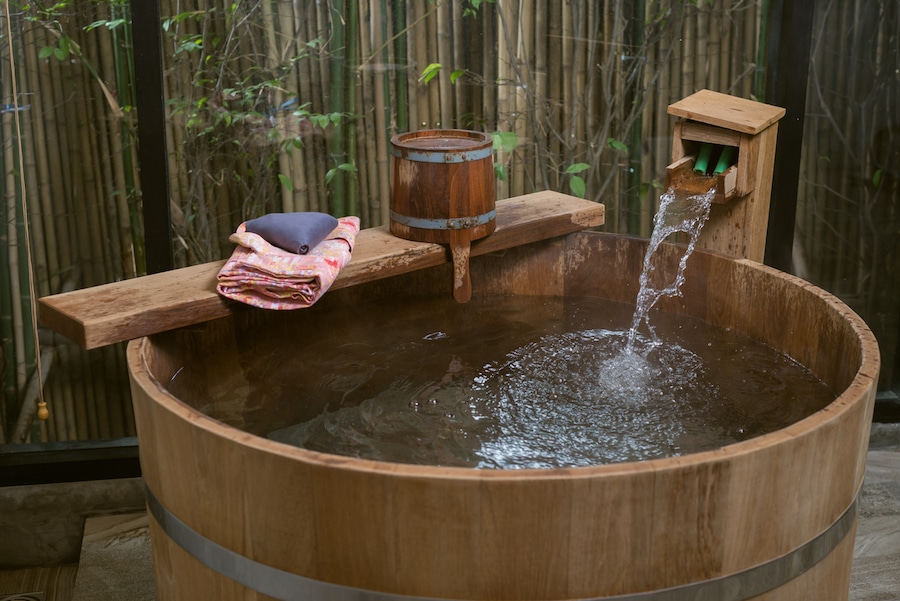
How an ofuro differs from a Western bathtub
The differences go beyond just depth. Here is how an ofuro compares to a standard Western tub:
| Feature | Ofuro (Japanese soaking tub) | Standard Western bathtub |
|---|---|---|
| Bathing position | Upright, seated | Reclined, lying down |
| Typical depth | 22-30 inches | 14-16 inches |
| Typical length | 42-60 inches | 60-72 inches |
| Floor space needed | Compact (as small as 42 x 28 inches) | Larger (typically 60 x 30 inches minimum) |
| Water coverage | Shoulder-deep when seated | Chest-level when reclined |
| Primary purpose | Relaxation, therapeutic soaking | Washing and bathing |
| Water usage | 60-160 gallons depending on size | 30-50 gallons for standard fill |
Ofuro tubs and hot tubs both involve soaking in hot water, but they serve different purposes and have different designs:
The compact footprint is one of the ofuro’s biggest practical advantages. Because you sit upright rather than recline, an ofuro can deliver full-body immersion in a tub that is significantly shorter than a standard bathtub. This makes them well suited for small bathrooms -> where a 60-inch tub would not fit.
Beautiful/unique-Ofuro bathtubs are quite unique in their appearance and function when compared to other bathtubs on the market. Although expensive, the tradeoff is a one-of-a-kind bathing experience.
Total soaking tubs-Ofuro tubs are designed for total immersion soaking, allowing your body to enjoy the relaxing water fully. In addition, long soaks in warm water have been known to provide health benefits.
Add value to the home-Due to their price and rarity, ofuro tubs can greatly impact the value of your home, making it highly desirable.
Highly customizable-Ofuro tubs can be made from a wide variety of different wood, providing a great deal of visual and material flexibility depending on the needs of your home.
Higher cost– Traditional wood ofuro tubs cost $4,000-$40,000+ depending on material, size, and craftsmanship. Modern stone resin and acrylic alternatives are more accessible at $1,500-$4,000.
Higher water usage– A deep ofuro uses 60-160 gallons per fill, compared to 30-50 gallons for a standard bathtub. This increases water and heating costs.
Entry and exit– The tall walls (22-30+ inches) require stepping up and over to get in. A step stool is recommended, and grab bars are advisable for safety.
Wood maintenance (traditional ofuro only)– Wooden tubs require regular resealing and careful drying between uses to prevent mold, cracking, and warping. Modern materials like stone resin and acrylic eliminate this concern entirely.
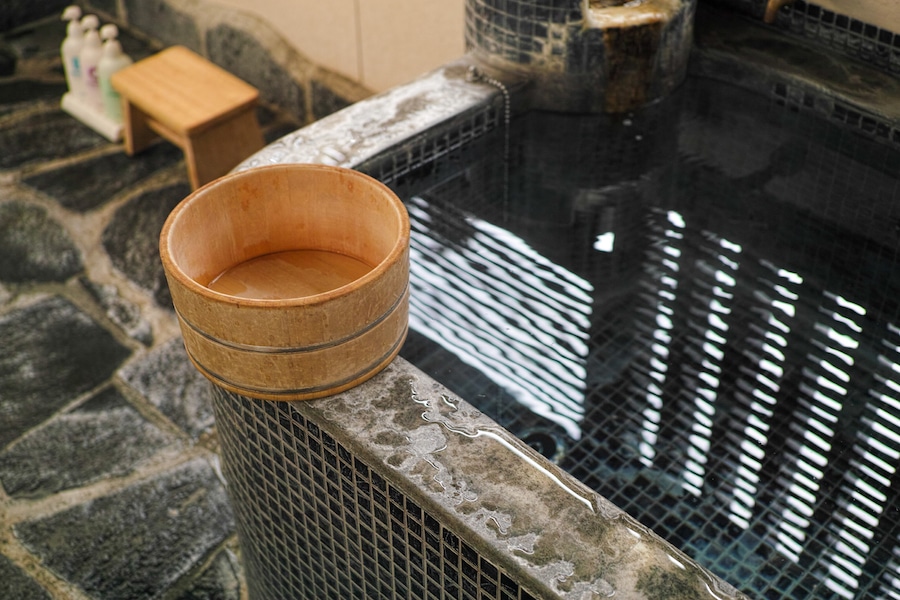
Traditional ofuro tubs are crafted from aromatic, water-resistant woods. The three most common species are:
Hinoki (Japanese cypress). The most prized ofuro wood. Hinoki releases a calming, citrus-like fragrance when exposed to hot water and has natural antibacterial properties. It is the same wood used in Japanese temple construction. However, hinoki is expensive, must be imported, and requires more frequent resealing than other woods. Cost: $6,000-$40,000+.
Western red cedar. The most common wood for ofuro tubs sold in North America. Cedar is naturally resistant to decay and bacteria, has a pleasant aroma, and offers excellent heat insulation. It is more readily available and affordable than hinoki. Cost: $3,000-$8,000.
Teak. A dense, oil-rich hardwood sourced primarily from Southeast Asia. Teak is highly durable, naturally water-resistant, and develops a warm golden patina over time. It requires less maintenance than hinoki but is heavier. Cost: $4,000-$10,000.
All wood ofuro tubs require ongoing maintenance: regular resealing (every 1-3 years depending on wood type and usage), careful drying between uses, and avoidance of soap or cleaning products in the water.
For homeowners who want the ofuro soaking experience without the maintenance demands of wood, several modern alternatives are available:
Stone resin. A composite of crushed natural stone (typically marble and limestone) bound with polymer resin. Stone resin ofuro tubs offer excellent heat retention, a smooth matte finish, and zero maintenance beyond basic cleaning. They are non-porous, stain-resistant, and will not crack, warp, or absorb water. Stone resin is what Badeloft uses for its Japanese ofuro bathtubs ->, including the BW-08-S -> (47.2 x 27.6 x 30.7 inches, with an interior depth that allows true shoulder-deep soaking). Cost: $1,500-$4,000.

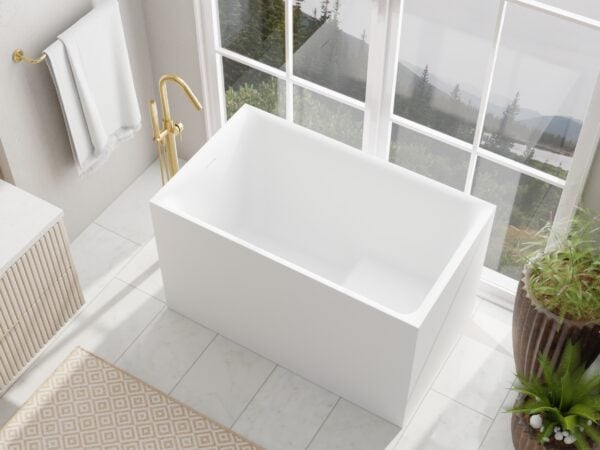
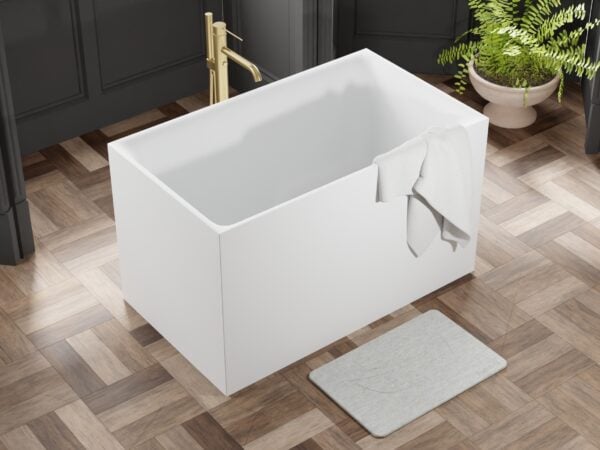
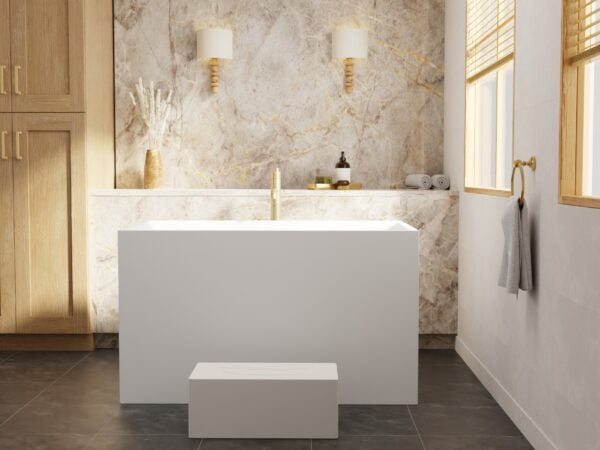
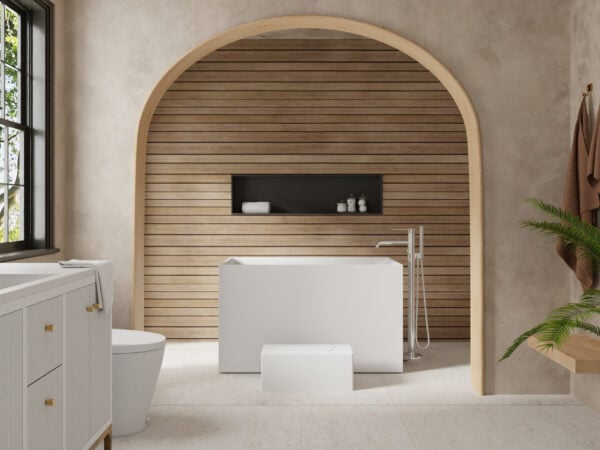
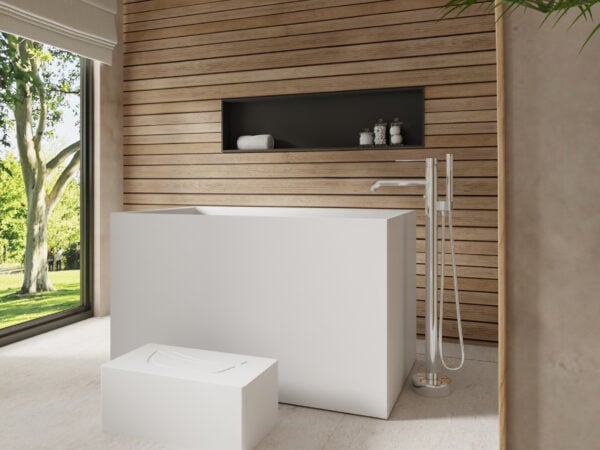
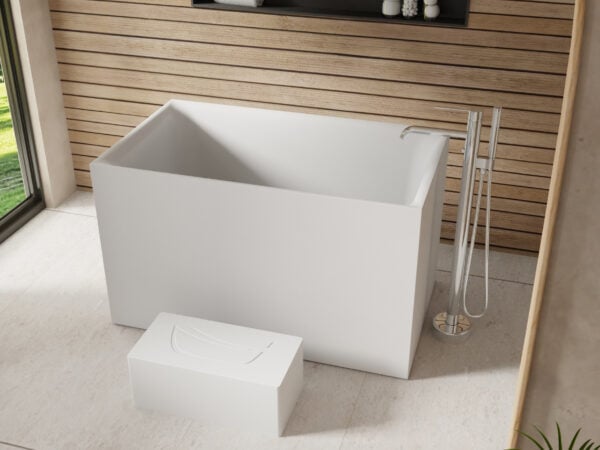
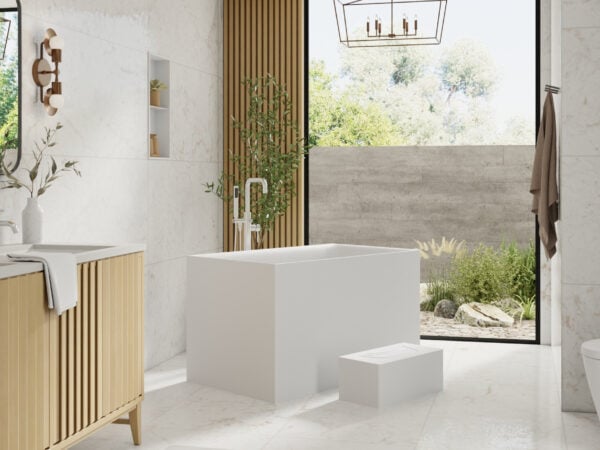
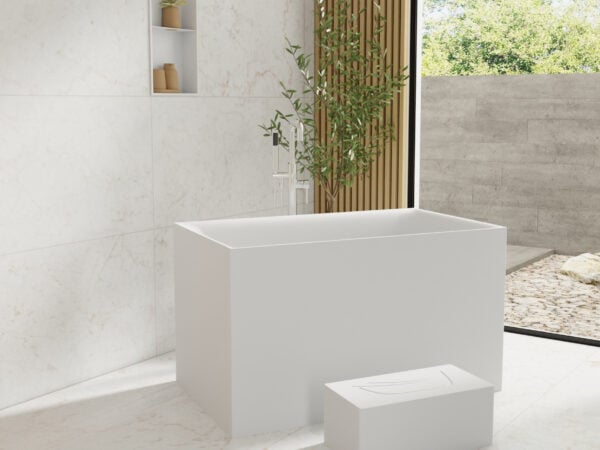
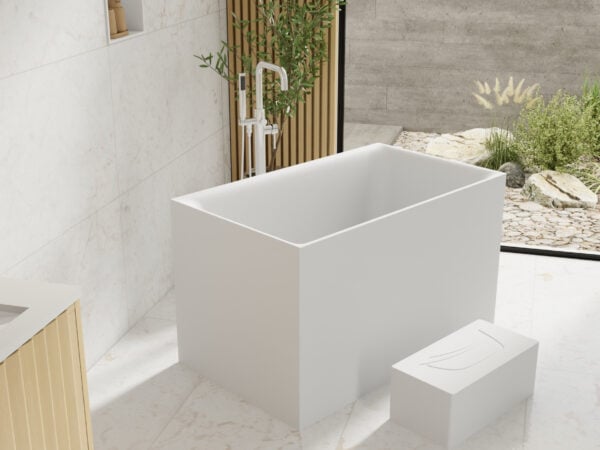
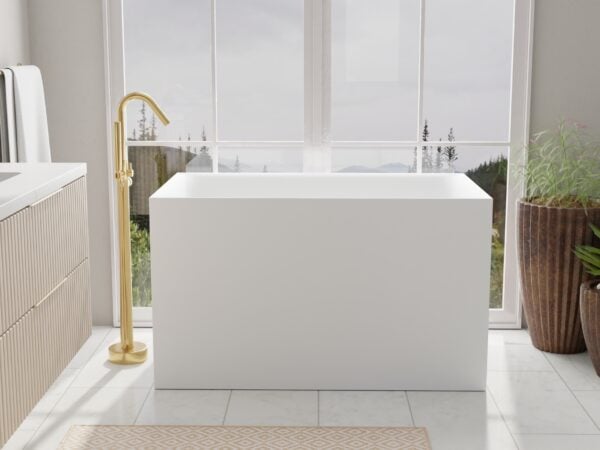
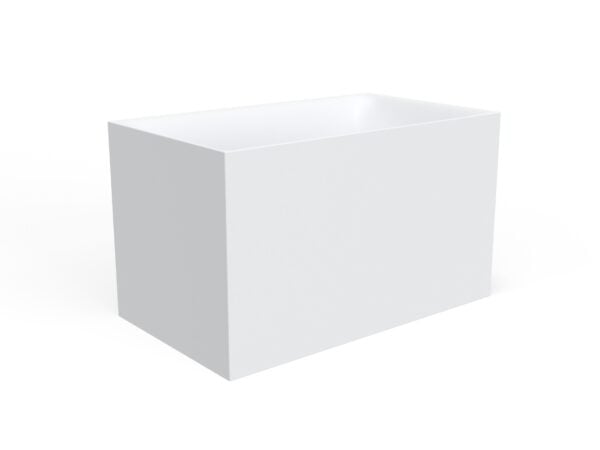
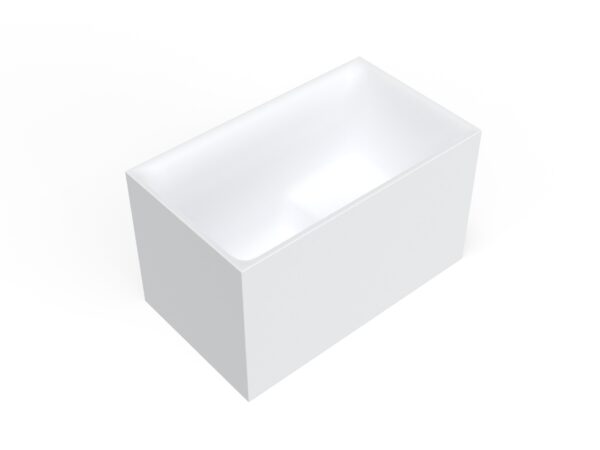
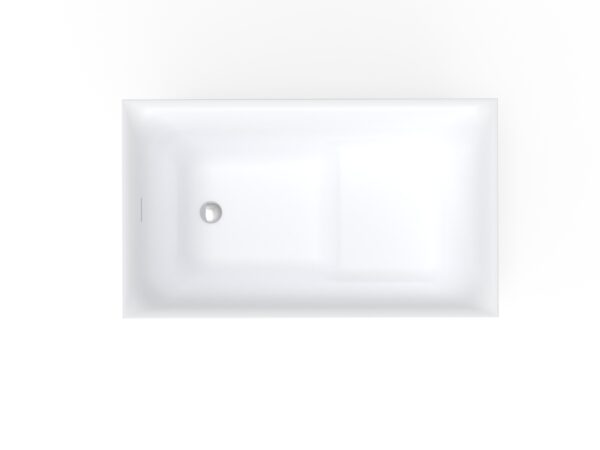
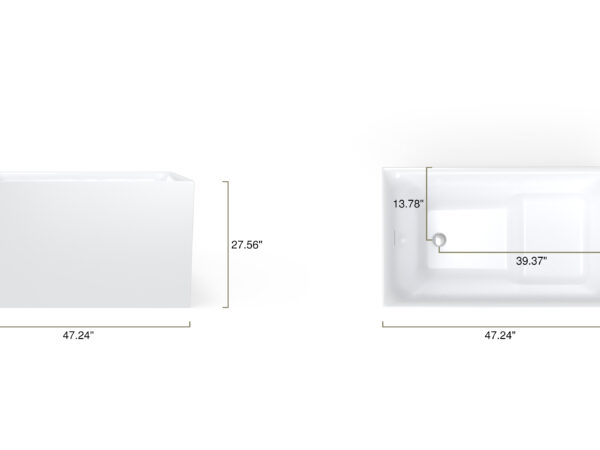


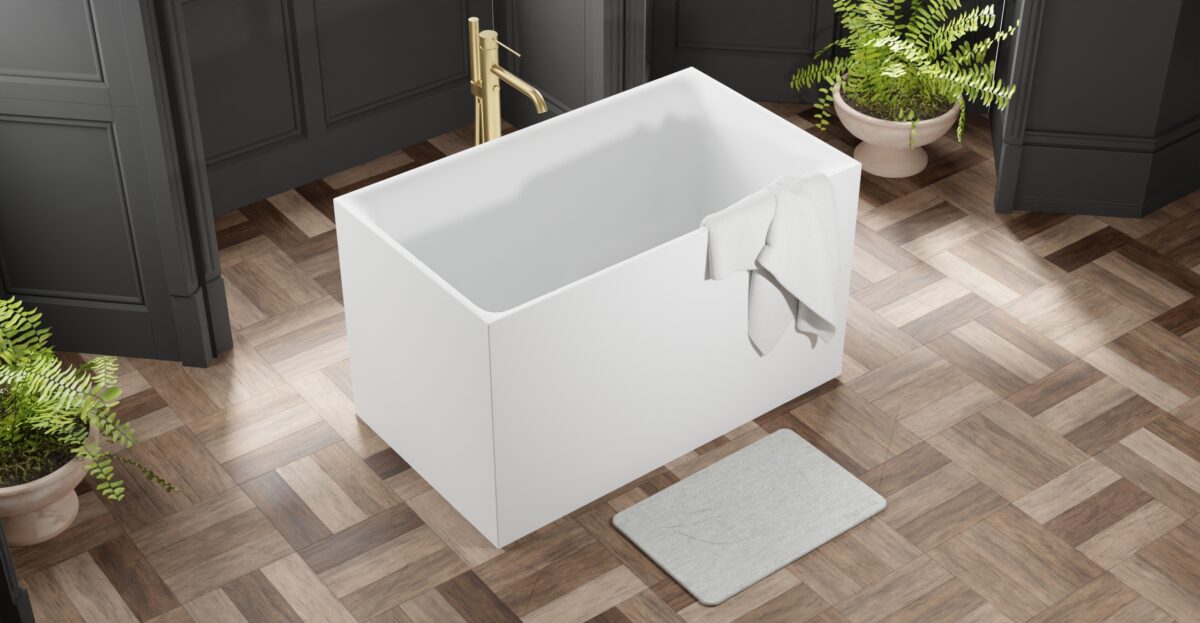
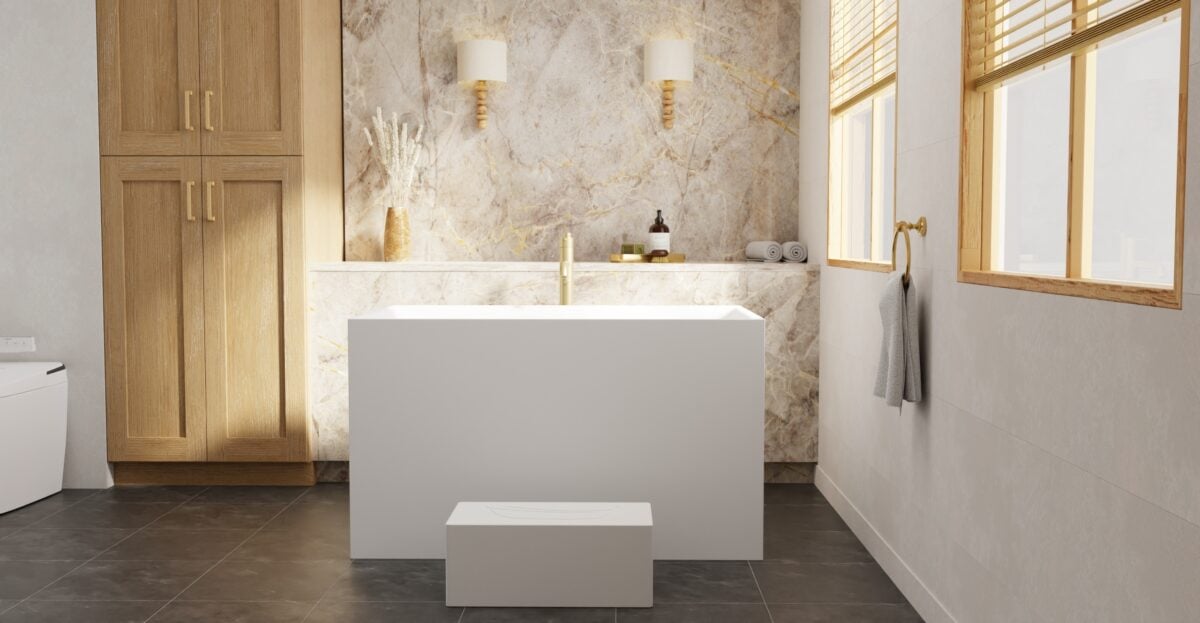
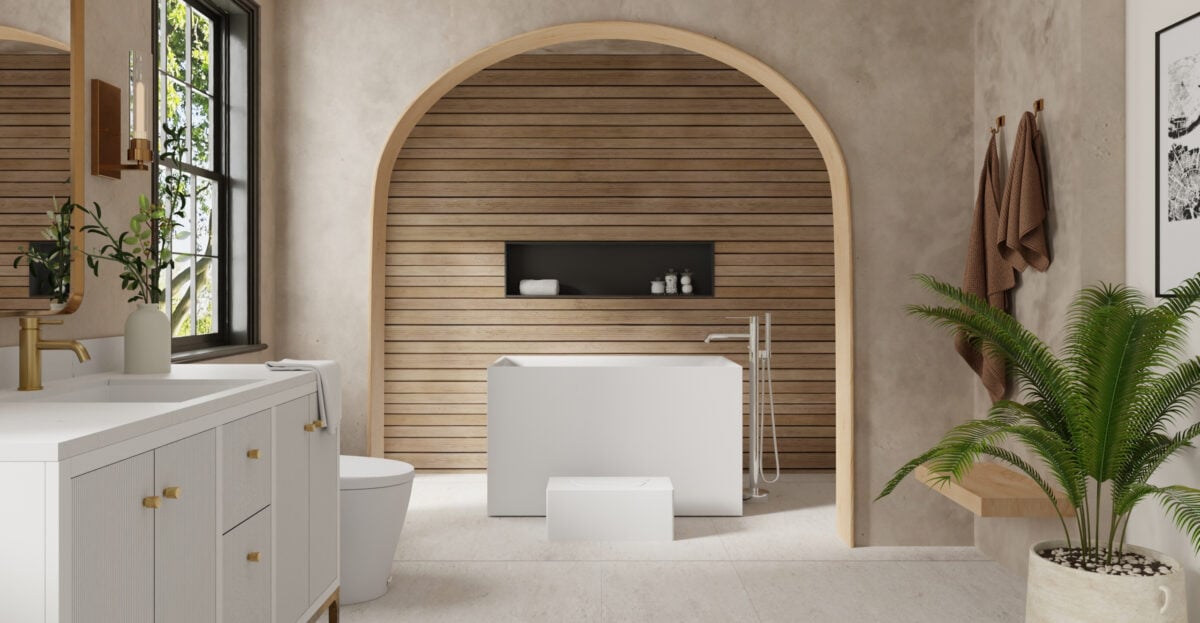
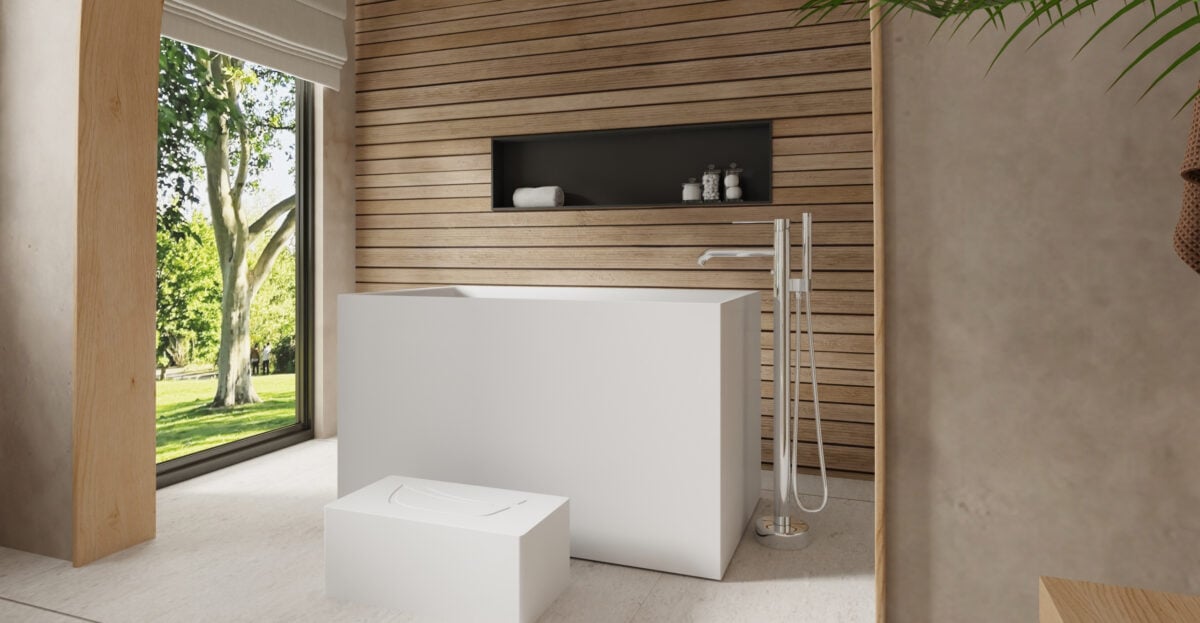
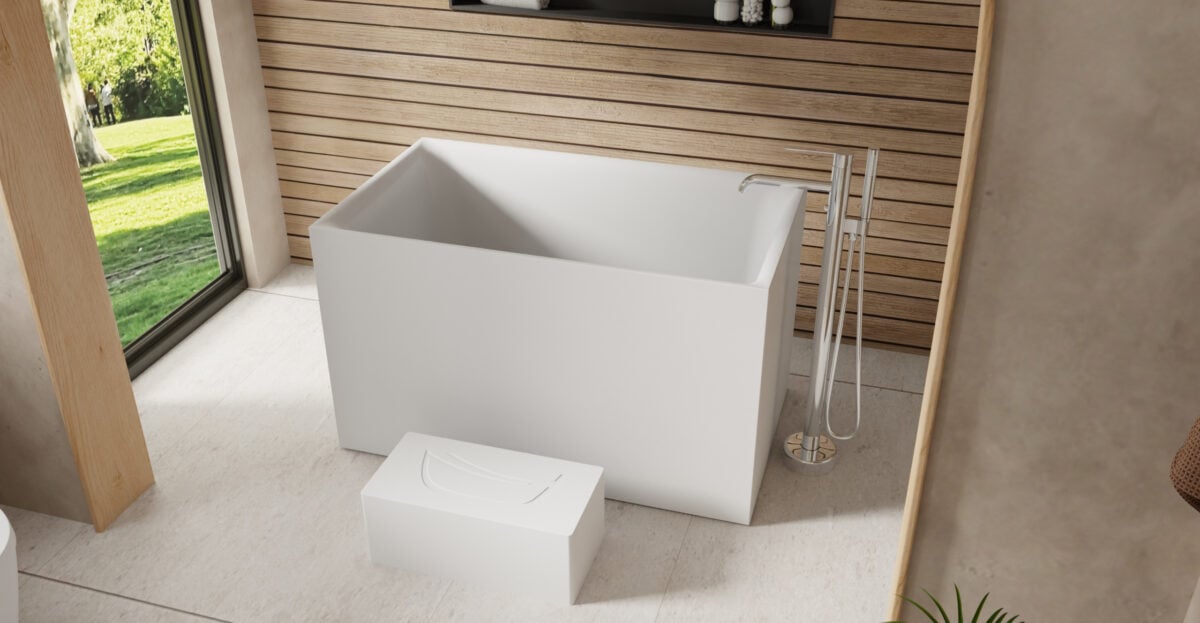
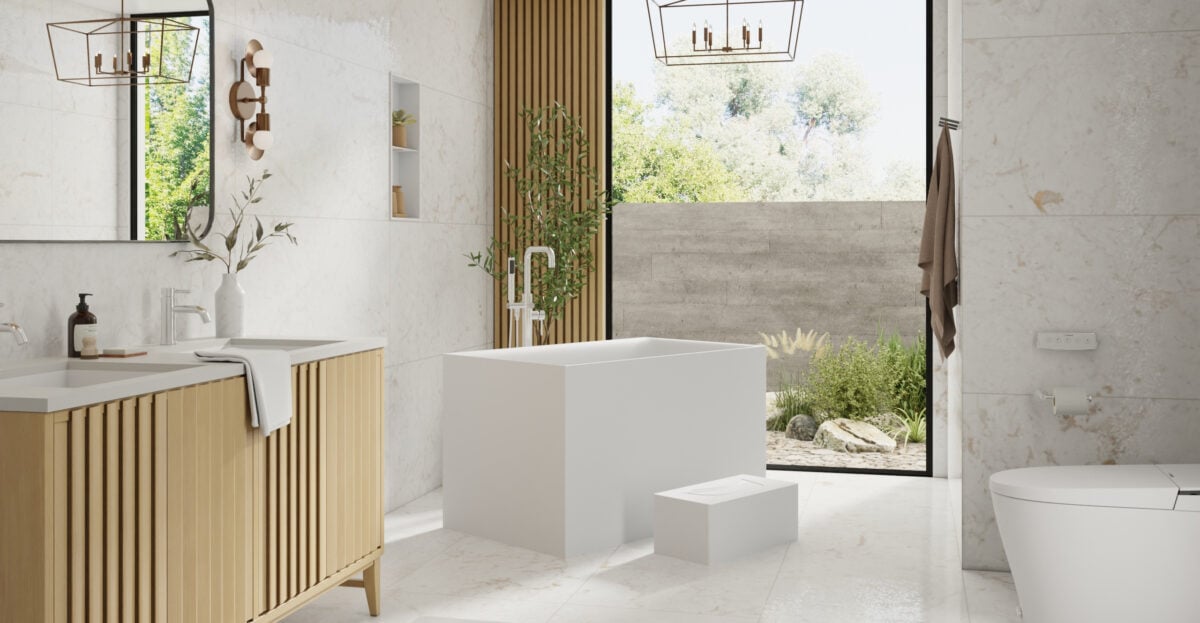
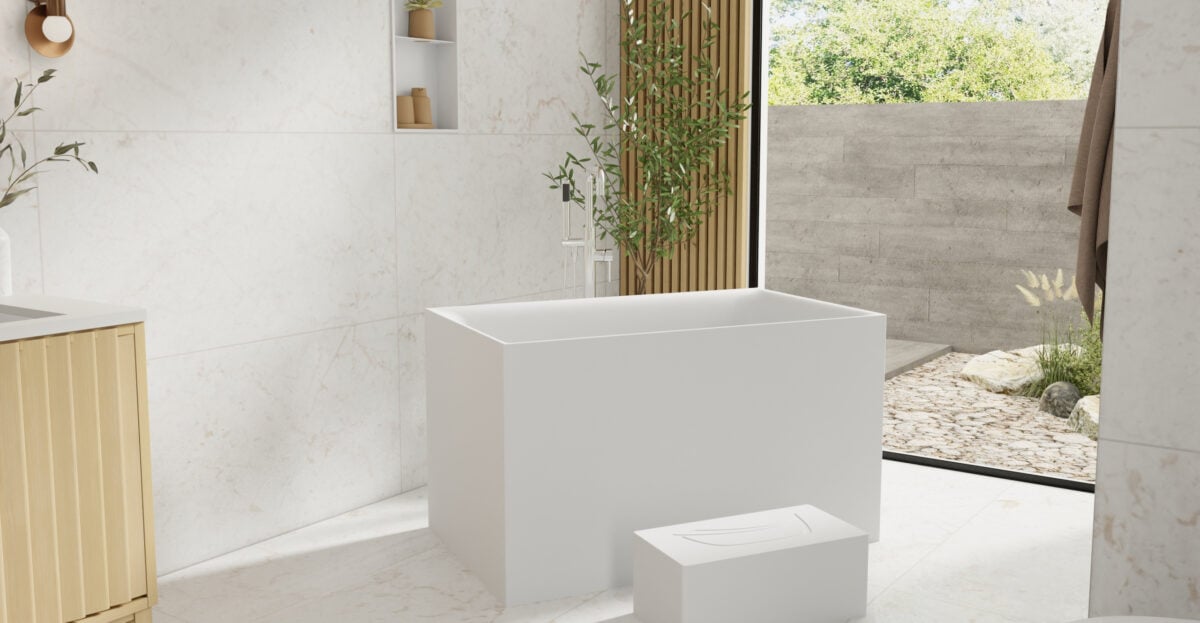
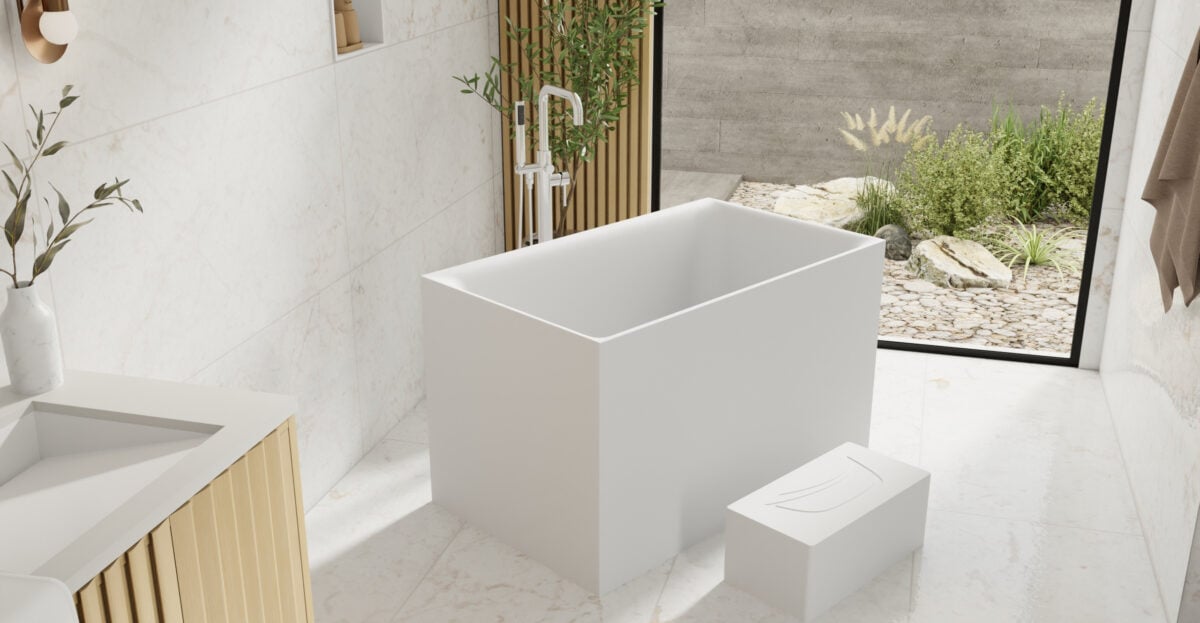


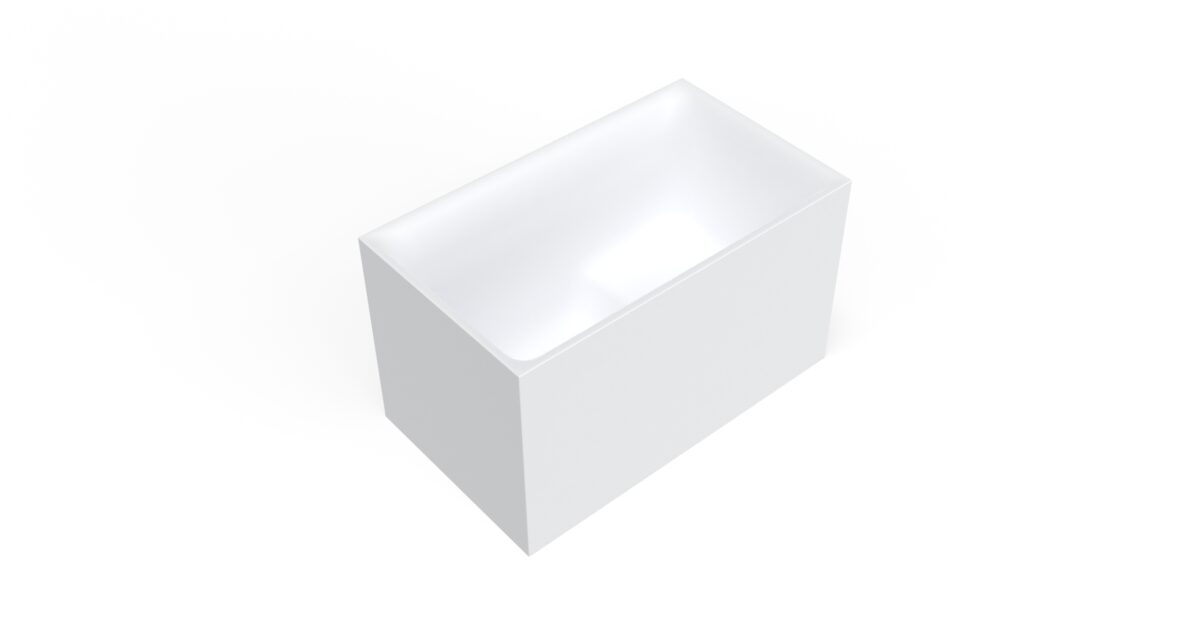

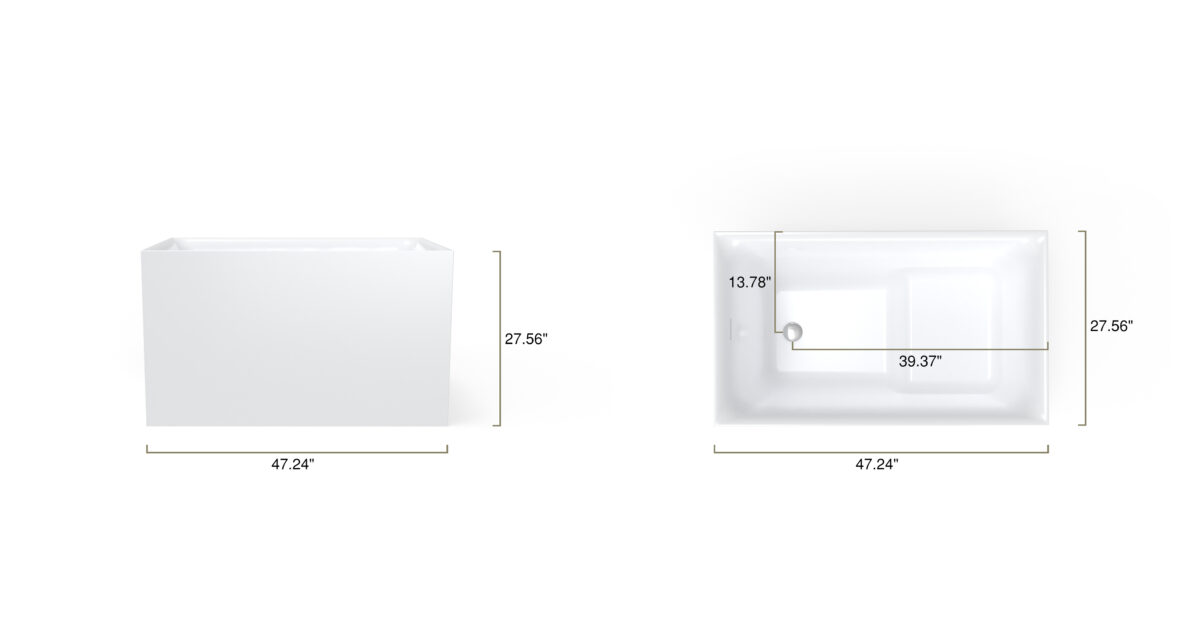

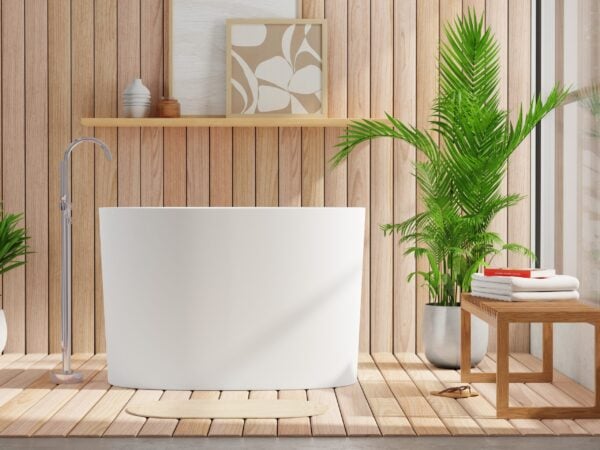
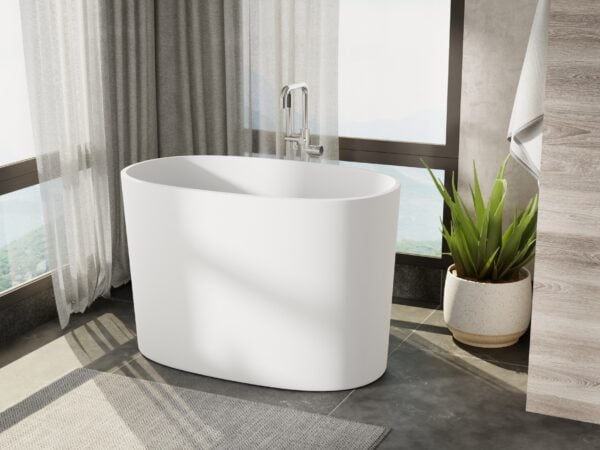
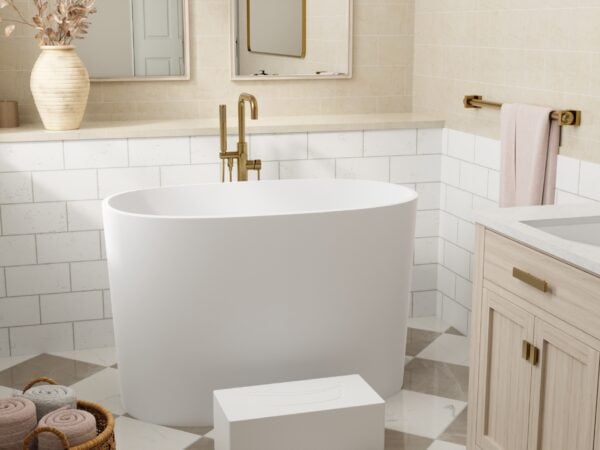
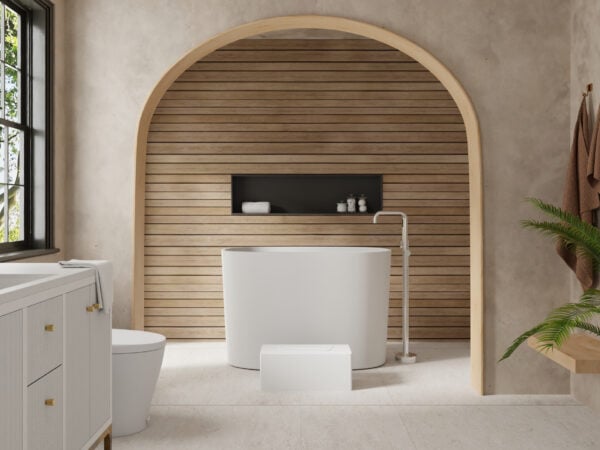
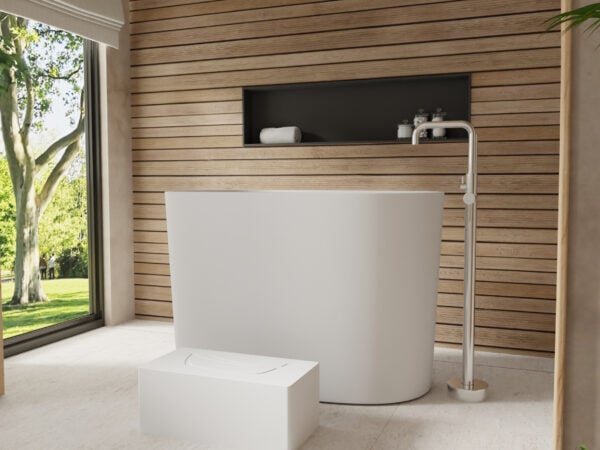
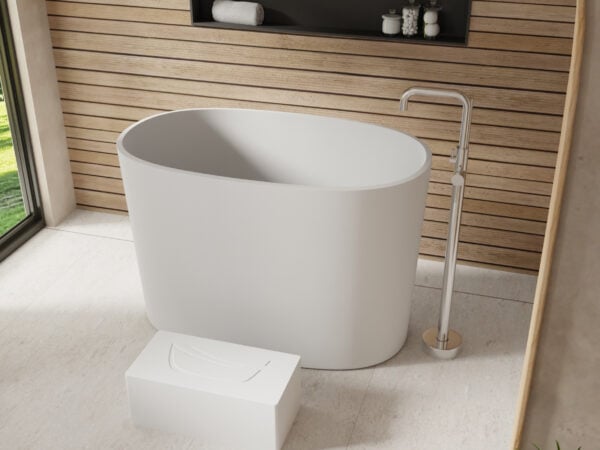
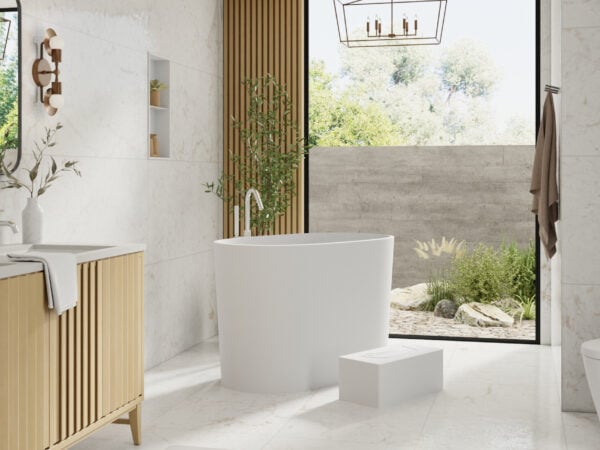
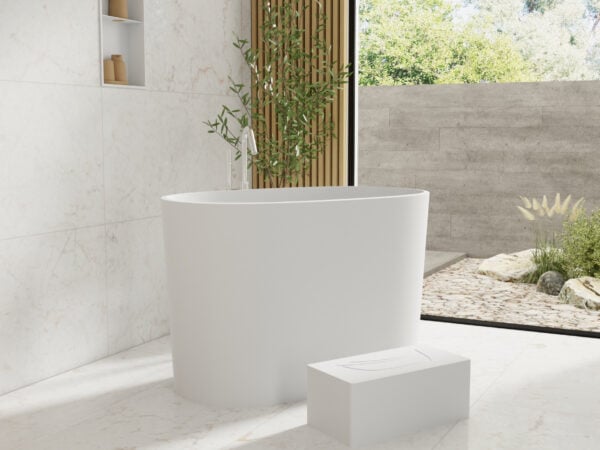
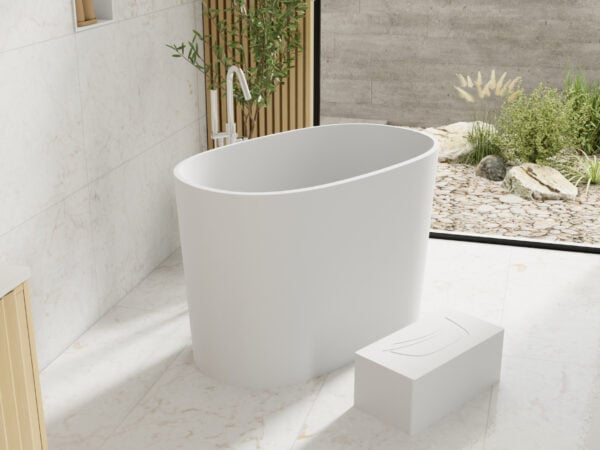
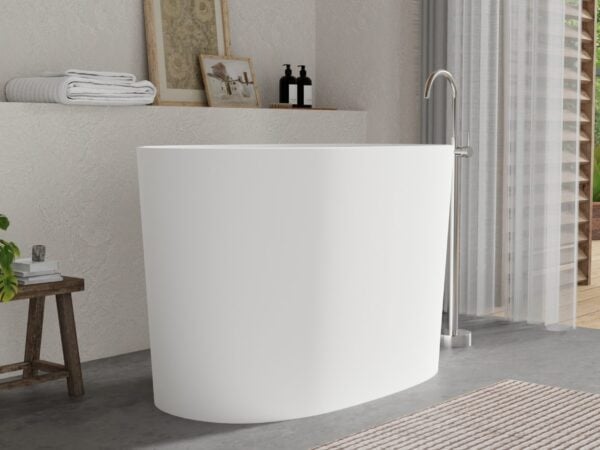
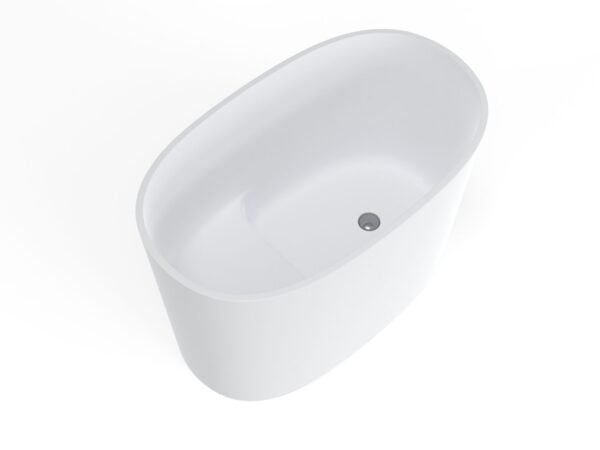
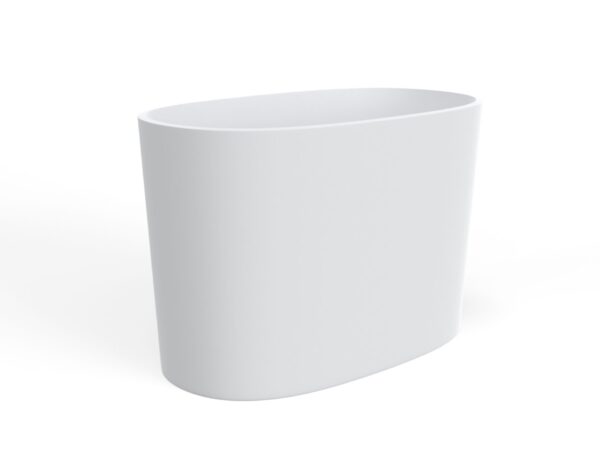
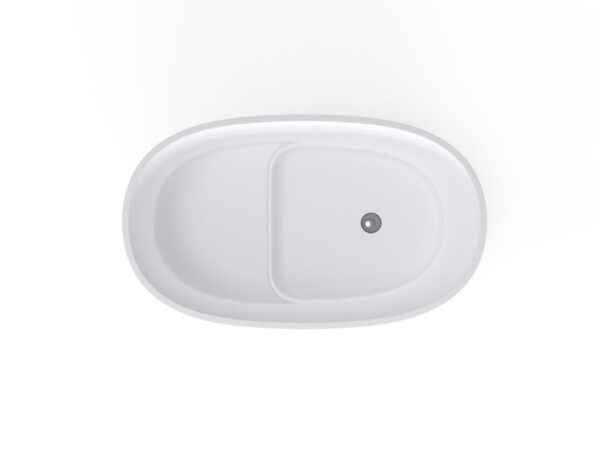
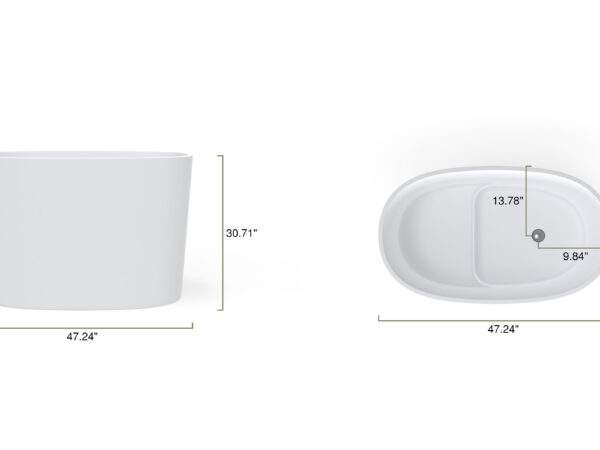
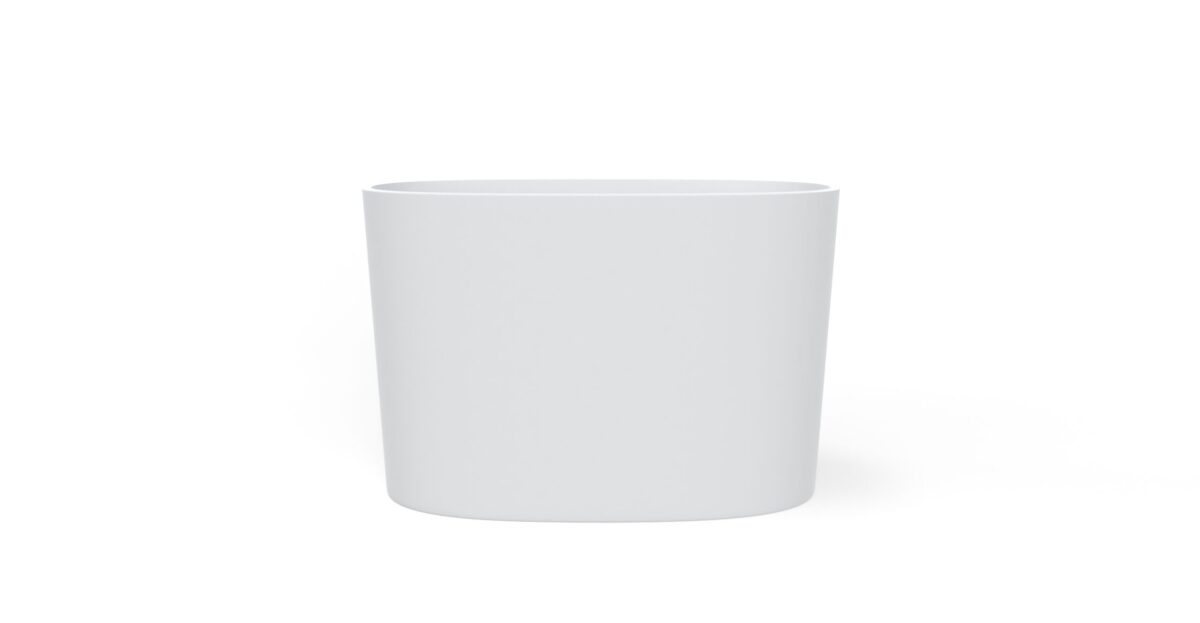

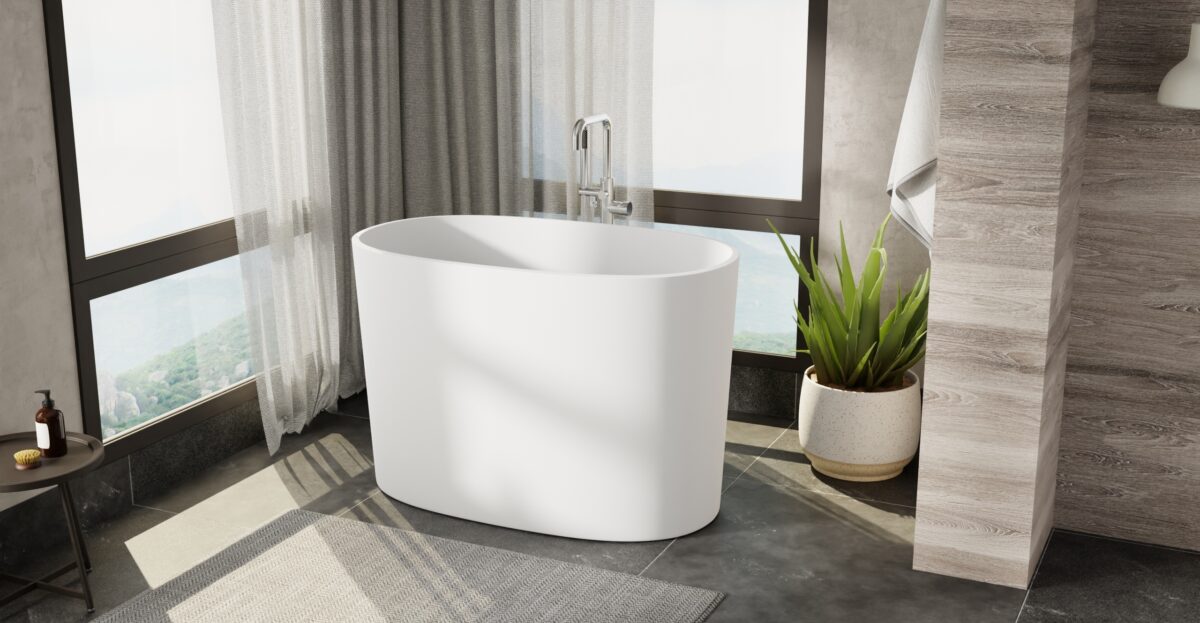
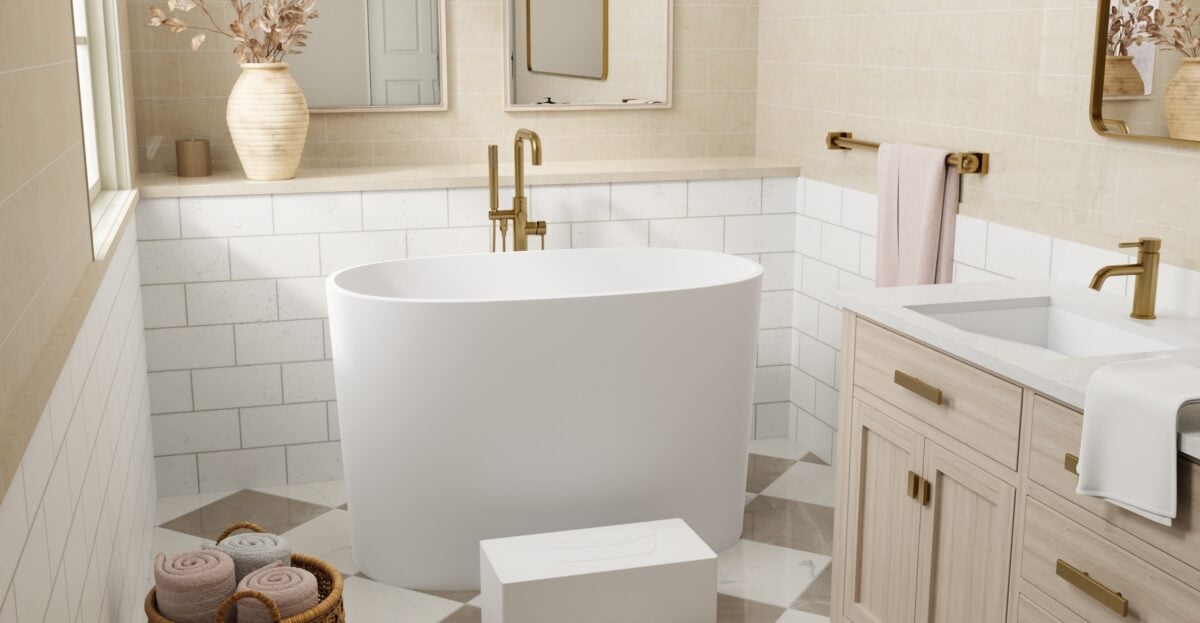
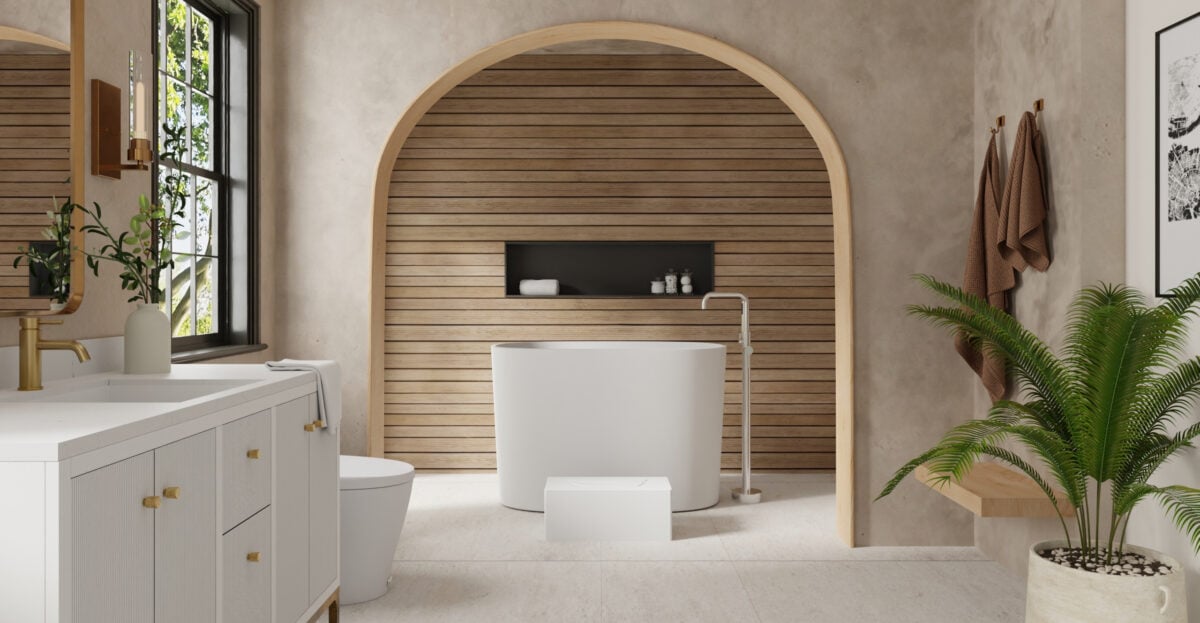
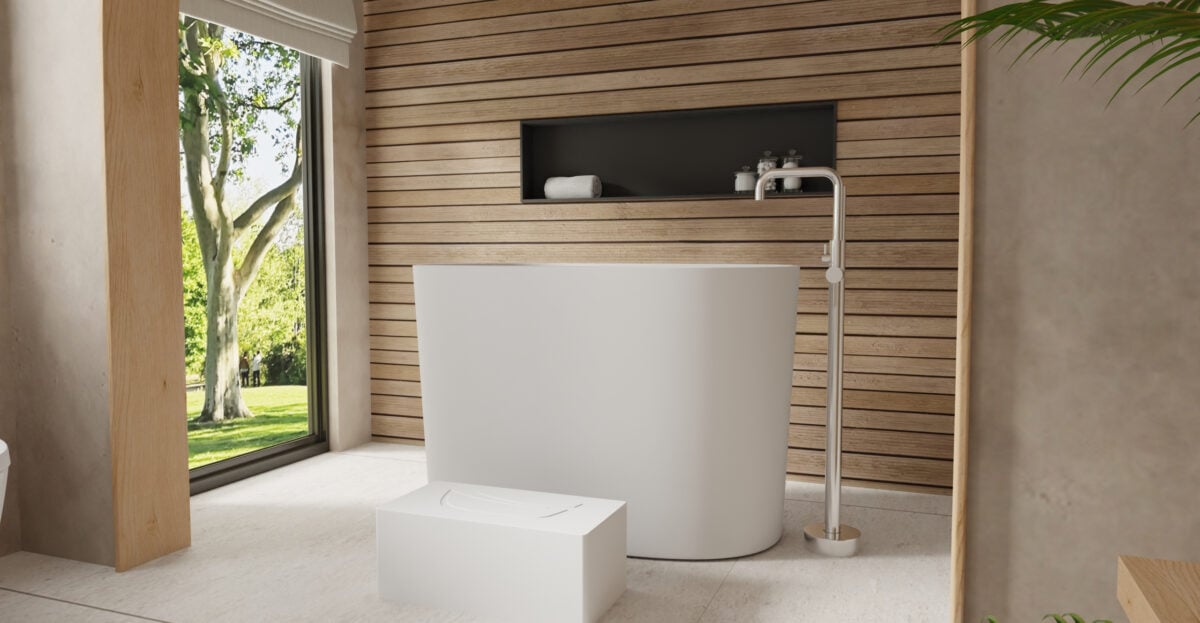
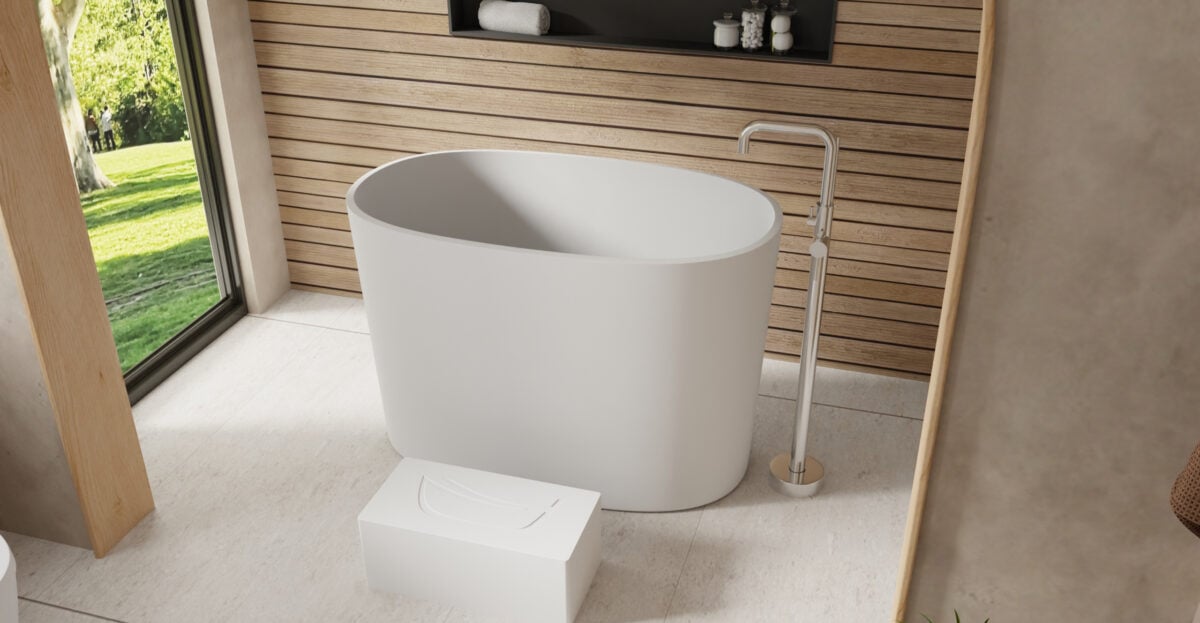
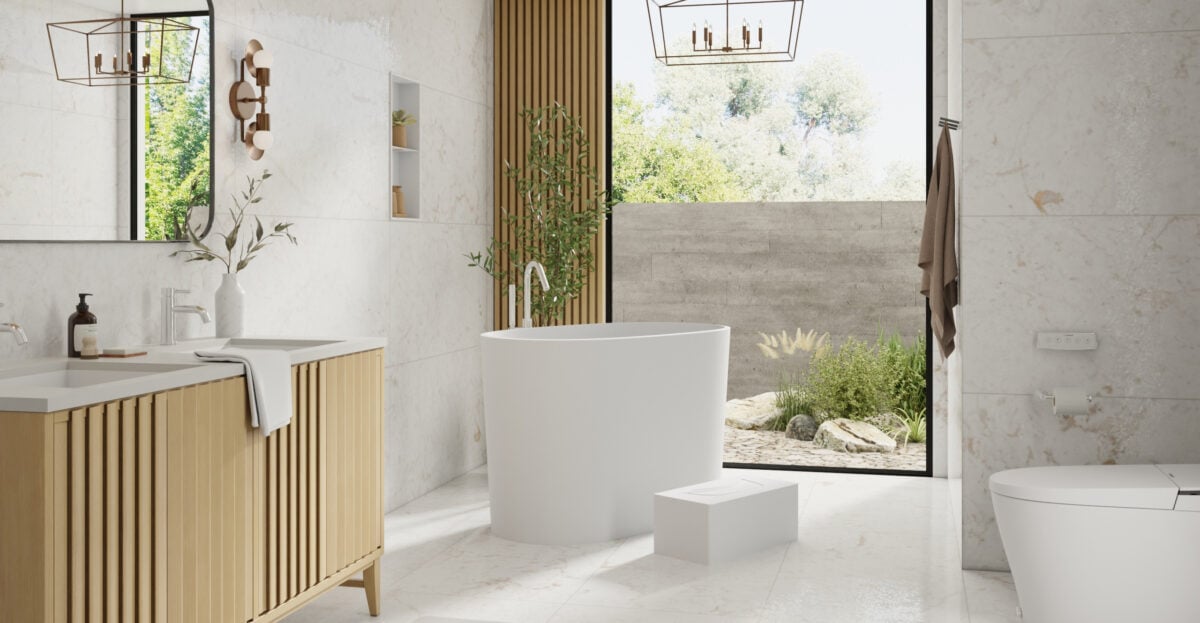
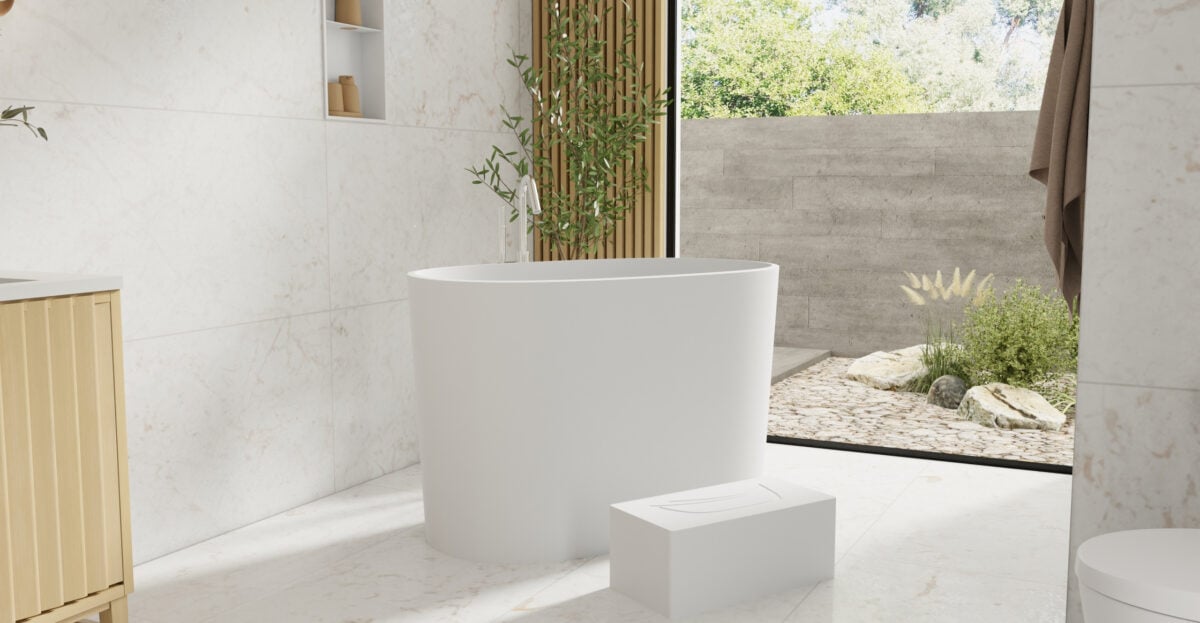
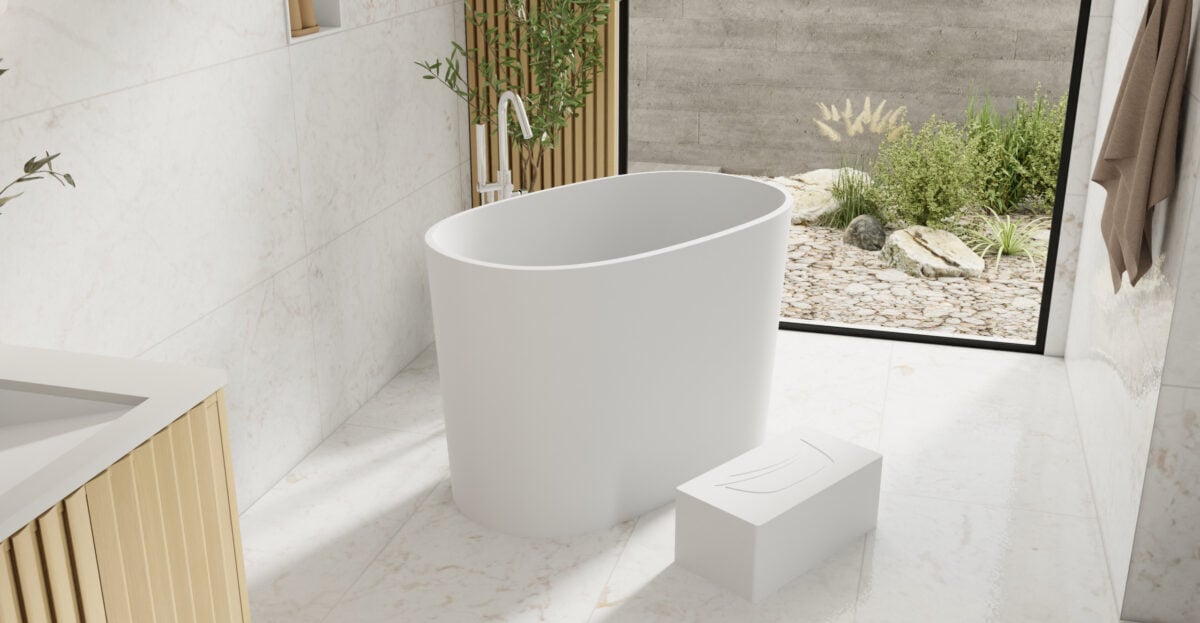

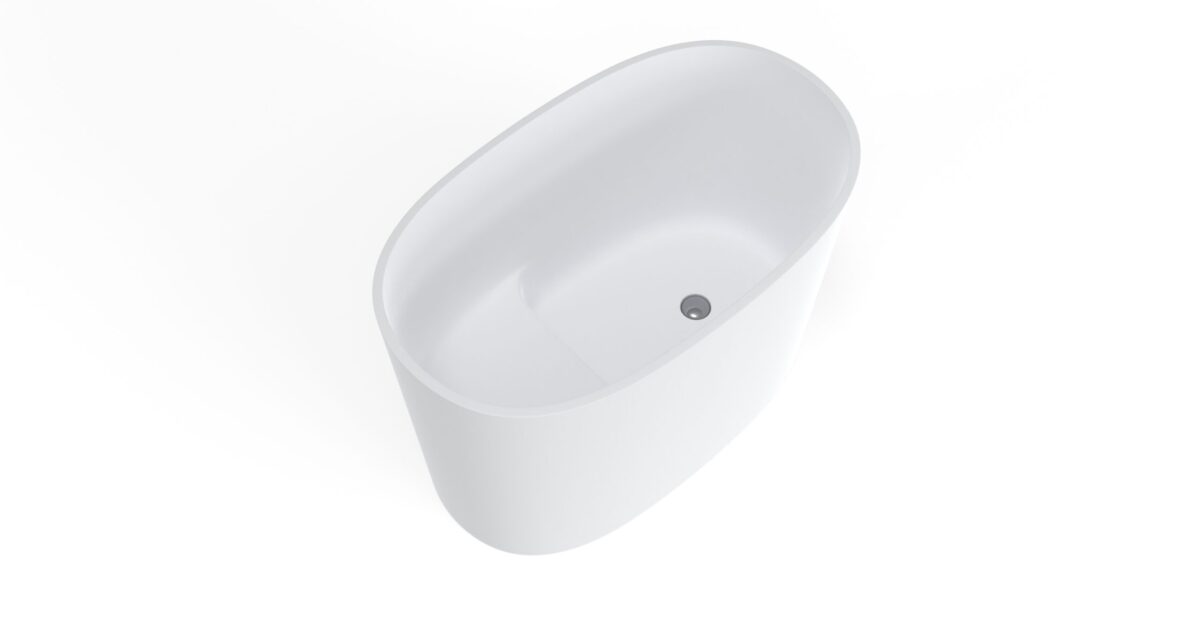


Elegance and relaxation are yours with the BW-08 luxury freestanding stone bathtub. Enjoy indulgent depths for full immersion bathing in this deep tub.
Acrylic. Lightweight, affordable, and available in many shapes. Acrylic ofuro-style tubs are easy to install and maintain, though they do not retain heat as well as stone resin or wood and are more prone to surface scratches over time. Cost: $800-$2,500.
Solid surface (e.g., AquateX, Corian). Similar in performance to stone resin, with a smooth, warm-to-the-touch surface and strong heat retention. Brands like Aquatica offer solid surface ofuro tubs. Cost: $3,000-$6,000.
Copper and stainless steel. Less common but visually striking. Copper develops a natural patina over time and offers excellent heat retention. Stainless steel is hygienic and virtually indestructible. Cost: $3,000-$10,000.
For a detailed comparison of all bathtub materials, see our guide to common bathtub materials ->.
| Material | Cost range | Heat retention | Maintenance | Lifespan | Weight (typical) |
|---|---|---|---|---|---|
| Hinoki wood | $6,000-$40,000+ | Good | High (regular resealing) | 15-25 years | 80-150 lbs |
| Cedar wood | $3,000-$8,000 | Good | Moderate (periodic resealing) | 15-20 years | 70-130 lbs |
| Stone resin | $1,500-$4,000 | Excellent | Low (soap and water) | 20+ years | 150-300 lbs |
| Acrylic | $800-$2,500 | Moderate | Low | 10-15 years | 50-90 lbs |
| Solid surface | $3,000-$6,000 | Excellent | Low | 20+ years | 150-250 lbs |
| Copper | $3,000-$10,000 | Excellent | Moderate (patina develops) | 50+ years | 100-200 lbs |
Long soaks in hot water help ease joint inflammation and reduce pain in the sore and tight muscles. It also helps lower blood pressure and promote healthier breathing as it places more pressure in the lungs. Long soaks in warm water also promote blood flow which can help boost your immunity and promote long-term health.
The primary disadvantage of an ofuro tub is the price. Ofuro tubs are difficult to justify compared to other bathtubs on the market. Their material will also require consistent maintenance to ensure its longevity. For those not used to an ofuro bathtub, this can be a hefty price tag overall.
Ofuro pricing varies dramatically based on material, size, and whether the tub is mass-produced or custom-built:
| Category | Price range | What to expect |
|---|---|---|
| Budget (acrylic) | $800-$2,500 | Modern ofuro-style shape in acrylic. Lightweight, easy to install. Shorter lifespan and less heat retention than premium materials. |
| Mid-range (stone resin) | $1,500-$4,000 | Excellent heat retention, zero maintenance, 20+ year lifespan. Available in matte white, black, and gray finishes. Badeloft’s stone resin ofuro tubs fall in this range. |
| Premium (solid surface, copper) | $3,000-$10,000 | High-end materials with distinctive aesthetics. Solid surface offers a warm, smooth feel. Copper develops a unique patina. |
| Traditional wood (handcrafted) | $4,000-$40,000+ | Authentic hinoki, cedar, or teak. Handmade by specialist craftsmen. Beautiful and aromatic, but requires ongoing maintenance and eventual replacement. |
Installation costs typically add $500-$2,000 depending on plumbing requirements. A freestanding ofuro tub placed on an existing bathroom floor is the simplest installation. Drop-in or built-in configurations require custom framing and add complexity.
For a broader look at bathtub pricing across all types, see our bathtub cost guide.
The design of an ofuro is meant to trap heat which allows it to reach temperatures close to 107 degrees Fahrenheit or higher. For that reason, it is always important to exercise caution when using an ofuro and to monitor the heat levels accordingly.
Regarding installation choices, there are two primary options: Rectangular or Circular. Both tubs are very similar, with the largest difference being the installation space. Rectangular tubs will be more difficult to install initially but require less space overall whereas circular tubs will need to be placed in a corner or the center of a room.
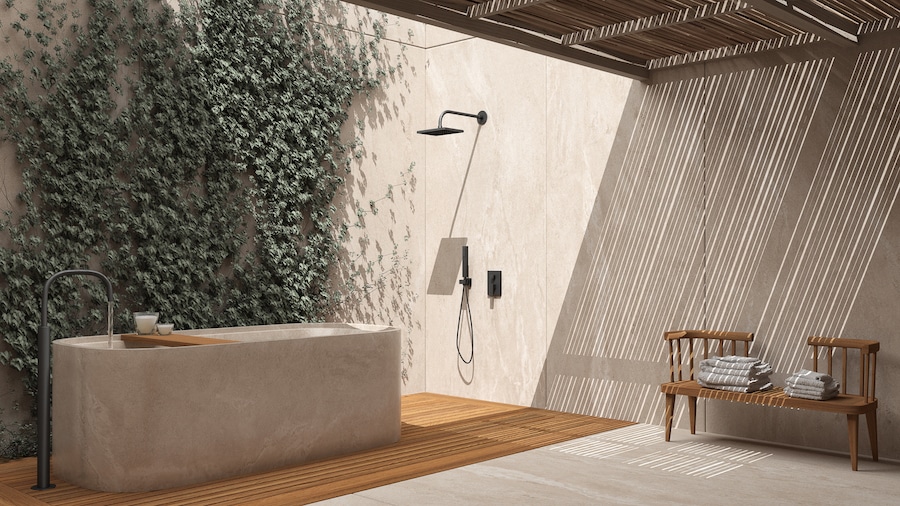
The ofuro experience follows a specific sequence that has been refined over centuries. Understanding this ritual is part of what makes ofuro soaking different from simply taking a bath.
Fill the ofuro with hot water to your preferred temperature. Traditional ofuro water is 104-110 degrees Fahrenheit (40-43 degrees Celsius). Some Japanese bathers prefer up to 113 degrees Fahrenheit. If you are new to ofuro bathing, start closer to 104 degrees and adjust upward over time.
This is the essential rule of ofuro etiquette. Before entering the tub, wash your body thoroughly at a separate shower or washing station. In traditional Japanese bathrooms, this is done seated on a low stool with a handheld showerhead. The purpose is to keep the ofuro water clean, as it is meant purely for soaking, not for cleaning.
Step into the tub and lower yourself gradually, allowing your body to adjust to the heat. The water should reach your shoulders when seated.
The ofuro is a space for stillness. Typical soaking time is 10-20 minutes. Soap, shampoo, and bath products are not used in the water. Some bathers add mineral salts or light aromatics, but the water itself is traditionally kept pure.
After soaking, exit the tub carefully (use a step stool if needed) and allow your body to cool naturally. Many Japanese bathers follow the soak with a light rinse of cool water to close the pores.
In traditional Japanese households, the same bathwater was shared among family members, starting with the eldest. Each person would wash beforehand to keep the water clean. While this practice is less common today, it reflects the deeply communal nature of ofuro culture.
This answer will ultimately depend on you. An ofuro tub is certainly a luxury tub that offers a unique experience. Ofuro tubs are highly customizable, have a unique look and will increase the value of your home. They are also much safer than a traditional bathtub since you do not need to balance, and you can sit more comfortably. The design makes it ideal for elderly individuals and those with movement impair as they can safely submerge their body and enjoy the long soak without the danger of slipping or falling.
That being said, it is drastically more expensive than any other bathtub on the market without any additional features, but keep in mind that you are paying for the expert craftsmanship of the tub. For those seeking a blend of luxury and wellness, understanding the spa bathtub definition and benefits further emphasizes the choice of an ofuro tub. These tubs not only provide a serene environment for relaxation but also promote improved circulation and stress relief, enhancing overall well-being. With the added appeal of a spa experience at home, the investment in an ofuro tub can transform your bathing routine into a daily retreat.

Eric is the founder and president of Badeloft USA. He has been the president of Badeloft’s US division for over ten years and oversees all marketing and branding aspects of Badeloftusa.com.
His expertise lies in small business development, sales, and home and bathroom industry trends and information.
Contact us with any business related inquiries.
Badeloft is dedicated to helping homeowners make informed decisions about their bathrooms. We adhere to strict editorial guidelines to ensure our content is accurate, trustworthy, and useful.
Request free stone resin and stainless steel material samples. Delivered to your door.
The modern residential landscape is currently undergoing a profound architectural and psychological shift, moving away from the utilitarian “all-in-one” bathroom
Acrylic bathtubs have become one of the most widely used materials in modern bathrooms, offering a balance of affordability, comfort,
When you’re shopping for a freestanding bathtub, the material matters just as much as the shape or size. It changes
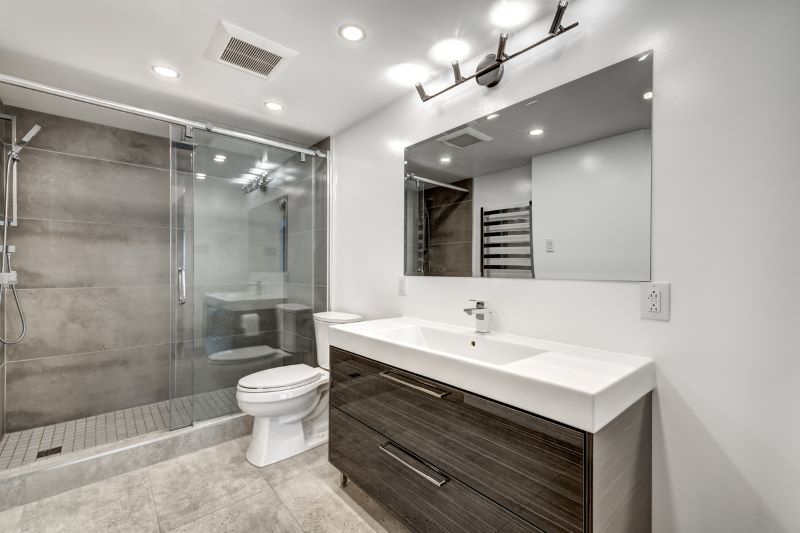
A well-designed bathroom begins long before fixtures are selected or materials are introduced. It starts with understanding the space itself.
Request your free material sample below. By submitting, you agree to receive occasional product updates and offers from Badeloft. Unsubscribe anytime.
"*" indicates required fields