
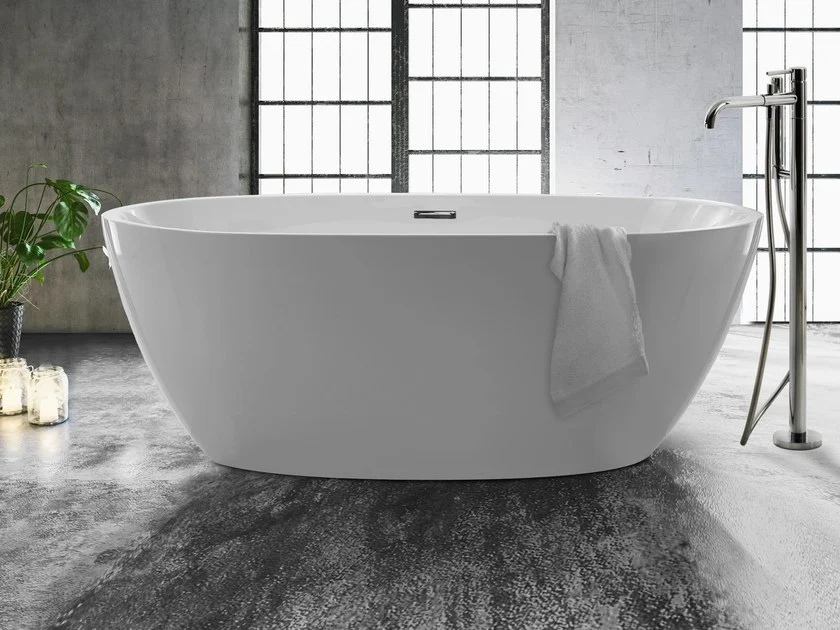
Stone Resin vs. Acrylic Tubs: Which Material Is Right for You?
When you’re shopping for a freestanding bathtub, the material matters just as much as the shape or size. It changes
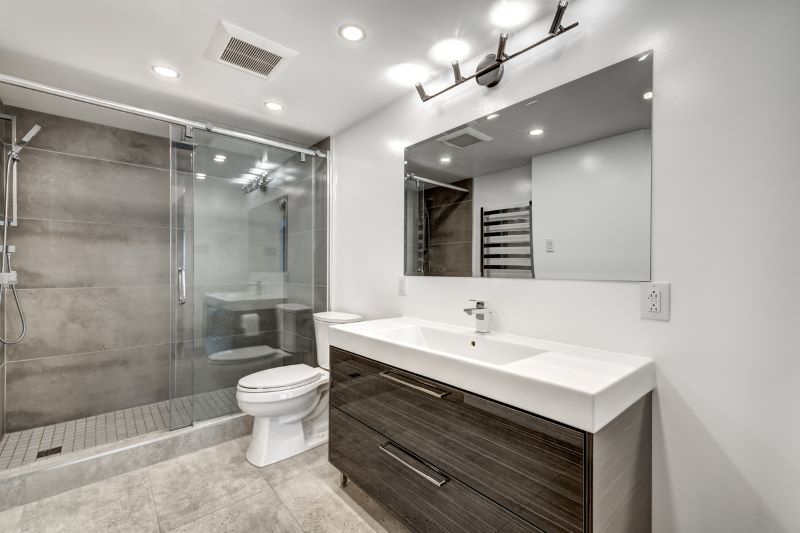
If you are looking to upgrade your bathroom, few changes make as big of an impact as a new vanity. It is the piece that ties the room together. It holds your sink, hides the plumbing, stores your everyday essentials, and sets the entire look and feel of the space.
But with so many sizes, styles, and materials out there, choosing the right one can feel overwhelming. This guide is here to simplify things. We will walk you through sizing, materials, the latest design trends for 2026, realistic cost expectations, and practical installation advice so you can pick the vanity that actually works for your bathroom and your life.

A bathroom vanity is the cabinet or furniture piece that sits under your sink. It gives you a countertop surface, storage underneath, and a clean way to hide plumbing pipes. Vanities come in all sizes, from compact wall-hung models that are just 18 inches wide up to full double-sink setups stretching past 72 inches.
What has changed in recent years is how much more vanities do. According to a Houzz survey, 62% of homeowners doing bathroom renovations now go with custom or semi-custom vanities. People are adding soft-close drawers, built-in electrical outlets, and tailored organizers. The vanity is no longer just a box under a sink. It is closer to a well-designed piece of furniture built around how you actually use your bathroom every morning.
Bathroom renovations are consistently one of the highest-return home improvement projects. National data from Zillow’s 2026 analysis puts the average midrange bathroom remodel at around $26,000 with roughly a 60 to 80 percent return on investment at resale. And the vanity is usually the first thing buyers notice when they walk into a bathroom.
Beyond the numbers, a good vanity just makes daily life better. It keeps your countertop clear, your morning routine organized, and turns a purely functional room into something that feels a little more like a retreat. Bathrooms in 2026 are being designed more and more as personal wellness spaces, and the vanity sits right at the center of that idea.
The NKBA (National Kitchen and Bath Association) published its 2026 Bath Trends Report based on feedback from nearly 700 industry professionals. Here is what is actually driving vanity design this year.
Wood-faced vanities have overtaken painted cabinets as the most popular finish. Natural walnut, white oak, and teak bring warmth and texture that feel right at home with the broader move toward nature-inspired color palettes. Fluted and reeded wood panels, the kind that create subtle shadow lines along the front of the vanity, are one of the most talked-about details going into 2026.
Vanities increasingly look more like standalone furniture than built-in bathroom cabinets. Think tapered legs, open lower shelves, and bases that could pass for a sideboard in a living room. HGTV designers have also pointed out a growing trend where homeowners are ditching the traditional double vanity in favor of two separate singles placed on opposing walls for a more intentional, boutique-hotel feel.
Cool grays and bright whites are fading. The NKBA reports that off-white is now favored by 58% of designers, light brown and tan by 54%, and sage green by 64%. Bolder cabinet colors like deep emerald, navy, terracotta, and olive are showing up more often, especially for homeowners who want their bathroom to have real personality.
Technology is becoming a seamless part of vanity design. In-drawer USB-C charging ports, LED lighting that turns on when you open a drawer, anti-fog mirrors with adjustable warmth settings, and touchless faucets are all gaining traction. The NKBA found that 91% of designers now consider lighting quality a top priority, and integrated vanity and mirror lighting is expected to keep growing.
This one is a real shift. Designers are choosing materials specifically for their low environmental impact: recycled composites, reclaimed wood, and responsibly sourced stone. The thinking in 2026 is simple. If you build something well enough that you do not have to replace it for 15 or 20 years, that is better for the environment and better for your wallet.
Polished chrome is losing ground. Brushed brass, satin gold, matte black, and aged bronze are the finishes dominating vanity hardware right now. They hide fingerprints better, cut glare, and add warmth. A good rule from designers: pick one metal finish and repeat it across your faucet, drawer pulls, and light fixtures for a pulled-together look.
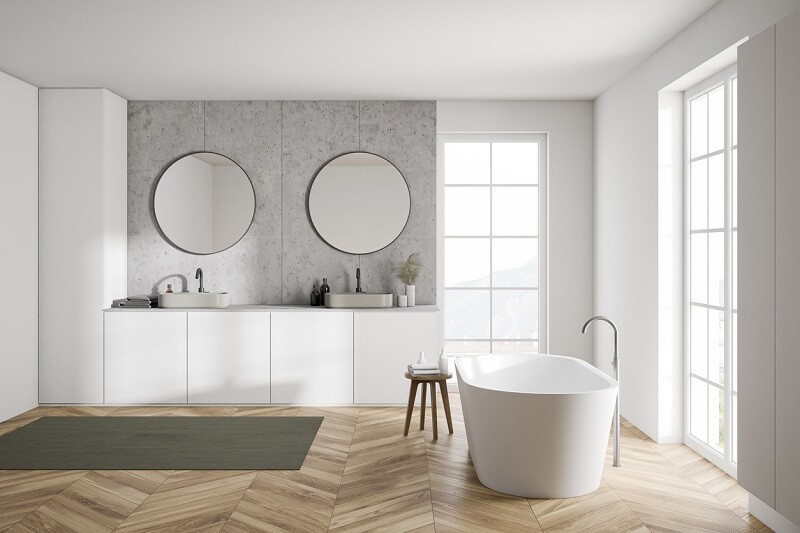
Before you fall in love with a vanity online, measure your bathroom. Check door swing clearances for both the entry door and shower, locate your existing plumbing, note where electrical outlets and switches sit, and remember that building code requires at least 18 inches from the cabinet edge to the center of the toilet.
Pro tip: Take a photo of your plumbing rough-in and measure exactly where the drain sits from each side wall. This one step can save you hundreds in installation costs because your new vanity will actually line up with existing pipes.
Picking the right size comes down to your bathroom’s footprint, your storage needs, and how many people share the space. Here are the standard dimensions:
| Dimension | Small | Standard | Large |
| Width | 18 to 24 in. | 30 to 48 in. | 60 to 84 in. |
| Height | 31 to 32 in. | 32 to 34 in. | 34 to 36 in. |
| Depth | 12 to 15 in. | 17 to 21 in. | 21 to 24 in. |
| Best For | Powder rooms, half baths | Guest baths, family baths | Primary ensuites |
A note on depth: In narrower bathrooms, a deep vanity can block traffic flow and make the whole room feel tight. Most designers would rather see you go with a slightly slimmer vanity that has smarter drawer storage than try to force a deeper cabinet into a space where it does not belong.
Comfort height matters: The old standard of 31 inches was set decades ago. Taller adults are increasingly going with “comfort height” vanities at 34 to 36 inches to reduce back strain during everyday use. If kids also use the bathroom, a simple step stool solves the height gap without compromising comfort for adults.
Single Vanity
Supports one sink with storage underneath. Great for smaller bathrooms, powder rooms, and guest baths. Available from 18 to 48 inches wide. Single vanities are the most versatile option and work well in just about any bathroom layout.
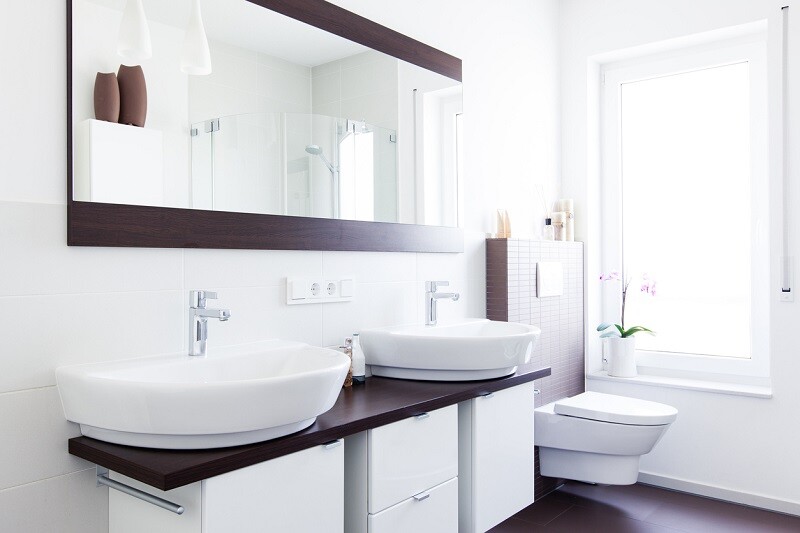
Double Vanity
Holds two sinks and is the go-to for primary bathrooms shared by couples or families. Usually 60 to 72 inches wide, these give you generous counter space and separate storage on each side. One interesting shift in 2026: some designers are swapping the traditional double vanity for a pair of singles on opposing walls, which creates a more curated, boutique-hotel feel.
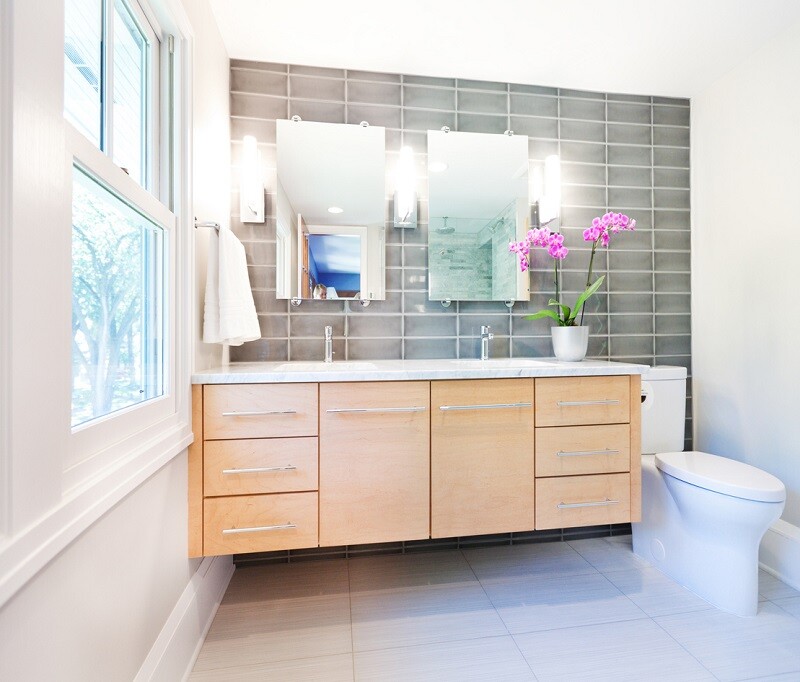
Floating (Wall-Mounted) Vanity
These mount directly to the wall and leave the floor exposed underneath. That open space makes the room look bigger and cleaning a lot easier. They are a top pick for modern and minimalist bathrooms, especially smaller ones. Just keep in mind that floating vanities need proper wall blocking during installation for structural support.
Corner Vanity
Built to tuck into a corner, these units are a lifesaver for tight powder rooms and half baths where every inch of floor space counts. Storage is more limited than a standard vanity, but they turn otherwise dead space into something useful.
Console Vanity
An open-leg design that looks more like a table than a cabinet. Console vanities trade enclosed storage for an airy, elegant look. They pair well with vessel sinks or wall-mounted faucets and are popular in transitional and boutique-style bathrooms.
Freestanding Furniture-Style Vanity
Repurposed dressers, antique chests, or purpose-built furniture pieces used as a vanity base. This approach brings one-of-a-kind character, supports sustainability through reuse, and works beautifully with vessel or countertop sinks. The furniture-style vanity keeps gaining fans in 2026 as more homeowners look for pieces with real personality.
Your vanity’s style should fit your bathroom’s overall look and complement your home’s architecture. Here are the most common style families:
Center-Wall Position: The most common placement. Centering the vanity on the main wall turns it into a natural focal point and is the most convenient setup for everyday use, especially when paired with a centered mirror and balanced lighting on each side.
Corner Position: Works best in compact bathrooms where you want the vanity out of the main traffic path. Not great for bathrooms with heavy daily use, but a smart choice for powder rooms and half baths.
His-and-Hers Split Layout: A newer approach gaining popularity in 2026. Two separate vanities go on opposing walls or flank a doorway, giving each person their own dedicated zone while adding some nice architectural symmetry to the room.
What your vanity cabinet is made of determines how well it holds up against moisture, daily wear, and the test of time.
| Material | Pros | Cons | Best For |
| Solid Wood (Oak, Maple, Walnut) | Highly durable, beautiful grain, long lifespan, holds up well in humidity when sealed properly | Expensive, heavy, needs a quality finish to resist moisture | Primary baths, luxury renovations |
| Plywood | Strong, moisture-resistant, affordable, easy to work with | Needs a veneer finish, quality varies by grade | Mid-range builds, most bathroom types |
| MDF (Medium-Density Fiberboard) | Smooth surface that paints well, budget-friendly | Swells when exposed to moisture, shorter lifespan | Budget renovations, low-humidity rooms |
| Particle Board | Cheapest option, widely available | Warps in humidity, low durability, cannot support heavy tops | Temporary setups or very tight budgets |
| PVC/Waterproof Composites | Completely moisture-proof, mold-resistant, lightweight | Does not feel as premium, fewer finish options | Wet environments, kids’ bathrooms |
Your countertop choice affects both how the vanity looks and how much upkeep it needs day to day. Here is how the most popular options stack up:
| Material | Cost/sq. ft. | Durability | Maintenance | 2026 Trend Status |
| Quartz | $50 to $200 | Harder than granite, non-porous, stain-resistant | Low. No sealing required | Top pick for modern baths |
| Granite | $5 to $60 | Extremely hard, heat-resistant | Medium. Needs annual sealing | Classic, lasting appeal |
| Marble | $40 to $100 | Durable, handles heat, gorgeous veining | High. Prone to stains and scratches, needs sealing | Honed/matte finishes are trending |
| Solid Surface | $40 to $100 | Seamless look with sink, repairable | Low. Minor scratches buff out easily | Growing in modern builds |
| Concrete | $65 to $135 | Very strong, unique handmade look | Medium. Needs sealing, heavy | Niche, industrial style |
| Laminate | $10 to $53 | Lightweight, wide variety of designs | Low. Easy to wipe clean | Budget-friendly staple |
2026 designer tip: Honed and matte-finish countertops are trending over high-gloss polished surfaces right now. They show fewer water spots, feel more organic to the touch, and fit nicely with the broader “texture over shine” direction in bathroom design.
Color is becoming a more personal and emotional choice in bathroom design. The 2026 palette is moving away from cool neutrals and toward warmer, more expressive tones. Here is what is shaping vanity color choices this year:
A simple color pairing guideline: Lighter vanity colors open up small spaces. Darker tones add warmth and depth to larger rooms. Match your hardware metal to the temperature of your vanity color. Warm metals like brass and gold go with warm cabinet tones. Cool metals like nickel and chrome complement cooler palettes.
One of the most common questions, and the answer depends on a few things. Here is a realistic breakdown of what U.S. homeowners are spending in 2026:
| Category | Typical Range | Notes |
| Prefabricated vanity (unit only) | $100 to $2,600 | Cabinet included; some come with sink and top |
| Custom vanity (unit only) | $500 to $3,000+ | Built to your exact specs |
| Installation labor | $100 to $1,000 | Basic swap with no plumbing changes |
| Full replacement (with plumbing work) | $665 to $3,300 | Covers removal, plumbing, and install |
| National average (all-in) | Around $1,500 | Vanity unit plus standard installation |
| Old vanity removal | $115 to $500 | Stone or heavy countertops cost more to remove |
| New plumbing (if relocating) | $400 to $2,200 | You can avoid this by keeping the existing layout |
| Backsplash addition | $2 to $30 per sq. ft. | Ceramic is the budget pick; glass and marble cost more |
How to keep costs down: Choose a vanity that matches your existing plumbing layout so you do not pay for pipe relocation. The 48-inch and 60-inch widths are the most common in U.S. bathrooms and usually fit existing footprints without additional work. Prefabricated vanities that come with a countertop and sink already included give you the best value for a straightforward swap.
Your sink should work with your vanity’s style, not against it. Undermount sinks give you a seamless, easy-to-clean look that suits modern vanities. Vessel sinks (the kind that sit on top of the counter) add sculptural interest and work with nearly any vanity style. One trend picking up in 2026 is full stone basin sinks carved from a single piece of natural stone, which are showing up as a luxury statement piece. Farmhouse sinks with an apron front pair naturally with rustic and transitional vanities.
Faucets set the finishing tone for your vanity area. Wall-mounted faucets free up counter space and give a clean, modern look. Widespread faucets add a more traditional feel. Single-hole faucets are the most versatile and easiest to install. Touchless and motion-sensor faucets are gaining popularity in 2026 for both hygiene and convenience. In terms of budget, expect to pay $60 to $120 for basic models, $130 to $250 for mid-range options, and $300 to $600 or more for designer picks.
A mirror does more than let you check your reflection. In 2026, backlit LED mirrors with anti-fog coatings and adjustable color temperatures are quickly replacing basic plate mirrors. Some smart mirrors even include small displays for weather or time. For lighting, the best approach is layered: ambient ceiling light for general brightness, task lights at the vanity for grooming, and accent lighting to add depth and highlight design details.
Good storage is what separates a vanity you tolerate from one you love. Soft-close drawers have become the standard (81% of renovating homeowners add them, according to Houzz). Built-in organizers, pull-out trays, and tiered shelf inserts keep everything visible and easy to reach. For 2026, look for vanities with in-drawer electrical outlets (about 33% of homeowners are adding these now) and dedicated spots for hair tools, charging cables, and skincare products.
If you are doing a simple swap (same size, same location, no plumbing changes), this is a realistic DIY project for someone with basic tools and a free weekend. You will save $100 to $1,000 in labor.
That said, there are times when it is worth calling a professional. Relocating plumbing, installing a floating vanity that requires wall blocking and precise leveling, adding electrical for built-in outlets, or dealing with heavy stone countertops are all situations where a pro will save you headaches. Get at least three quotes from licensed, insured contractors before committing.
Before you start: Shut off the water supply valves. Disconnect plumbing. Pull out all drawers and doors to lighten the unit. Lay down drop cloths to protect your flooring. And if you are going with a wall-mounted vanity, confirm that your wall has the structural support to handle it before you commit to the design.
What is the most popular vanity size in 2026?
The 48-inch and 60-inch widths are still the most common in U.S. bathrooms because they fit standard layouts without needing wall or plumbing changes. For single-sink vanities, the 30 to 36 inch range is the sweet spot.
Can floating vanities handle heavy countertops?
Yes, as long as they are installed correctly. Floating vanities can support stone and quartz countertops, but the wall behind them needs structural reinforcement. That usually means 2×6 blocking or a full plywood backer installed before the vanity goes up.
How long should a good vanity last?
A solid wood or high-grade plywood vanity with a durable countertop can easily last 15 to 25 years with basic care. Particle board vanities in humid environments, on the other hand, often need replacing within 3 to 5 years. Spending a little more upfront on quality materials really does pay off over time.
Is it better to buy a vanity with or without a top?
Vanities with tops included are less expensive, easier to install, and come as a coordinated set. Buying the top separately gives you more control over the exact countertop material, edge profile, and sink style, but it adds complexity and may require professional fabrication. If you are doing a straightforward replacement, the bundled option usually makes more sense.
What vanity finish is most popular for 2026?
Natural wood finishes, especially white oak, walnut, and teak, have moved ahead of painted cabinets as the top choice. For painted options, sage green, warm off-white, and deep navy are leading the pack.
The best vanity is not just one that looks great right now. It is one you will still be happy with 10 or 15 years down the road. Start with accurate measurements, choose materials that are built for bathroom conditions, and go with a style that fits your home rather than chasing whatever is trending this month.
In 2026, the most satisfying vanity choices tend to combine warm, natural materials with smart storage and thoughtful technology. Whether you are working with a small powder room or designing a full spa-style primary bath, the right vanity can completely change how your bathroom looks and how it feels to use every single day.

Eric is the founder and president of Badeloft USA. He has been the president of Badeloft’s US division for over ten years and oversees all marketing and branding aspects of Badeloftusa.com.
His expertise lies in small business development, sales, and home and bathroom industry trends and information.
Contact us with any business related inquiries.
Badeloft is dedicated to helping homeowners make informed decisions about their bathrooms. We adhere to strict editorial guidelines to ensure our content is accurate, trustworthy, and useful.
Request free stone resin and stainless steel material samples. Delivered to your door.
When you’re shopping for a freestanding bathtub, the material matters just as much as the shape or size. It changes
When remodeling your home, you may struggle finding which bathroom size is appropriate for your home. The full sized bathroom
Today’s bathtub choices are plentiful with a host of styles, shapes, sizes, and materials to choose. The choice often comes
Does adding a bathtub to your home increase its resale value? The short answer is yes, with many US homeowners
Request your free material sample below. By submitting, you agree to receive occasional product updates and offers from Badeloft. Unsubscribe anytime.
"*" indicates required fields