
Bathroom Remodel Costs in Illinois 2026 – Guest, Primary & Half Bath Pricing
Bathroom remodel costs in Illinois are influenced by the state’s mix of dense urban housing, aging infrastructure, and wide variation
Remodeling a bathroom in New York can transform an outdated space into a modern retreat while adding value to your home. Costs in the Empire State vary widely because of differences in city sizes, housing stock, and local labor rates. Urban areas like New York City and parts of Long Island command some of the highest prices in the country due to dense housing, co‑op/condo regulations, and premium labor. Upstate cities and smaller towns generally offer more affordable remodeling rates, though scope, materials, and layout changes still have a big impact on the total budget. Understanding the typical ranges by location and project type will help you set realistic expectations before contacting contractors.
Across New York in 2025, bathroom remodel projects can cost anywhere from $3,000 for a minor refresh to $75,000+ for a luxury master suite. Prices are shaped by factors such as the size of the bathroom, whether you’re moving plumbing or electrical lines, and your choice of materials. The following sections break down costs by major New York markets, outline common project types, explain what drives pricing, and offer tips on finding the right contractor and financing options.
Because costs differ significantly between downstate and upstate regions, your budget will largely depend on where you live. High‑demand coastal markets often see starting prices well above national averages, while inland cities offer better value. The next section provides a city‑by‑city overview of bathroom remodel costs across New York State in 2025.
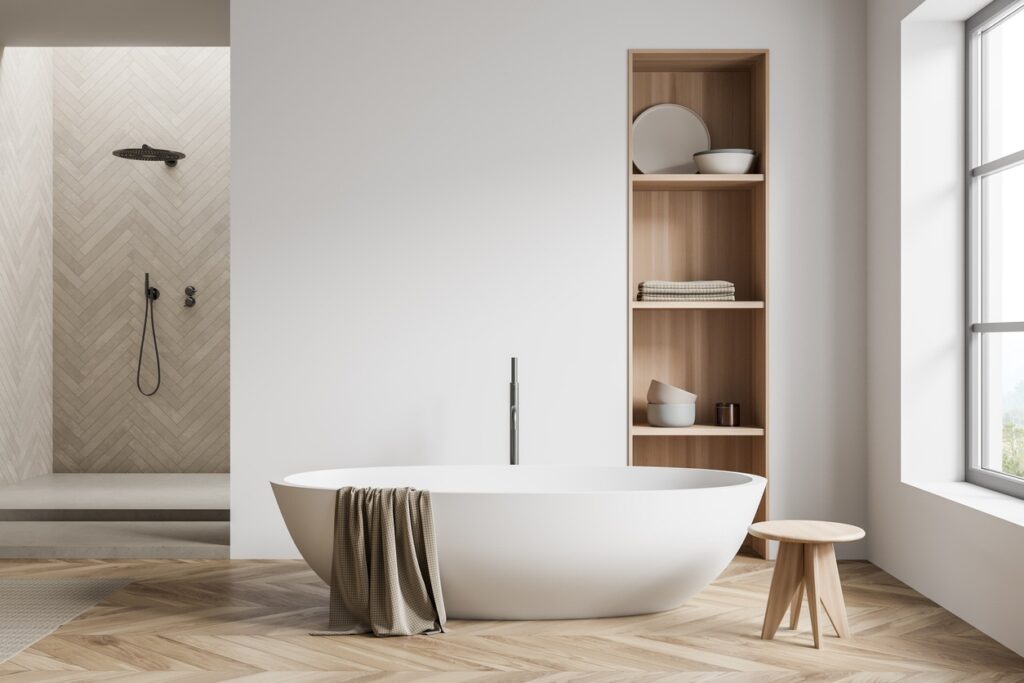
Bathroom remodel pricing in New York is heavily influenced by local labor rates, permitting rules, and housing stock. Dense metropolitan areas require more logistics, building approvals, and often union labor, which drive up costs. In contrast, smaller upstate cities benefit from lower contractor rates and fewer co‑op or condominium restrictions. Below is an overview of what homeowners typically spend in the state’s major markets.
Bathroom remodels in New York City are among the most expensive in the country. A basic refresh with cosmetic updates typically costs $8,000 – $15,000, while a full renovation runs $15,000 – $25,000 and high‑end luxury remodels range from $30,000 – $75,000+. These prices are 30–50 % higher than the national average and reflect NYC‑specific expenses such as building permits ($500–$3,000), co‑op/condo board fees ($500–$2,000), freight‑elevator charges and after‑hours labor premiums. Hidden costs like structural repairs, plumbing updates, and mandatory insurance also add to the final bill. Homeowners should budget extra time for permitting and expect contractors to charge premium hourly rates for plumbers ($150–$250/hr) and electricians ($125–$200/hr).
Long Island and Westchester County represent some of New York’s most affluent remodeling markets, with pricing that rivals or exceeds Manhattan. Sweeten’s 2025 cost guide notes that a budget full bathroom renovation on Long Island starts around $18,025 – $18,725+, a mid‑grade renovation begins at $27,810 – $28,890+, and high‑end projects start at $40,170 – $41,730+. Westchester County estimates show starting costs of $8,500 for a budget full renovation and $14,500 for mid‑grade work, but mid‑range remodels typically run $15,000 – $30,000 and luxury projects exceed $50,000. In upscale areas like Scarsdale, mid‑range bathroom remodels cost $25,000 – $40,000+ and luxury master suites can reach $50,000 – $90,000+. Co‑op board approvals, strict building codes and high demand for custom materials all contribute to elevated pricing.
Buffalo offers some of the state’s most affordable bathroom remodel costs. According to Homeyou’s 2025 cost survey, the typical bathroom remodel in Buffalo ranges from $9,606 – $13,266, though total costs can vary from $4,113 – $20,010 depending on size and scope. Minor repairs or refreshes focusing on essential fixtures can be completed for $3,000 – $7,000, while full remodels with new plumbing, tile, and fixtures generally fall between $9,000 – $13,000. Because Buffalo’s labor rates are lower than those in downstate markets, homeowners can often achieve high‑quality results for a fraction of what similar projects cost in NYC or Long Island.
In Rochester, bathroom remodels typically cost $9,498 – $13,117, according to Homeyou’s pricing data. Project totals may be as low as $4,067 for modest updates or as high as $19,786 for more extensive work. An average remodel is around $9,000, with simple remodels (vanities, fixtures, and flooring) costing $3,000 – $7,000. Rochester homeowners often benefit from competitively priced labor and a wide selection of local contractors, making it easier to stay within budget.
The capital city offers similarly moderate pricing. Homeyou reports that bathroom remodels in Albany usually fall between $8,376 – $11,568, with possible ranges from $3,586 – $17,449 based on project complexity. Basic remodels that focus on repairing or replacing key components can cost $3,000 – $7,000, whereas more comprehensive updates with new plumbing, tile, and fixtures tend to hover around the $9,000 mark. Lower labor costs and fewer permitting hurdles make Albany an appealing market for homeowners seeking high‑quality results without the downstate price tag.
Upstate communities like Syracuse, Binghamton, and Utica generally offer the most cost‑effective bathroom remodels in New York. Bath Pros, a Syracuse‑based remodeler, notes that basic tub or shower insert projects start around $7,000 and high‑end full‑scale transformations can exceed $40,000. A “wet space” remodel—upgrading only the tub or shower area—typically costs $9,000 – $15,000+, while a complete cosmetic update without moving plumbing runs $12,000 – $25,000, with most jobs landing between $15,000 – $20,000. Extensive renovations that involve expanding the bathroom or relocating fixtures start around $20,000 and can exceed $50,000. Because labor rates are lower and homes are often newer than downstate housing stock, upstate homeowners can achieve luxury finishes at prices far below those of Long Island or NYC.
Once you understand typical costs across New York’s cities, the next step is choosing the right type of bathroom remodel for your needs and budget. Some projects focus on cosmetic updates, while others involve gutting the room and reconfiguring its layout. The following section describes common types of bathroom remodels and what they usually cost in New York.
Bathroom remodel projects range from quick surface updates to full gut renovations, each with its own price tag and scope. In New York, costs tend to be higher than the national average but vary widely depending on location, bathroom size, and materials. Understanding these project types will help you decide how far to go with your remodel and how to allocate your budget.
A partial bathroom remodel focuses on updating specific elements—such as vanities, fixtures, lighting, or a single wet area—without changing the entire layout. This approach is ideal for homeowners who want a fresh look without committing to a major renovation. In New York, partial remodels generally cost $5,000 – $18,000, with downstate projects at the higher end. Upstate homeowners may spend closer to $7,000 – $15,000 for upgrades like a new vanity, toilet, and shower surround. Because plumbing and electrical systems remain largely intact, these projects typically have shorter timelines and lower labor costs.
A full bathroom remodel involves removing most or all existing fixtures, finishes, and sometimes drywall to create a completely new space. This type of project allows for fresh plumbing, updated electrical systems, and new layout configurations. Costs in New York range from $15,000 – $45,000+ for standard full bathrooms, with NYC, Long Island, and Westchester often exceeding $50,000 due to high labor and permitting fees. Upstate full remodels are more affordable, starting around $20,000 and topping out at $40,000. Homeowners should budget extra for potential structural repairs or code upgrades uncovered during demolition.
Primary bathrooms (also called master bathrooms) are the largest and most customized bathroom spaces, typically featuring double vanities, walk‑in showers, freestanding tubs, and premium materials. In New York City and affluent suburbs, luxury primary bathroom remodels range from $35,000 – $90,000+, especially when custom tile, heated floors, or built‑in storage are included. More modest primary bathroom remodels in upstate cities generally cost $25,000 – $60,000, depending on finishes and whether plumbing is relocated. Because these spaces are often focal points in a home, homeowners tend to invest in high‑quality fixtures and materials that enhance both comfort and resale value.
Guest bathrooms are usually smaller and less complex than primary baths, making them more budget‑friendly. These projects commonly involve replacing a vanity, toilet, tub/shower combination, and flooring without major layout changes. In New York, guest bathroom remodels typically range from $8,000 – $25,000, with NYC and Long Island trending toward the higher end and upstate cities falling closer to $10,000 – $20,000. Selecting durable yet affordable materials can help keep costs in check while still achieving a stylish, updated space.
After determining which type of bathroom remodel fits your goals, it’s important to understand the factors that influence pricing. Everything from the size of your bathroom to the materials you choose can affect costs. The next section explores these factors in detail, so you can plan a budget that reflects your specific project.
Several key factors determine how much you’ll spend on a bathroom remodel in New York. By understanding each element—size, materials, plumbing/electrical work, labor rates, and location—you can make choices that align with your budget and avoid surprises during construction.
The square footage and existing layout of your bathroom play a significant role in determining price. Larger bathrooms require more tile, flooring, fixtures, and lighting, which increases material and labor costs. Layout changes—such as relocating a toilet, tub, or shower—also add to the budget because plumbing lines and electrical wiring must be moved. In historic New York homes, tight or unusual layouts may require additional framing work or structural modifications, further driving up costs. Keeping the current footprint is one of the most effective ways to control spending and shorten project timelines.
Material and fixture choices can quickly swing your project cost from economical to extravagant. Budget‑friendly options—like standard toilets ($200–$500), basic vanities ($400–$1,200), and ceramic tile ($3–$8 per sq. ft.)—help keep expenses in check. Premium selections—such as luxury toilets ($1,500–$5,000), custom vanities ($2,500–$8,000), freestanding tubs ($1,500–$6,000), and natural stone tile ($15–$50 per sq. ft.)—can dramatically increase the total. In high‑end markets like Manhattan and the Hamptons, homeowners often opt for imported stone, designer fixtures, and custom cabinetry, pushing budgets upward. Upstate homeowners may choose durable yet cost‑effective materials like cultured stone or porcelain tile.
Older New York homes may need plumbing and electrical upgrades to meet current building codes. Updating pipes, adding GFCI outlets, or installing new ventilation systems can add several thousand dollars to your project. In NYC and Long Island, hourly rates for plumbers ($150–$250) and electricians ($125–$200) are significantly higher than upstate rates. Relocating fixtures also requires more labor and may involve structural work. Planning for these expenses early helps prevent budget overruns and ensures your bathroom is safe and compliant.
Labor typically accounts for 40–60 % of total bathroom remodel costs in New York. Experienced contractors and specialized tradespeople command higher rates, especially in NYC and Westchester where union labor and building restrictions are common. While it may be tempting to choose the lowest bid, skilled professionals deliver higher‑quality workmanship, adhere to local codes, and complete projects on schedule. In upstate markets, competitive labor rates and a larger pool of contractors often lead to lower overall costs and shorter wait times.
Where you live has a profound impact on your bathroom remodel budget. Downstate areas—especially Manhattan, Brooklyn, Long Island, and Westchester—have higher contractor rates, stricter permitting rules, and added costs for co‑ops or condos, leading to higher overall prices. Upstate cities like Buffalo, Rochester, and Albany offer more affordable labor and materials, allowing homeowners to achieve similar finishes for less. Additionally, rural counties may have fewer building restrictions and faster permit approvals, which can expedite projects and reduce carrying costs.
Knowing what drives bathroom remodel costs helps you plan a realistic budget and choose materials wisely. However, the success of your project also depends on selecting a qualified professional who understands local building codes and can manage complex logistics. The next section explains how to choose the right contractor for a bathroom remodel in New York.
Selecting the right contractor is crucial for ensuring your bathroom remodel is completed safely, on time, and within budget. In New York, licensing requirements vary by city and county, so it’s essential to verify credentials and track records before signing a contract. A reputable contractor will also help navigate permitting, co‑op board approvals, and building logistics unique to your area.
New York does not issue a statewide general contractor license; instead, home‑improvement contractors must be licensed locally. The New York Attorney General advises that contractors must be licensed in New York City, Suffolk, Nassau, Westchester, Putnam, Rockland counties, and the City of Buffalo. Before hiring, check your county’s consumer affairs office or the NYC Department of Buildings database to confirm a contractor’s license and insurance. Also request proof of general liability and workers’ compensation insurance to protect yourself from liability during the project. Hiring an unlicensed contractor can lead to costly fines, poor workmanship, and difficulty obtaining permits.
A contractor’s portfolio showcases their design ability, craftsmanship, and attention to detail. Ask to see before‑and‑after photos of previous bathroom projects, paying close attention to tile work, plumbing connections, and finish quality. Look for projects similar in size and style to your own bathroom—particularly if your home is historic or part of a co‑op/condo building. Reading customer testimonials and contacting references can further confirm a contractor’s reliability and professionalism.
Collecting at least three detailed quotes helps you compare pricing, scope, materials, and timelines. An itemized estimate should include labor, materials, permit fees, and contingencies. Be wary of bids that are significantly lower than others, as they may omit important elements or indicate inexperienced workmanship. Comparing quotes ensures you select a contractor who offers a fair price while still delivering the quality you expect.
Discuss a contractor’s installation techniques—especially waterproofing practices, plumbing connections, and tile setting methods—to ensure durability. Reputable professionals should be able to explain which waterproof membranes, backer boards, and sealants they use, and why. Ask about preferred fixture brands and materials, and whether they source eco‑friendly or low‑VOC products. Understanding these details helps you evaluate quality and make informed decisions about upgrades like heated floors or specialized ventilation.
Online reviews and local reputation offer valuable insight into how a contractor manages communication, scheduling, and problem‑solving. Check resources like the Better Business Bureau, Google reviews, and community forums for feedback on punctuality, cleanliness, and responsiveness. In small upstate markets, word‑of‑mouth referrals from neighbors and real estate professionals can be especially helpful. A contractor with strong local relationships and positive reviews is more likely to deliver a smooth renovation experience.
With a qualified contractor and a clear understanding of your project scope, the next step is determining how to finance your bathroom remodel. Many homeowners use loans, credit lines, or promotional credit cards to spread out the cost of large remodels. The following section explores the most common financing options available to New York homeowners in 2025.
Bathroom remodels can be expensive, and many New York homeowners use financing to manage costs. The right loan or credit program allows you to spread payments over time while still moving forward with your project. Below are common financing options and what to consider with each.
Home improvement loans are unsecured personal loans specifically designed for remodeling projects. They provide a lump sum with fixed interest rates and predictable monthly payments, typically over three to seven years. Because approval is based on credit and income rather than home equity, these loans are accessible to homeowners with little equity or those in co‑op buildings. Interest rates may be higher than equity‑based loans, but funds are often disbursed quickly, making them ideal for projects with tight timelines.
Many bathroom contractors and big‑box retailers offer in‑house financing programs. These plans may include low or zero‑interest promotional periods, deferred payments, or bundle pricing when you purchase fixtures and installation through the same provider. Be sure to read the fine print—APR rates often rise sharply after the promotional period ends, and some plans carry fees. Comparing contractor financing with other loan options helps you determine the best overall value.
A home equity line of credit lets you borrow against the equity in your home, often at lower interest rates than personal loans. HELOCs function like credit cards: you can draw funds as needed during a draw period, then repay over a set term. Because property values in New York—especially downstate—have grown significantly, many homeowners have substantial equity to tap. However, your home serves as collateral, so failure to repay could lead to foreclosure. Variable interest rates mean your payment could rise over time.
For smaller bathroom remodels or partial upgrades, credit cards offering 0 % APR for an introductory period can be a convenient option. These cards allow you to finance materials and labor without interest if you pay off the balance before the promotional window ends. This approach works well for partial remodels or when paired with other financing sources. Just be sure to plan your repayment schedule carefully, as interest rates after the introductory period can be high.
With financing options clarified, the next logical question is whether a bathroom remodel offers a worthwhile return. In a state with high property values and competitive real estate markets, the answer often depends on your goals and market location. The following section discusses the investment potential of bathroom remodels in New York.
Investing in a bathroom remodel typically yields strong returns in New York, thanks to the state’s high property values and buyer demand for updated homes. In NYC and affluent suburbs, updated bathrooms can significantly boost resale appeal and help a property stand out in competitive markets. Upstate homeowners also see notable benefits: a modern, functional bathroom enhances day‑to‑day comfort and positions a home more favorably when selling. While luxury remodels may have a lower percentage return than mid‑range updates, they often contribute to faster sales and higher asking prices. Regardless of location, focusing on quality materials, timeless design, and functional improvements maximizes both personal enjoyment and long‑term value.
If your bathroom replacement involves upgrading the bathtub, Badeloft USA offers premium stone‑resin tubs that combine durability with modern design. Their freestanding bathtubs retain heat longer than acrylic and resist surface wear, delivering a spa‑like experience at home. Badeloft’s selection includes a variety of shapes, sizes, and finishes, making it easy to find a tub that suits both compact guest baths and spacious primary suites. For homeowners in New York’s high‑cost markets, investing in a quality tub can enhance everyday comfort and add a distinctive focal point to the room. Upstate homeowners appreciate that Badeloft tubs offer luxury aesthetics at a competitive price point, providing lasting value that complements any style of bathroom replacement.

Eric is the founder and president of Badeloft USA. He has been the president of Badeloft’s US division for over ten years and oversees all marketing and branding aspects of Badeloftusa.com.
His expertise lies in small business development, sales, and home and bathroom industry trends and information.
Contact us with any business related inquiries.
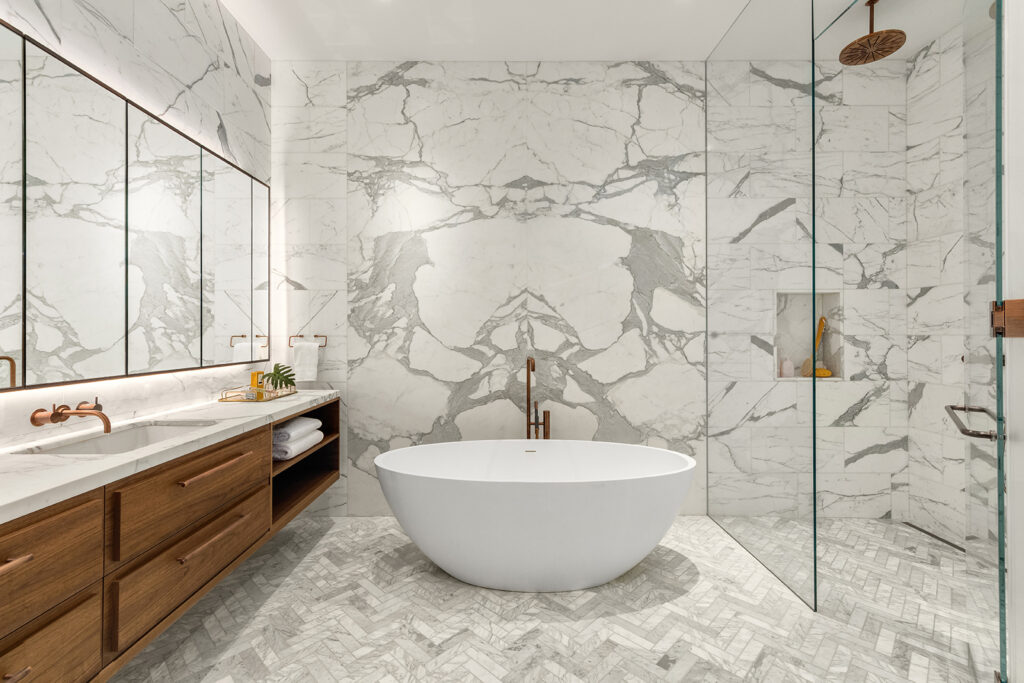
Free material samples and tub templates
Bathroom remodel costs in Illinois are influenced by the state’s mix of dense urban housing, aging infrastructure, and wide variation
Bathroom remodel costs in Pennsylvania are shaped by the state’s older housing stock, diverse regional economies, and wide variation between
Bathroom remodel costs in Ohio are shaped by the state’s older housing stock, moderate labor rates, and significant variation between
Remodeling a bathroom breathes new life into your home, turning a functional space into a comfortable and relaxing retreat—but it
"*" indicates required fields
"*" indicates required fields
Request your free material sample below. By submitting, you agree to receive occasional product updates and offers from Badeloft. Unsubscribe anytime.
"*" indicates required fields