
Choosing a Bathtub for Two: Sizes, Features, Installation & Other Considerations Before You Purchase
There’s a gap between what a freestanding bathtub listing tells you and what it actually feels like to share one.
A jack and jill bathroom is a full bath that has two or more entrances. This bathroom is typically shared by two rooms and in some cases a hallway. A jack and jill bathroom will always have two sinks and occasionally, this bathroom would be split, with each side having their own toilet and sink with only the bath being shared, but usually, all aspects of the bathroom is shared.
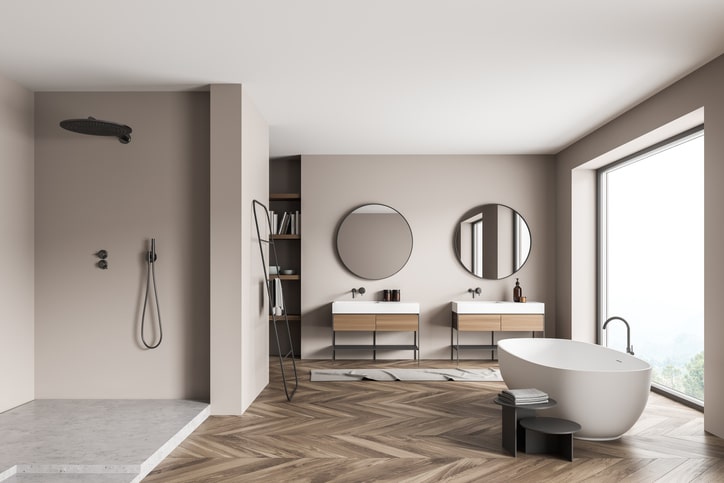
Jack and jill bathrooms became common in the 1970s as suburban home building scaled up and builders needed to give multiple bedrooms bathroom access without the cost of a full second bath per bedroom. The design was a practical compromise: one bathroom, two entry points, and the feeling of private access without the square-footage cost.
In the 1970s and 1980s, when households commonly had three or four children and master suites were smaller, this made obvious sense. The children shared, the parents had their own bath, and the house ran smoothly.
The question for 2026 is whether the conditions that made J&J bathrooms sensible still apply. In most cases, the answer is: it depends on who’s sharing.
Jack and jill bathrooms are easily identifiable with a few key characteristics. Below are all the aspects that make a jack and jill bathroom.
This is one of the most frequently asked questions about J&J bathrooms, and most design guides skip the mechanics. Here’s how it works.
The standard solution is a privacy lock on each door with an indicator bolt. When someone locks the door from the inside, a visual indicator (usually a red/green or vacant/engaged marker) flips on the outside. Both bedroom-side doors show the status, so neither person needs to knock to check occupancy.
For a cleaner setup, a pocket door with a recessed privacy latch provides the same functionality without a door swing to manage. In tight bathrooms, pocket doors make a meaningful difference in how usable the space feels day-to-day.
One installation detail worth getting right: the locks on each door should be keyed so a parent or caretaker can override them from outside. Standard interior privacy locks can be opened with a coin or a flathead screwdriver. In a house with young children, that matters.
Jack and jill bathrooms are a great option for those with large families as they help to save space while still providing all users privacy.
Here are some pros and cons of jack and jill bathrooms.
The configuration earns its footprint in specific situations.
Families with two children, roughly the same age, sharing a floor. This is the design’s native environment. Two kids with adjacent bedrooms, morning routines that don’t fully overlap, and a parent who doesn’t need the bathroom for themselves. In this scenario, the J&J delivers real value: both kids get direct bathroom access without a hallway, conflicts are manageable, and the house functions more smoothly than it would with a single shared hallway bath.
Homes where adding a second full bath isn’t feasible. If the floor plan doesn’t have room for a second full bathroom but there are two bedrooms that share a wall with a plumbing stack nearby, a J&J configuration may be the only way to give both rooms bathroom access. A split-function J&J is significantly better than one bedroom having no bathroom access at all.
Guest suites in larger homes. A J&J connecting a guest bedroom to a secondary bedroom gives occasional guests private bath access without permanently dedicating a full bathroom to a room that sits empty most of the year.
Jack and Jill bathrooms cause daily friction in more households than they solve problems in. Here’s when they’re the wrong choice.
Teenagers or adults sharing the space. Once kids are in high school, the morning timeline becomes a real conflict. The J&J was designed for young children with short routines. Teenagers with different schedules, longer grooming routines, and a stronger need for privacy tend to resent the configuration. If your children are within five years of high school, build the split toilet zone at a minimum, or plan to convert it later.
When one door becomes a pass-through. In practice, one bedroom tends to become the default entry point, meaning family members walk through it to access the bathroom. This destroys the privacy logic of the design and creates resentment quickly.
Rental properties and short-term use. Tenants sharing a J&J with a stranger is a reliable source of conflict. In rental contexts, a J&J is a liability, not an asset.
The short answer: the design isn’t outdated, but the context it was built for has changed.
In the 1970s and 1980s, J&J bathrooms were built for large families in modest homes where bathroom-to-bedroom ratios were constrained by cost. Today, new construction homes routinely include en-suite baths in master bedrooms and at least one full hallway bath. The cases where a J&J is the obvious choice have narrowed.
What we see in 2026 is a split. In homes with young families on a single floor with two or three bedrooms and a tight budget for additional plumbing, J&J configurations are still being built and still making sense. In premium new construction, they’re largely gone, replaced by en-suite or dedicated guest baths.
The design isn’t outdated so much as it’s become more context-specific. Whether it belongs in your home depends on the same factors it always did: who’s sharing, how long they’ll be sharing, and what the alternative is.
Resale impact depends almost entirely on how the J&J was built and who’s buying.
For families with young children buying a home, a well-designed J&J — especially a split toilet zone or double vanity layout — reads as a genuine asset. It signals that the house was designed for family life, and it adds functional bathroom access to multiple bedrooms without doubling plumbing cost.
For buyers without children or buyers evaluating the home as an investment, a J&J can read as a limitation: a bathroom that two bedrooms compete for rather than one that belongs to a single room.
The configuration matters significantly here. A fully shared J&J with a single sink and no privacy partitions can hurt resale in a market where buyers expect some functional separation. A split toilet zone with a double vanity tends to read as a thoughtful design choice regardless of buyer demographics.
If you’re selling and you have a J&J: don’t convert it unless it’s in poor condition. Stage it to emphasize the dual access and the lock mechanism. The right buyers will recognize the value.
If you have a J&J that isn’t working, you have two practical options.
Seal one door and convert to a private bath. This is the most common conversion. One bedroom entrance is closed off, drywalled over, and the bathroom becomes a private bath for one bedroom. The other bedroom loses its direct access. Cost: typically $500 to $2,000 for the door removal and wall repair, depending on whether the door framing needs to stay for structural reasons.
Convert to a hallway bath. Both bedroom doors are sealed, and a new door is cut to an adjacent hallway. This is more invasive and adds cost if plumbing relocation is involved. Cost: $1,500 to $5,000 depending on complexity.
If you’re converting because of daily conflict rather than a structural failure, consider the split toilet zone modification first. In many households, simply adding a lockable partition around the toilet resolves the friction without the cost or disruption of a full conversion.
Jack and Jill bathrooms usually vary in size and layout, depending on the needs of your home. Some are designed with small children in mind, whereas others have larger bath spaces for more privacy between both users. Although it is very common for both users to share both the bath, sinks and toilets, some are designed with separate toilets, sharing only the bath or shower. Again, there is a great deal of freedom when it comes to designing a jack and jill bathroom.
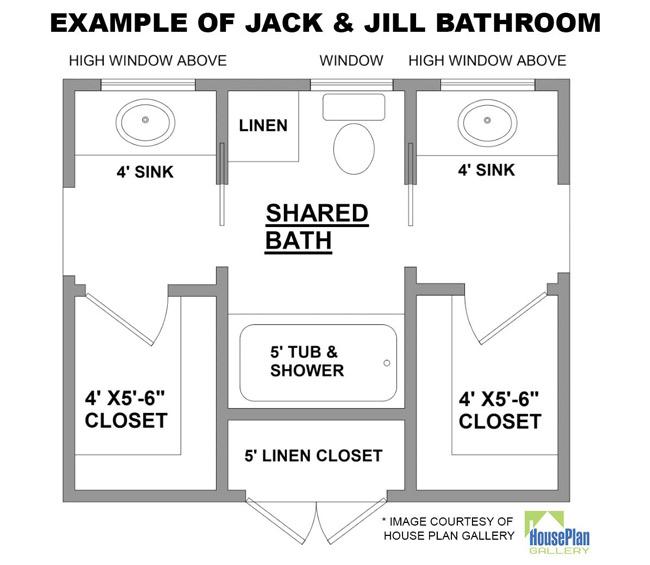
While jack and jill can have different layouts and floor plans, their dimensions are quite similar to a medium-sized full bath.
Average dimension: Around 110-164 square feet. While this may seem large, remember that this space is shared by two rooms. On average, one half of a jack and jill bath is around 84 square feet.
Small size: 40 square feet. A small jack and jill bath that fits around 40 square feet with all amenities shared.
Medium size: 110-164 square feet. A medium-sized bath allows for separate toilets and sinks, but the sink is usually shared.
Large size:165-210 square feet-The large size allows for almost two separate bathrooms and allows for ample space for both users.
A jack and jill bathroom will cost you similar to adding a full bath to your home, which is around $19-20,000. This number can increase depending on how large you want your bathroom to be as you must remember that a jack and jill bath is effectively cut in half, requiring a little more space. On average, a mid-range bathroom installation will cost anywhere from $20,000 to $50,000.
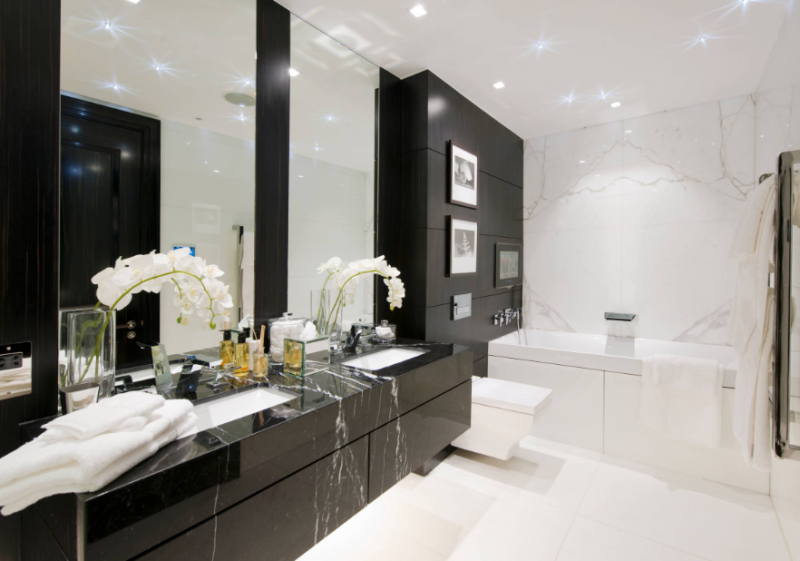
Jack and jill bathrooms are available in multiple styles. The different styles show the full range of a jack and jill bathroom, from classic & homely, to more sleek and modern designs.

Jack and jill bathrooms work best when the people sharing them are young, the routines don’t heavily overlap, and the configuration is built with some functional separation from the start. They become a source of daily friction when they’re fully shared, the users are older, or the layout creates pass-through traffic.
If you’re building: choose the split toilet zone or double vanity layout. The upfront cost is worth it.
If you’re evaluating a home that already has one: look at the configuration before forming an opinion. A well-built J&J with a double vanity and proper lock hardware is a real asset for the right household.
If you’re stuck with one that isn’t working: sealing one door is a simple, low-cost fix that converts it to a private bath without touching the plumbing.

Eric is the founder and president of Badeloft USA. He has been the president of Badeloft’s US division for over ten years and oversees all marketing and branding aspects of Badeloftusa.com.
His expertise lies in small business development, sales, and home and bathroom industry trends and information.
Contact us with any business related inquiries.
Badeloft is dedicated to helping homeowners make informed decisions about their bathrooms. We adhere to strict editorial guidelines to ensure our content is accurate, trustworthy, and useful.
Request free stone resin and stainless steel material samples. Delivered to your door.
There’s a gap between what a freestanding bathtub listing tells you and what it actually feels like to share one.
The bathtub you choose will shape how you use your primary bathroom every day for the next two decades. Not
A freestanding bathtub is the most permanent aesthetic decision in a bathroom renovation. Get the selection right and it becomes
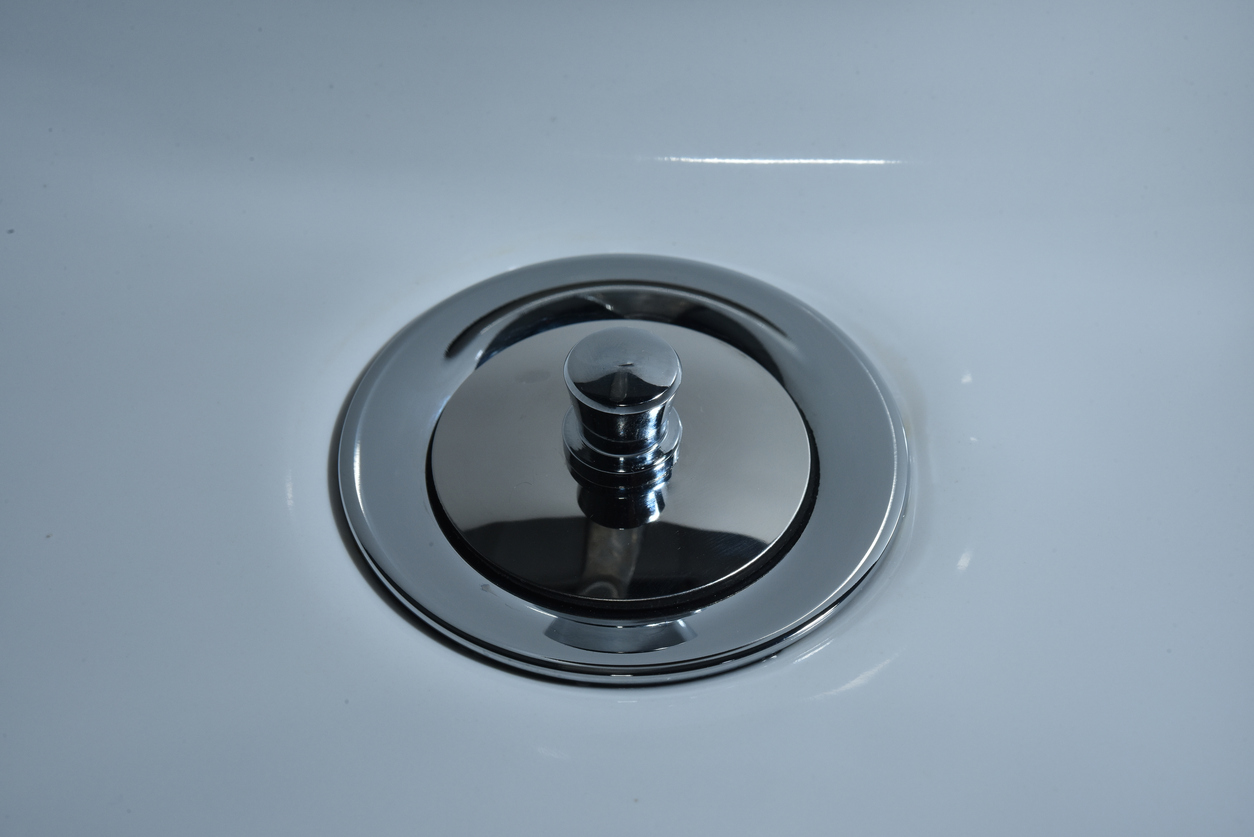
Choosing the right bathtub drain stopper is essential for creating a comfortable and functional bathing experience. With over 20 common
Request your free material sample below. By submitting, you agree to receive occasional product updates and offers from Badeloft. Unsubscribe anytime.
"*" indicates required fields