

Choosing a Bathtub for Two: Sizes, Features, Installation & Other Considerations Before You Purchase
There’s a gap between what a freestanding bathtub listing tells you and what it actually feels like to share one.
Spring is when most bathroom remodels get serious. The weather breaks, contractors open up, and that upgrade you have been thinking about since January suddenly feels like something you could actually start this month. If a heated toilet seat is on your list, you are not alone, and you are researching at the right time.
If you have ever sat down on a cold toilet seat at 6 a.m. in January, you do not need anyone to explain the appeal of a heated toilet seat. What you probably do need is someone to explain what you are actually buying, because the market ranges from $60 bolt-on seats that warm up a plastic surface to $3,000 integrated smart toilets where the heated seat is one feature among a dozen. The experience, the durability, and the five-year cost of those two products could not be more different.
This is the guide we wish existed when customers started calling us with questions. We manufacture the Badeloft ST-01 Smart Bidet Toilet, so we know the integrated side of this market from the inside. But we also know that an integrated smart toilet is not the right answer for everyone. Some people want warmth and nothing else. Some want warmth plus a bidet. Some want the full smart bathroom experience. This guide covers all three honestly, with real costs, real trade-offs, and clear recommendations based on who you are and what your bathroom actually needs.
Every heated toilet seat, regardless of price or type, uses a low-wattage electric heating element embedded beneath the seat surface. The element plugs into a standard 110V household outlet (the same type near your bathroom mirror) and draws between 30 and 60 watts during active heating. For reference, that is less energy than a single incandescent light bulb.
The heating element warms the seat to a temperature you select, typically between 82 and 104 degrees Fahrenheit. On higher-quality models, that temperature holds steady. On cheaper ones, the element cycles on and off, creating noticeable warm-to-cool fluctuations that feel like the seat can not make up its mind. If you have ever used a space heater that clicks on and off all night, you know the feeling.
Most models made after 2020 include some form of energy management. Basic seats use a simple timer. Better ones have occupancy sensors that detect when someone approaches and ramp up from a low standby temperature. The ST-01, for example, maintains minimal power draw in standby and reaches full seat temperature within seconds of detecting a person. That distinction matters more than it sounds: a seat that takes 90 seconds to warm up after you sit down has missed the entire point.
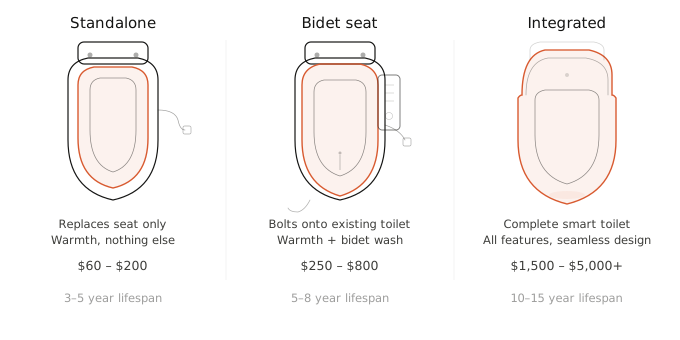
This is where most buying guides fail you. They treat “heated toilet seat” as one product category. It is not. There are three fundamentally different products, and choosing the wrong one leads to the most common regret we hear from customers who call us after buying something else first.
Understanding these three tiers before you shop will save you from the cycle we see constantly: someone buys a $60 seat, it disappoints them in 18 months, they buy a bidet seat, they love it, and then during a remodel they wish they had just gone integrated from the start. Knowing the full landscape upfront lets you buy once for your actual situation.
A standalone heated seat replaces your existing toilet seat. You remove two bolts, attach the new seat, and plug it into a nearby outlet. The toilet underneath stays exactly the same.
What you get: a warm seat surface with adjustable temperature, typically two to five heat settings. That is it. No bidet, no dryer, no deodorizer. Just warmth.
What you pay: $60 to $200.
Who this is for: someone who wants exactly one thing (a warm seat), has a GFCI outlet within four feet of the toilet, and does not want to change anything else about their bathroom. If you are renting, this is the practical choice. If you are just dipping your toes in and want to see whether a warm seat changes your morning routine, this is a low-risk way to find out.
The honest take: standalone heated seats solve the cold-seat problem and nothing else. They work. But the build quality at this price point means you are likely replacing the seat every three to four years as the heating element degrades, the plastic flexes, or the electrical connection loosens. If you add up two replacements over a decade, you have spent $180 to $600 on a product that only ever did one thing.
A heated bidet seat combines seat warming with a water wash system in an add-on format that bolts onto your existing toilet. Brands like TOTO Washlet and Bio Bidet are the most recognized names here. Prices run $250 to $800.
What you get: heated seat plus bidet wash with adjustable water temperature and pressure, and on some models, a warm air dryer, deodorizer, and night light.
Who this is for: someone who wants both warmth and bidet functionality but is not ready to replace their entire toilet. Renters who want a premium bathroom experience they can take with them. Anyone testing whether they actually like bidet washing before committing to a full smart toilet.
The honest take: this is the most popular middle ground, and for good reason. A quality heated bidet seat from TOTO or Bio Bidet will last five to eight years and genuinely upgrades your daily routine. The trade-off is aesthetic. The seat sits visibly thicker than your original. The control panel mounts to the side or requires a separate remote. The water supply hose connects at the base and is visible. It always looks like an upgrade, never like a built-in feature. For some people that is perfectly fine. For others, especially anyone who just spent $20,000 on a bathroom remodel, the aftermarket look defeats the purpose.
An integrated smart toilet is a complete unit engineered from the ground up with every feature designed to work together. The heated seat, bidet system, dryer, deodorizer, and electronics are not separate components bolted together. They are one product.
What you get: heated seat as one feature among many. The Badeloft ST-01 includes oscillating bidet wash with adjustable pressure and temperature, a dedicated feminine wash position, warm air drying, UV sterilization of the nozzle after every use, automatic lid open and close, auto-flush, a night light, and full remote control. Everything is concealed inside a seamless ceramic body.
What you pay: $1,500 to $5,000+ depending on the brand and feature set.
Who this is for: homeowners doing a bathroom remodel who want the cleanest possible design. Anyone who values hygiene features like UV sterilization and self-cleaning nozzles. People planning to age in place who benefit from hands-free operation. Design-conscious buyers who want their bathroom to feel intentional, not accessorized.
The honest take: this is where the value equation flips. The upfront cost is higher, but the product lasts 10 to 15 years, the features compound (you are not just getting warmth, you are getting a fundamentally better bathroom experience), and the design looks like it belongs. The per-year cost of a $2,500 smart toilet over 12 years is about $208. The per-year cost of replacing $150 standalone heated seats every 3.5 years over that same period is $171, and all you ever got was a warm seat.
The global smart toilet market is growing at over 10% annually and is expected to reach $15.76 billion by 2030. That growth is not driven by novelty. It is driven by people who try a smart toilet once and refuse to go back to a standard one.
Here is what each option costs over five years, including the parts nobody mentions.
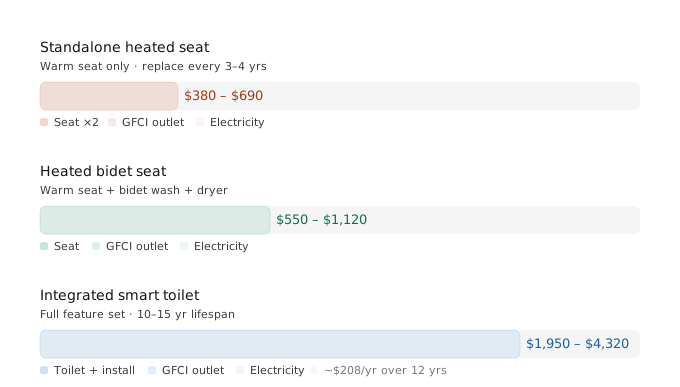
Every guide quotes the sticker price. Nobody shows you the actual cost of ownership. Here is what each option costs over five years, including the parts nobody mentions. With bathroom remodel costs running 15 to 20 percent higher in 2026 than they were two years ago, getting the math right before you commit matters more than usual.
| Cost Component | Amount |
|---|---|
| Seat purchase | $80 to $150 |
| Replacement seat at year 3-4 | $80 to $150 |
| GFCI outlet installation (if needed) | $130 to $300 |
| Electricity (5 years at ~$1.50/month) | $90 |
| Total 5-year cost | $380 to $690 |
| What you got | A warm seat, twice |
| Cost Component | Amount |
|---|---|
| Seat purchase | $300 to $700 |
| GFCI outlet installation (if needed) | $130 to $300 |
| Electricity (5 years at ~$2/month) | $120 |
| Total 5-year cost | $550 to $1,120 |
| What you got | Warm seat, bidet wash, dryer on some models |
| Cost Component | Amount |
|---|---|
| Toilet purchase | $1,500 to $3,500 |
| Professional installation | $200 to $400 |
| GFCI outlet installation (if needed) | $130 to $300 |
| Electricity (5 years at ~$2/month) | $120 |
| Total 5-year cost | $1,950 to $4,320 |
| What you got | Heated seat, bidet, dryer, UV sterilization, auto-flush, night light, auto-lid, remote control, seamless design |
The gap between option 2 and option 3 narrows significantly when you factor in the 10-15 year lifespan of a smart toilet versus the 5-8 year lifespan of a bidet seat. Over a decade, many buyers end up spending comparable amounts while getting dramatically different experiences.
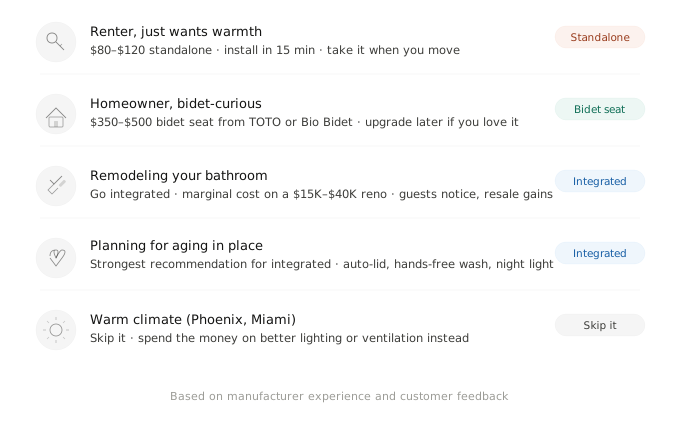
We sell integrated smart toilets, so you might expect us to push everyone toward that option. We are not going to do that. Here is what we actually recommend based on who you are.
If you rent your apartment and just want a warm seat: buy a standalone heated seat in the $80 to $120 range. Install it in 15 minutes, take it with you when you move. Do not overthink it.
If you own your home and are curious about bidets: start with a heated bidet seat from TOTO or Bio Bidet in the $350 to $500 range. You will know within a month whether bidet washing is something you want permanently. If it is, you can upgrade to an integrated unit during your next remodel and move the bidet seat to a second bathroom.
If you are remodeling your bathroom: this is the moment to go integrated. You are already spending $15,000 to $40,000 on the renovation. Adding a smart toilet is a marginal cost increase for a feature that guests notice, that improves daily life, and that adds genuine resale appeal. Spending $25,000 on a beautiful bathroom and then bolting a $100 heated seat onto a builder-grade toilet is a mismatch that shows. If you are planning a spring or summer remodel, book your contractor now. Schedules fill fast once the weather turns, and lead times on smart toilets can run four to six weeks depending on the model.
If you are planning for aging in place: the integrated smart toilet is the strongest recommendation we can make. Auto-open lids reduce bending. Bidet wash reduces the need to reach and twist. Warm air drying eliminates paper handling. Night lights prevent falls during 3 a.m. bathroom trips. The heated seat is almost secondary. What matters is the full system of hands-free features that makes the bathroom safer as mobility changes. Currently, only about 10% of U.S. homes meet basic aging-ready standards according to the Census Bureau, and 80% of adults over 55 say they need bathroom modifications to stay in their homes long-term. If you are an adult child researching this for a parent, the ST-01’s remote control means you can set everything up once and your parent never has to touch a side panel or figure out buttons.
If you live in a warm climate and rarely experience cold bathrooms: honestly, skip it. A heated toilet seat in Phoenix or Miami is solving a problem you do not have most of the year. Put the money toward better lighting or ventilation instead.
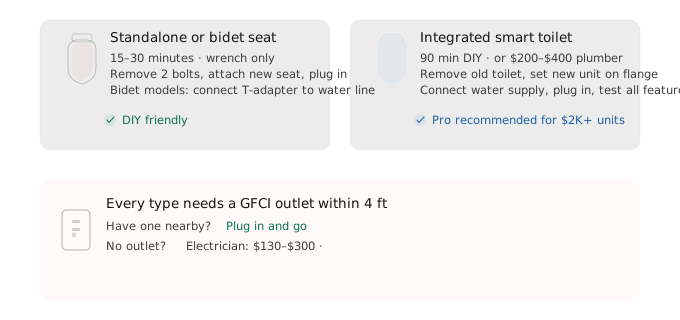
Every heated toilet seat product needs one thing your bathroom might not have: a GFCI-protected electrical outlet within reach of the toilet. This is the number one installation surprise, and it deserves a direct answer. We hear from buyers regularly who ordered a seat before checking for an outlet, and then had to wait two weeks for an electrician before they could use what was already sitting in their bathroom.
If you have a GFCI outlet within four feet of your toilet (behind the toilet or on the adjacent wall), you are set. Plug in and go.
If you do not have a nearby outlet, you need an electrician. Budget $130 to $300 depending on your home’s wiring, wall material, and whether a new circuit is needed. Tile walls cost more. Homes with older wiring may need a panel upgrade. Get a quote before you buy the seat.
Running an extension cord from your vanity outlet to the toilet is a building code violation and a genuine electrical hazard in a wet environment. Do not do it. No heated seat is worth a house fire.
Turn off the water supply valve behind the toilet. Remove the two bolts holding your current seat. Attach the new seat with the provided hardware. Connect the water supply T-adapter if the seat has bidet functionality. Plug into the GFCI outlet. Total time: 15 to 30 minutes with a wrench and no plumbing knowledge.
Remove the old toilet entirely: drain the tank, disconnect the supply line, unbolt from the floor flange, and lift it out. Inspect the wax ring or gasket and replace it. Set the new smart toilet onto the flange, bolt it down, connect the water supply, and plug into the GFCI outlet. Test every function.
A confident DIYer can do this in 90 minutes. If you are not comfortable removing a toilet, hire a plumber. Professional installation runs $200 to $400, and it is money well spent for peace of mind on a $2,000+ product.
This is the section nobody writes because it is not flattering to the product category. But if you are spending money, you deserve to know what the ownership arc actually looks like. One of the most common frustrations we hear is from people who bought a cheap heated seat, had it fail at year two, and assumed the entire product category was unreliable. It is not. The product type determines the durability curve.
Standalone heated seats (years 1-5): the heating element is the weak point. Expect consistent performance for the first two to three years. After that, many units develop uneven heating, slower warm-up times, or intermittent function. The plastic housing also degrades faster in humid bathroom environments than the marketing suggests. Most standalone seats need replacement between year three and year five.
Heated bidet seats (years 1-8): higher build quality extends the useful life significantly. TOTO Washlet seats routinely last six to eight years in residential use. The bidet nozzle mechanism and water valve are the components most likely to need attention. Some brands sell replacement nozzle assemblies, which can extend the seat’s life by another two to three years.
Integrated smart toilets (years 1-15): because the electronics, plumbing, and ceramic are engineered as one system, failure points are fewer and further apart. The ceramic body lasts indefinitely. The electronic components (heating, sensors, bidet mechanism) are commercial-grade in quality products. We have ST-01 units in hotel installations that run multiple times daily and show no degradation after years of use. If something does fail, integrated units are designed for component-level repair rather than full replacement.
The spec sheets on heated toilet seats can be overwhelming, especially on integrated smart toilets. If you have been comparing five different models in browser tabs for the last hour, this section is for you. Here is what makes a real difference in daily use and what is marketing noise.
Worth paying for:
Not worth paying extra for:
This question shows up in every forum discussion about smart toilets, and the answer is simpler than people expect.
The toilet still flushes. Every quality smart toilet, including the ST-01, has a manual flush button or lever that works without electricity. You lose the heated seat, the bidet, the auto-lid, and the electronic features until power returns. The toilet functions as a normal toilet.
For standalone and bidet seats, the toilet beneath was always a normal toilet. The seat just becomes an unheated seat until power comes back.
Nobody has ever been stranded by a power outage because they bought a smart toilet. This concern sounds reasonable in the abstract but has never been a real problem in practice.
If you are remodeling with an eye toward selling the home within five to ten years, the type of heated seat you install matters for resale.
A standalone heated seat adds nothing to home value. Buyers do not notice it, and if they do, they view it as a personal preference item they might remove.
A quality bidet seat is increasingly expected in higher-end homes, particularly in markets with significant Asian and European buyer pools where bidet use is standard.
An integrated smart toilet is a selling feature. Real estate agents in the $800K+ home market report that smart bathrooms (smart toilets, smart mirrors, heated floors) are among the upgrades buyers notice and remember during tours. A $2,500 smart toilet will not recoup its full cost at resale, but it contributes to the overall impression of a well-appointed, modern home. In a market where bathroom renovation alone can return 60 to 70 percent of its cost at resale, the details that make buyers remember your home are worth more than their line-item price.
Everyone comes to this decision from a different place. Here are the situations we see most often. Find the one closest to yours.
If you are mid-remodel with a $20,000 to $40,000 budget and your contractor is asking what toilet to order…
You are in the best position to make this decision well, because you are already tearing things out. The incremental cost of a smart toilet over a standard one is $1,000 to $2,500, which is a fraction of your total project. But here is what catches people: they finalize the toilet last, after the tile and vanity decisions have eaten the budget. Do not let that happen. Decide on the toilet early, while there is still room in the numbers. Tell your contractor the model so they can confirm rough-in dimensions and outlet placement before the walls close up. If you wait until the plumber is on-site, your options shrink to whatever ships in three days.
Here is what to do:
The result: a bathroom that looks like every detail was planned together, because it was.
If you are an adult child researching bathroom safety for a parent who wants to stay in their home…
This one is personal, and it is more common than most people realize. Nearly 95% of adults over 55 say aging in place is important to them, but the bathroom is the most dangerous room in the house for someone with limited mobility. You are probably looking at grab bars, walk-in showers, and non-slip flooring. A smart toilet belongs on that same list, but it rarely makes the first round of research because people associate heated seats with luxury, not accessibility.
Here is what matters for your parent’s situation:
The near-term relief: your parent has a safer, more dignified bathroom experience without moving to assisted living. The longer-term outcome: one less reason to have the “should you move?” conversation.
If you just moved into a new home and the bathroom is functional but uninspiring…
You have a long list of things to change, a finite budget, and no idea what to prioritize. The bathroom works, but it feels like the previous owner’s bathroom, not yours. A full remodel is not in the cards right now, so you are looking for upgrades that make a visible difference without tearing anything out.
Here is how to approach it:
What you get right now: a bathroom that feels noticeably upgraded the first morning you use it, with no contractor, no permits, and no mess.
If you live in the upper Midwest or Northeast and your bathroom is the coldest room in your house…
For you, a heated toilet seat is not a luxury. It is solving a real, daily problem that makes you dread a room you use five to eight times a day from November through March. The question is not whether to buy one. The question is how much to spend.
Here is the honest breakdown for your situation:
The immediate payoff: tomorrow morning, you sit down and the seat is warm. That alone changes how you feel about your bathroom for six months of the year.
The smart toilet and heated seat market has grown significantly. Here is an honest look at the major players.
TOTO is the most established name globally. Their Washlet bidet seats are the industry benchmark for reliability. The Neorest line of integrated smart toilets is excellent but expensive, starting around $3,000 and exceeding $10,000 for flagship models. If budget is not a constraint, TOTO is a safe choice.
Kohler offers the Veil and Numi lines, which bring smart features into a more traditional American bathroom aesthetic. The Numi 2.0 starts around $7,000. Kohler’s strength is brand trust and dealer network; their pricing reflects that overhead.
Badeloft takes a design-forward approach with the ST-01, offering the complete smart toilet feature set (heated seat, bidet with oscillating nozzle, feminine wash, warm air dryer, UV sterilization, auto-flush, auto-lid, night light, remote control) at a lower price point than TOTO or Kohler flagships. We are a manufacturer, not a brand licensing someone else’s components, which is how we deliver the full feature set without the luxury brand markup.
Bio Bidet and TOTO Washlet dominate the heated bidet seat category. Both are reliable. Bio Bidet tends to offer more features per dollar; TOTO tends to offer quieter operation and better build quality at a premium.
Horow and WoodBridge compete in the value smart toilet segment at $800 to $1,500. Feature sets look competitive on paper. Build quality, component longevity, and after-sale support vary. Read warranty terms carefully and check whether replacement parts are actually available before buying.
For a deeper comparison, see our smart toilet brands guide. For a full breakdown of what each smart toilet feature actually does in daily use, see our smart toilet features and benefits guide.
If you have read this far, you know more about heated toilet seats than 95% of the people shopping for one. Here is how to turn that knowledge into a decision:
A heated toilet seat is one of those upgrades that sounds small until you live with it. The people who have one rarely think about it. The people who do not have one think about it every cold morning. The right version for your life is out there. Now you know enough to pick it.
It depends entirely on the product type. Standalone heated seats last three to five years before the heating element or electronics degrade noticeably. Heated bidet seats from quality brands last five to eight years. Integrated smart toilets are built to commercial-grade standards and generally last 10 to 15 years or more with basic maintenance. The quality of the heating element, the electronics waterproofing, and the overall build determine lifespan far more than the brand name on the box.
Standalone heated seats and bidet seats, yes. It is a 15 to 30 minute job with basic tools: remove two bolts, attach the new seat, connect the water line if it is a bidet model, plug it in. Integrated smart toilets involve removing your entire existing toilet and installing the new unit, which requires basic plumbing knowledge and enough strength to lift a toilet. If you have swapped a toilet before, you can handle it. If not, $200 to $400 for a plumber is reasonable.
No. At 30 to 60 watts of active draw, a heated toilet seat costs roughly $1 to $2 per month in electricity. Models with occupancy sensors and eco modes cost even less because they only heat when someone is present. For context, leaving a bathroom exhaust fan running costs more per month than a heated toilet seat.
Yes, when installed correctly with a GFCI-protected outlet. Modern heated seats use sealed electronics and waterproof housings designed for continuous contact with moisture. The GFCI outlet is non-negotiable: it cuts power instantly if it detects any current leakage. Electrical issues are extraordinarily rare. The one legitimate safety consideration is burn risk for individuals with reduced sensation (diabetic neuropathy, certain spinal cord conditions) who may not feel excessive heat. If this applies, use the lowest temperature setting and check with a physician.
A heated toilet seat only warms the seat surface. A bidet provides a water wash for personal cleaning. A heated bidet seat combines both in one add-on product. An integrated smart toilet includes both plus air drying, deodorizing, UV sterilization, automatic flushing, and other features depending on the model. The terminology gets confusing because “heated toilet seat” is what people search for, but most buyers who start with that search end up wanting bidet functionality once they learn what is available.
Yes, it flushes manually. You lose the heated seat, bidet wash, auto-lid, and all electronic features until power returns. Basic toilet function is always available through a manual flush button or lever.
Standalone and bidet seats come in two shapes: elongated (roughly 18.5 inches from mounting holes to front) and round (about 16.5 inches). Measure before ordering. Getting the wrong shape means it will not align with the bowl and will overhang or sit recessed. Integrated smart toilets replace the entire unit, so bowl shape is not a compatibility concern. You do need to confirm your rough-in distance (wall to drain center), which is 12 inches in most homes. Measure before you buy.
Badeloft is dedicated to helping homeowners make informed decisions about their bathrooms. We adhere to strict editorial guidelines to ensure our content is accurate, trustworthy, and useful.
Request free stone resin and stainless steel material samples. Delivered to your door.
There’s a gap between what a freestanding bathtub listing tells you and what it actually feels like to share one.
The bathtub you choose will shape how you use your primary bathroom every day for the next two decades. Not
A freestanding bathtub is the most permanent aesthetic decision in a bathroom renovation. Get the selection right and it becomes
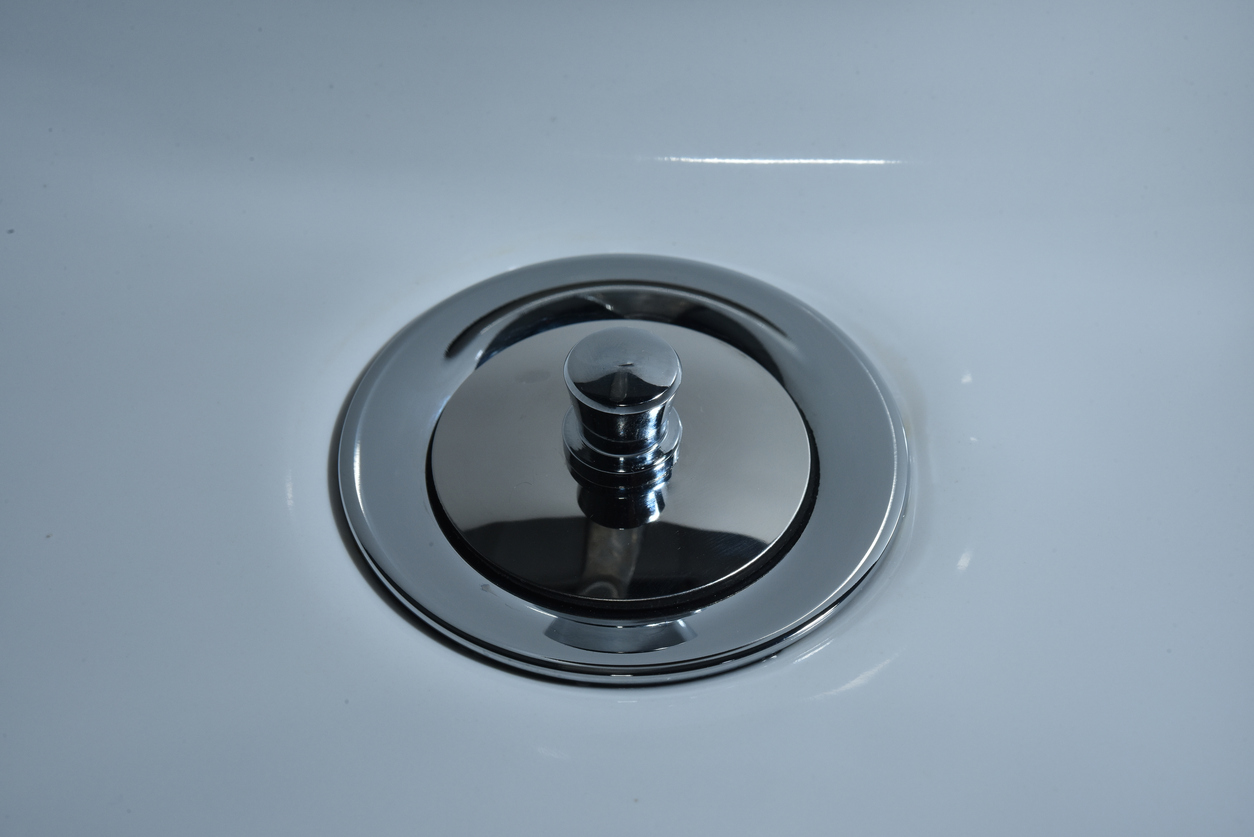
Choosing the right bathtub drain stopper is essential for creating a comfortable and functional bathing experience. With over 20 common
Request your free material sample below. By submitting, you agree to receive occasional product updates and offers from Badeloft. Unsubscribe anytime.
"*" indicates required fields