
Heated Toilet Seats: What to Know Before You Buy
Spring is when most bathroom remodels get serious. The weather breaks, contractors open up, and that upgrade you have been
Adding a half bathroom is one of the most commonly recommended home improvements for resale value and livability, and one of the most frequently budgeted incorrectly. The cost varies more by where in the house the bathroom goes than by any other single factor.
A half bathroom added off a hallway near existing plumbing might cost $5,000. The same bathroom in a basement requiring new plumbing runs to $15,000. A luxury powder room finished with premium tile, designer wallpaper, and custom fixtures can reach $25,000 at the same square footage. The scope of work is similar; the location changes everything.
A half bathroom (also called a powder room) contains a toilet and a sink. No bathtub, no shower. Standard size is 18 to 20 square feet, enough for a toilet, a compact vanity or pedestal sink, and a mirror. An expanded half bath runs 20 to 32 square feet, allowing for a more substantial vanity, cabinet storage, and more design flexibility.
Half bathrooms are typically located near main living areas: off an entry hallway, adjacent to a family room, or near a dining area. Their primary function is accommodating guests without directing them through private sleeping areas.
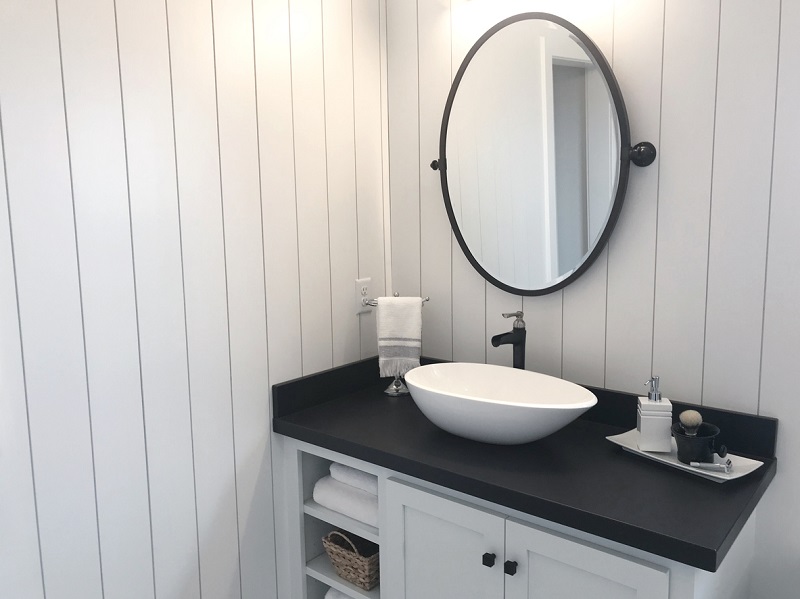
A half bath is usually limited in space, so minimal designs such as floating vanities, freestanding sinks, and wall-mounted sinks are highly recommended. A half bath’s average size is around 18-20 square feet, which can be extended to a larger size around 20-32 square feet, which generally does not allow for a tub or a shower.
In 2025, half of the bathrooms will be transformed into stylish, functional spaces with bold and innovative design trends. Popular features include fluted tiles for texture, sage green color schemes for a calming, nature-inspired ambiance, and natural materials like wood and stone to create a spa-like feel. Homeowners also embrace bold wallpapers and retro-inspired designs with vintage touches like pink tiles and brass finishes. Mixed metal fixtures add depth and character, while innovative technology such as touchless faucets and motion-sensor lighting enhances functionality and hygiene.
According to recent design surveys, 55% of homeowners renovating bathrooms incorporate natural materials, reflecting a growing trend toward biophilic design. Additionally, 40% of new bathroom installations in 2025 are expected to feature smart technology, catering to the increased demand for convenience and hygiene. Fluted tiles have seen a 35% rise in popularity compared to 2024, while bold wallpapers have become a staple for 25% of half-bathroom redesigns. These trends make half-bathrooms practical and visually striking spaces in modern homes, bridging functionality with cutting-edge design.
Once more, adding a half bathroom typically ranges between $5,000 and $15,000, with high-end installations reaching up to $25,000. The cost of adding a half bathroom will ultimately depend on a few different factors, namely:
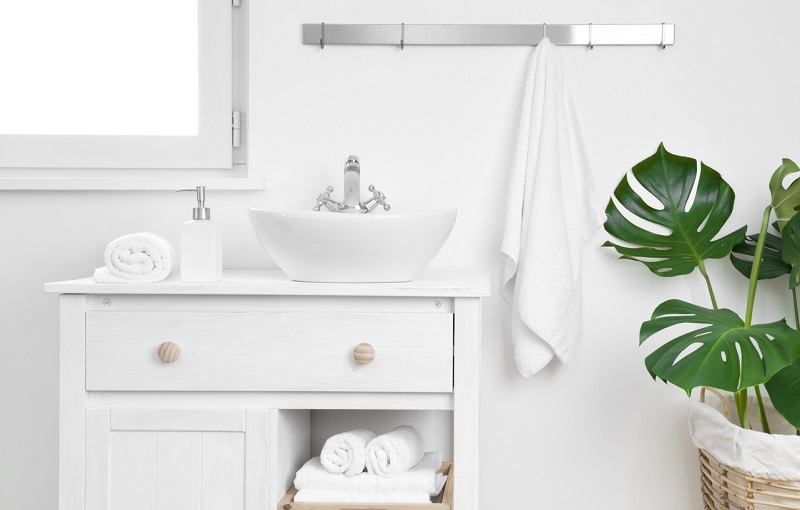
Each of these factors will increase your bathroom cost so you must determine whether you want a more affordable bathroom or a more luxurious bath space.
Closet conversion is typically the most cost-effective path. An interior closet near a main bathroom or kitchen has the best chance of connecting to existing plumbing with a short run. Minimum size: 15–18 sq ft. Budget: $5,000–$12,000, depending on the proximity to plumbing.
Under the staircase uses space that is often otherwise wasted. Minimum requirements: approximately 25 square feet of floor area and at least 5 feet of ceiling height at the tallest point. The angular ceiling is a design challenge but not an obstacle; a wall-hung toilet and compact pedestal sink work well in the geometry. Budget: $3,000–$10,000.
Hallway conversion carves square footage from an existing hallway. Works best in homes where the hallway has excess width or a dead-end section. Budget: $5,000–$15,000, depending on the proximity to plumbing.
Laundry room conversion converts the laundry space partially or fully. The laundry room already has supply and drain connections, which significantly reduces plumbing cost. Budget: $5,000–$12,000.
A basement addition typically requires an ejector pump when the basement sits below the main sewer line. An ejector pump pumps waste upward to the main drain and adds $600–$2,000 to the project. Without one, gravity drainage won’t work. Budget: $10,000–$20,000, including ejector pump where required.
Plumbing is the largest cost variable in a half-bathroom addition. Two components drive this:
Supply lines bring hot and cold water to the sink. If an existing supply line is within 10 feet, this is a straightforward connection, typically $500–$1,500. If new lines must be run from the main supply, add $500–$2,000 depending on distance and access.
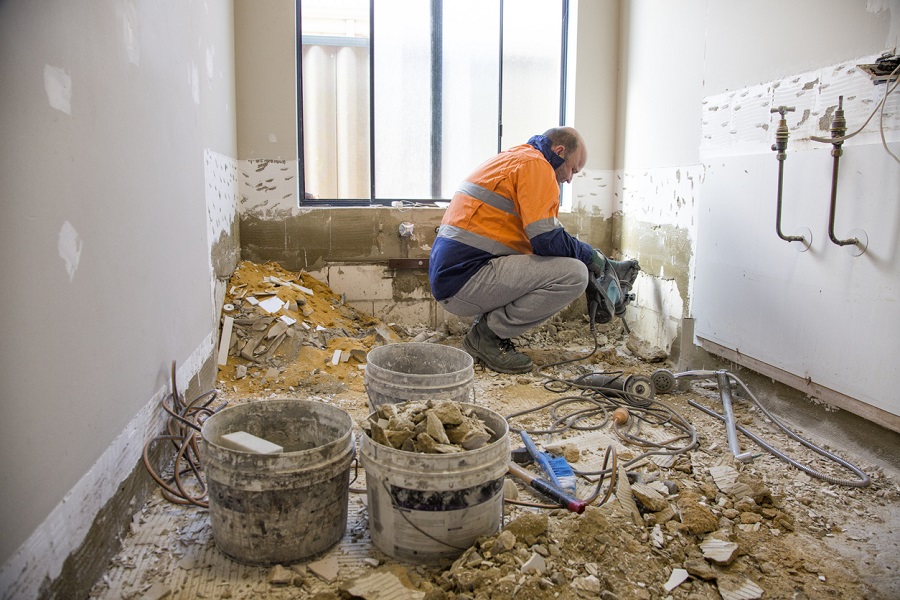
Drain lines route waste from the toilet to the home’s main drain. Gravity drainage works when the half bath is on the same level or above the main drain exit. An ejector pump is required when the half bath sits below the main drain — common in basement installations.
Full new plumbing rough-in (supply + drain + vent + connections combined): $3,000–$8,000 for most half bathroom conversions in existing homes. This is the realistic range for a standard project. The $10,000–$25,000 figures sometimes cited in renovation guides reflect complex multi-floor situations or full gut renovations, not typical powder room additions.
Connecting to existing nearby plumbing: $500–$2,000. The proximity of the chosen location to existing supply and drain lines is the single most consequential decision in the entire project.
Every home has ventilation requirements to ensure that your home is properly ventilated to ensure good health. Current codes require either an operable window or an exhaust vent for every bathroom to circulate the air properly.
The national average to install a bathroom fan is anywhere between $300-400, which involves installing new fans and the ducts that run through to the exterior.
Electrical outlets will need to be installed on a GCFI circuit or ground fault circuit interrupter which provides additional protection against shock in wet areas. These outlets will be standard in modern homes but might be missing in older homes, so it is important to ensure you have a GCFI circuit available.
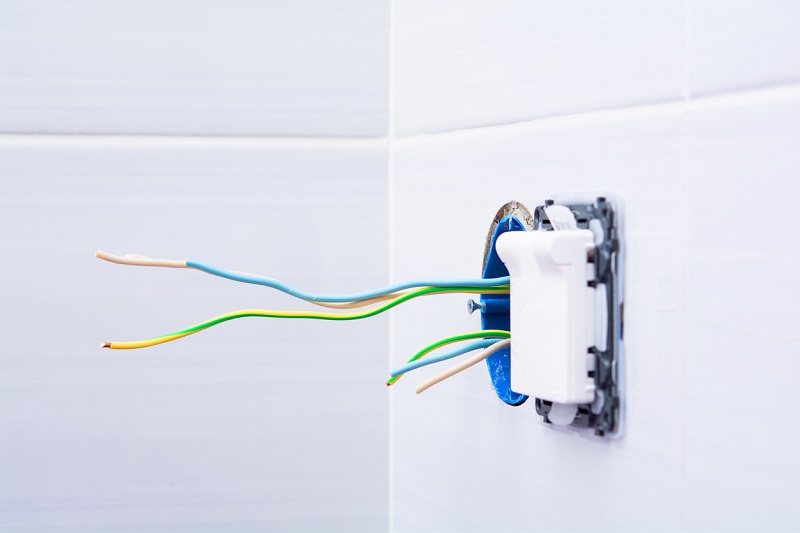
The average cost to install an electrical outlet ranges anywhere between $130-300 depending on the complexity of the job, the location of house and any special features that are asked for. Keep in mind that much of the cost of installing an outlet will be labor costs. It is recommended that you hire a skilled and experienced electrician to ensure the job is completed safely.
The last factor to consider would be the quality of materials. Depending on the types of material you want for your bathroom, the greater the expense will be.
To that end, you want to ensure that the materials you choose will be in your budget. Try to strike a balance between luxury and affordability when choosing the materials for your bathroom.
Adding a half bathroom almost always requires permits for plumbing and electrical work. In many jurisdictions, structural permits are also required if walls are modified.
Unpermitted bathroom additions create title complications at sale and can trigger insurance issues if a water damage claim involves the space. Pull the permits. Your contractor should handle this as part of the project scope; confirm before work begins.
Once rough work is complete, fixture and finish costs determine how the room feels.
Toilet: $150–$600 for standard to quality models. Wall-hung toilets ($500–$1,500 for the unit, plus $200–$500 for concealed tank installation) work particularly well in small half baths: they free up floor space and simplify cleaning. Worth considering if the budget allows.
Sink and vanity: Pedestal sink: $100–$500. Wall-mounted sink: $150–$600 (requires wall blocking during rough-in). Compact vanity with storage: $300–$1,200. In a powder room, the sink is a design statement as much as a functional fixture; the scale is small enough that a distinctive piece is affordable.
Faucet: $100–$500, depending on finish and quality.
Mirror: $50–$400. An oversized or backlit mirror in a small powder room changes how the room reads. The room’s small scale makes a mirror upgrade relatively inexpensive given its visual impact.
Flooring: $3–$15 per sq ft for tile, installed. For 20 sq ft, budget $60–$300 for materials plus $100–$200 for installation. Premium tile: $25–$75 per sq ft.
Wallpaper: A powder room is the one space in most homes where bold wallpaper works well. The room is small, occupancy time is short, and a dramatic wall is far more impactful at 20 square feet than in a large room. Installation for a small space: $200–$500.
Lighting: $150–$400 for a quality vanity light. A half bathroom with only a single overhead light feels like a utility closet. Proper vanity lighting at mirror height changes the room’s character entirely.
An important consideration when installing a new bathroom is where to place it. The beauty of a half bath is that it is much smaller than a traditional bathroom, giving you a greater deal of flexibility.
Here are some common areas in your home where you can add a half bath. A half bathroom adds a great deal of versatility to your home. Depending on where you install a half bath
A half bath is a great addition to a basement home office or child playroom. A half bath installed in the basement provides a more conveniently located bathroom out of the usual foot traffic. Also, the average cost to add a basement is around $10,000-15,000.
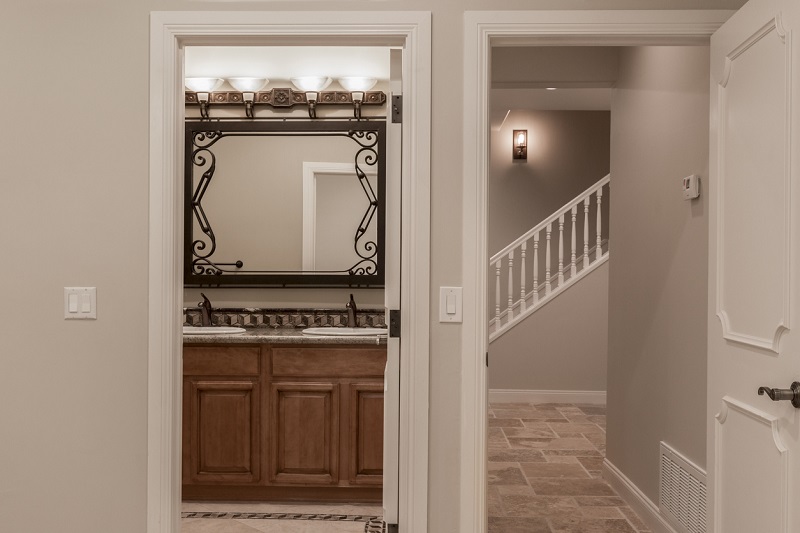
However, if you add the basement under an existing bathroom, you can save anywhere between $1-2,000 in plumbing expenses. The only drawback to a basement half bath would be the ventilation and sewage-ejector system of your home.
Ensure that this system is properly routed through your home so that your wastewater can effectively travel up and out of your basement area to the proper channels.
A closet bath provides a great choice as it remodels a small storage space and repurposes it. This cuts back on installation costs as you are adding to an existing space. Additionally, closets are conveniently placed in many homes, providing a natural recess to install a bath.
Keep in mind that the average cost to install a closet bath is anywhere from $5,000-15,000. Depending on the size of the existing closet and proper ventilation, it will be necessary, especially given the smaller space.
Similar to closet space, the storage area under a staircase is another good choice for a half bath as it repurposes an existing space. Many staircases have an empty space that many homes use for storage or a pantry, which makes it a logical area for a small bathroom.
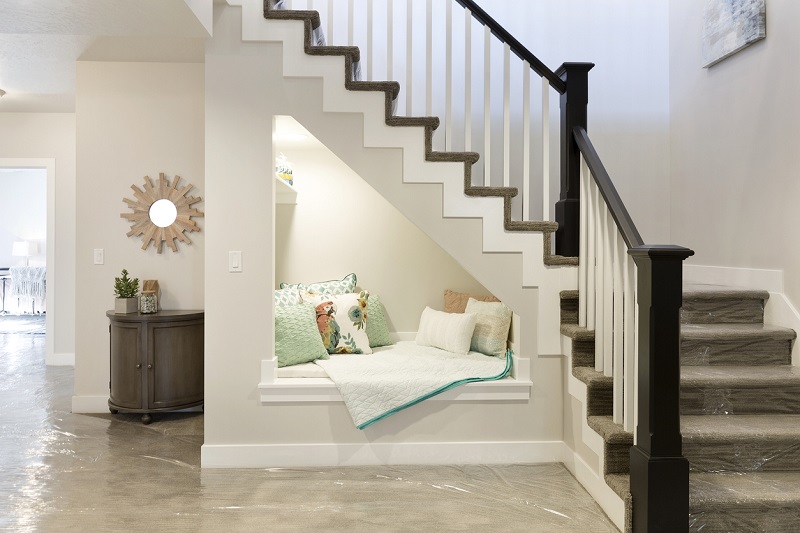
Before installing in this area, ensure that space is around 25 square feet with a minimum height of 5 ft to keep with local building codes.
Additionally, ensure that proper ventilation can reach this bathroom through either a window or fan. The average cost for a stair installation starts around $3,000.
A laundry room can also provide a great location for a half bath. Many laundry rooms tend to have a large amount of space available, with existing plumbing already installed.
With plumbing costs lowered and the laundry room’s location typically out of the way of heavy foot traffic in your home, a laundry bathroom is a logical place to install a bathroom. The laundry room bathroom’s average cost would be anywhere from $5,000-12,000 depending on size and materials.
A popular location, the long hallway in many homes provides a great deal of space for a bathroom to be installed. Windows can easily be added to this location, providing great ventilation compared to other areas.
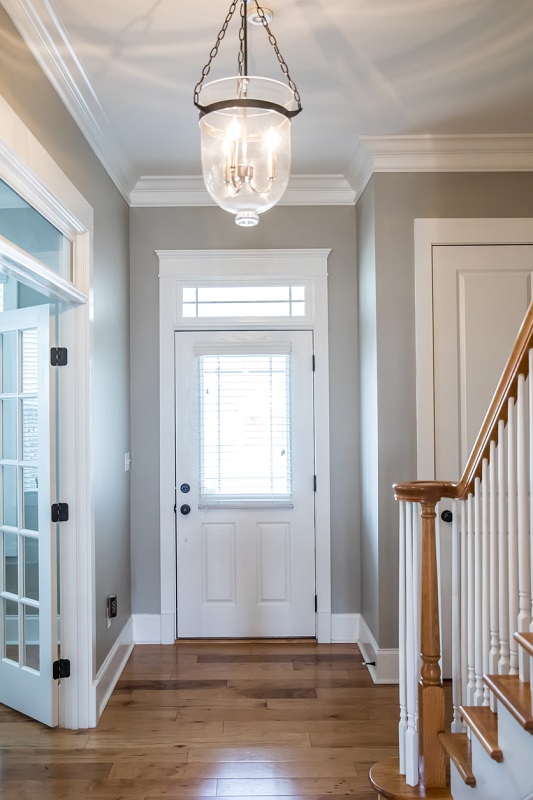
The hallway also provides a convenient location that allows guests to enter and exit discreetly when using the bathroom. Depending on the location and materials, a hallway bathroom will run anywhere between $5000-15,000.
Half bathrooms have become a space where homeowners invest in design that would be cost-prohibitive at a full bathroom scale. Because the square footage is small, the cost of premium materials stays manageable.
Current directions in powder room design:
None of these directions requires a large material budget. In a 20-square-foot room, a $150 wallpaper panel and a $300 brass faucet transform the design without meaningfully changing the project budget.
Adding a half bathroom where none existed is one of the higher-ROI projects in residential renovation. Industry data consistently shows returns of 50–65% of project cost at resale — a $10,000 powder room addition adds roughly $5,000–$6,500 to appraised home value.
For resale-focused projects, the most cost-effective approach is a clean, neutral powder room in the most accessible location. Simple tile, quality fixtures in a neutral finish, and proper lighting. The goal is a room that reads as complete, not custom.
For buyers who will live in the home for several more years, the daily functional benefits matter more than the resale figure. A home with only one full bathroom and no powder room is measurably more difficult to live in. Guests require access to private space; morning routines pile up; the one bathroom becomes a bottleneck. A powder room solves this at a fraction of the cost of a full bathroom addition.
Before committing, answer three questions:
If the answers align, available space, plumbing proximity, and a clear use case — a half bathroom addition is one of the more straightforward renovation projects to justify financially and practically.

Eric is the founder and president of Badeloft USA. He has been the president of Badeloft’s US division for over ten years and oversees all marketing and branding aspects of Badeloftusa.com.
His expertise lies in small business development, sales, and home and bathroom industry trends and information.
Contact us with any business related inquiries.
Badeloft is dedicated to helping homeowners make informed decisions about their bathrooms. We adhere to strict editorial guidelines to ensure our content is accurate, trustworthy, and useful.
Request free stone resin and stainless steel material samples. Delivered to your door.
Spring is when most bathroom remodels get serious. The weather breaks, contractors open up, and that upgrade you have been
A Japanese soaking tub, known traditionally as an ofuro, is designed for one purpose: full-body immersion. Unlike Western bathtubs built
Spring is peak bathroom renovation season – and with remodel costs up 15–20% this year, the pressure to get it
It’s spring, tax refunds are landing, and if you’ve been putting off a bathroom upgrade, you’re in good company. A
Request your free material sample below. By submitting, you agree to receive occasional product updates and offers from Badeloft. Unsubscribe anytime.
"*" indicates required fields