
Bathroom Tile Trends 2026: What’s Worth It, What Will Date Your Space, and What Changes When You Have a Freestanding Tub
If you’re mid-renovation or about to start one, you’ve probably spent more time than you expected staring at tile samples.
If you’re mid-renovation or about to start one, you’ve probably spent more time than you expected staring at tile samples. Most bathroom tile trend guides are written by tile retailers. They have every reason to tell you what’s exciting this season and no reason to tell you what you’ll regret in five years. This one comes from a different place.
As a freestanding bathtub manufacturer, we’ve seen thousands of bathrooms built around our tubs, from full renovations with architect-selected materials to DIY projects where homeowners made every decision themselves. We’ve watched tile trends cycle through, watched certain choices age gracefully, and watched others look dated before the caulk fully cured.
Whether you’re building a bathroom around a freestanding tub, replacing a tub-shower combo with something more intentional, or simply trying to choose tile that won’t make you wince in 2032, this guide covers what’s trending, what lasts, and how the presence of a sculptural focal point changes the tile logic entirely.
For most of the last decade, bathroom tile design was dominated by cool, clean, and clinical. White porcelain. Gray stone-look. Dark grout on white subway tiles. The aesthetic was easy to execute and looked good in photos.
It’s also precisely what designers are now calling lifeless.
The shift happening in 2026 is a correction, not a trend cycle. Flat porcelain that lacks texture no longer satisfies the bathroom’s role as a wellness space. Homeowners want to walk into their bathroom and feel something. That means:
The question for each trend below isn’t just “is this popular?” It’s whether it delivers the presence a modern bathroom needs and whether it still delivers that a decade from now.
Large format tile is one of the defining moves of modern bathroom design. Fewer grout lines mean a quieter floor, a more expansive visual field, and a surface that lets the material speak rather than interrupting it every few inches.
For a bathroom built around a freestanding tub, large format tile has a specific structural advantage. A clean, continuous floor running to the base of a sculptural tub lets the tub read as the art piece it is. Tubs with legs or feet especially benefit: the floor reads beneath them, and large format tile creates the uninterrupted canvas that makes that composition work. If the tile is busy or broken up, the tub has to compete for visual attention rather than own the room.
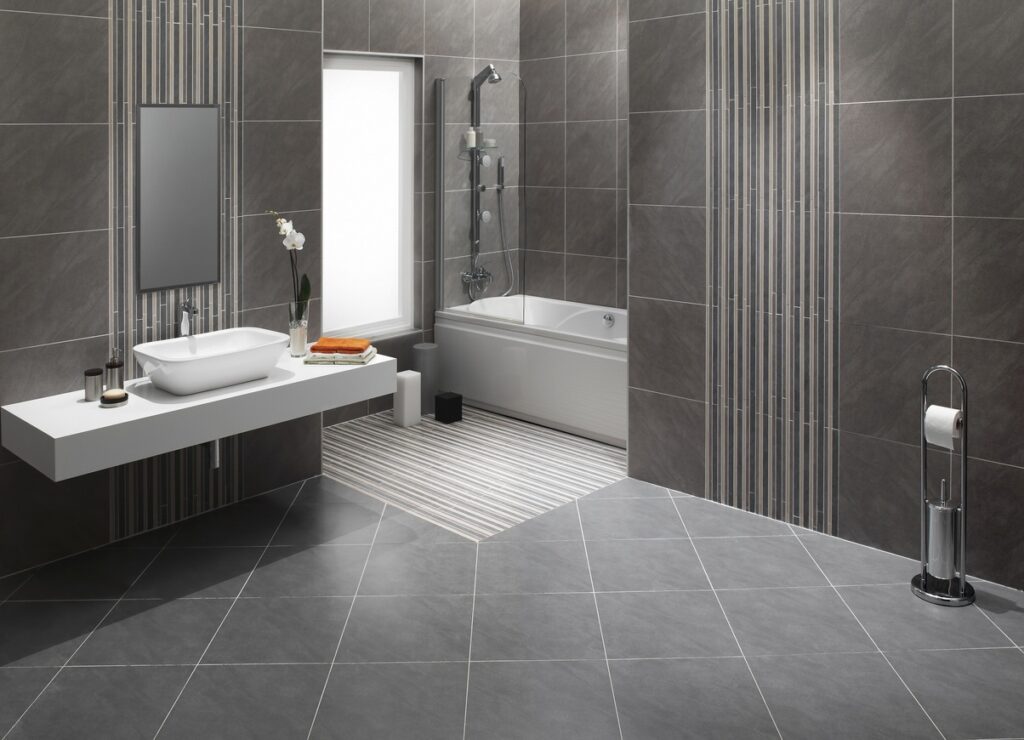
The 12×24 tile has been the default field tile for mid-budget renovations for years. If you’re choosing it because it’s inexpensive and easy to install, that’s a fair decision. But if you think it reads as “modern,” it doesn’t. It reads as “mid-2020s renovation,” which is a different thing entirely. Designers are already calling it one of the most defining and eventually dated looks of this decade.
If you’re going large format, go large. Slab-style formats in natural stone or stone-look porcelain commit to the aesthetic rather than splitting the difference.
Textured tiles are one of the strongest calls in 2026, and the reasoning is sound. They solve the primary problem with flat tile: the way flat surfaces in a bathroom feel cold and reflective rather than warm and present. Ribbed and fluted tiles work particularly well on accent walls and shower niches. The ridges catch and diffuse light, creating shadow play that flat tile simply cannot replicate.
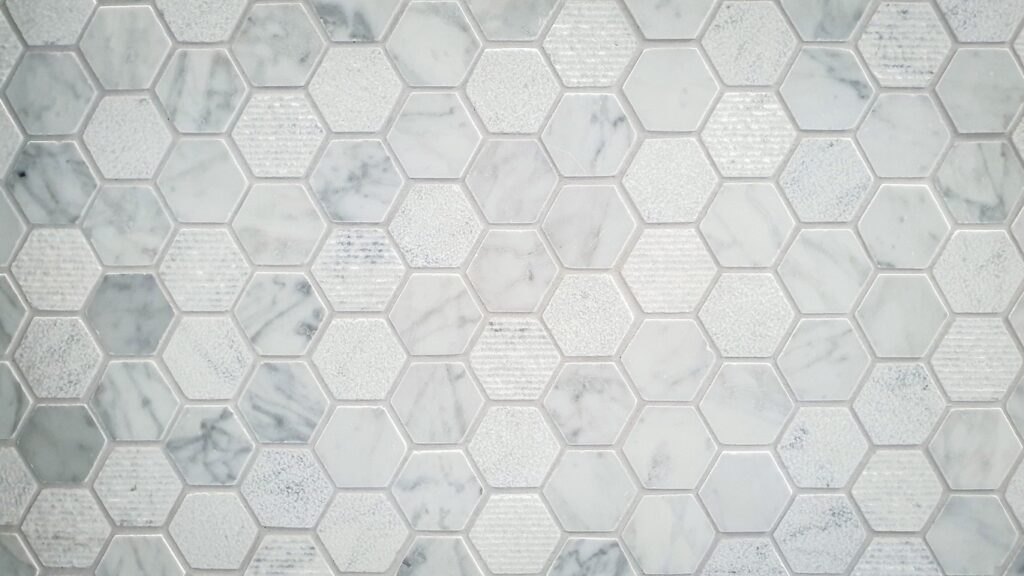
Raised surfaces create more crevices, which means grout becomes a more active maintenance consideration in the shower. That’s not a reason to avoid textured tile. It’s a reason to pair it with the right grout (more on that below) and to reserve deeply textured options for walls rather than shower floors where water pools.
If you want a beautiful bathroom with minimal upkeep, keep textured tiles on walls and choose smoother large format stone for shower floors.
Travertine, limestone, marble, and zellige are dominating the 2026 conversation for a reason that goes beyond aesthetics: they’re materials with actual history, variation, and depth that manufactured tiles cannot replicate.
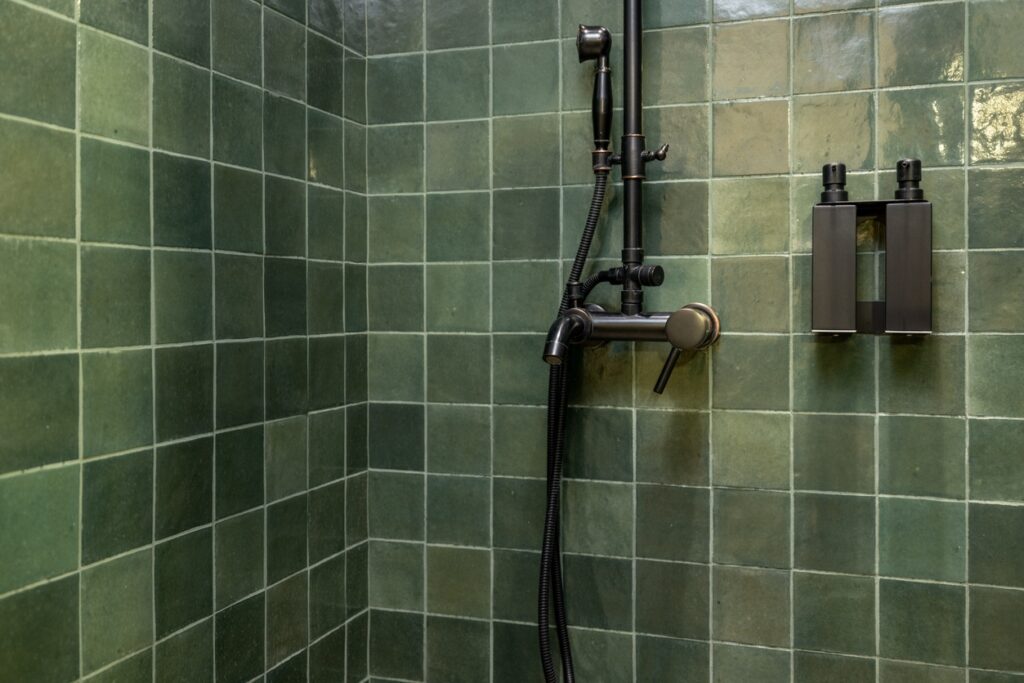
Real zellige and ceramic zellige-look tile are not the same decision.
Real zellige is Moroccan-made, hand-pressed tile with the color variation and surface imperfection that gives it its depth. It’s harder to source, requires a skilled installer who understands the material, and costs significantly more. Homeowners who’ve pursued it often describe the process as harder than they expected.
Ceramic zellige-look tile is accessible and cost-effective. But what you’re paying for with real zellige the variation, the depth, the sense that each tile is slightly different is difficult to fake. Ceramic versions are more uniform, and that uniformity reduces the visual impact.
If the budget allows real zellige, it’s a strong long-term investment. If not, choose a different authentic material rather than a ceramic approximation. A simple tumbled travertine or textured limestone will serve better over time than a faux version of something that works precisely because it isn’t perfect.
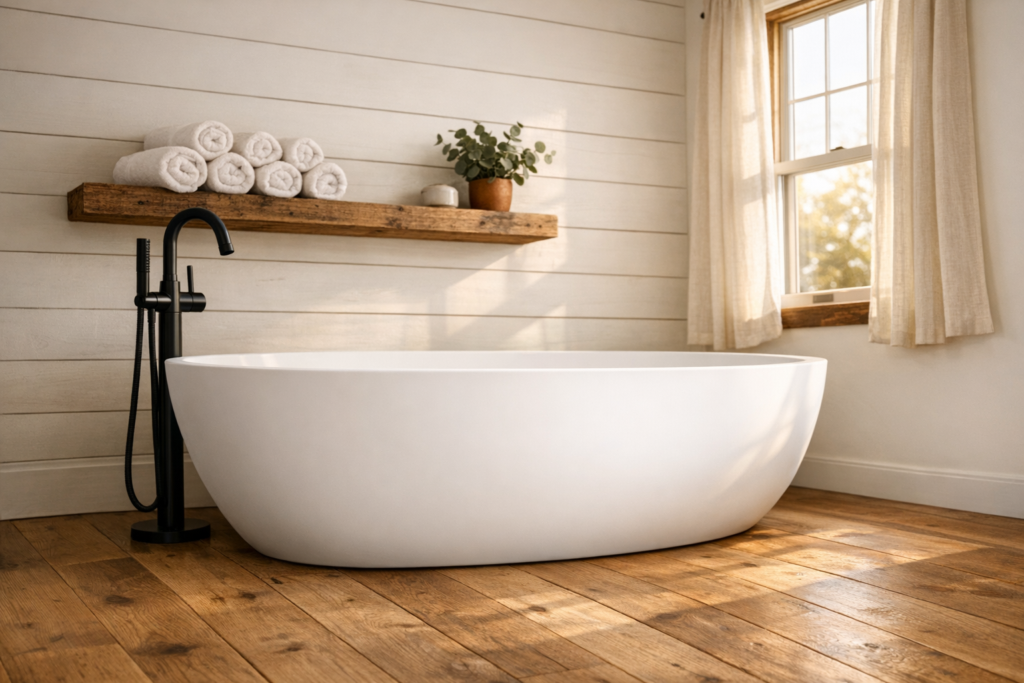
For bathrooms with a stone resin freestanding tub, natural stone tile creates genuine material harmony. Stone resin and natural stone share warmth and textural depth in a way that ceramic tile doesn’t match. Consider what material would belong in the same room as your tub naturally, and lean toward options that feel like they come from the same world.
Sage green, terracotta, warm cream, dusty blush, muted olive. These are the colors driving bathroom tile selection in 2026, and the most common question about them is the right one: will these feel dated?
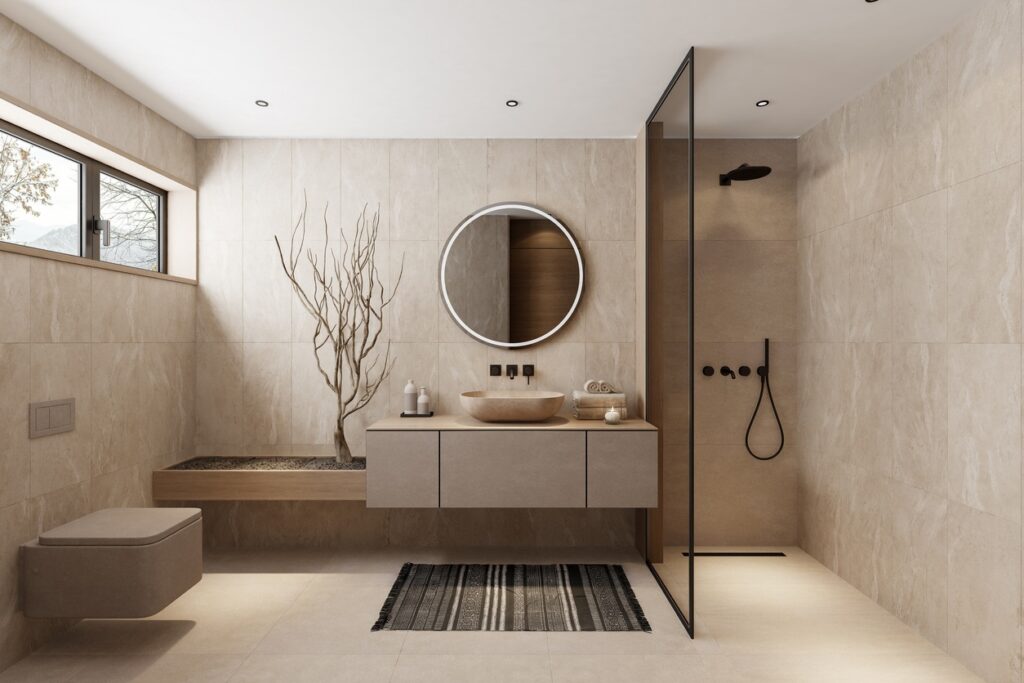
Terracotta and clay tones have long design precedents. They appear in Mediterranean, Moorish, and Southwestern architecture across centuries. Used in natural materials actual terracotta tile, warm stone, handmade ceramic they read as enduring rather than trend-driven. Warm cream and limestone white fall into the same category: tones grounded in material rather than fashion.
Saturated sage green and the dustier cool tones are more moment-specific. They’re a reaction to the gray-and-white decade, and they’ll be associated with this period. That’s not automatically a problem, but if you’re tiling for 20 years, warm neutrals anchored in natural material will outlast specific trend hues used as field tile.
The practical rule: lead with material, let the color follow. A warm limestone floor is on-trend in 2026 and genuinely timeless. A sage-painted ceramic tile floor is a trend.
Tile drenching, running the same tile continuously across floor, walls, ceiling, and shower enclosure is the single most dramatic bathroom design move in 2026. Used well, it creates a room that feels like a single material.
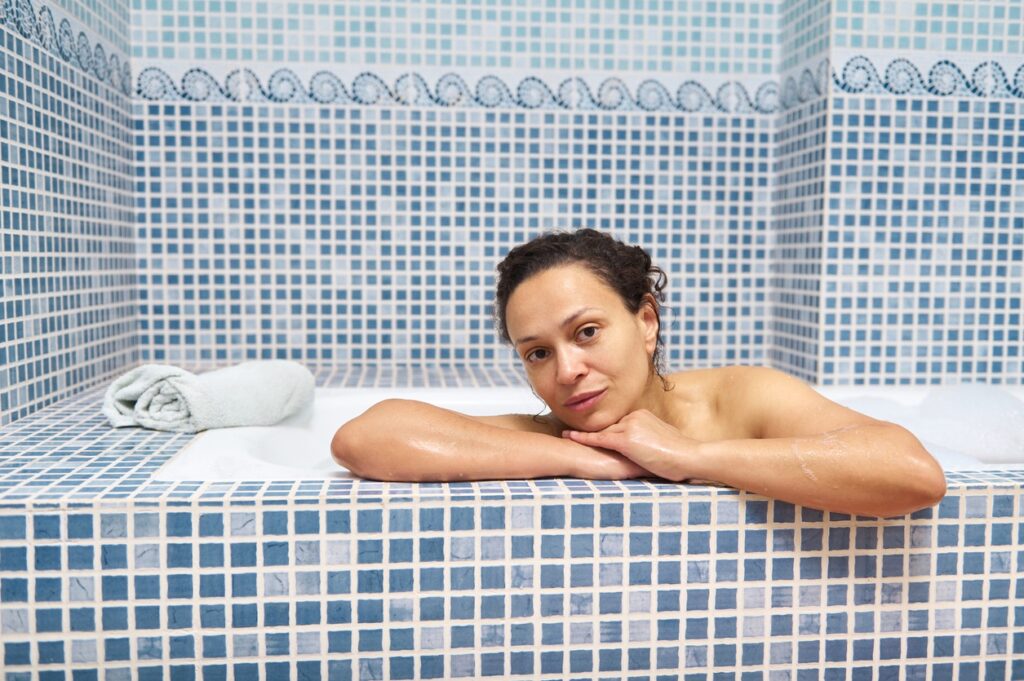
When a room is fully tiled in a continuous surface, the only visual interruption is the object you place in it. In a drenched bathroom, the freestanding tub becomes the sole focal point the sculpture in the gallery. Interior designers do exactly this in high-end projects: they eliminate visual competition so the centerpiece commands full attention.
Tile drenching has real limits:
In smaller or darker spaces, tile drenching works best with large format, matte, low-contrast tiles that recede rather than advance.
Most trend roundups tell you what’s in. This section covers what you’ll regret. If you’re making a 15-year tile decision, these are the choices to reconsider before committing.
The 12×24 default. This format became the safe, mid-budget choice for so many renovations that it now reads as a timestamp. Choosing it for cost is fair. Choosing it because it seems modern is a mistake you’ll notice in a few years.
Dark grout with white or light tile. The contrast grout approach white hex or subway tile with charcoal or black grout creates a look that photographs dramatically and ages quickly. High-contrast grout draws attention to every grout line, and grout lines are what show wear, staining, and age most visibly. Tonal grout is almost always the more timeless choice.
Pebble shower floors. They feel spa-like in the showroom. In practice, they’re among the hardest surfaces to keep clean, and their visual busyness dates a bathroom faster than almost any other tile choice.
Faux material tiles. Ceramic tile designed to look like wood, stone, or concrete is more convincing than it used to be, but it still reads as an approximation. If the budget doesn’t support real travertine, a different real material will serve better over time than a ceramic imitation of a premium one.
A freestanding tub changes the tile equation in ways most tile guides don’t address, because most tile guides aren’t written by people who make freestanding tubs.
The core principle: a freestanding tub is a sculptural object, not a built-in fixture. It occupies space the way furniture occupies a room visually, spatially, and materially. The tile surrounding it isn’t just a surface treatment; it’s the backdrop, the setting, the frame.
You have two general options:
Both work. Feature walls work best when the tile pattern or material is strong enough to anchor the tub without competing with it. Full tile drenching works best when the tile is restrained neutral, matte, large format and the tub provides all the drama. What doesn’t work: busy pattern tiles running floor to ceiling with a sculptural tub in the foreground. Two focal points in the same visual field create competition, not composition.
If your tub has legs or feet, the floor runs beneath it which means the floor tile is visible under the tub and becomes part of the design. Large format tiles create a continuous visual run that reads well under a tub with feet. Very small mosaic tiles can look busy beneath a large fixture.
Slip rating matters here. Floors around freestanding tubs get wet, and the area should be rated accordingly. The Tile Council of North America sets a Dynamic Coefficient of Friction (DCOF) rating of 0.42 or higher as the standard for wet floor areas. Check this before committing to any floor tile you love aesthetically.
Every tile guide tells you to choose your tile. Almost none tell you that your grout choice affects how the tile looks, how the bathroom ages, and how much time you spend cleaning sometimes more than the tile itself.
High-contrast grout draws attention to the grid of your tile layout. That can be an intentional design choice, but it should be intentional. In most applications, tonal grout where the grout color matches or closely coordinates with the tile creates a quieter, more cohesive result that ages better and shows wear less obviously.
Large format tiles typically call for narrow grout joints sometimes as thin as 1/16 inch with rectified tile. The visual effect is nearly seamless, which is what you’re paying for with large format. Wider grout joints on large format tile are a common installation mistake that undermines the whole aesthetic.
Standard cementitious grout in shower enclosures requires sealing, re-sealing, and regular cleaning to prevent staining and mold. Epoxy grout is more expensive and harder to install, but it doesn’t absorb water, doesn’t stain, and requires almost no maintenance in wet zones.
Homeowners who’ve made the switch consistently describe it as the decision they wish they’d made from the start. In a shower or around a freestanding tub, epoxy grout is a long-term investment that most trend guides never mention. If you’re already spending on quality tile, this is not the place to cut costs on installation.
If you’re feeling pulled in multiple directions, here’s how to sequence the tile decision without second-guessing yourself later:
The tile choices that work best in a modern bathroom are the ones designed around a focal point worth building toward. Badeloft’s stone resin freestanding tubs are made for bathrooms where the materials, the light, and the finishes work together rather than competing. When you’re ready to see what belongs at the center of your space, browse the full freestanding bathtub collection and find the tub that sets the direction for everything around it.

Eric is the founder and president of Badeloft USA. He has been the president of Badeloft’s US division for over ten years and oversees all marketing and branding aspects of Badeloftusa.com.
His expertise lies in small business development, sales, and home and bathroom industry trends and information.
Contact us with any business related inquiries.
Badeloft is dedicated to helping homeowners make informed decisions about their bathrooms. We adhere to strict editorial guidelines to ensure our content is accurate, trustworthy, and useful.
Request free stone resin and stainless steel material samples. Delivered to your door.
If you’re mid-renovation or about to start one, you’ve probably spent more time than you expected staring at tile samples.
Getting the drain size wrong on a freestanding bathtub is one of those installation mistakes you don’t discover until the
Bathroom storage fails the same way every time: it gets planned last. By the time the tiles are in and
A waterfall faucet is one of the most visually compelling fixtures a bathroom can have. It’s also one of the
Request your free material sample below. By submitting, you agree to receive occasional product updates and offers from Badeloft. Unsubscribe anytime.
"*" indicates required fields