
Bathroom Storage Trends 2026: The Planning Guide That Changes When You Choose a Freestanding Tub
Bathroom storage fails the same way every time: it gets planned last. By the time the tiles are in and
You’re planning a bathroom renovation and staring down one of the most common decisions homeowners face: do you keep a shower tub combo, or go for a freestanding bathtub and a separate shower?
I sell freestanding tubs for a living, so you might expect me to push you toward the freestanding option every time. But after years of working with homeowners, interior designers, and contractors, I’ve learned that the honest answer depends entirely on your bathroom, your household, and how you actually use the space.
A shower tub combo is the right call for a lot of bathrooms. A freestanding tub is the right call for others. This guide will help you figure out which one is right for yours, without the sales pitch.
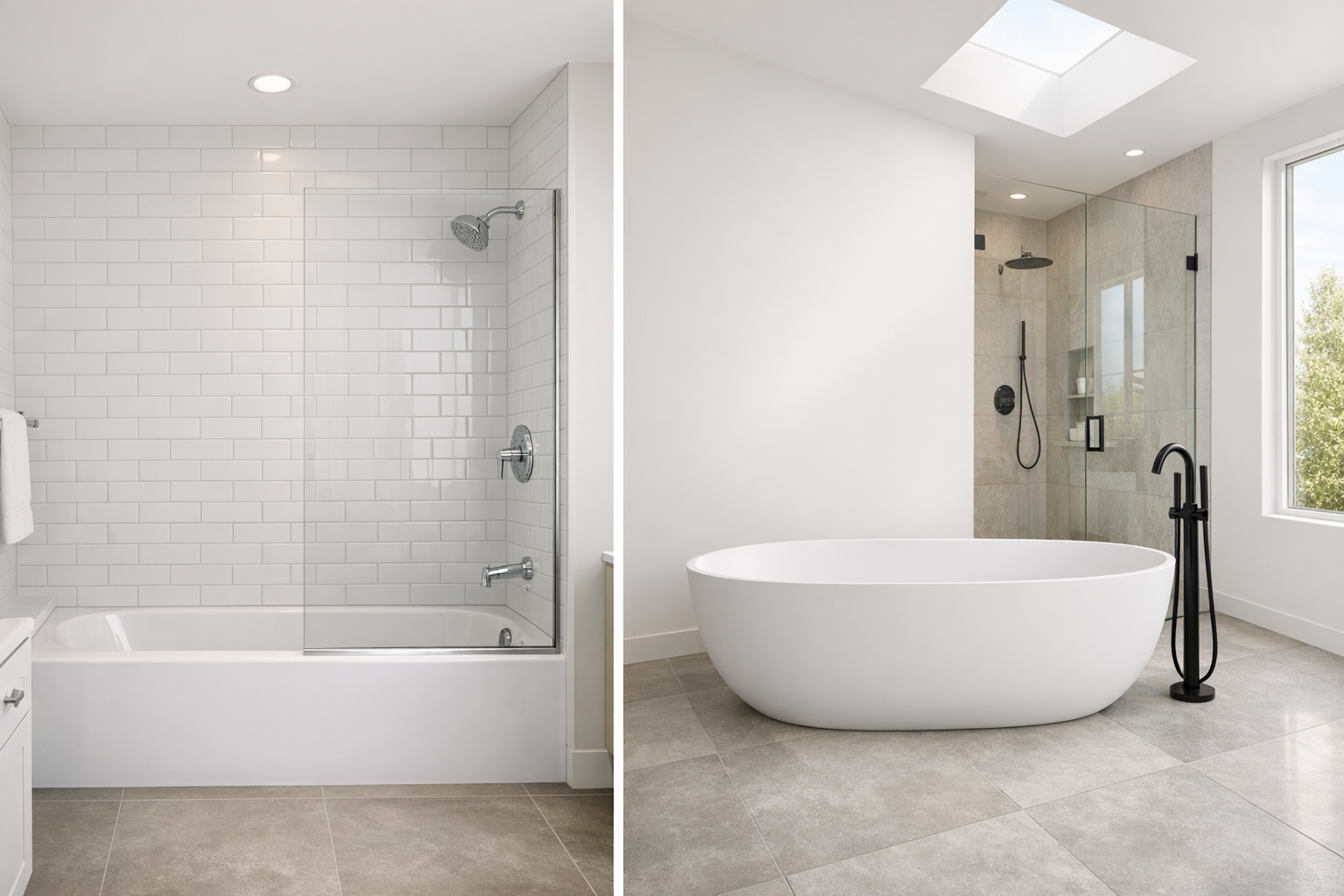
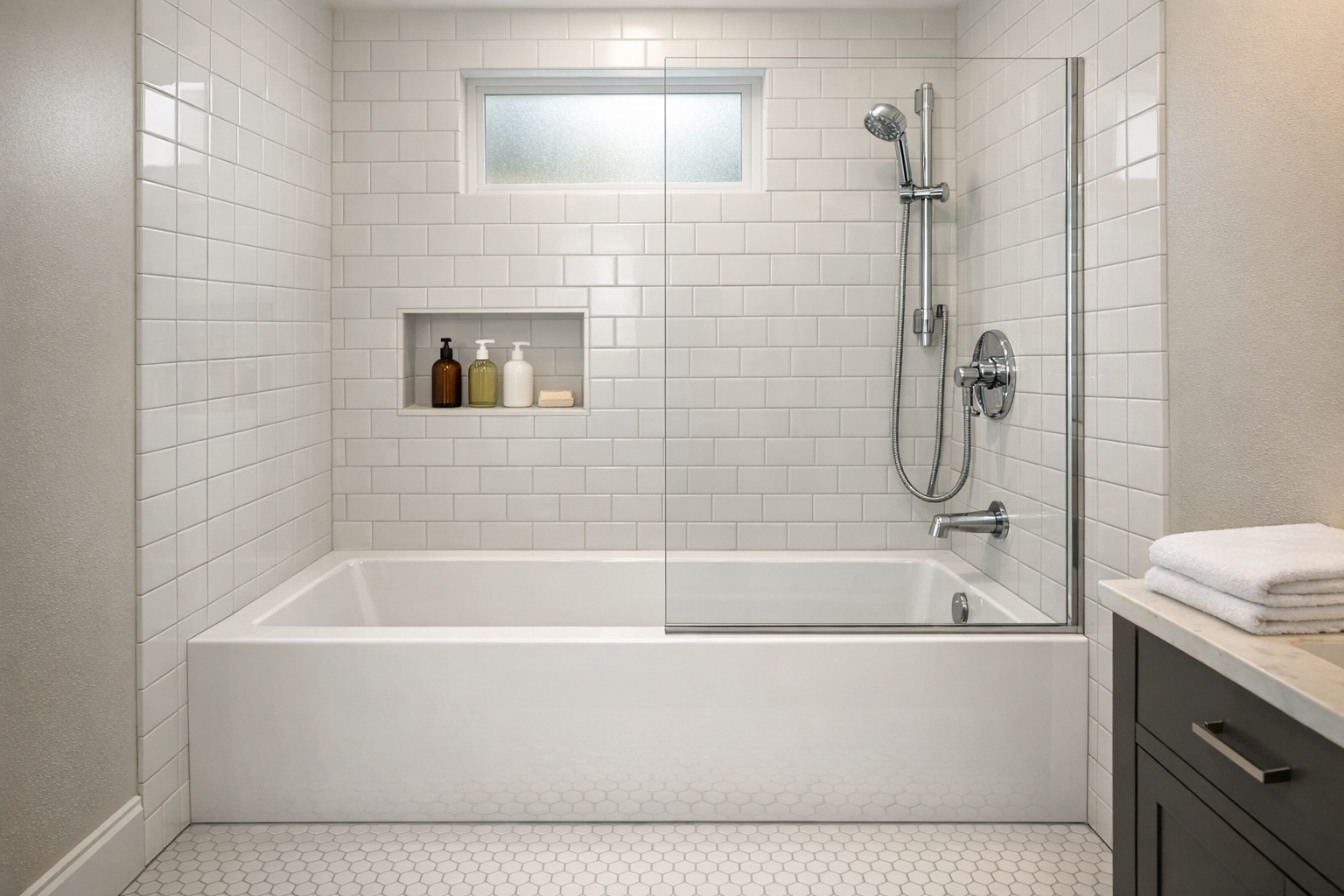
A shower tub combo, also called a combined bathtub and shower, is a single unit that serves both functions in one footprint. The tub sits in an alcove or against a wall, a showerhead mounts above it, and either a curtain or glass door contains the spray.
They come in a few main configurations:
What they all share: the shower and tub occupy the same square footage. That’s their primary advantage, and also their primary limitation.
Before we get into comparisons, let’s be clear: a shower tub combo is genuinely the better choice in many situations. Here’s when it wins.
If your home has a single bathroom, or a bathroom shared by kids and adults with different bathing habits, a shower tub combo is almost always the right call. You need both functions accessible, and you can’t afford to sacrifice the tub for a shower-only setup or vice versa.
Are you remodeling a primary family bathroom used by multiple generations? Keep the combo. It’s the most functional option for diverse household needs.
Standard alcove tub-shower combos fit comfortably in bathrooms as small as 35 square feet for the tub-shower zone alone. A freestanding tub typically needs clearance on multiple sides, plus space for a separate shower nearby. For reference, see our guide to the most common bathroom sizes and dimensions; most secondary bathrooms simply do not have the square footage to justify going separate.
A quality alcove tub-shower combo with a new surround, fixtures, and a glass door typically runs $2,000 to $6,000 installed. A freestanding tub alone starts around $1,500 for entry-level stone resin, and that’s before you factor in a separate shower enclosure, additional plumbing runs, and a larger overall footprint. If you’re working within a tight renovation budget, the combo delivers more value per dollar.
Manufacturer’s Take: We make freestanding tubs, and we’ll tell you flat out: if you’re remodeling a shared family bathroom under 80 square feet on a budget under $5,000, a high-quality alcove tub-shower combo is almost certainly the smarter move. Our products are not right for every bathroom, and pretending otherwise helps nobody.
Real estate agents consistently say that at least one full bathroom with a tub is important for resale in most markets, especially in homes with families as the likely buyer pool. If your home has only one full bathroom, removing the tub to install a freestanding tub plus walk-in shower combination is a risk unless you’re in a market where that renovation plays well.
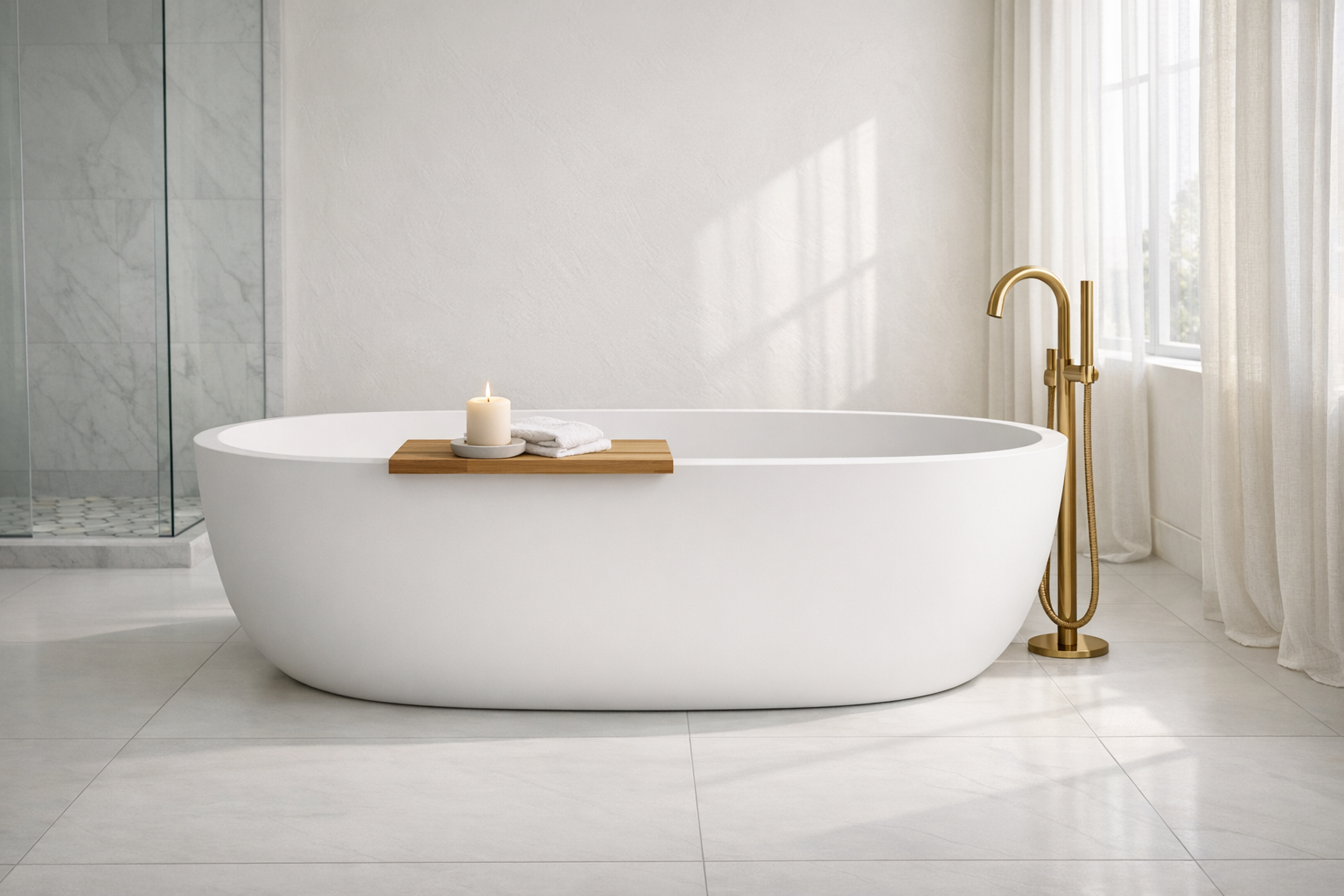
Now let’s talk about when you should skip the combo and invest in a freestanding tub.
If the bathroom in question is a private en-suite that won’t need to serve multiple users or family bathing needs, a freestanding tub becomes a genuinely compelling option. You can build the space around it, with a separate walk-in shower nearby and the tub as the visual centerpiece.
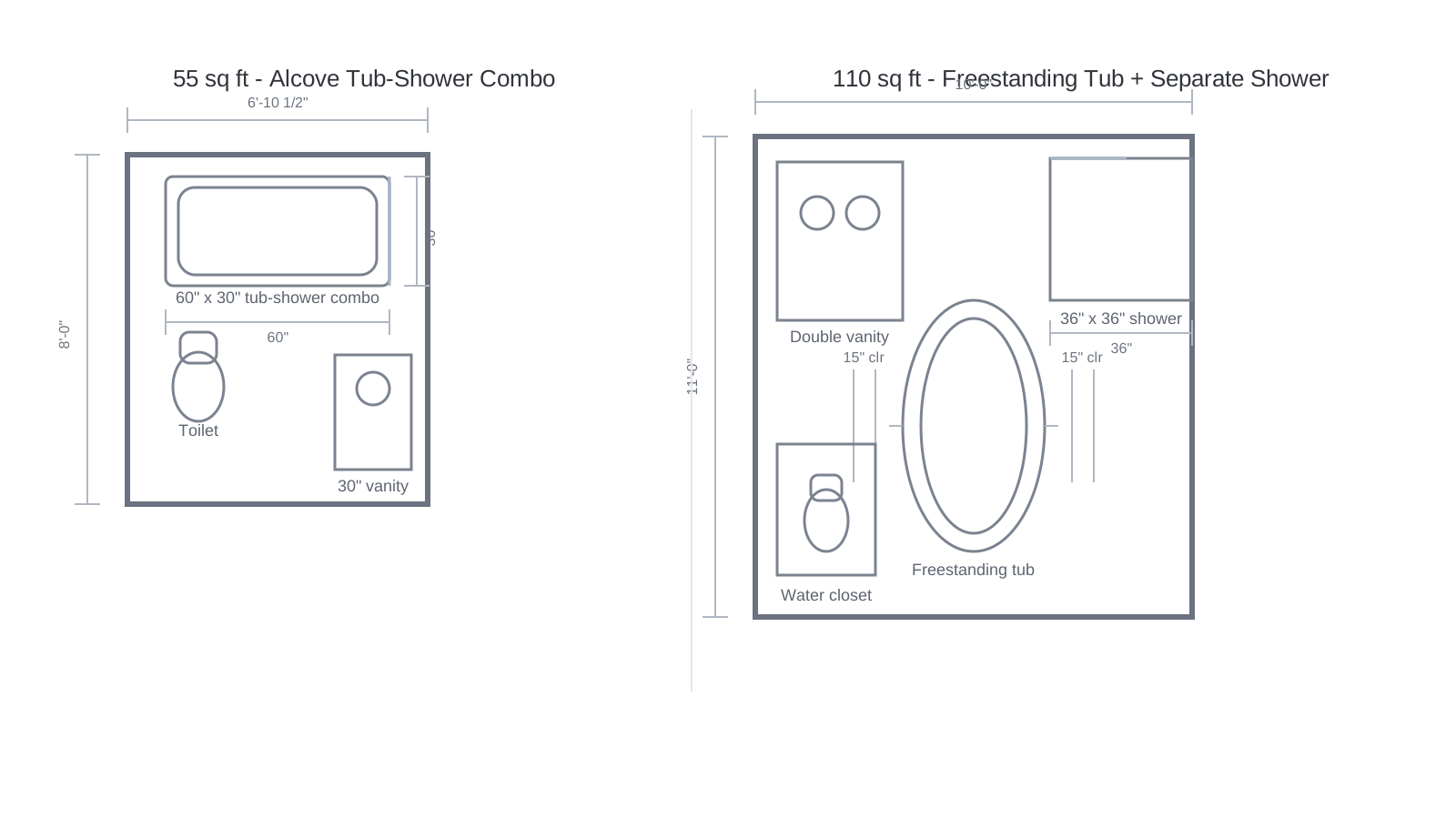
As a general rule, a freestanding tub works well in bathrooms over 100 square feet. You want the tub to breathe; cramming a freestanding soaker into a 60-square-foot bathroom makes it feel claustrophobic rather than luxurious.
What’s the minimum realistic footprint for a freestanding tub setup? For a 55-inch freestanding tub, allow the tub dimensions plus 12 to 18 inches of clearance on at least three sides, and plan for a separate shower elsewhere in the room. Our freestanding bathtub buying guide walks through this in detail.
Most standard alcove tub-shower combos are not designed for soaking. They’re 14 to 16 inches deep, built wide and shallow to accommodate shower use. A dedicated soaking tub, particularly a stone resin freestanding tub, is usually 20 to 24 inches deep with a contoured back, built specifically for the bath experience. If you actually intend to use the tub for long soaks rather than occasional baths, the difference is significant.
Manufacturer’s Take: I’ll be direct about what our stone resin freestanding bathtubs are actually built for. They’re deep soaking tubs designed to hold heat longer than acrylic, built as bathroom focal points. If you want to shower in your tub too, a combo is the honest answer. Our tubs are not shower platforms; they’re for the bath experience.
Freestanding tubs are statement pieces. If the design vision for the space puts the bathtub at the center, the reason you open the bathroom door, then a combo unit cannot deliver that. The visual impact of a freestanding tub in the right space is simply in a different category.
In higher-end homes and luxury renovation markets, a well-executed master bathroom with a freestanding tub and separate walk-in shower is now the expected standard. The renovation ROI calculus changes at this tier; here, the freestanding tub is not a luxury extra but a baseline expectation for buyers.
| Dimension | Shower Tub Combo | Freestanding Tub |
|---|---|---|
| Starting cost (tub only) | $400-$2,000 | $1,500-$8,000+ |
| Installed cost (full setup) | $2,000-$7,000 | $4,000-$15,000+ |
| Minimum bathroom size | ~35 sq ft for the unit alone | ~100 sq ft for a full bathroom layout |
| Soaking depth | 14-16 inches | 18-24 inches |
| Shower capability | Built-in, primary function | Possible but awkward; separate shower recommended |
| Heat retention | Low-medium | High |
| Installation complexity | Low-medium | Medium-high |
| Maintenance | Low | Medium |
| Aesthetic impact | Practical and clean | Statement piece / room centerpiece |
| Resale value impact | Positive in family and mid-range homes | Positive in luxury and master bath contexts |
| Best for | Family bathrooms, single-bathroom homes, budget renovations | Master suites, luxury renovations, dedicated soaking spaces |
| Placement flexibility | Low | High |
Manufacturer’s Take: The question we hear most often is, “can I put a shower over a freestanding tub?” Technically yes. But we almost never recommend it. You lose the visual appeal of the freestanding tub, you need a wrap-around curtain rod that looks awkward, and the shallow deck of most freestanding tubs is not designed for shower use. If you want both, build a separate shower and let the freestanding tub do what it does best.
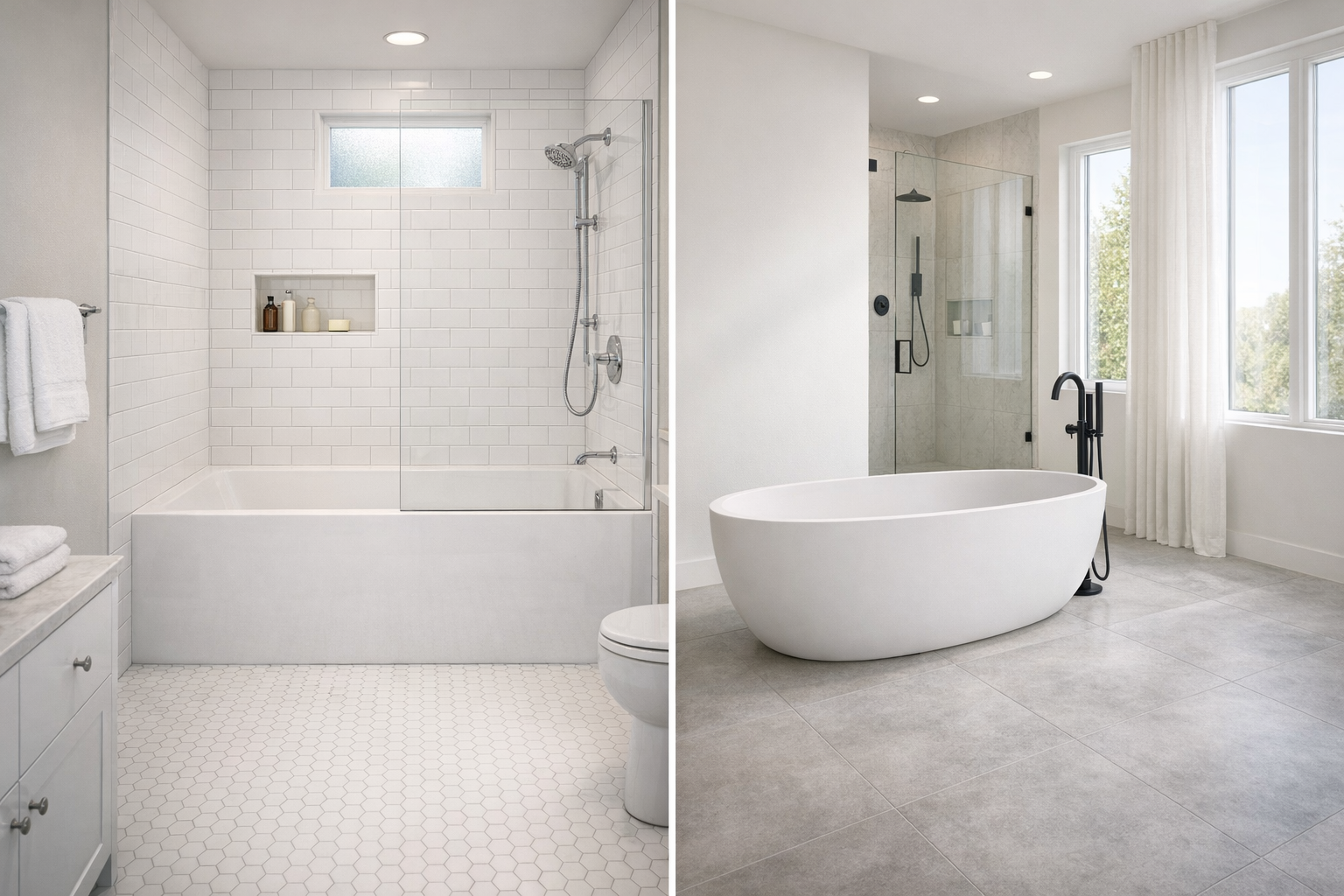
The most timeless approach. White or light gray subway tile on the three surround walls, a frameless glass panel on the fourth side, and a rain showerhead overhead. It works in bathrooms from 50 square feet up and stays easy to clean.
Replace the three-panel acrylic surround with floor-to-ceiling large-format porcelain tile. This elevates a standard alcove combo into something that looks custom-designed. Add a pressure-balance thermostatic valve and a handheld showerhead and it becomes genuinely luxurious within a combo footprint.
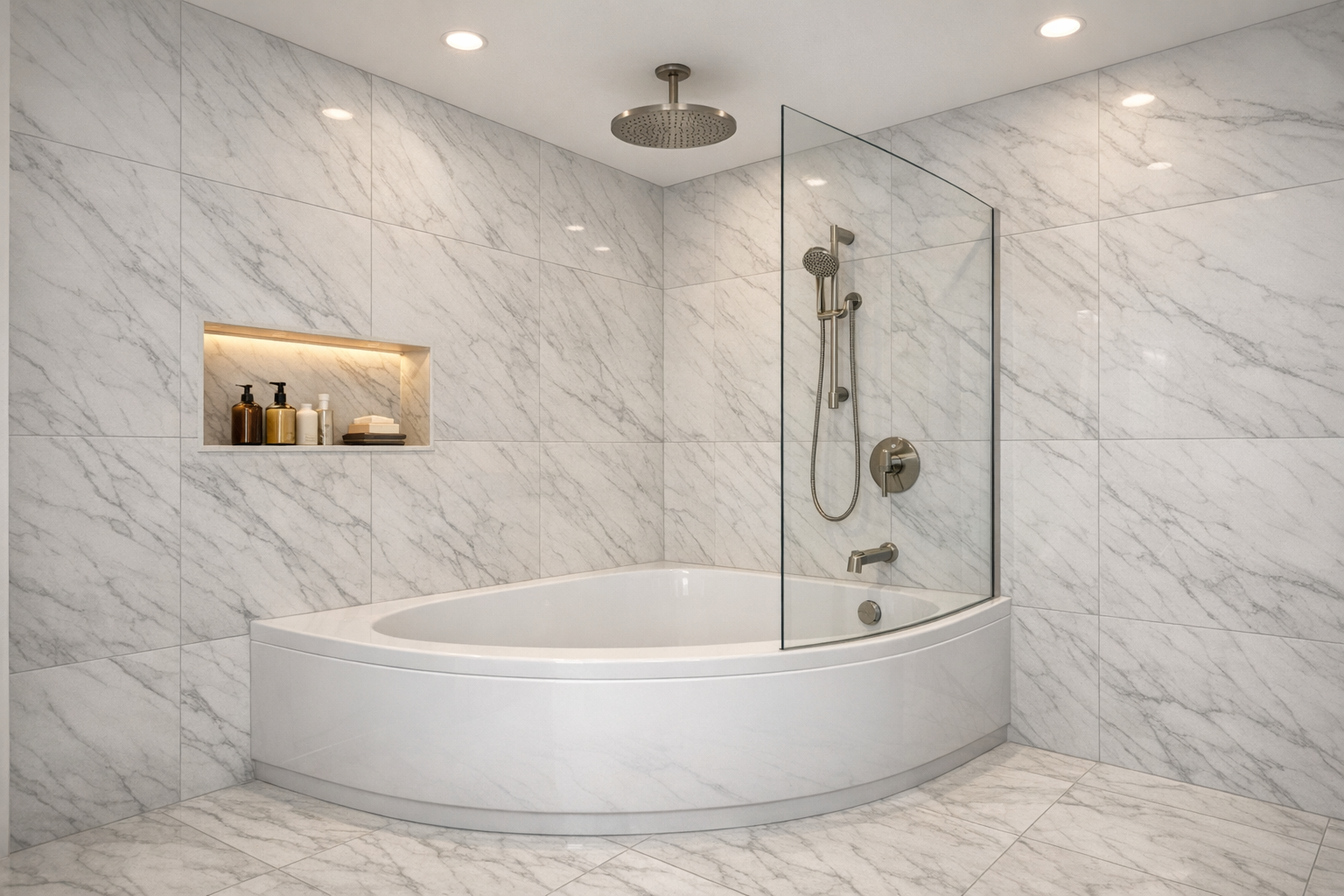
Corner tub-shower combos allow for a walk-in entry on the diagonal corner, with no door needed. This works especially well in bathrooms with unusual floor plans or corner alcoves that do not fit standard 60-inch tubs.
Is there a middle-ground option? Yes. If your bathroom is in the 90 to 110 square foot range and your budget is $8,000+, consider placing a freestanding soaking tub against one wall or in a corner and building a separate compact walk-in shower in the same room. You get the visual impact of the freestanding tub and the daily convenience of a proper shower. Our freestanding bathtubs include sizes starting at 55 inches that can work in tighter master bathrooms when planned carefully.
This is where most renovation plans go wrong. People underestimate how much room the non-tub elements take.
For a standard shower tub combo (alcove):
For a freestanding tub with a separate shower:
Not sure what size bathroom you’re working with? Our resource on the most common bathroom sizes and dimensions is a good place to start.
Installing a shower tub combo is a relatively contained project. The plumbing usually stays in the same location. The main variables are whether you’re replacing an existing unit or moving plumbing.
Installing a freestanding tub is a different conversation. The drain location may need to move if your existing drain is in an alcove position. Freestanding tubs typically use a floor-mount tub filler, which means a new supply line run through the floor. Depending on your subfloor type, this can add $500 to $2,000 to the project cost. Read our guide to installing a freestanding bathtub for the full breakdown.
Manufacturer’s Take: The most underestimated cost in a freestanding tub installation is not the tub. It’s the floor-mount tub filler and the plumber’s time to run the supply line. Get that quote before you finalize your budget.
Both combo units and freestanding tubs come in several materials. Here’s what that means in practice.
Acrylic / fiberglass (most combo units):
Porcelain-on-steel:
Stone resin:
Cast iron:
Manufacturer’s Take: We use stone resin for a specific reason: it’s the material that makes the soaking experience meaningfully different from an acrylic tub. If you’re investing in a freestanding tub primarily for relaxation baths, stone resin is worth the premium. If you want a tub that doubles as a shower platform, an acrylic combo unit is honestly the better choice for that use case.
| Your Situation | Best Choice |
|---|---|
| One bathroom in the home | Shower Tub Combo |
| Kids in the household | Shower Tub Combo |
| Bathroom under 80 sq ft | Shower Tub Combo |
| Budget under $5,000 | Shower Tub Combo |
| Mid-range home, family buyer pool | Shower Tub Combo |
| Master en-suite, 100+ sq ft | Freestanding Tub |
| You actually use the tub for soaking | Freestanding Tub |
| Design is the primary goal | Freestanding Tub |
| Luxury renovation, high-end market | Freestanding Tub |
| You want the room’s focal point to be the tub | Freestanding Tub |
A shower tub combo is a bathtub and shower in a single unit, one footprint that does both jobs. The tub sits in an alcove or against a wall, the showerhead mounts above it, and a curtain or glass door contains the water during showering.
The standard alcove tub-shower combo is 60 inches long by 30 to 32 inches wide. This is the most widely stocked configuration and fits the standard 5-foot alcove found in most American bathrooms.
Yes. Removing a tub-shower combo and converting the space to a walk-in shower is one of the most popular bathroom renovations. The existing drain can often be repurposed.
Technically yes, but it’s generally not recommended. You need a custom wrap-around curtain rod that compromises the tub’s visual appeal, and freestanding tubs are not designed for shower use.
Plan for at least 100 to 120 square feet if you want a freestanding tub plus a separate shower. The tub itself needs 12 to 18 inches of clearance on its open sides.
In most markets, particularly mid-range homes with family buyers, yes. Having at least one full bathroom with a tub is an important box for many buyers.
A basic alcove tub-shower combo with a prefab surround runs about $1,500 to $4,000 installed. A tiled surround with upgraded fixtures typically runs $4,000 to $8,000. Custom tile work and frameless glass can go higher.
A combo has a full tub basin, so you can fill and soak in it. A walk-in shower with a bench is shower-only; the bench is for convenience, not soaking.
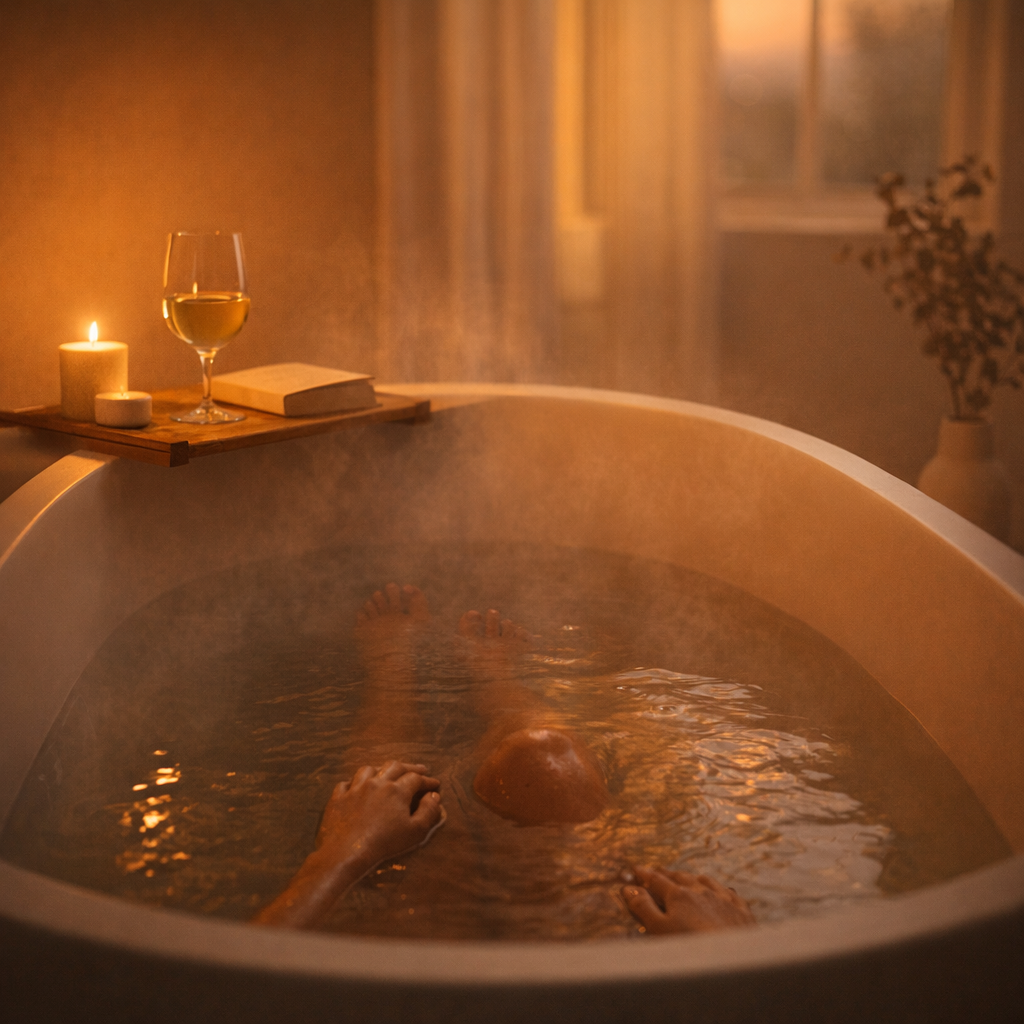
If you’ve worked through this guide and a freestanding tub is the right call for your bathroom, here’s what matters most in choosing one.
Soaking depth: Look for 18 inches of usable water depth minimum. That’s the point where a bath starts to feel immersive rather than shallow.
Material: Stone resin holds heat longer than acrylic. A bath that stays warm for the duration is a different experience than one that goes tepid in 15 minutes.
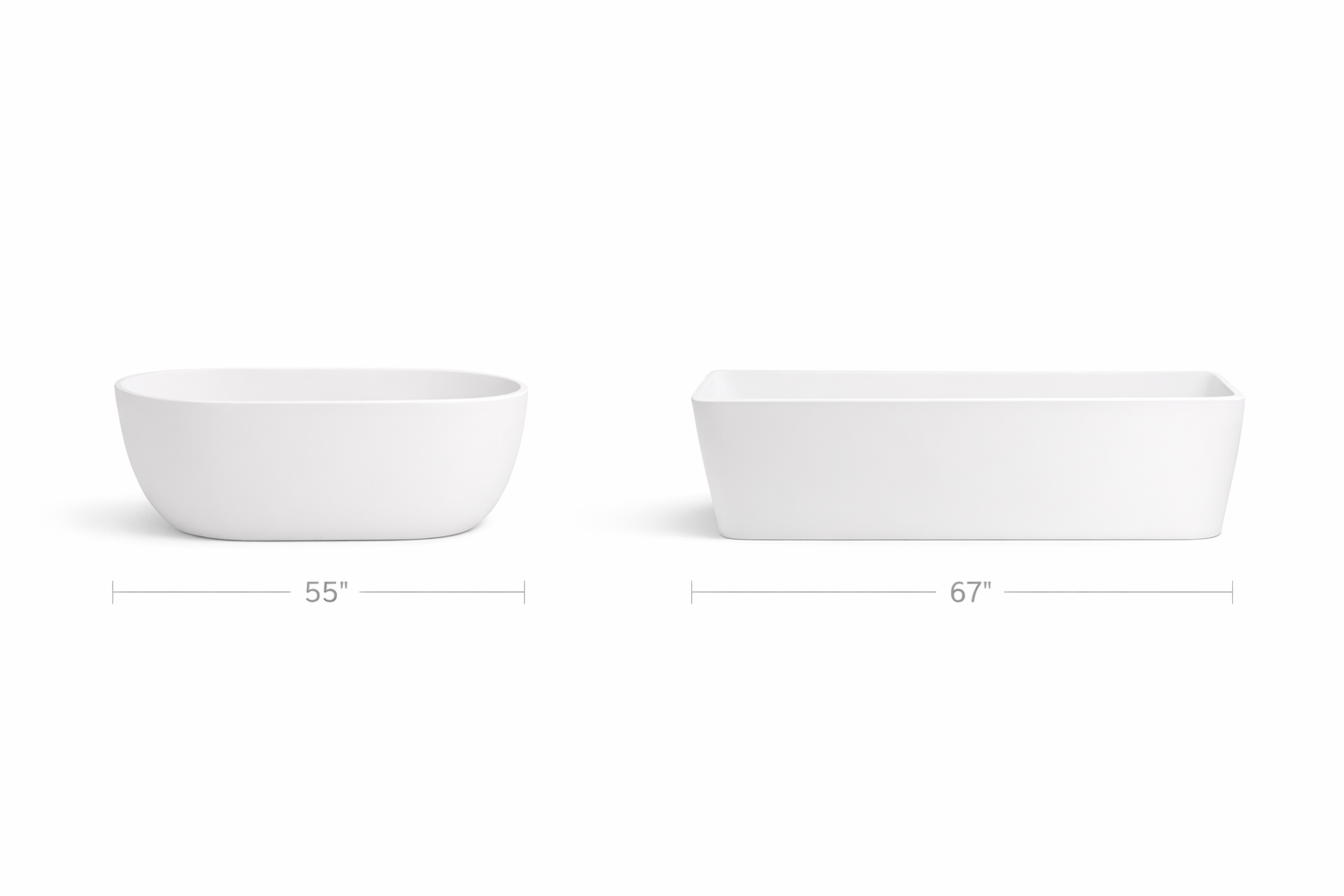
Size vs. your bathroom: Measure twice. A 55-inch tub can look right in a 90-square-foot bathroom. A 72-inch tub in the same room often overwhelms it.
Floor compatibility: Stone resin and cast iron tubs are heavy when filled. Confirm your subfloor and floor material can handle the load before you purchase.
Explore our full collection of freestanding bathtubs. We make stone resin tubs in multiple sizes starting at 55 inches, and our freestanding bathtub buying guide covers the rest of the decision in detail.
The shower tub combo vs. freestanding tub decision is not really about which one is better. It’s about which one is right for your specific bathroom, your household, and how you actually live.
Choose a shower tub combo if:
Choose a freestanding tub if:
If the second list matches your situation, we’d love to help you find the right tub. Browse our freestanding bathtubs or start with our freestanding bathtub buying guide.
And if the first list is your situation? Do the combo. Do it well. It’s the right call.

Eric is the founder and president of Badeloft USA. He has been the president of Badeloft’s US division for over ten years and oversees all marketing and branding aspects of Badeloftusa.com.
His expertise lies in small business development, sales, and home and bathroom industry trends and information.
Contact us with any business related inquiries.
Badeloft is dedicated to helping homeowners make informed decisions about their bathrooms. We adhere to strict editorial guidelines to ensure our content is accurate, trustworthy, and useful.
Request free stone resin and stainless steel material samples. Delivered to your door.
Bathroom storage fails the same way every time: it gets planned last. By the time the tiles are in and
A waterfall faucet is one of the most visually compelling fixtures a bathroom can have. It’s also one of the
Choosing a bathtub color is one of the few bathroom decisions you’ll live with for 15 to 20 years. Get
Most bathtub decisions come down to what fits the space and what fits the budget. That is a reasonable starting
Request your free material sample below. By submitting, you agree to receive occasional product updates and offers from Badeloft. Unsubscribe anytime.
"*" indicates required fields