
What Features Should You Look for When Buying a Freestanding Bathtub
A freestanding bathtub is the most permanent aesthetic decision in a bathroom renovation. Get the selection right and it becomes
A freestanding bathtub is the most permanent aesthetic decision in a bathroom renovation. Get the selection right and it becomes the reason you actually use the room. Get it wrong and it sits there, beautiful and wrong, reminding you of the features you didn’t check.
Badeloft has manufactured stone resin bathtubs for over a decade, working alongside installers, interior designers, and homeowners across North America and Europe. The perspective here comes from the manufacturer side: seeing which features drive long-term satisfaction, which shortcomings generate the most calls after installation, and what the purchase process almost never surfaces until it’s too late.
Whether you’re replacing a built-in alcove tub, selecting a centerpiece for a new primary bath, or navigating a first-time freestanding purchase, this guide covers both the features that show up on every spec sheet and the ones that rarely get mentioned until after delivery day.
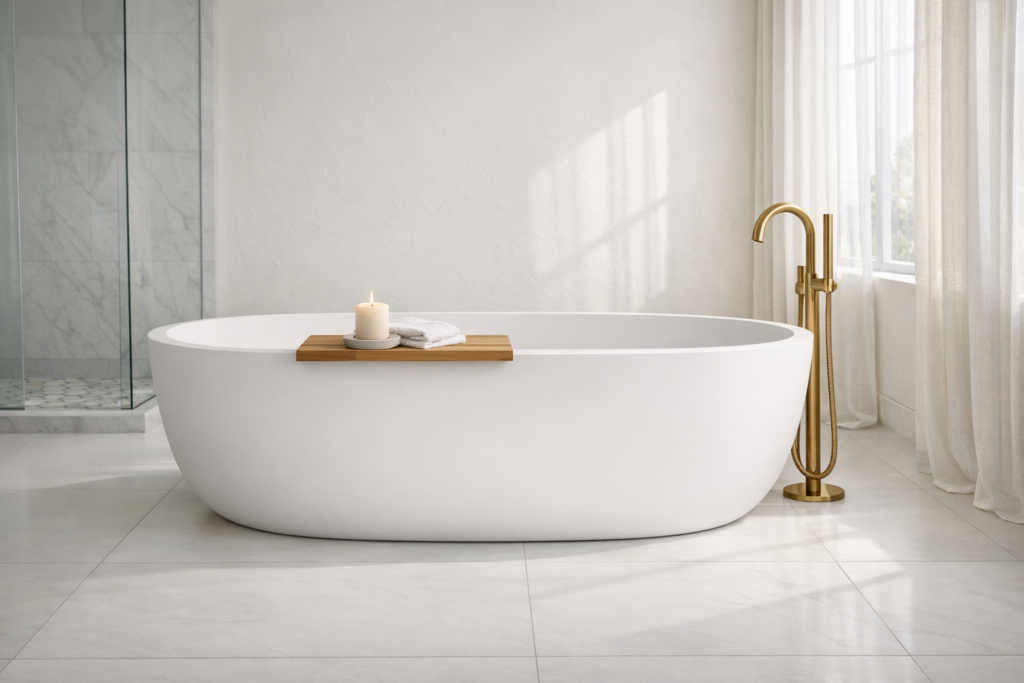
If you’re drawn to a particular tub but quietly unsure whether the interior will actually be comfortable to lie in for 20 minutes, this is worth reading before you decide. Maybe you’ve been comparing materials for weeks and every source tells you the same things about acrylic versus cast iron without explaining what the difference feels like at the end of a long day. Or you’re deep in the renovation process and just discovered that the plumbing rough-in from your contractor is in the wrong place for the tub you chose.
By the end of this guide, you’ll know which features are worth prioritizing, which questions to ask your installer, and what to verify before you commit. The longer outcome: a tub you actually use, because it’s right for your body, your plumbing, your floor, and your household’s hot water supply.
We’ll cover material selection and what it actually means for heat retention, how to evaluate size and ergonomic fit, what installation surprises to head off before delivery day, how to think about faucet and drain configuration, and what the true installed cost looks like beyond the sticker price.
Let’s start with material, because it’s the single decision that affects everything else, including comfort, maintenance, and whether the tub keeps your water warm long enough to matter.
Every significant feature of a freestanding bathtub, including how long the water stays warm, how easy it is to keep clean, how the surface holds up over years of daily use, and how much floor reinforcement you’ll need, flows from one upstream decision: what the tub is made of.
The four materials worth serious consideration are stone resin, cast iron, acrylic, and solid surface composite. Each involves a real trade-off. Understanding those trade-offs before you choose a shape, size, or color will prevent you from making a $5,000 decision based on appearance alone.
Stone resin, also called mineral composite or composite stone, is a blend of natural stone aggregate and resin binders, typically finished in matte or satin. It’s the material that has gained the most ground in premium freestanding specification over the past decade, and the reason comes down to balance.
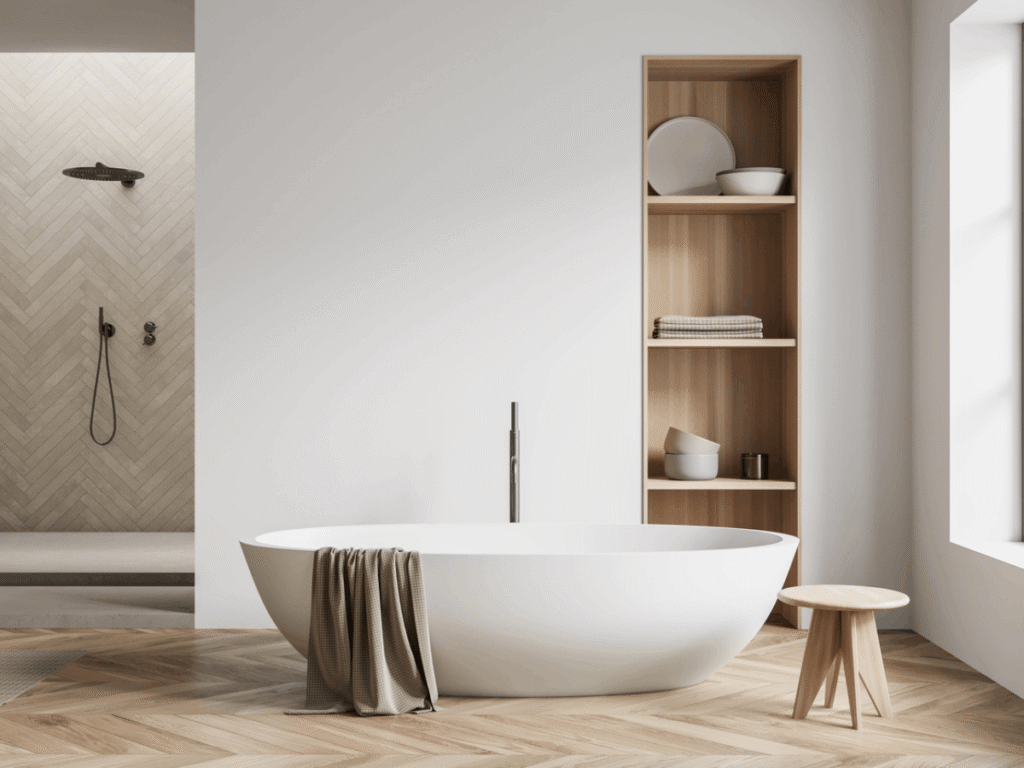
Stone resin is heavier than acrylic but lighter than cast iron, typically 150–300 pounds for a freestanding tub. It retains heat significantly better than acrylic without requiring the structural reinforcement that cast iron demands. The surface is non-porous, resistant to scratches and staining, and doesn’t require the periodic re-glazing that enamel does. In matte finishes, water spots and fingerprints are also far less visible than on high-gloss acrylic.
The trade-off is cost. Stone resin tubs sit at the mid-to-high end of the price range, typically $2,500–$8,000 for the tub body before fixtures and installation.
Cast iron has the most credible heat retention story of any bathtub material. The metal absorbs heat from the water as the tub fills, and once warm, it releases that heat back slowly, keeping the water temperature stable longer than any other common option.
The trade-off is weight. A standard cast iron freestanding tub weighs 350–500 pounds before water or occupant. Most floors can support this load, but upper-floor installations require a structural assessment before the tub arrives, not after. The delivery and installation process is also more complex and more expensive than with other materials.
The enamel surface requires care. It can chip, and once chipped, it needs professional re-glazing to prevent rust from spreading into the exposed iron beneath. This isn’t a common problem with careful use, but it’s a maintenance reality that acrylic and stone resin don’t share.
Acrylic is the most common residential bathtub material for one reason: cost. Acrylic tubs are significantly less expensive than stone resin or cast iron, lighter at 60–100 pounds, easier to install, and available in the widest range of shapes and sizes.
The trade-offs are heat retention and surface longevity. Acrylic loses heat faster than stone resin or cast iron, a meaningful difference if long, warm soaks are the point of buying a freestanding tub. The surface can scratch with abrasive cleaners and yellow over years of exposure to cleaning products and UV light.
If budget is the primary constraint, acrylic is a reasonable starting point. If you’re investing in a primary bath renovation and plan to keep the tub for 15 or more years, the gap in heat retention and surface longevity between acrylic and stone resin typically justifies the cost difference over that time window.
Solid surface composites sit between acrylic and stone resin across most performance categories: better heat retention than acrylic, comparable scratch resistance, and more moldable into complex curves than stone resin. They’re a strong option for buyers who want design flexibility at a mid-range price point, and they’re worth considering if the shape you want isn’t available in stone resin.
Heat retention is one of the most cited features in freestanding tub research, and one of the least clearly explained. Here is what it actually means in practice.
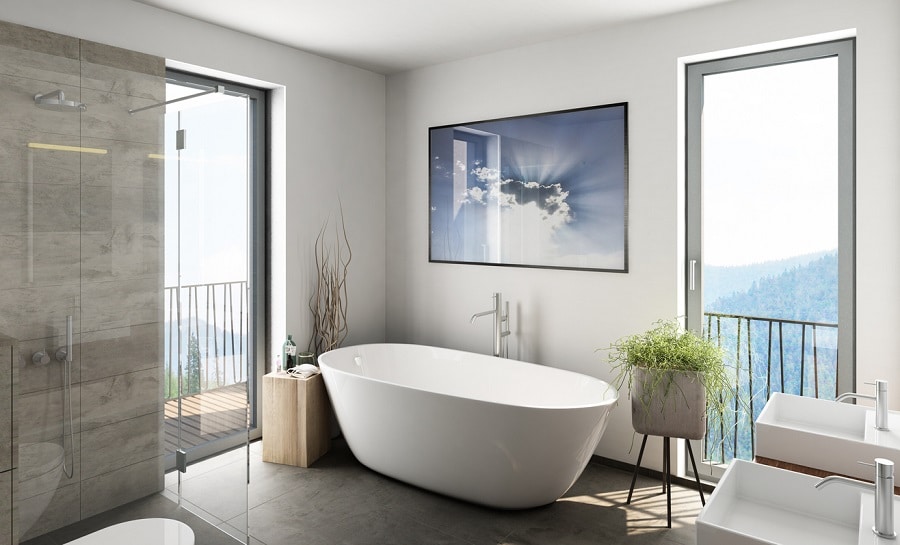
An acrylic tub loses heat relatively quickly because acrylic has low thermal mass: it doesn’t absorb heat from the water, so the water cools toward room temperature at a faster rate. Stone resin has higher thermal mass, absorbs some of the water’s heat as the tub warms, and releases it back gradually, slowing the cooling curve. Cast iron has the highest thermal mass of the group: it takes the longest to heat up during the fill, because the iron itself draws heat from the water, but once warm it maintains temperature the longest.
A practical benchmark: in a bathroom at roughly 68°F, water in an acrylic tub drops noticeably in temperature within 10–15 minutes of settling. Water in a stone resin tub holds warmth considerably longer under the same conditions. Cast iron performs best in sustained soaking but requires the entire tub body to warm first, which means the first several gallons of hot water go into heating the iron rather than the bath.
What this means for your decision: if a 20–30 minute soak is the primary use case, stone resin gives you a meaningful improvement over acrylic without the weight and installation complexity of cast iron. If you want maximum heat retention and can accommodate the structural requirements, cast iron is the answer. If budget is the constraint and heat retention is secondary, acrylic is workable, but go in understanding the limitation.
Getting size wrong is the most common and most avoidable freestanding tub mistake. There are two distinct measurements to get right: the space the tub needs in the room, and the space it provides for the person inside.
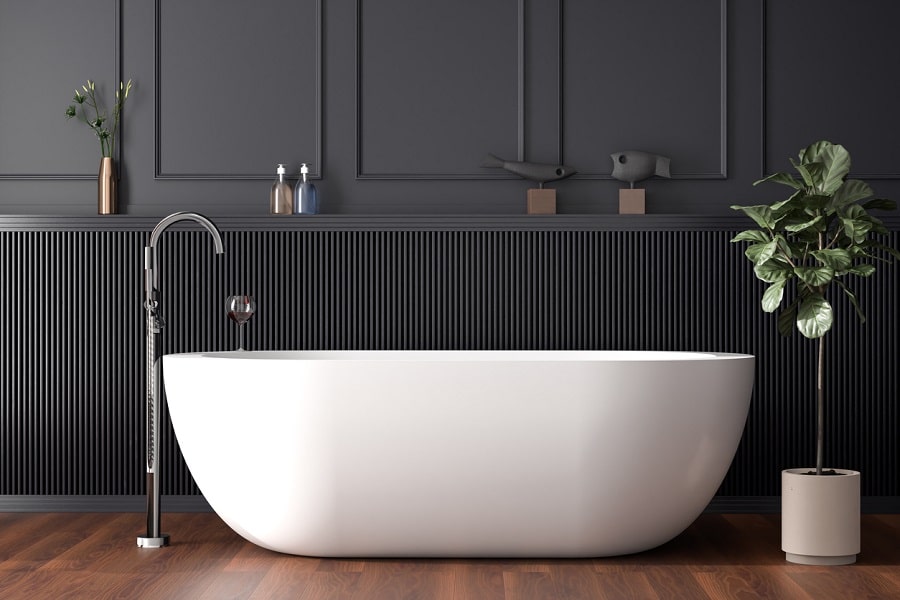
Room clearance: The standard guidance is 4–6 inches of clearance on all sides of a freestanding tub. That number is a functional minimum for cleaning access, not an aesthetic recommendation. For the tub to visually anchor the room without feeling cramped, 12 inches on the sides and at least 18 inches at the drain end for faucet access and plumbing reads significantly better in most bathrooms.
Measuring the delivery path: Before you measure the room, measure the path. Delivery teams regularly encounter front door widths, stair landings, and hallway corners the tub cannot navigate without removing a door frame or near-vertical pivoting. Measure the narrowest point on the route from street to bathroom and compare it to the tub’s longest dimension, not just its installed footprint. If the numbers are within a few inches of each other, call the manufacturer or retailer to confirm delivery logistics before you buy.
Tub length and user height: Most freestanding tubs range from 54–72 inches in exterior length. The comfortable interior length is shorter, typically 50–66 inches once you account for sloped ends, interior walls, and the drain position. A useful rule: add 6 inches to the height of the tallest person who will use the tub regularly. A person who is 6 feet tall needs at least a 66-inch interior to lie back without bending. If you’re between sizes, choose longer. A tub that’s slightly too short to recline in fully is one of the most consistently cited regrets among freestanding tub owners.
This is the feature most buyers don’t think to evaluate, and the one that determines whether you actually want to spend time in the tub once it’s installed. The interior shape governs three things: back support angle, shoulder width, and effective soaking depth.
Back angle: The angle at which the interior end wall rises determines whether you can recline comfortably or whether you have to hold yourself upright. A wall that rises too steeply forces a near-seated posture that becomes uncomfortable within minutes. Look for a gradual, reclined slope, ideally 100–115 degrees from horizontal, that allows your back to rest without effort. Some manufacturers specify this; many don’t. If you can test the tub in a showroom, lie back for two full minutes rather than ten seconds. Your back will tell you what photographs won’t.
Shoulder width: The interior width at shoulder height determines whether a broader-shouldered person can relax their arms rather than angle them inward. Interior widths below 24 inches can feel confining for adults of average build. Widths of 28 inches or more give the shoulders room to settle naturally. This measurement is almost never listed in product descriptions; ask for it directly if it isn’t on the spec sheet.
Effective soaking depth: Most freestanding tubs list a soaking depth of 14–20 inches from drain to overflow. The relevant question is not whether the number is technically adequate but whether the overflow is positioned high enough to let you submerge to your shoulders when lying back. A tub with a deep bowl but a low overflow drains before you reach full depth. Check the overflow height alongside the stated interior volume, not just the depth measurement.
Most installation problems are discoverable in advance. Most buyers don’t look until the tub is already in the house.
Floor support and weight: Before any tub over 250 pounds is placed on a wood-framed floor, calculate the total load. Water weighs 8.34 pounds per gallon. A 60-gallon tub adds approximately 500 pounds of water weight. Add tub weight and occupant weight, and a 280-pound stone resin tub fully filled and occupied generates roughly 1,000 pounds concentrated over the tub’s footprint.
Most modern residential construction handles this without reinforcement. Older homes, upper-floor bathrooms in houses built before 1980, and any bathroom with visible floor deflection or soft spots warrant a structural assessment before installation. For cast iron, this assessment is not optional.
Plumbing rough-in location: Freestanding tubs drain from the center or one end depending on the model. Floor-mounted freestanding faucets have their own rough-in position, typically 3–6 inches from the tub’s edge. Both the drain and the faucet supply lines need to match your existing rough-in, or your plumber needs to move them before the tub arrives.
This is a common and expensive surprise. Confirm the drain location and faucet rough-in requirements with your installer before finalizing the tub selection. Discovering a mismatch after the tub is in the room means either changing the tub or paying for a plumbing relocation you didn’t budget for.
Hot water supply: A standard 40-gallon residential water heater will not fill a deep-soaking freestanding tub to capacity. Most freestanding tubs hold 50–70 gallons at the overflow line. If your household runs on a 40–50 gallon tank heater, you’ll either fill the tub with lukewarm water or wait for the tank to recover mid-fill. Confirm your water heater’s tank size and recovery rate before buying a deep-soaking tub. A tankless water heater or an upgraded tank solves this, but it needs to be on the renovation checklist before installation day, not discovered on first use.
Freestanding tubs are plumbed differently from alcove or drop-in tubs, and the faucet options are more varied than most buyers expect going in.
Floor-mounted freestanding faucet: The most common choice for a true freestanding tub. The faucet stands independently on the floor beside the tub, fed by supply lines running through the floor. It requires its own rough-in position, typically 3–6 inches from the tub’s edge at the drain end. Clean look, maximum flexibility in tub positioning.
Deck-mounted faucet on a drilled rim: Some freestanding tubs come with a flat deck rail that accepts standard deck-mount faucets. This works well when the existing plumbing is positioned toward the wall rather than the floor, but it limits faucet options to deck-mount configurations and changes the visual profile of the tub.
Wall-mounted faucet: Works for freestanding tubs positioned against or very near a wall. Less common for true freestanding placement but practical in narrower bathrooms where floor plumbing isn’t feasible.
On drain placement: center drains are standard on most contemporary freestanding tubs. End drains exist on some models and work better when the plumbing rough-in is near one end of the tub’s intended position. Identify where your drain rough-in sits before selecting a model, not after. Changing drain position is a plumbing job; choosing the right model is free.
The sticker price of a freestanding bathtub is typically 40–60% of what you’ll actually spend to have it installed and functional. Knowing the full cost picture before setting your budget is the difference between a renovation that comes in on target and one that surprises you at the end.
Items that reliably add to the tub price:
A $3,500 stone resin tub in a straightforward installation, with existing plumbing in the right position, a ground-floor bathroom, and no structural work required, can realistically run $4,500–$5,500 total. A $5,000 cast iron tub on an upper floor with supply line relocation can reach $8,000–$10,000 installed.
Budget for installation before you choose the tub, not after.
These are the regrets that come up most often, not from people who bought the wrong brand, but from people who made a reasonable decision on style and got the practical details wrong.
“The water goes cold too fast.” Almost always an acrylic tub. Heat retention was treated as a marketing distinction rather than a real performance difference. Stone resin or cast iron would have addressed this entirely.
“I can’t lie back comfortably.” Back wall angle too steep for the buyer’s height. The tub was never tested in a showroom. The decision was made from photographs and specification sheets that didn’t list back angle.
“We ran out of hot water before the tub was full.” Standard 40-gallon water heater. The tub holds 65 gallons. A tankless water heater or a larger tank would have solved it, but the issue wasn’t on the pre-installation checklist.
“Cleaning underneath is harder than I expected.” The gap between the tub base and the floor is too narrow for standard cleaning tools. Pedestal models and tubs on visible feet are considerably easier to maintain underneath. This is worth asking about specifically if ease of cleaning matters to you.
“The faucet ended up in the wrong position.” Floor rough-in was near the head end of the tub rather than the drain end. The faucet now reaches across the tub rather than sitting beside it. The rough-in position was not confirmed before the tub was ordered.
None of these are problems you can’t avoid. All of them are on the checklist below. At Badeloft, we want you to know that you are purchasing a freestanding bathtub with the highest grade stone resin materials, designed in mind for a consistent confortable soak.
Before committing, verify each of these:
Getting all eight right before delivery day is easier than correcting any one of them after.
A freestanding bathtub is a long-term investment, and the features that will matter most to you in five years are not the ones that photograph best. Material determines your daily experience of warmth and surface quality. Interior shape determines whether you actually want to stay in for 20 minutes. Installation details determine whether the tub arrives without a problem and plumbs in without a change order.
The buyers who are happiest with their freestanding tubs are the ones who did the practical work first: measured the path, confirmed the plumbing, checked the floor, and saw the material in person. The aesthetic decision, the one that feels like the main decision when you’re browsing, turns out to be the easiest part once everything else is settled.

Eric is the founder and president of Badeloft USA. He has been the president of Badeloft’s US division for over ten years and oversees all marketing and branding aspects of Badeloftusa.com.
His expertise lies in small business development, sales, and home and bathroom industry trends and information.
Contact us with any business related inquiries.
Badeloft is dedicated to helping homeowners make informed decisions about their bathrooms. We adhere to strict editorial guidelines to ensure our content is accurate, trustworthy, and useful.
Request free stone resin and stainless steel material samples. Delivered to your door.
A freestanding bathtub is the most permanent aesthetic decision in a bathroom renovation. Get the selection right and it becomes
Choosing the right bathtub drain stopper is essential for creating a comfortable and functional bathing experience. With over 20 common
A soaking tub is defined by one thing: depth. Where a standard alcove tub sits around 14 inches deep, a
Spring is when most bathroom remodels get serious. The weather breaks, contractors open up, and that upgrade you have been
Request your free material sample below. By submitting, you agree to receive occasional product updates and offers from Badeloft. Unsubscribe anytime.
"*" indicates required fields