
Choosing a Bathtub for Two: Sizes, Features, Installation & Other Considerations Before You Purchase
There’s a gap between what a freestanding bathtub listing tells you and what it actually feels like to share one.
Most people treat the toilet shape as an afterthought. They pick the rest of the bathroom first, then walk into a showroom and choose whichever toilet fits the rough-in. It works, but it leaves a lot on the table.
Toilet shape is one of the first decisions you should make in a bathroom renovation, not the last. It affects comfort, spatial flow, design consistency, and whether the smart seat or bidet you have your eye on will even fit. Getting it wrong costs you not just money, but the feeling that something is slightly off every time you walk into the room.
This guide covers every shape currently on the market, how to measure your space correctly before you buy, and how to think about toilet shape as part of a considered bathroom design.

All toilets in production today fall into one of three bowl geometries: round, elongated, or square. Each makes a different trade-off between spatial footprint, user comfort, and visual presence.
1. Round bowls measure approximately 16.5 inches from the mounting holes to the front of the rim. They project less into the room, which makes them the default choice in tight spaces. They also carry a traditional visual weight that reads as compact and understated. In a powder room or a bathroom where square footage dictates everything, round is often not just acceptable but the right design decision.
2. Elongated bowls measure approximately 18.5 inches from mounting holes to rim. The additional two inches translate into meaningfully more seating comfort for most adults. Elongated bowls have become the standard in new construction and primary bathrooms, and their oval form reads as more modern and visually resolved. The trade-off is real: in a bathroom already running tight on depth, those two inches can affect door swing or leave less walking clearance than code-compliant minimums.
3. Square and D-shape bowls are the least covered option in most buying guides, which is a problem because they often solve exactly the kind of space challenge that sends people back and forth between round and elongated. Square and D-shape bowls typically measure 14 to 16 inches wide with rough-in sizes between 10 and 14 inches, fitting into corners and wall-adjacent positions that a round or elongated bowl simply cannot occupy cleanly. They offer the most architectural look of the three and pair well with modern, high-design bathrooms where every element is deliberate.
If you’re renovating a powder room, a small en-suite, or a hall bathroom in an older home with a compressed floor plan, a round toilet is not a compromise. It’s the right tool for the space.
A round bowl in a 35-square-foot bathroom leaves room to move. The same space with an elongated bowl can feel as though the toilet owns the room. First-time renovators often focus on upgrading to elongated because it reads as the “better” option, and then discover that the extra length creates a squeeze between the toilet and the vanity that no tile choice or lighting fixture can fix.
Round toilets are also easier for children to use and generally cost $40 to $75 less than their elongated counterparts at equivalent quality levels. Installation costs are identical. If you’re designing a family bathroom that gets heavy use from multiple people across different ages and sizes, round performs reliably for the widest range of users.
The design perception that round toilets look dated does not hold up when paired with the right fixtures. A clean, wall-hung round bowl in a matte white or matte black finish against large-format tile reads as contemporary. The shape is not the issue. The surrounding choices are.
For a primary bathroom used primarily by adults, elongated is the bowl most people will find more comfortable over time. The forward extension supports more of the thigh, distributes weight more naturally, and provides a seated position that most adults report as noticeably better, particularly during longer use.
Elongated bowls have become the standard for bidet toilet seats, smart toilet integrations, and most premium seat upgrades. If you’re planning to install a bidet seat as part of this renovation, confirm compatibility with your specific toilet model before purchasing. Most bidet seats are produced in both elongated and round configurations, but the fit is not interchangeable. An elongated seat on a round bowl overhangs the front; a round seat on an elongated bowl leaves a gap. The visual result is wrong enough to notice every day.
If you’re renovating a primary bathroom with clear dimensions, elongated is usually the right recommendation. At an additional $40 to $75 in product cost with identical installation labor, the comfort difference is real and lasting. The bathroom you’re designing now should serve you well for 10 to 15 years or more. That upgrade is worth it.
For bathrooms where depth is a concern but comfort matters, look at compact elongated models before defaulting to round.
Square and D-shape bowls deserve more attention than they typically receive, and the reason most buyers overlook them is simply that most buying guides don’t cover them.
The geometry of a square or D-shape bowl is architecturally different from both round and elongated options. It doesn’t carry the traditional curvature of either. The flat front and angular form sit flush against walls and into corners more cleanly than any rounded bowl can. In bathrooms where a round toilet would work but an elongated one wouldn’t fit, a square or D-shape bowl often fits better than round and provides a more intentional design statement.
Comfort with square and D-shape toilets depends on the specific model. The flat front can feel less natural for extended seated use, and the shape limits the accessory and seat options available compared to round or elongated. For a bathroom used lightly, or where the design brief calls for a strong architectural statement, this trade-off is often acceptable. For a heavily used primary bathroom, elongated remains the stronger comfort choice.
If you’re working with an architect or interior designer on a bathroom renovation and they want something beyond the standard round-or-elongated binary, this is the shape worth exploring.
Compact elongated toilets offer the comfort profile of an elongated bowl with roughly the footprint of a round one. They accomplish this by shortening the overall projection while preserving the oval seat shape.
A standard elongated toilet projects approximately 29 to 32 inches from the wall. A compact elongated model reduces that projection by roughly two inches, bringing it into the same footprint range as a standard round toilet at 27 to 30 inches. The seat geometry remains elongated, so adult comfort is preserved.
If you’re working with a space that measures borderline between what an elongated bowl fits and what it doesn’t, price a compact elongated model before defaulting to round. The cost difference is minimal, and the comfort gap between compact elongated and full elongated is smaller than the gap between elongated and round.
This is where most buyers make their mistake, and it’s entirely avoidable.
Rough-in distance is the measurement from the finished wall behind the toilet to the center of the drain pipe, or to the center of the bolt holes on an existing toilet. Standard rough-in sizes are 10 inches, 12 inches, and 14 inches. The 12-inch rough-in covers the majority of residential bathrooms. Older homes and some renovated bathrooms may have 10-inch or 14-inch rough-ins.
Before purchasing any toilet, measure your rough-in. Buying a toilet designed for a 12-inch rough-in into a 10-inch rough-in produces a gap between the toilet tank and the wall. It won’t leak. It will just look wrong every single day.
Clearance from bowl front to wall, door, or adjacent fixture is the second measurement that matters. Building codes typically require 21 inches of clearance from the front of the toilet to any obstruction. ADA-compliant bathrooms require 48 inches. Measure from the center of the mounting bolts outward:
If your clearance measurement falls below 21 inches with an elongated bowl, use a compact elongated or a round. No aesthetic preference is worth failing a building inspection or creating a space that’s uncomfortable to navigate daily.
Smart toilet seats and bidet attachments are no longer niche products. If you’re approaching a full bathroom renovation, knowing whether your chosen toilet shape will accommodate the seat upgrade you want later is worth resolving now rather than after installation.
Most bidet seats and smart toilet seats are produced in both elongated and round configurations.
Before finalizing a toilet selection:
1. Identify the bidet or smart seat model you want, or the category you’d likely buy into within the next few years.
2. Confirm it’s available in your chosen bowl shape.
3. Verify that the seat’s front-to-back depth matches your bowl before ordering.
Round bidet seats fit round toilets. Elongated bidet seats require elongated bowls. The mismatch is two inches at the front, and there is no way to adapt around it cleanly. Square and D-shape toilets have the fewest smart seat options available. If bidet or smart toilet compatibility is a priority, elongated is the safer long-term choice.
ADA-compliant toilets require a floor-to-seat-rim height of 17 to 19 inches, measured without the seat. Standard toilets sit at 14 to 15 inches. The difference matters more than most buyers expect.
For households with anyone over 60, anyone with knee or hip concerns, or anyone recovering from lower-body surgery or injury, a comfort-height toilet is worth specifying from the start. Retrofitting height later means replacing the entire unit. The cost difference between a standard-height and comfort-height model at equivalent quality is typically small relative to the renovation budget overall.
Bowl shape and seat height are independent specifications. You can have a round comfort-height toilet or an elongated standard-height toilet. When selecting for accessibility, specify both: the shape that fits your space and the height that serves the people using it.
ADA requirements also govern flush handle placement: handles must be operable without tight grasping, pinching, or twisting of the wrist. Voice-activated and electronic flush systems meet this requirement and provide a genuine quality-of-life improvement in any household.
When you’re planning a full bathroom renovation, toilet shape is part of a visual system, not a standalone specification.
An elongated bowl in a modern bathroom with a wall-mounted vanity, large-format tile, and a freestanding soaking tub reads as intentional and resolved. A round bowl in the same space can feel like a concession. Conversely, in a compact powder room designed with clean lines and a wall-hung basin, a round bowl preserves the spatial breathing room that makes the room work. The shape is doing design work either way.
Think about the visual language of the bathroom as a whole. Clean, architectural, and minimal suggests elongated or square. Warm, traditional, or compact suggests round. Whatever shape you choose, coordinate the seat, flush plate, and finish with the other fixtures in the room. A matte white toilet paired with chrome faucets and polished hardware reads as fragmented. These details compound.
If you’re investing in a premium bathtub, custom tile work, or a stone resin sink, the toilet specification deserves the same level of attention. The room is experienced as a whole.
At comparable quality and flush technology:
Professional installation ranges from $45 to $130, independent of bowl shape. The shape you choose has no impact on installation labor. If you’re replacing an existing toilet and your rough-in matches, installation is straightforward. If you’re changing rough-in size as part of a renovation, that is a separate plumbing cost to factor in.
For bathrooms where you’re already spending significantly on tile, fixtures, and vanity, the $40 to $75 difference between round and elongated is not a meaningful budget consideration. Make the choice based on what the space needs and what will serve the household well for the next decade or more.

Toilet shape is not complicated once you measure correctly and think about it in the right order.
Start by measuring your rough-in. Then measure your clearance. Those two numbers will tell you which shapes are technically possible. Most bathrooms can accommodate all three shapes; some cannot accommodate elongated, and that is important to know before you fall in love with a specific model.
Once you know what fits, match the shape to the household and the design:
1. Measure your rough-in distance before visiting any showroom.
2. Calculate clearance from mounting bolt center to the nearest obstruction.
3. Choose elongated if comfort is the priority and the space allows it; choose compact elongated if depth is tight but you want adult comfort.
4. Choose round if the bathroom is small, serves children, or if the design calls for it.
5. Specify comfort height separately from shape, based on who will use the bathroom most.
When those decisions are made, what remains is finding a toilet that matches the material and finish quality of the rest of the room.
A well-designed bathroom is one where the toilet doesn’t announce itself. Every fixture is in conversation with the others. The shape you choose, measured correctly and matched to the design language around it, is one step toward a room that simply feels complete.

Eric is the founder and president of Badeloft USA. He has been the president of Badeloft’s US division for over ten years and oversees all marketing and branding aspects of Badeloftusa.com.
His expertise lies in small business development, sales, and home and bathroom industry trends and information.
Contact us with any business related inquiries.
Badeloft is dedicated to helping homeowners make informed decisions about their bathrooms. We adhere to strict editorial guidelines to ensure our content is accurate, trustworthy, and useful.
Request free stone resin and stainless steel material samples. Delivered to your door.
There’s a gap between what a freestanding bathtub listing tells you and what it actually feels like to share one.
The bathtub you choose will shape how you use your primary bathroom every day for the next two decades. Not
A freestanding bathtub is the most permanent aesthetic decision in a bathroom renovation. Get the selection right and it becomes
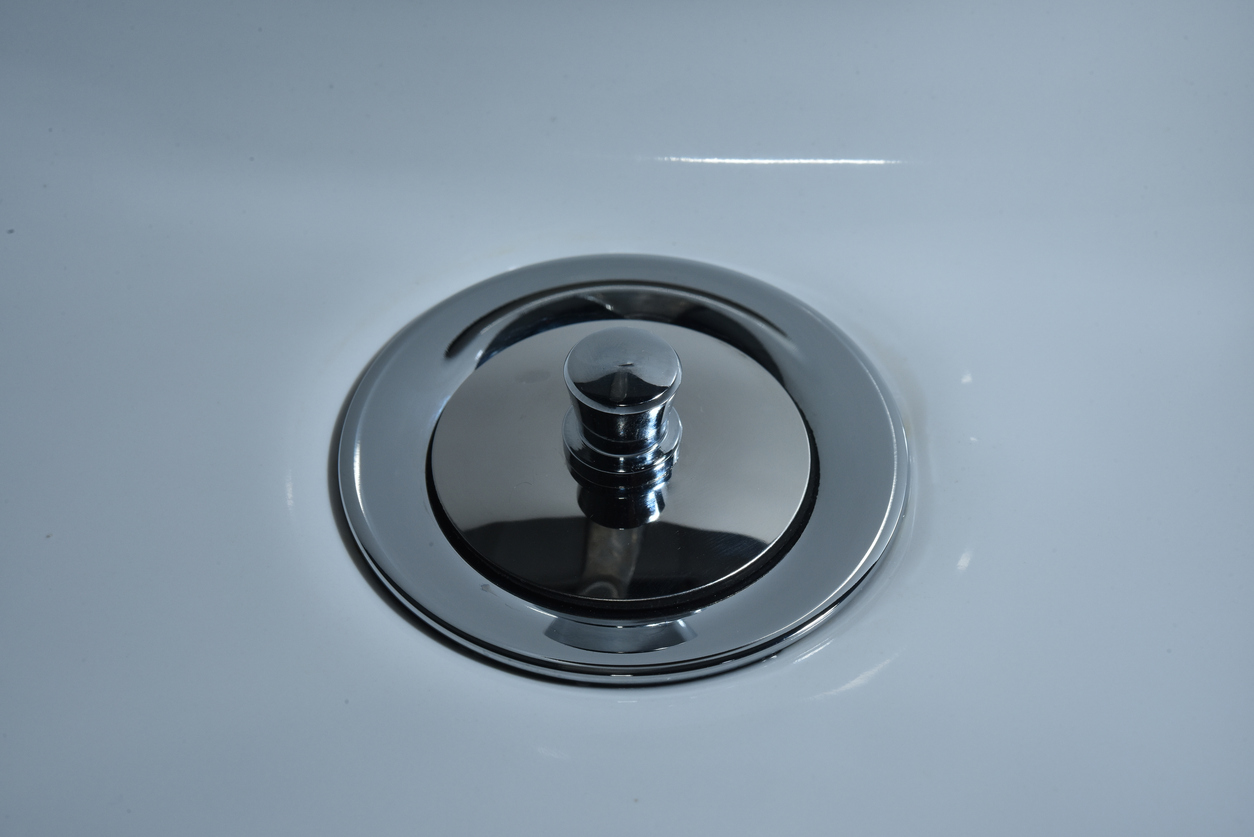
Choosing the right bathtub drain stopper is essential for creating a comfortable and functional bathing experience. With over 20 common
Request your free material sample below. By submitting, you agree to receive occasional product updates and offers from Badeloft. Unsubscribe anytime.
"*" indicates required fields