
Choosing a Bathtub for Two: Sizes, Features, Installation & Other Considerations Before You Purchase
There’s a gap between what a freestanding bathtub listing tells you and what it actually feels like to share one.
The bathtub you choose will shape how you use your primary bathroom every day for the next two decades. Not the tile. Not the vanity hardware. The tub, because it determines whether that room becomes a real retreat or a feature you stop thinking about after the first year.
At Badeloft, we’ve designed and manufactured freestanding stone resin bathtubs long enough to see a clear pattern in what buyers regret and what they don’t. The most consistent regret we hear isn’t about size or style. It’s about what happens after year two, when the novelty fades and the maintenance becomes the experience.
We’ll cover both the practical math and the design philosophy behind each choice, so you leave with more than a feature list.
If you’re in the middle of a primary bathroom remodel and trying to make a decision that won’t haunt you, this is a good place to start. Maybe you’ve stood in a showroom, activated the jets, and felt that first rush of “yes, this”, but something made you pause before committing. Or perhaps you’ve always pictured a deep, still soak at the end of a long week, and you’re trying to figure out whether jets are what you actually want, or just what you’ve been shown most often.
By the end of this guide, you’ll have a clear comparison across what actually matters: maintenance burden, 10-year operating cost, material quality, design flexibility, and long-term home value. We’ll also give you a clear recommendation , not an “it depends” shrug.
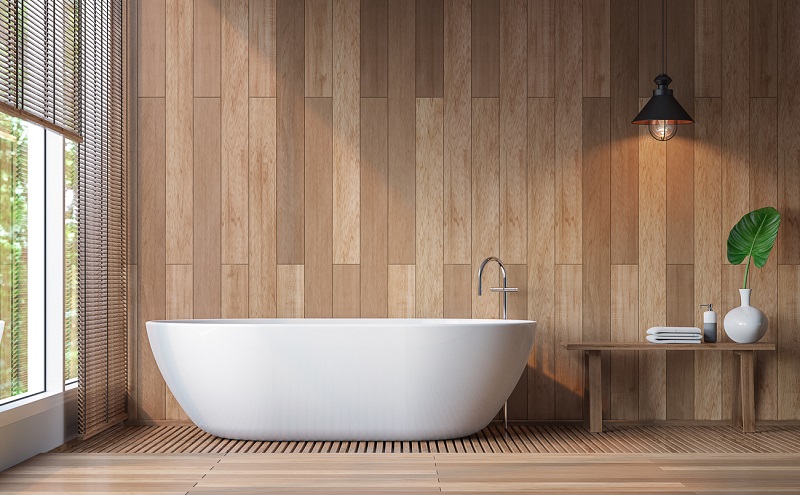
We’ll cover what each tub type actually is and what the word “jetted” is quietly hiding, the honest case for both options, the maintenance and cost reality over a decade, why material and design choice matters as much as jet presence, and a direct breakdown of which buyer each option genuinely serves.
So let’s start with the thing most comparison guides get wrong: what you’re actually comparing when you put these two types side by side.
When most buyers say “soaking tub vs. jetted tub,” they’re often comparing two very different things without fully realizing it. A soaking tub is defined by what it doesn’t have: no motorized components, no pump, no jets. It’s a vessel designed for immersion, typically deeper than a standard alcove tub, often freestanding, built to hold water at the right depth for a genuine full-body soak.
A jetted tub is defined by what it does have: a motor, a pump, and either water jets or air jets. That distinction water jets versus air jets matters more than most buyers realize going in.
Whirlpool tubs circulate the bathwater itself through a sealed internal plumbing system, pushing it out through jets positioned around the basin. The water travels through those internal pipes and returns to the tub. This is the system most people picture when they think of a jetted tub. It produces stronger, more targeted pressure. It also means the internal plumbing is always in contact with used bathwater, every single time you bathe.
Air tubs use a separate pump to push room-temperature air through small jets along the tub floor or walls. Because air moves through the system rather than water, the internal components stay drier between uses. They’re quieter than whirlpool systems and meaningfully easier to maintain, though the therapeutic sensation is lighter and less targeted.
This distinction matters because most of the maintenance concerns associated with jetted tubs are specific to whirlpool systems. If you’re comparing options and someone mentions “jetted tub maintenance,” ask which kind. The answer changes the picture considerably.
Soaking tubs don’t need a long feature list to justify them. The case is simpler: they do one thing extremely well, and they do it without asking anything of you afterward.
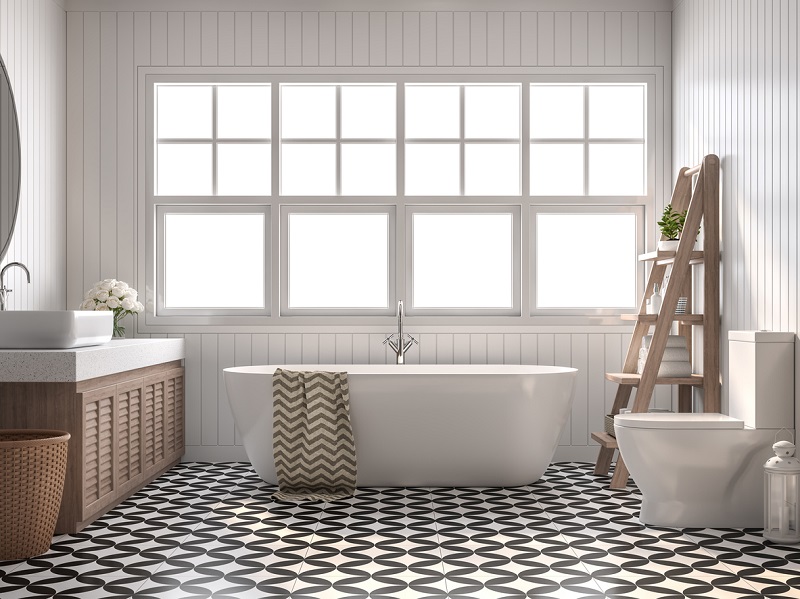
A well-designed soaking tub is deep enough for full-body immersion, ergonomic enough to stay in for 30–45 minutes without discomfort, and made from a material that retains heat long enough to make that time worthwhile. When those three things are true, a soaking tub delivers something most jetted tubs never quite manage: a quiet, uninterrupted, genuinely relaxing experience every time. No button to press. No pump noise. No cleanup protocol before you drain.
From a practical standpoint, soaking tubs hold a clear advantage across every operational dimension:
The strongest argument for a soaking tub isn’t what it offers on paper. It’s that people consistently use them. The jetted tub that becomes a production to clean is the one you eventually stop filling.
The honest version of this argument is more specific than “hydrotherapy”, a word used so broadly it has stopped meaning much on its own.

Targeted water pressure against sore or inflamed tissue is a real therapeutic modality. For people who use a tub specifically for post-workout recovery, chronic lower back pain management, or conditions like arthritis or fibromyalgia, a well-positioned whirlpool system can provide something a soaking tub won’t. That is a legitimate case, and we’re not minimizing it.
Whirlpool systems with inline heaters also offer a genuine advantage in heat maintenance: rather than allowing bathwater to cool naturally, the heater sustains temperature throughout the soak. For long sessions, that’s a meaningful feature, though stone resin soaking tubs already retain heat significantly longer than standard acrylic, which narrows that gap considerably.
The honest caveat is that most people who choose jetted tubs for the idea of relaxation use them heavily for the first few months, then progressively less. The barrier is rarely the soak itself. It’s what comes after — and that’s the section most comparison guides underwrite.
Every comparison article acknowledges that jetted tubs “require more maintenance.” Almost none of them say what that actually looks like in practice.
In a whirlpool system, bathwater circulates through sealed internal plumbing lines before returning through the jets. Those lines are not visible. They’re difficult to access. And they are in continuous contact with warm, used bathwater — which creates ideal conditions for biofilm, mold, mildew, and bacteria.
This is not a worst-case scenario. It is the expected behavior of any closed water circulation system exposed to organic matter and warmth. Jacuzzi, Kohler, and American Standard all publish monthly cleaning protocols specifically because biofilm accumulation is a baseline maintenance expectation, not an edge case.
The standard protocol for a whirlpool system looks like this:
That process takes 45–60 minutes. Most manufacturers recommend it monthly. Some recommend it every two weeks for frequent users.
Specialized jetted tub cleaners cost $15–30 per bottle. Operating the pump and inline heater adds $25–40 to your monthly electricity bill. Cleaning chemicals across a full year run $100–250 depending on usage frequency and the products you use. None of that includes the cost of a service call if the pump develops problems.
Air tubs are genuinely easier: the purge cycle, run after draining, clears standing moisture from the lines and reduces mold risk significantly. But even air tubs require regular cleaning of the jet openings and periodic inspection of the air filter.
For first-time renovators weighing this decision: this is the section worth the most time. If the monthly commitment above sounds manageable, a jetted tub may work well for you. If it sounds like something you’d skip half the time, that’s important information about the tub you’re about to own.
Most bathtub comparisons stop at purchase price. That’s the wrong number to compare.
Here’s a realistic 10-year cost model for each option:
| Cost Category | Freestanding Soaking Tub | Whirlpool Jetted Tub |
|---|---|---|
| Purchase and installation | $2,000–$6,000 | $3,000–$8,000 |
| Annual electricity premium | $0 | $300–$480/yr ($25–$40/mo) |
| Annual cleaning supplies | $30–$50 | $100–$250 |
| Pump or motor service (10-yr estimate) | $0 | $400–$1,200 |
| 10-year total | $2,300–$6,500 | $6,900–$18,200 |
The gap doesn’t only show up at purchase. It compounds across years of operating overhead, and that’s before accounting for any out-of-warranty repairs.
Badeloft stone resin freestanding tubs are backed by a 10-year warranty covering the basin and structural components. Over that same decade, a jetted tub will have generated $4,000–$12,000 more in running costs before a single component reaches end of life.
For buyers thinking through the decision as “it’s only a few thousand more upfront,” the 10-year picture changes the calculation substantially.
Most bathtub comparisons treat material as an aesthetic question. For soaking tubs especially, it isn’t. Without a jet system providing mechanical stimulation, the tub itself is the performance variable. Heat retention, surface durability, and long-term structural integrity all flow from what it’s made from.
Acrylic is the most common bathtub material. It’s lightweight, affordable, and easy to form into complex shapes. It also loses heat quickly — an acrylic tub cools noticeably within 15–20 minutes — and it scratches and dulls over time, particularly with abrasive cleaning products.
Fiberglass is similar in profile, with even lower surface durability over time. Both are adequate for everyday use, but neither performs at the level that justifies a soaking tub as a premium investment.
Stone resin is in a different category. A dense composite of acrylic polymer and natural minerals, stone resin is thermally stable, non-porous, and structurally solid. Badeloft’s stone resin tubs retain heat up to 30% longer than standard acrylic, meaning the water stays at a comfortable temperature significantly longer without requiring a top-up. The non-porous surface resists mold, mildew, and staining at the material level, not just through cleaning effort. And because stone resin is scratch-resistant and dimensionally stable, the surface holds its appearance over years of daily use without refinishing or polishing.
The 10-year warranty Badeloft backs every stone resin tub with reflects what the material can sustain, not just a marketing commitment.
If the goal of choosing a soaking tub is a genuinely premium experience — deep, warm, quiet, beautiful — the material is what determines whether that investment pays off over time.
There’s a design dimension to this decision that functional comparisons tend to skip. It ends up mattering more than most buyers anticipate.
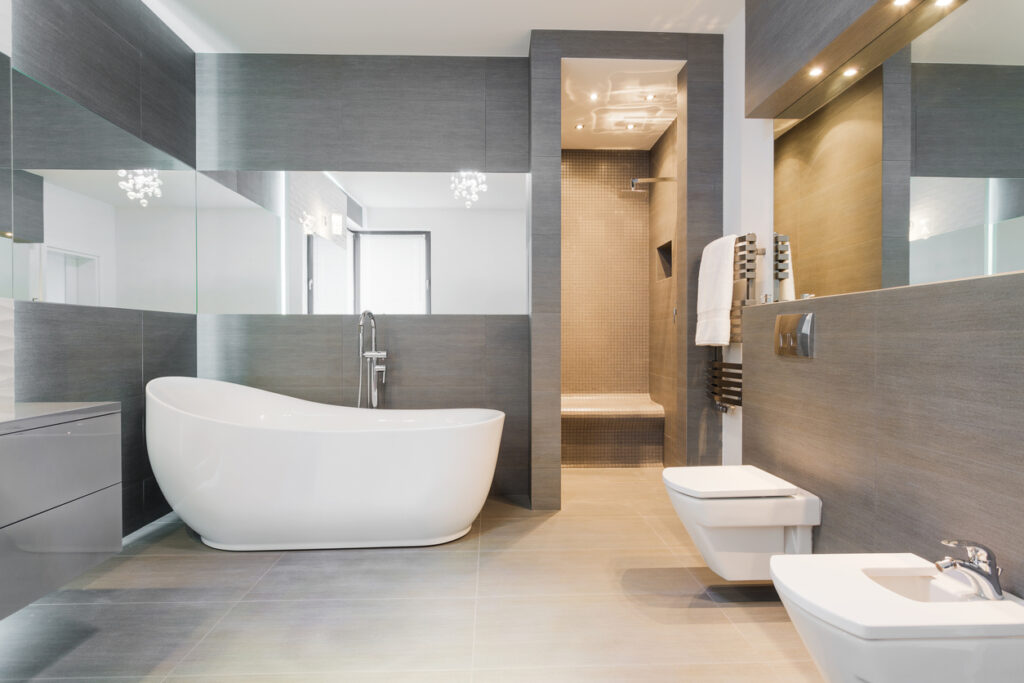
Jetted tubs are almost always built-in or alcove configurations. They require connection to plumbing and electrical on adjacent walls, which means they go where the infrastructure dictates. The tub becomes a component of the room rather than a feature of it — something that fits around the architecture instead of defining it.
Freestanding soaking tubs work differently. Without the need for wall contact, they can be positioned anywhere the rough plumbing allows: centered under a window, anchored in the middle of the room, oriented toward a view. The tub becomes the room’s visual anchor.
According to the Houzz 2024 Bathroom Trends Report, 54% of homeowners identify a freestanding soaking tub as a dream bathroom feature. In that same survey, 70% of completed primary bathroom remodels included a freestanding tub as the centerpiece element. That’s not a niche preference. It reflects a genuine shift in how people think about their primary bathrooms — as spaces they want to spend time in, not just move through.
The spa-resort aesthetic that fills most renovation inspiration boards — the still white room, the tub near the window, the Japanese-style wet room — is built around clarity and calm. A freestanding soaking tub in a well-lit room is the visual signature of that aesthetic. A jetted tub surrounded by access panels and jet housing typically isn’t.
Badeloft’s lineup spans oval, rectangular, slipper, double-ended, and Japanese Ofuro configurations across a full range of sizes. Every model is proportioned to stand in open space, designed as a sculptural centerpiece rather than a surround fixture.
Yes, it does but not in the direction most people assume if they’ve been told that more features equal more value.
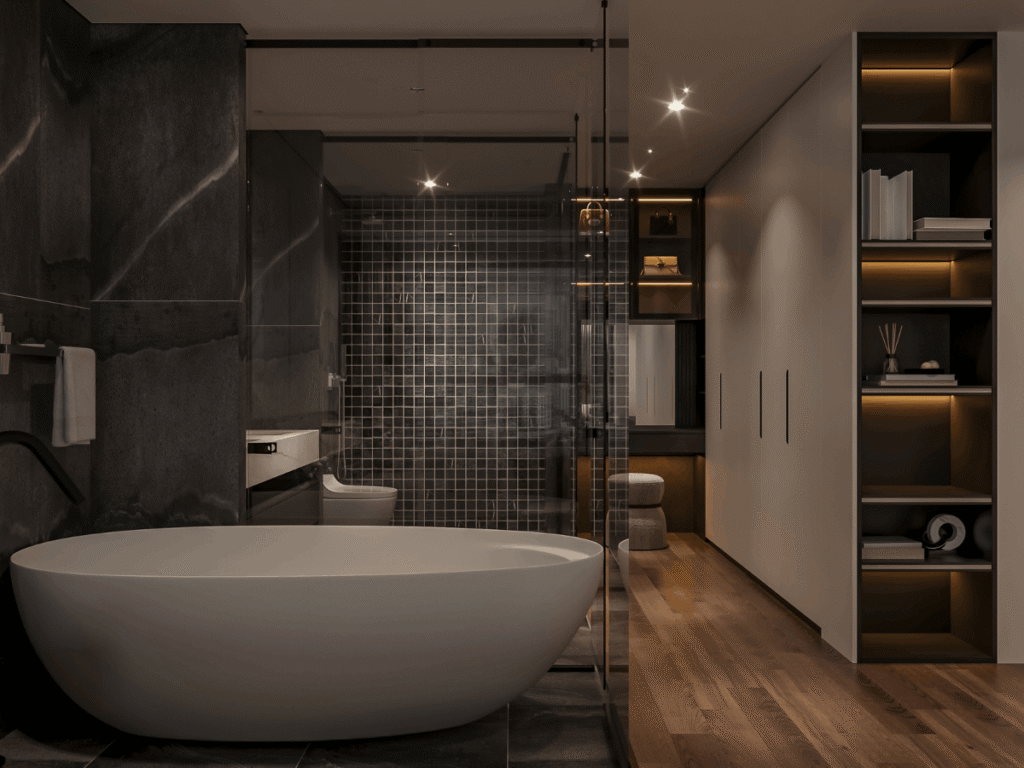
Jetted tubs were a premium signal in bathroom design through the 1990s and early 2000s. That association has largely reversed. Real estate professionals increasingly report that dated whirlpool systems create friction with buyers: prospective owners see the jets and mentally calculate the maintenance obligation before they register a benefit. The question “has this actually been maintained properly” is not one most buyers want forming in their minds during a walkthrough.
A freestanding soaking tub reads differently. It signals current luxury — the kind of design choice that shows up in high-end new construction, boutique hotel bathrooms, and architectural features that photograph well. Buyers recognize it as a considered decision, not a remnant from a different era of bathroom design.
This doesn’t mean a jetted tub damages resale value. It means it contributes little to it, and may prompt honest questions about the system’s condition and maintenance history. A well-chosen freestanding soaking tub in a primary bathroom that photographs well contributes to the overall luxury perception of the home in a way that a jetted tub, in today’s market, typically doesn’t.
A soaking tub is the right choice if you want a bath that’s genuinely usable every day. No maintenance protocol standing between you and the experience means no friction, no scheduling around cleaning day, no reason to hesitate. You fill it, you use it, you wipe it down. It stays ready.
It’s the right choice if you care about design as much as function. If the bathroom is a room you’ve imagined — not just a room you use — a freestanding soaking tub is the piece that makes the difference between a renovated bathroom and one that actually feels designed.
For first-time renovators who aren’t completely certain what they’ll use most: a soaking tub removes the regret risk. There’s nothing to maintain between uses and nothing to feel guilty about skipping. The tub is simply there, whenever you want it.
And if the 10-year cost comparison shifted how you’re thinking about this, that instinct is worth following. The long-term economics of a stone resin soaking tub are substantially better — lower running costs, no mechanical failure risk, a warranty that holds across the full decade.
The case for a jetted tub has a legitimate version. It serves a narrower group than the marketing suggests, but it’s a real group.
Choose a jetted tub if you have a specific, recurring physical condition — arthritis, fibromyalgia, chronic lower back injury — for which targeted hydrotherapy provides documented relief, and you know from experience that you’ll pursue it consistently. The therapeutic case is real. It requires an equal commitment to the maintenance protocol to remain real over time.
A jetted tub also makes sense if you’re working with a large primary bathroom where an alcove configuration is structurally built into the design plan, and you have used a jetted tub before and know from your own behavior — not your intentions — that you’ll use this one.
If the main draw is that jets feel like more value for the money, that reasoning is worth questioning. The 10-year cost model, the monthly maintenance commitment, and the direction of resale value all point away from that conclusion for most buyers.
Badeloft manufactures freestanding stone resin bathtubs across a full range of sizes, configurations, and soaking depths. Every tub is built from the same non-porous, heat-retentive stone resin composite — no acrylic cores, no fiberglass shells, no veneers applied over a lesser material.
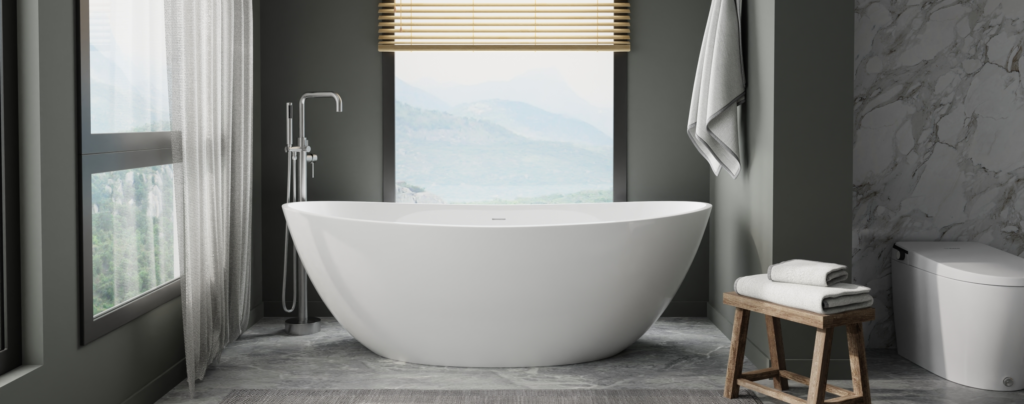
The current lineup includes:
Every Badeloft tub ships with the drain system, care kit, and installation hardware included. The 10-year warranty covers the basin and all structural components for residential use. Full specifications, size guides, and installation dimensions are documented for each configuration at badeloftusa.com.
The choice between a soaking tub and a jetted tub isn’t really about features. It’s about what kind of bathroom experience you’re actually building — and whether the tub you choose will still be delivering it in year five and year ten.
For most buyers, the answer is a well-made freestanding soaking tub: substantially lower operating cost across a decade, no maintenance burden between you and the experience, stronger long-term design value, and a daily usability that jetted systems rarely sustain over time.
If you have a specific, recurring physical need that targeted hydrotherapy genuinely addresses — and you know from your own behavior that you’ll use it consistently — a jetted tub may serve you better. But if what you’re drawn to is the quiet luxury, the spa feeling, the room that finally looks the way you’ve imagined it: a soaking tub gets you there more reliably than jets ever will.
Explore Badeloft’s full collection of freestanding stone resin soaking tubs at badeloftusa.com

Eric is the founder and president of Badeloft USA. He has been the president of Badeloft’s US division for over ten years and oversees all marketing and branding aspects of Badeloftusa.com.
His expertise lies in small business development, sales, and home and bathroom industry trends and information.
Contact us with any business related inquiries.
Badeloft is dedicated to helping homeowners make informed decisions about their bathrooms. We adhere to strict editorial guidelines to ensure our content is accurate, trustworthy, and useful.
Request free stone resin and stainless steel material samples. Delivered to your door.
There’s a gap between what a freestanding bathtub listing tells you and what it actually feels like to share one.
The bathtub you choose will shape how you use your primary bathroom every day for the next two decades. Not
A freestanding bathtub is the most permanent aesthetic decision in a bathroom renovation. Get the selection right and it becomes
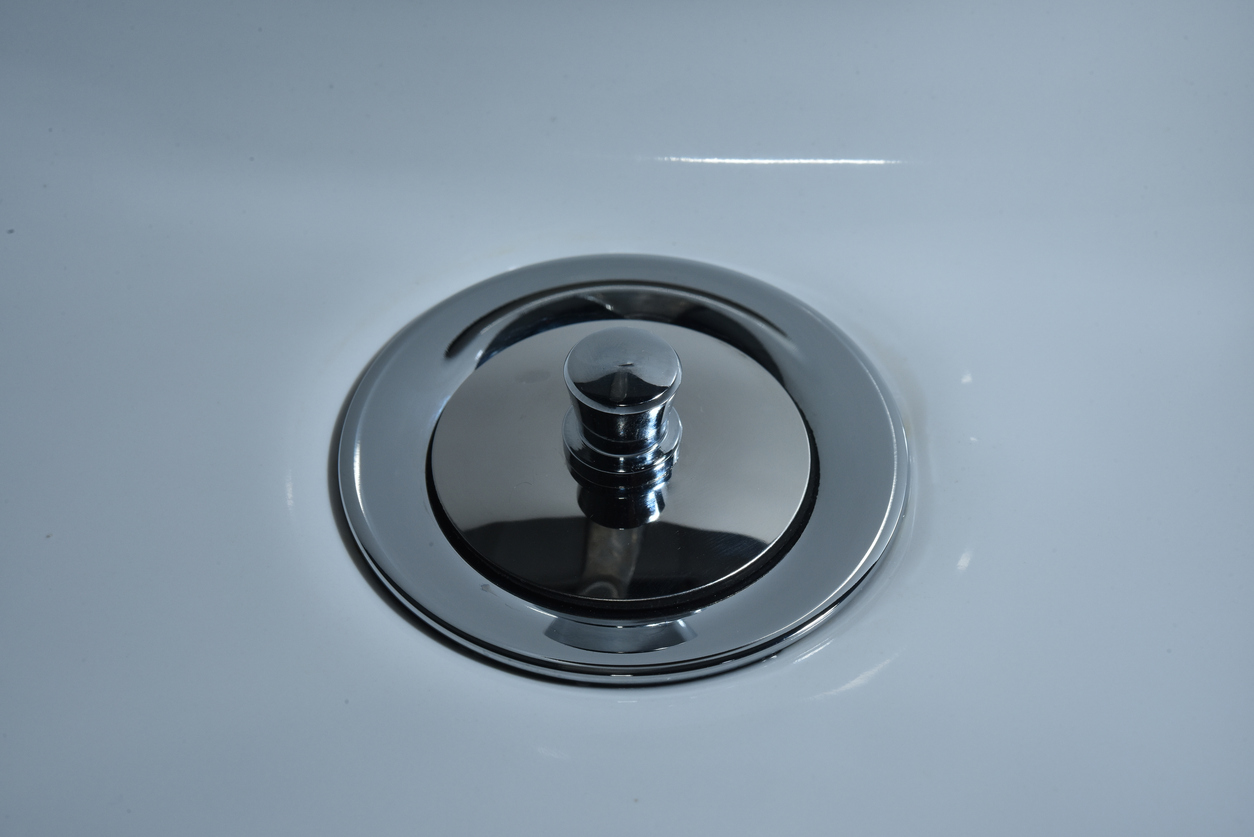
Choosing the right bathtub drain stopper is essential for creating a comfortable and functional bathing experience. With over 20 common
Request your free material sample below. By submitting, you agree to receive occasional product updates and offers from Badeloft. Unsubscribe anytime.
"*" indicates required fields