
The Perfect Bath Water Temperature and How to Actually Hold It
A genuinely restorative bath is not luck. It is a temperature you choose on purpose and then actually manage to
A Japanese soaking tub, known traditionally as an ofuro, is designed for one purpose: full-body immersion. Unlike Western bathtubs built for reclining, the ofuro is deeper, shorter, and meant to be used in a seated upright position with water covering your shoulders. The result is a bathing experience that is meditative, space-efficient, and profoundly relaxing.
If you have been searching for a japanese soaking tub, an ofuro tub, or a japanese bathtub that fits a modern American bathroom, this guide covers everything you need to know: the history, the design principles, how to choose the right one, and why stone resin has become the preferred material for contemporary ofuro-inspired tubs.
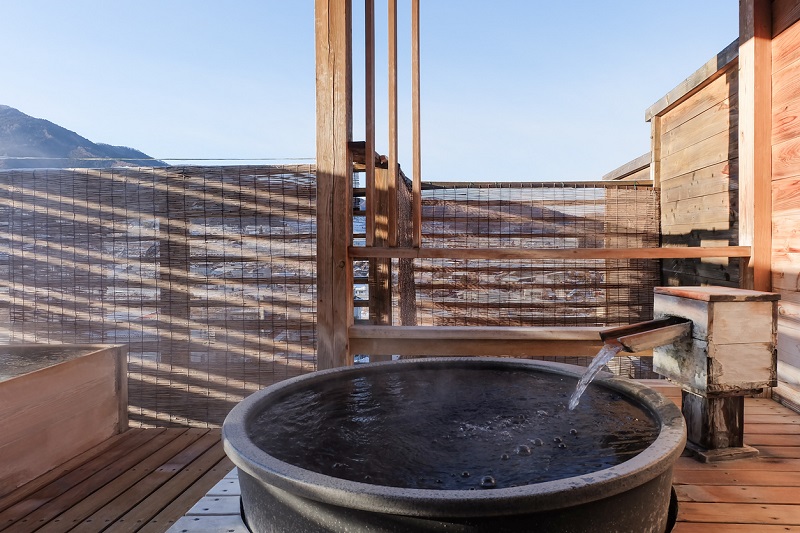
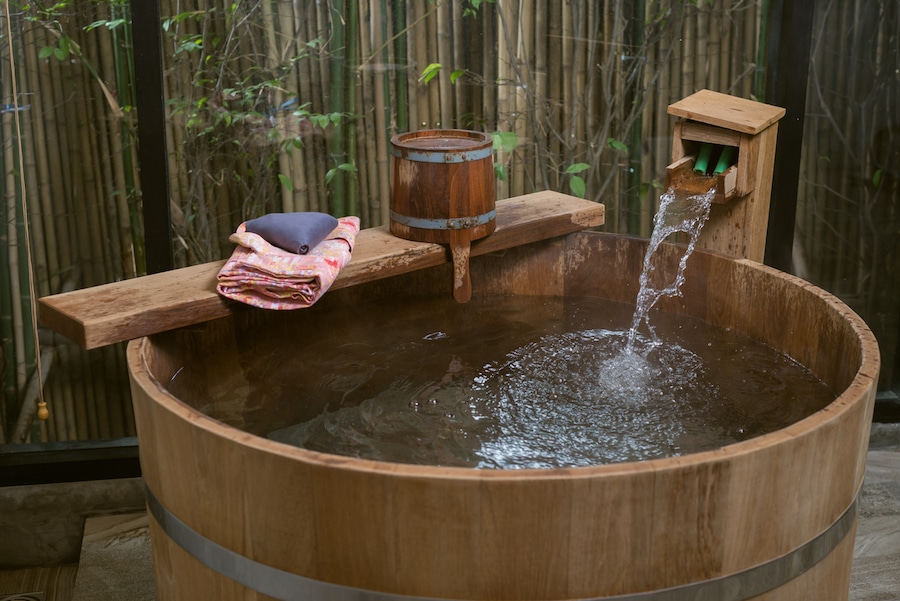
The ofuro has been central to Japanese bathing culture for centuries. The word itself means “bath” in Japanese, but it refers specifically to a deep wooden tub, traditionally made from hinoki (Japanese cypress), used after the body has already been washed. The ofuro is not about getting clean. It is about soaking, warming, and resetting.
In traditional Japanese homes, the bathing ritual follows a strict sequence. You wash and rinse your body outside the tub, then step into the ofuro for a long, still soak. The water is kept hot, typically between 100-104 degrees Fahrenheit, and is often shared by multiple family members throughout the evening. The tub’s depth allows full submersion to the neck while seated on a built-in bench or the tub floor with knees slightly drawn.
This bathing philosophy began shifting into Western markets in the early 2000s as minimalist Japanese design gained global appeal. Today, the japanese soaking tub has evolved from a wooden vessel into a range of modern materials, but the core principle remains the same: deep water, upright posture, complete immersion.
The differences between an ofuro tub and a standard freestanding bathtub go beyond aesthetics.
Depth over length. A typical Western freestanding tub is 56-72 inches long and 14-16 inches deep (interior water depth). A Japanese soaking tub is often just 41-55 inches long but 22-27 inches deep. You sit upright rather than recline, which means you need less linear space but more vertical water volume.
Compact footprint. Because ofuro tubs are shorter, they fit comfortably in bathrooms where a full-length freestanding tub would overwhelm the space. This makes them an excellent choice for smaller primary baths, urban apartments, and guest bathrooms. See our small bathtub collection.
Full-shoulder immersion. The seated position combined with greater depth means the water line reaches your collarbone or higher. This is a fundamentally different sensation from a Western tub, where your upper body is typically exposed unless the tub is exceptionally large.
Therapeutic heat retention. Because the water volume is concentrated vertically rather than spread across a long, shallow basin, japanese soaking tubs lose heat more slowly. Stone resin amplifies this advantage further, keeping the water warm 30-40 minutes longer than acrylic equivalents.
Muscle and joint relief. Full immersion creates hydrostatic pressure that reduces swelling, improves circulation, and relieves joint pain. Rheumatologists and physical therapists frequently recommend deep soaking for patients with arthritis and chronic pain conditions.
Stress reduction. The upright, still posture of ofuro bathing encourages mindful breathing and meditation. Studies on Japanese bathing culture link regular deep soaking to lower cortisol levels and improved sleep quality.
Space efficiency. A 47-inch ofuro tub occupies roughly the same floor area as a large shower base, making it viable for bathrooms where a 67-inch freestanding tub is not an option.
Water conservation. Shorter tubs with higher walls actually use less total water than long, shallow bathtubs because the water volume is concentrated around the bather rather than spread across unused basin length.
Understanding dimensions is critical when shopping for a japanese soaking tub. Here is how ofuro sizing compares to standard freestanding tubs:
| Dimension | Japanese Soaking Tub | Standard Freestanding Tub |
|---|---|---|
| Length | 41-55 inches | 55-72 inches |
| Width | 27-32 inches | 27-36 inches |
| Exterior Height | 24-30 inches | 22-26 inches |
| Interior Water Depth | 22-27 inches | 14-17 inches |
| Water Capacity | 50-80 gallons | 40-70 gallons |
When measuring your bathroom, remember that the shorter length of a japanese bathtub is offset by the taller profile. Confirm that your ceiling height, any soffits, and your sightlines from the doorway work with a taller tub before ordering.
Reference: Popular Freestanding Bathtub Sizes Guide
Traditionally, ofuro tubs were made from hinoki wood, valued for its antimicrobial properties and warm cedar-like aroma. While hinoki tubs are still available, they require significant maintenance: regular oiling, careful drying after each use, and replacement every 10-15 years.
Modern japanese soaking tubs are available in several materials:
Acrylic. Lightweight and affordable, but the thin walls flex underfoot, do not retain heat well, and can yellow or scratch over time. Budget-friendly for a guest bath but not ideal for a primary soaking tub.
Cast iron. Excellent heat retention, but extremely heavy (300-500 lbs) and requires reinforced flooring. Enamel coatings can chip and are difficult to repair.
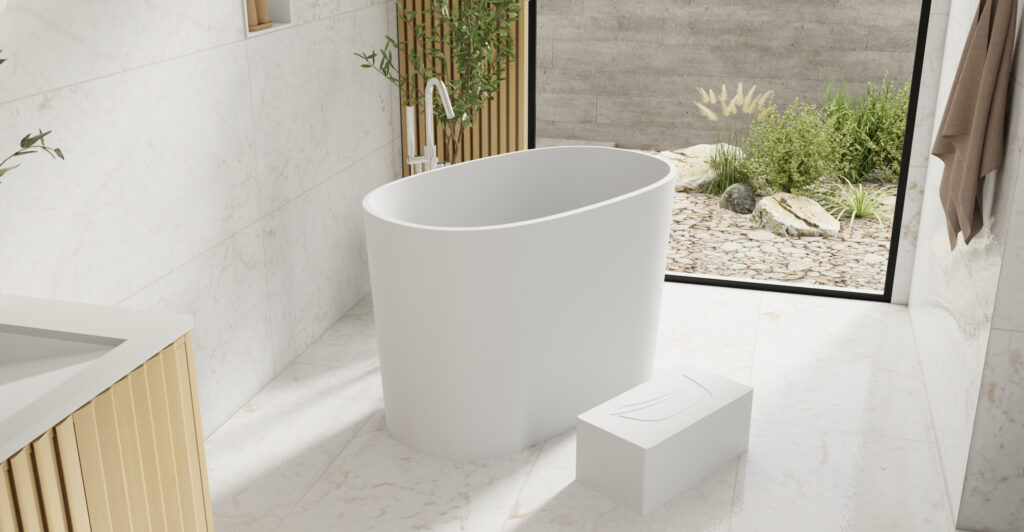
Stone resin. The preferred material for modern ofuro tubs. Stone resin is cast as a single solid piece with no seams, gel coats, or hollow cavities. It retains heat like cast iron at roughly half the weight, resists staining and scratching, and feels warm and substantial to the touch. Badeloft’s japanese soaking tubs are all crafted in solid stone resin with matte or glossy finishes.
Copper. Beautiful and antimicrobial, but expensive, heavy, and develops a patina that requires either maintenance or acceptance.
For most homeowners, stone resin offers the best balance of heat retention, durability, weight, and aesthetics. It is the material that most closely replicates the warm, solid feel of a traditional hinoki tub without the maintenance burden.
Step 1: Confirm your floor can handle the weight. A stone resin japanese soaking tub weighs approximately 150-250 lbs empty. Filled with water and a bather, total weight can reach 600-800 lbs. Most modern homes with standard joist construction can support this, but older homes or upper-floor installations should be verified by a contractor.
Step 2: Decide on shape. Japanese soaking tubs come in round, oval, and rectangular profiles. Round and oval tubs soften a bathroom visually and work well as a centerpiece. Rectangular tubs integrate more naturally against a wall or in a corner.
Step 3: Consider a freestanding tub faucet. Because ofuro tubs sit away from walls, you will need either a freestanding floor-mounted faucet, a wall-mounted filler with extended reach, or a deck-mounted faucet if your tub has a flat rim. Plan your plumbing rough-in before the tub arrives.
Step 4: Think about entry and exit. Taller tubs require a comfortable step-over height. Look for models with a slight inward curve at the rim that makes gripping easier, or plan for a small wooden step stool beside the tub, as is traditional in Japanese bathrooms.
Browse All Japanese Bathtubs | Tips for Buying a Soaking Tub
A Japanese soaking tub, or ofuro, is a deep bathtub designed for seated, full-body immersion up to the shoulders. Originating in Japanese bathing culture, these tubs are shorter in length but significantly deeper than Western bathtubs, prioritizing a therapeutic, meditative soak over reclining.
Most japanese soaking tubs are 41-55 inches long, 27-32 inches wide, and 24-30 inches tall. Interior water depth is typically 22-27 inches, compared to 14-17 inches in a standard Western bathtub. This allows full shoulder immersion while seated upright.
Yes. Because ofuro tubs are shorter than standard freestanding tubs, they can fit in bathrooms as small as 5×7 feet. Their compact footprint makes them one of the best options for homeowners who want a soaking tub but lack space for a full 60-67 inch model.
While both are deeper than standard tubs, an ofuro is specifically designed for upright seated soaking, with a higher wall-to-length ratio and often a flatter bottom. A deep freestanding bathtub may still be designed primarily for reclining, just with more water depth. The ofuro’s proportions create a fundamentally different posture and experience.

Eric is the founder and president of Badeloft USA. He has been the president of Badeloft’s US division for over ten years and oversees all marketing and branding aspects of Badeloftusa.com.
His expertise lies in small business development, sales, and home and bathroom industry trends and information.
Contact us with any business related inquiries.
Badeloft is dedicated to helping homeowners make informed decisions about their bathrooms. We adhere to strict editorial guidelines to ensure our content is accurate, trustworthy, and useful.
Request free stone resin and stainless steel material samples. Delivered to your door.
A genuinely restorative bath is not luck. It is a temperature you choose on purpose and then actually manage to
If you’re mid-renovation or about to start one, you’ve probably spent more time than you expected staring at tile samples.
Getting the drain size wrong on a freestanding bathtub is one of those installation mistakes you don’t discover until the
Bathroom storage fails the same way every time: it gets planned last. By the time the tiles are in and
Request your free material sample below. By submitting, you agree to receive occasional product updates and offers from Badeloft. Unsubscribe anytime.
"*" indicates required fields