
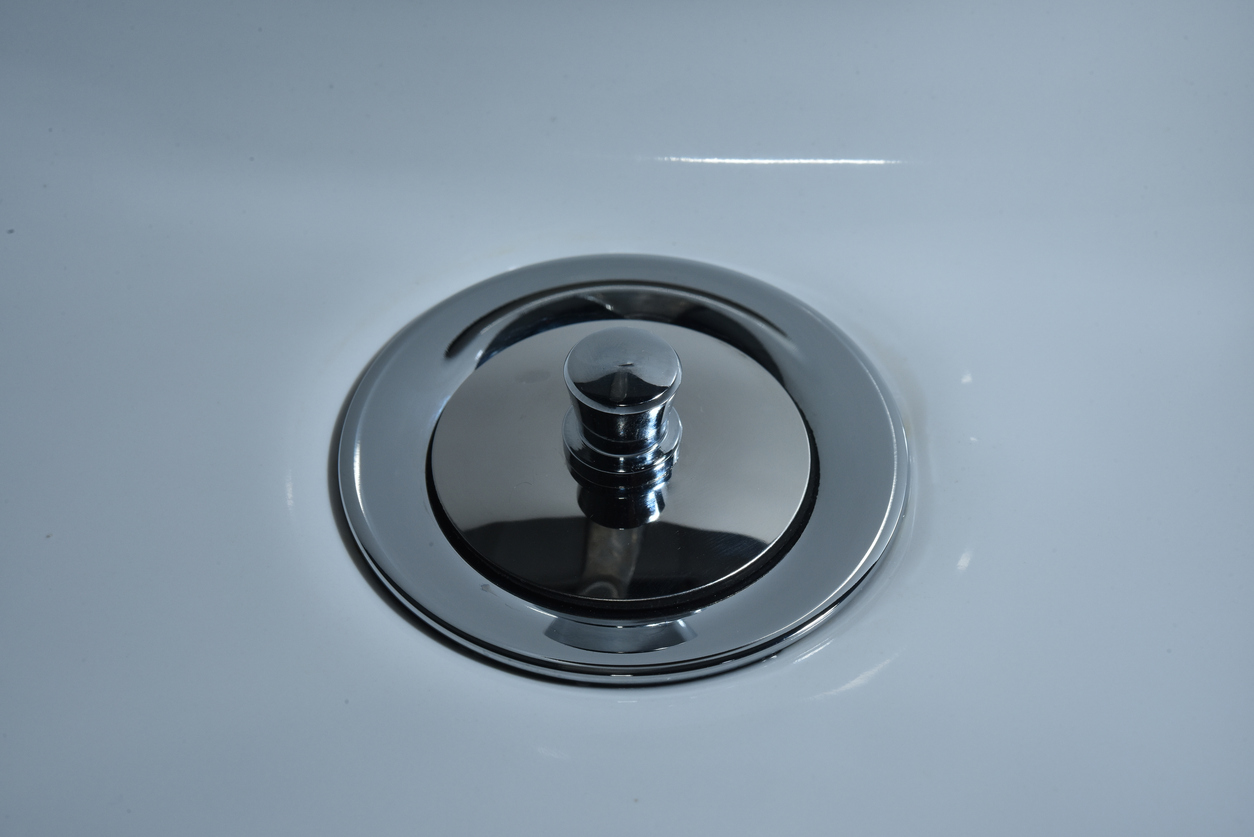
20+ Common Bathtub Drain Stopper Types in 2025 – Which is best for your bathtub?
Choosing the right bathtub drain stopper is essential for creating a comfortable and functional bathing experience. With over 20 common
Spring is peak bathroom renovation season – and with remodel costs up 15–20% this year, the pressure to get it right the first time has never been higher. Whether you’re finally tackling that master bath you’ve been putting off for years or designing one from scratch in a new build, the decisions you make now will define how your bathroom looks and feels for the next decade.
The master bathroom is one of the few rooms where luxury isn’t optional – it’s expected. Unlike a guest bath or a powder room, this is the space you start and end every day in. It should feel intentional, not like an afterthought. And if you’re investing $15,000 to $50,000 (the current range for a mid-to-high-end master bath remodel), you deserve more than a Pinterest board – you need a clear vision.
That’s what this guide is for. We’ve pulled together 40 of the best master bathroom ideas for 2026, each with a specific design direction and a reason it works. If you’re a first-time homeowner looking to make a small space feel elevated, you’ll find ideas that punch above their square footage. If you’ve been in your home for years and want a spa-like retreat that matches how you actually live, these designs will help you think beyond tile samples and faucet finishes.
Let’s get into it.
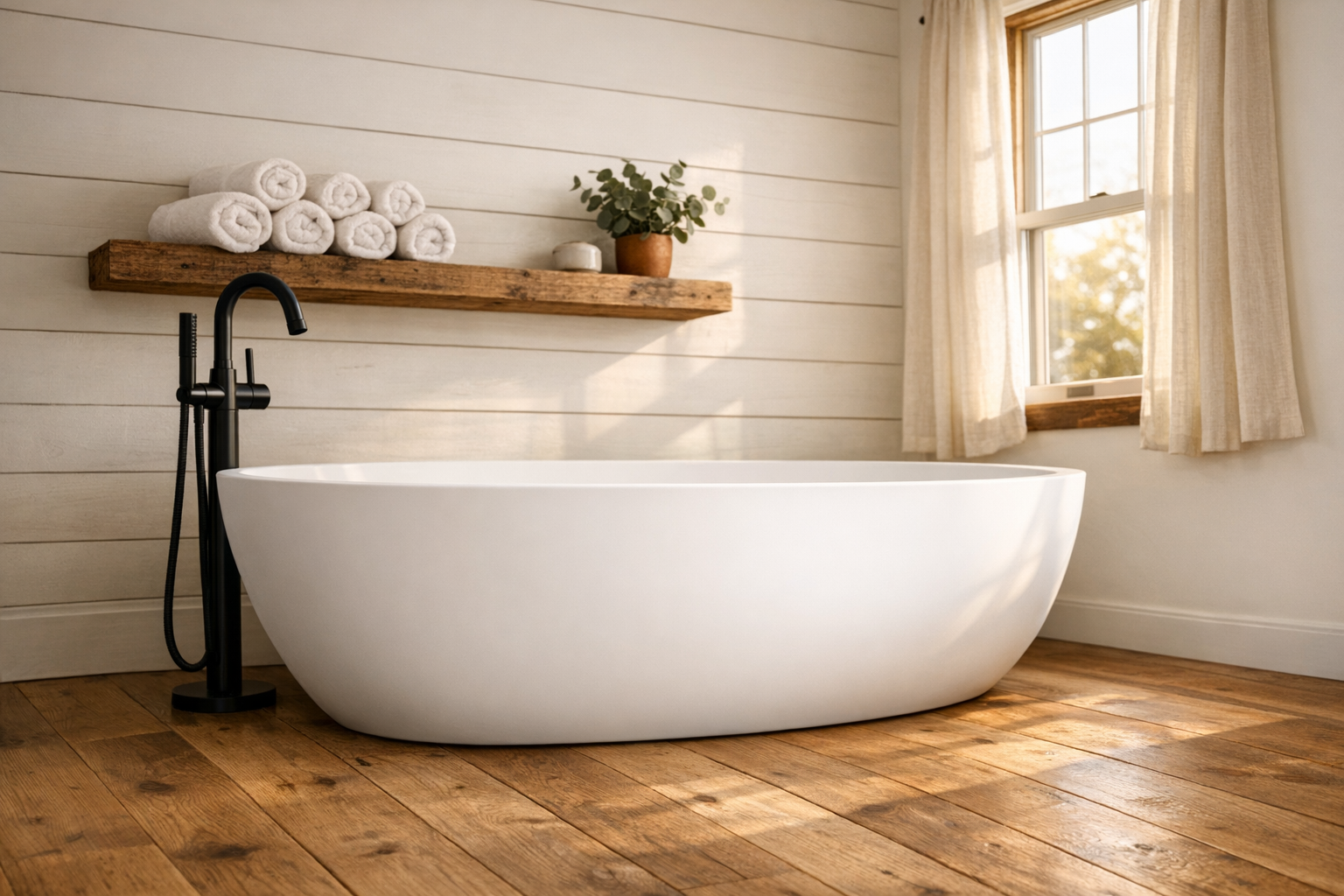
The farmhouse look risks feeling too safe – shiplap, white everything, predictable. What saves it is contrast: a freestanding bathtub that anchors the room and gives the eye something to land on. Without it, farmhouse bathrooms can read as “nice rental” instead of “intentional design.”
A cozy farmhouse bathroom with natural wood tones and a stone resin freestanding bathtub creates warmth without sacrificing sophistication. The key is keeping the palette tight – warm whites, natural wood, matte black hardware – and letting the tub do the heavy lifting.
Why it works: Farmhouse design is forgiving for first-time renovators because the materials are accessible and the look doesn’t require perfect execution to feel cohesive. If you’re working with a modest budget, start here.
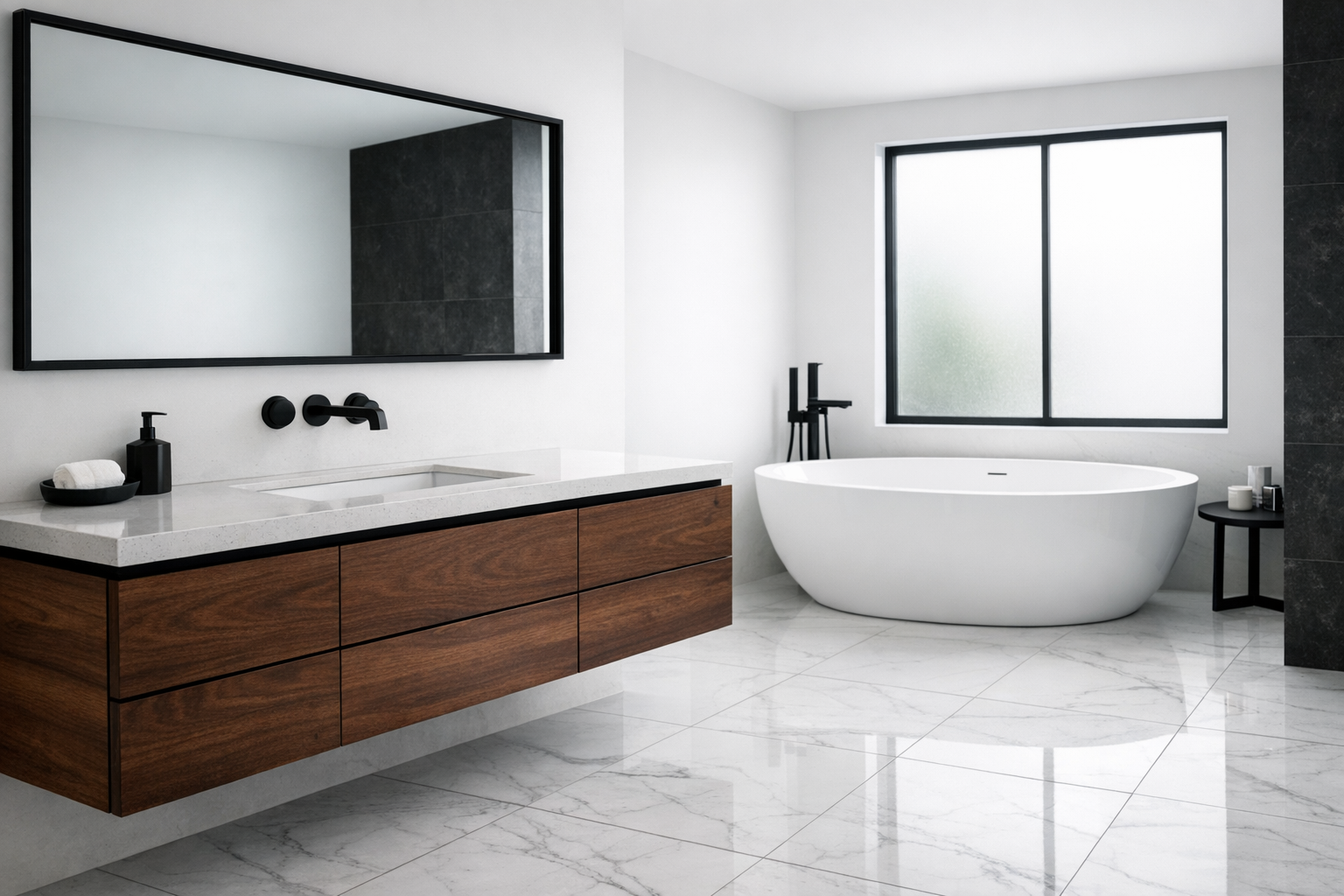
This is one of the most reliable palettes in bathroom design, and for good reason: it never dates. A dark wooden floating vanity paired with a white freestanding tub creates depth without complexity. You don’t need to pick a “theme” – the contrast is the theme.
Modern black and white bathrooms succeed because they let materials and proportions speak. The floating vanity keeps the floor line clean, which makes the room feel larger than it is. If you’re renovating a smaller master bath, this approach gives you visual impact without requiring more square footage.
Our take: Skip the trendy patterned tiles in a black-and-white bathroom. The moment you add too many competing elements, the simplicity that makes this palette work falls apart.
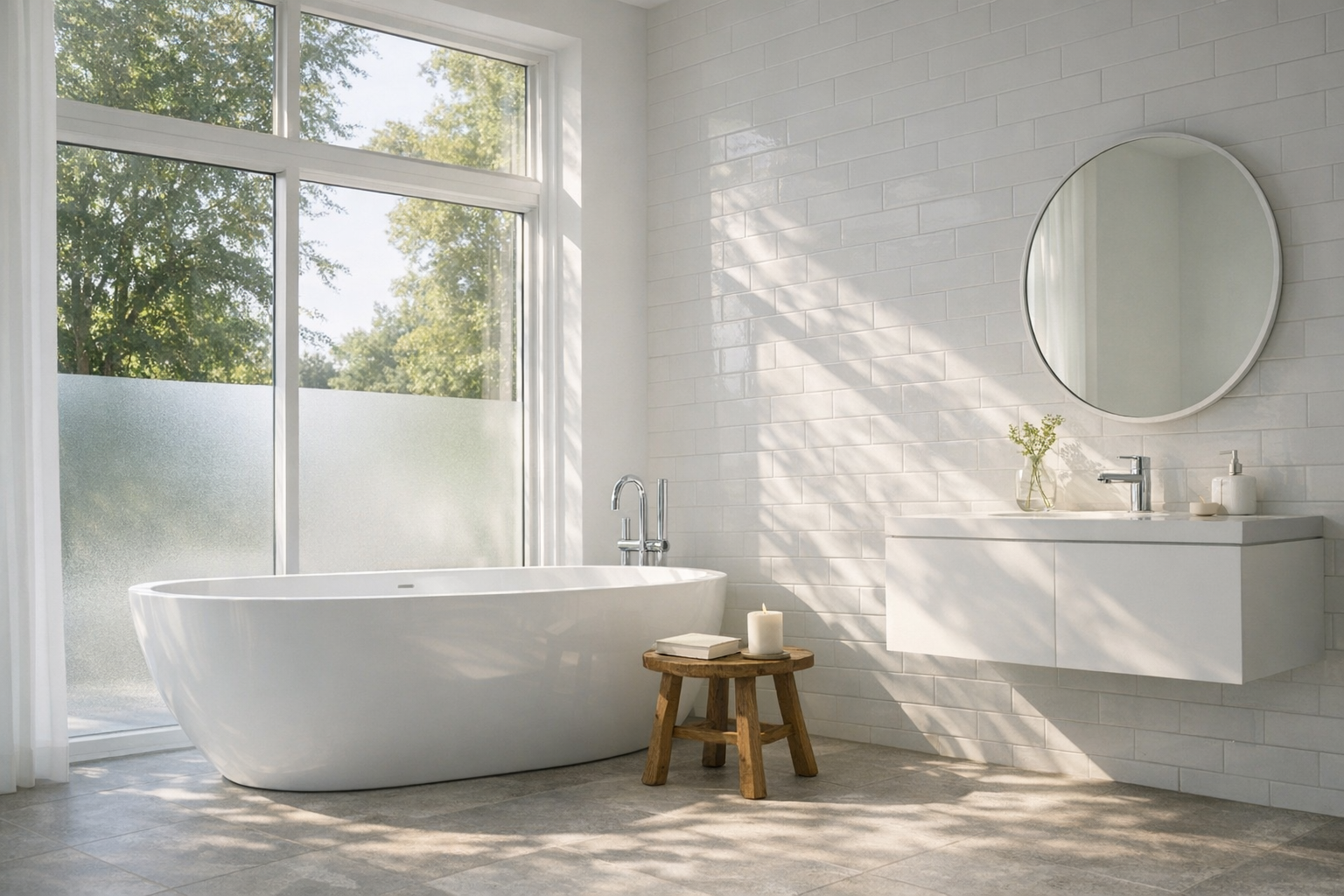
If your master bathroom has windows – even small ones – use them. Natural lighting transforms a bathroom more than any fixture or finish. A charming master bathroom with a freestanding bathtub positioned near a window becomes a completely different room at different times of day.
Too many homeowners treat bathroom windows as an afterthought or cover them entirely for privacy. Consider frosted glass or top-mounted windows instead of curtains. You get the light without the exposure.
If you’re renovating an older home: Older bathrooms were often designed with tiny or no windows. Adding or enlarging a window is one of the highest-ROI changes you can make – it affects how the entire room feels, not just how it looks.
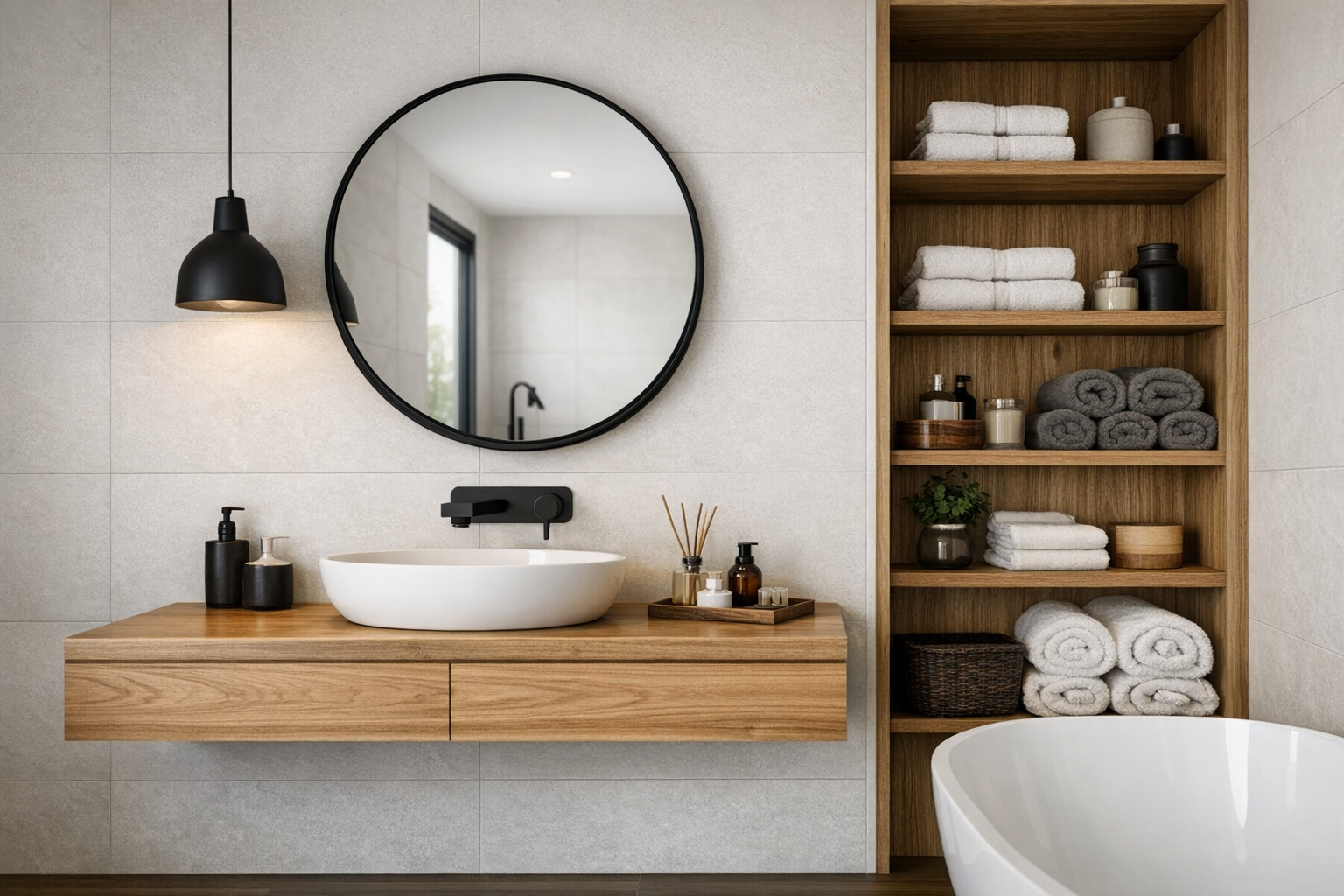
Contemporary master bathrooms with black and wood accents are everywhere right now – but most people get the ratio wrong. Too much black and the room feels heavy. Too much wood and it reads as a sauna. The sweet spot is using black as the frame (hardware, mirror edges, light fixtures) and wood as the surface (vanity, shelving, accents).
A matte black faucet paired with a light oak floating vanity keeps the room grounded and modern. The wood brings warmth; the black brings edge.
What most people get wrong: They match the wood tones too precisely. A slight contrast between your vanity wood and your shelving or accent wood actually creates more visual interest than a perfect match.
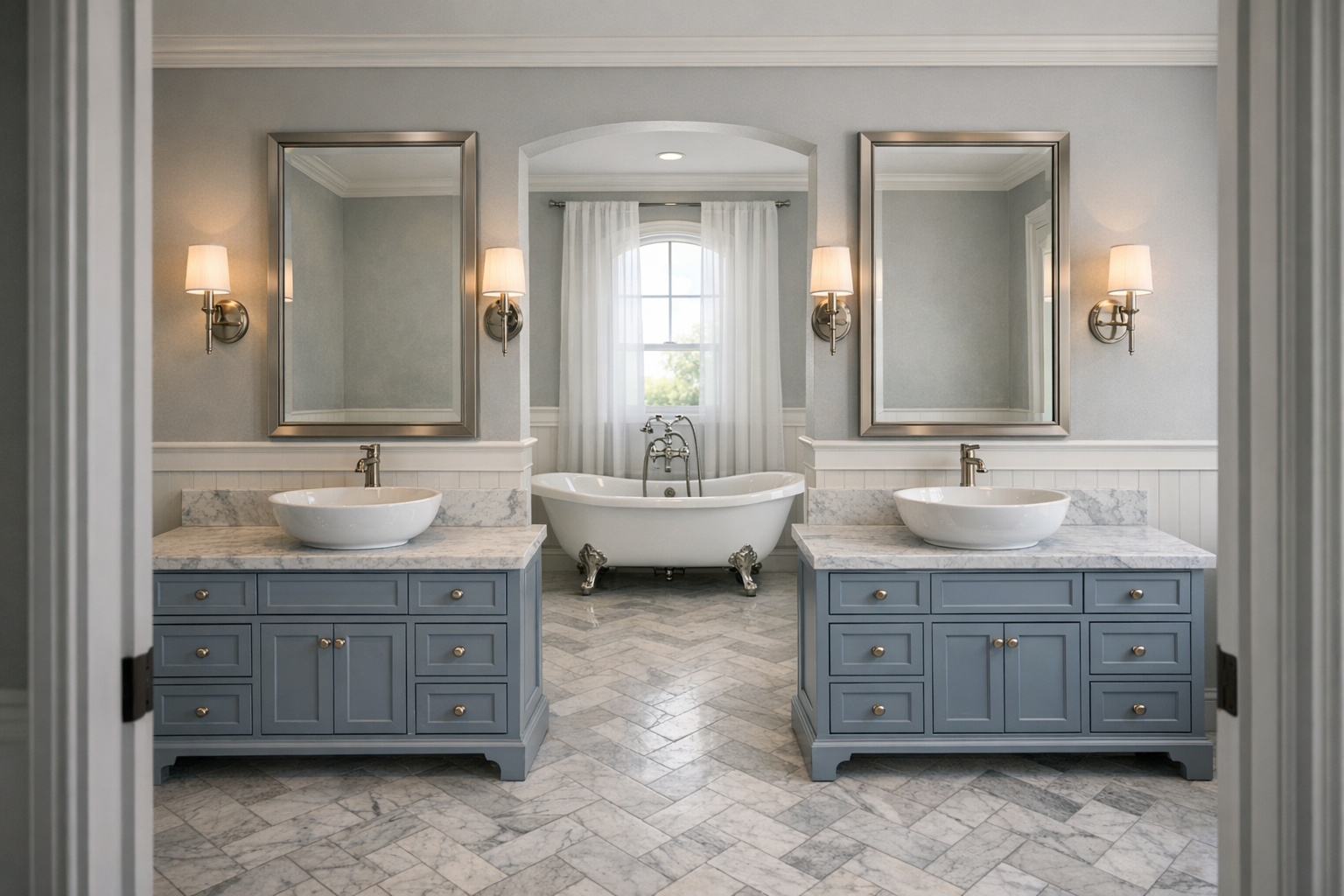
Double vanities look great in photos, but they only make sense if your bathroom is wide enough to give each sink real counter space – at least 30 inches per person. In a narrow bathroom, two cramped sinks are worse than one generous one.
A traditional master bathroom with a clawfoot bathtub and his-and-her sinks works when the room supports it. The clawfoot tub adds classic character, and the double vanity makes morning routines practical for couples.
The real question to ask: Do both of you actually use the bathroom at the same time? If not, invest in one larger vanity with more storage instead. Storage solves more daily friction than a second sink.
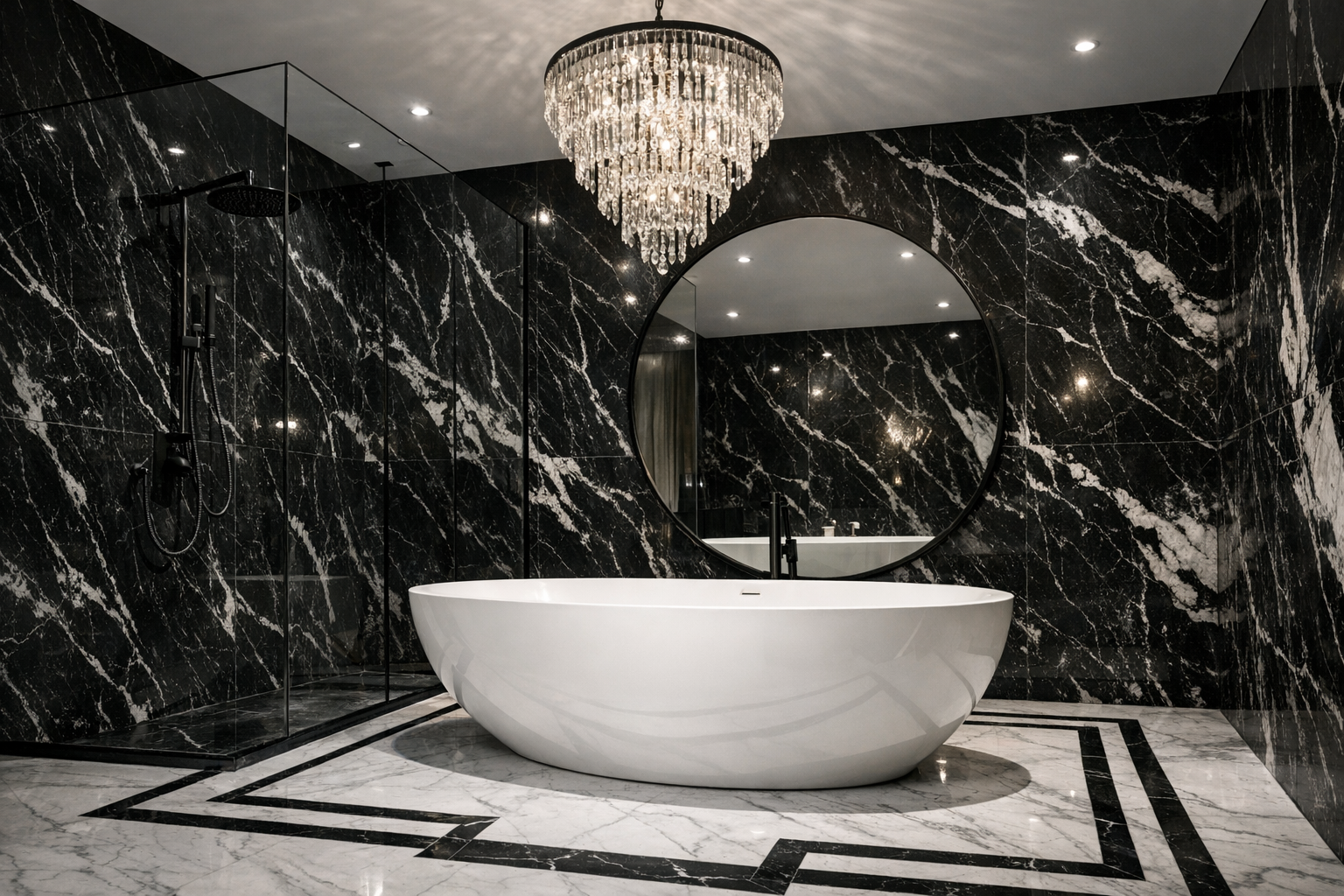
There’s a difference between a black-and-white bathroom and a bold black-and-white bathroom. The difference is commitment. An exquisite master bathroom with floor-to-ceiling contrast, dramatic tile patterns, and architectural details like a balcony or oversized mirror turns a safe palette into something striking.
This approach works best in larger master bathrooms where scale amplifies the contrast. In a small space, heavy black can feel claustrophobic.
Design principle: If you’re going bold with black walls or dark tile, make sure your lighting is equally bold. Underpowered lighting in a dark bathroom makes it feel like a cave, not a statement.
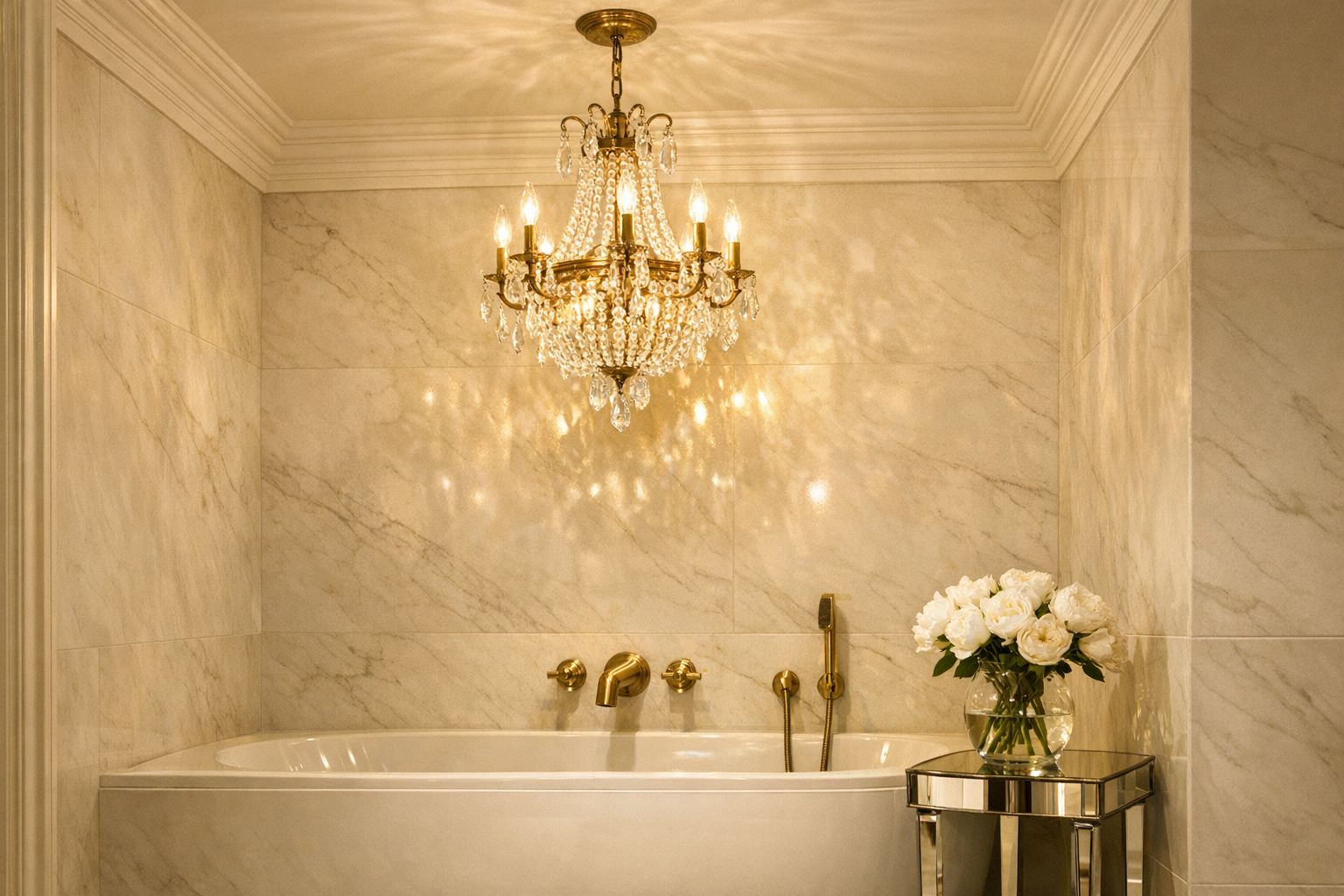
A glamorous master bathroom with a chandelier sounds over the top – until you see one done well. The chandelier replaces the generic flush mount that most bathrooms default to, and it immediately signals that this room was designed, not just built.
An acrylic alcove bathtub under a chandelier creates a focal point that draws the eye up, making the ceiling feel higher. Choose a chandelier rated for damp locations – this is non-negotiable for safety and longevity.
Who this is for: If you’ve always wanted a bathroom that feels more like a room in a boutique hotel than a utilitarian space, a chandelier is the single fastest way to get there. It changes the entire energy of the room.
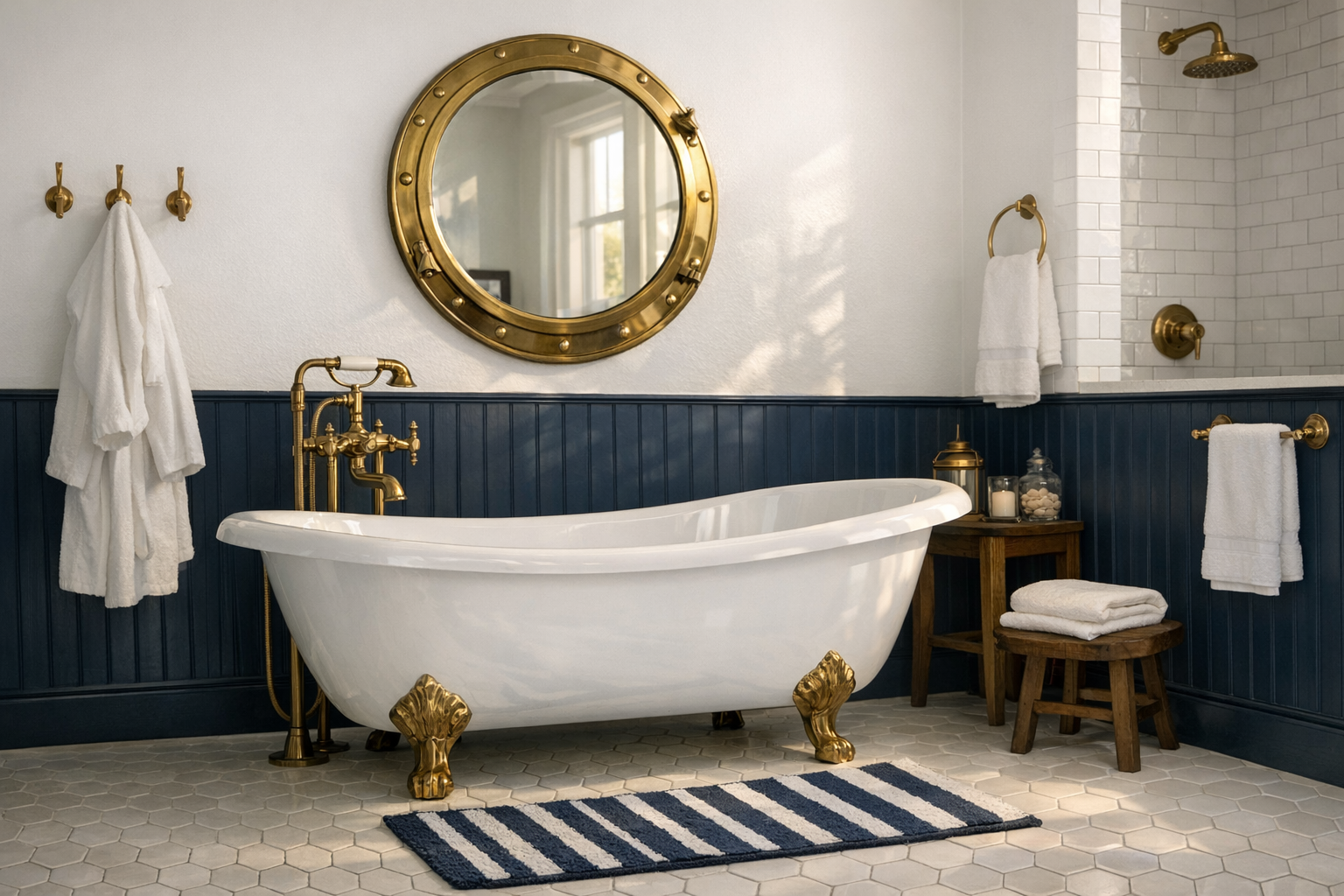
Classic maritime design – think navy, brass, white beadboard, and a clawfoot bathtub – is one of the most enduring bathroom aesthetics. It’s been working for decades and it’ll keep working, which makes it one of the safest style bets for resale value.
The clawfoot tub is the anchor of this look. Pair it with brushed brass fixtures and navy accents, and you have a bathroom that feels both timeless and personal.
Why it holds value: Maritime-style bathrooms avoid the trap of trend-chasing. While ultra-modern designs may feel dated in 5–7 years, this look compounds in charm over time.
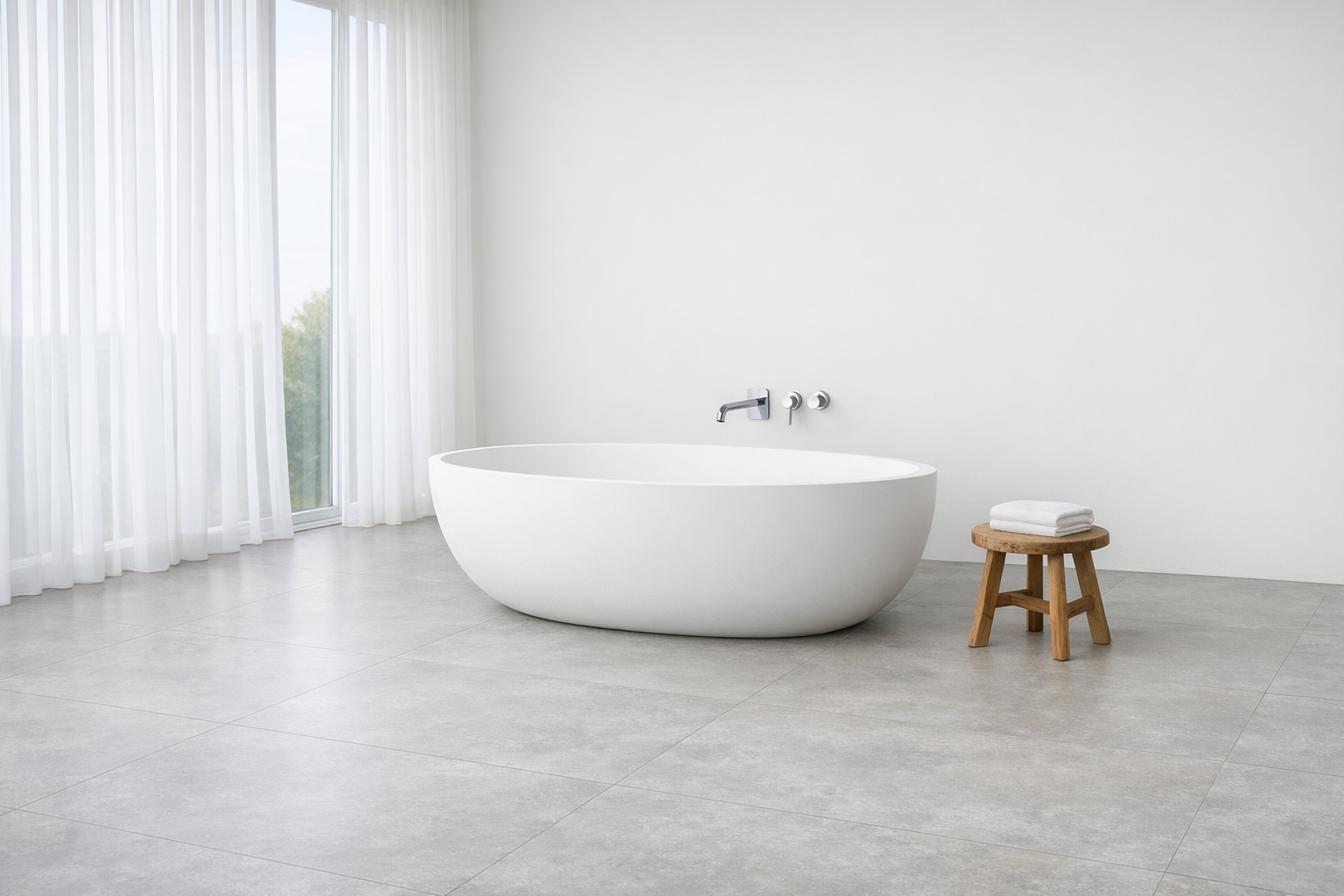
Most people assume luxury bathrooms are about expensive materials – marble everywhere, gold fixtures, oversized footprints. But the bathrooms that actually feel luxurious have one thing in common: space around the fixtures. A freestanding bathtub with breathing room around it feels more luxurious than an expensive tub crammed into a corner.
A luxurious master bathroom with a freestanding bathtub centered in the room, surrounded by open floor space, communicates intention and confidence. The empty space is the luxury.
The takeaway: If your budget forces a choice between better materials and more open space, choose space. You can upgrade materials later – you can’t add square footage.
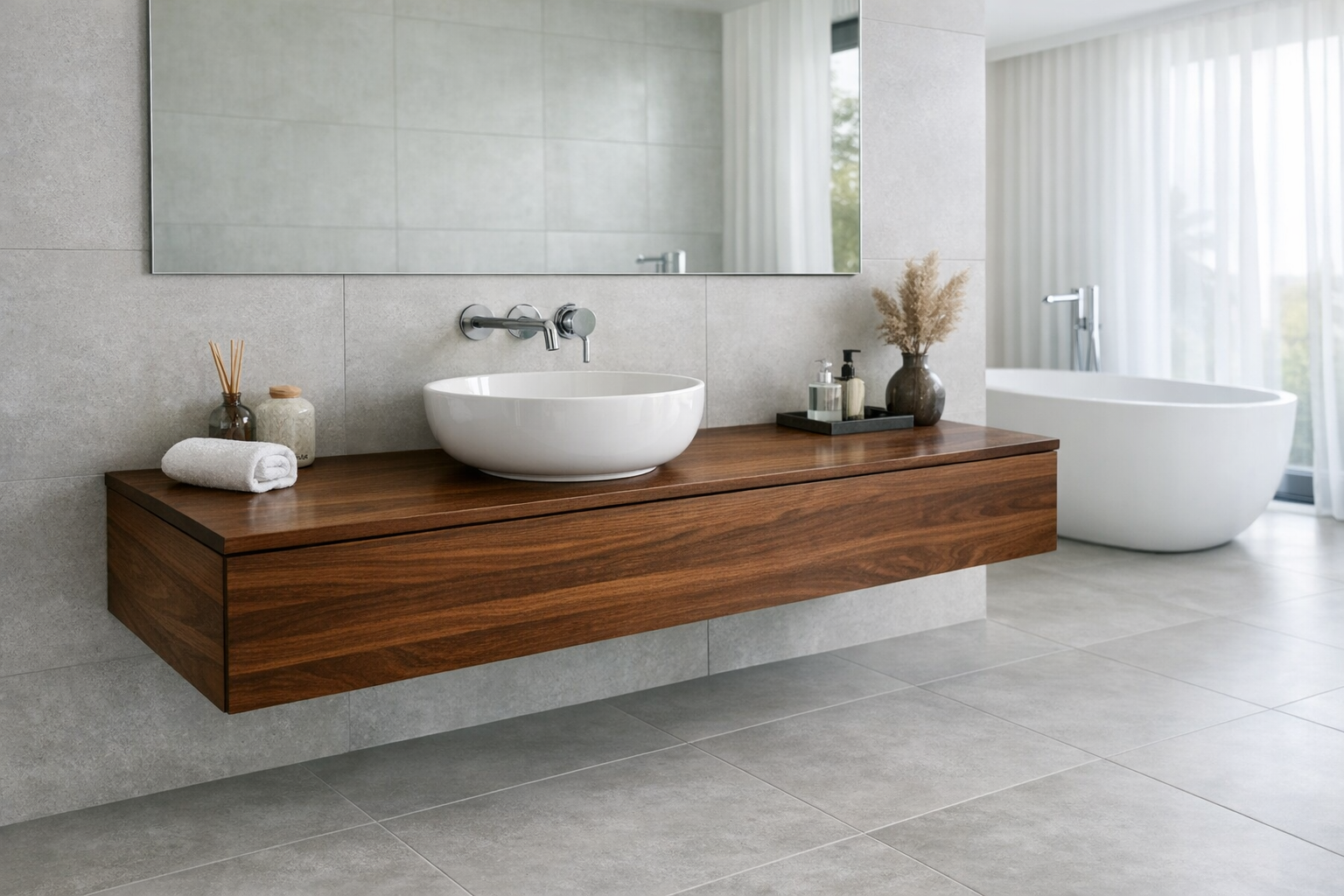
A spacious master bathroom with a ceramic vessel sink and a floating vanity uses a simple visual trick: by revealing the floor beneath the vanity, the room reads as larger. Your eye follows the unbroken floor line, and the result is a bathroom that feels more open than its dimensions suggest.
This is especially effective in master bathrooms that aren’t quite as large as you’d like. The freestanding tub combined with a floating vanity creates a room where nothing touches the ground unnecessarily.
Practical bonus: Floating vanities also make floor cleaning dramatically easier – no more reaching around vanity legs or dealing with water pooling at the base.
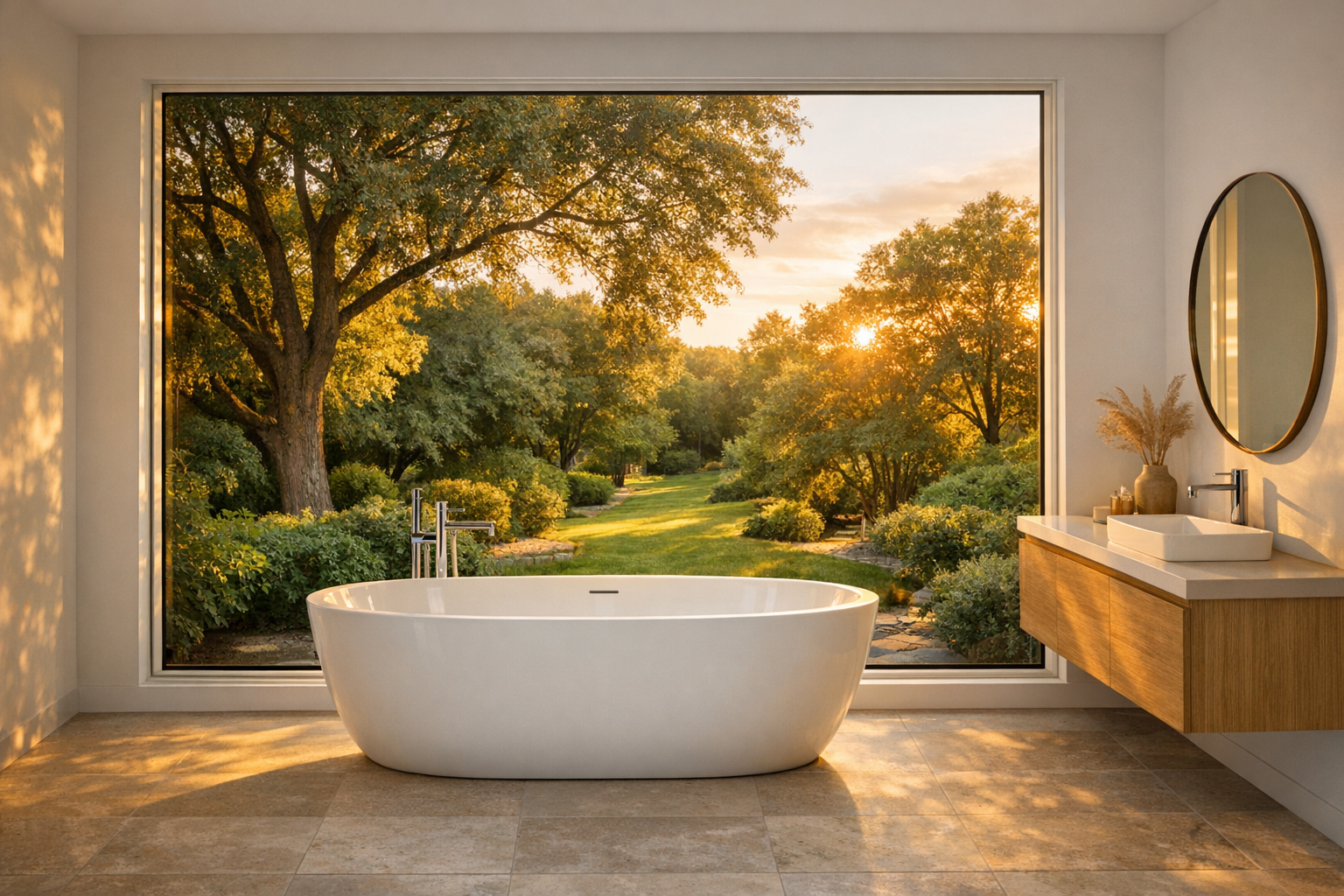
If your master bathroom has the option for a window with a view – trees, a garden, even a skyline – lean into it. A simple modern bath with a spacious view and floating vanity doesn’t need elaborate tile work or statement fixtures. The view is the design.
Position your tub or shower to face the view. Use minimal window treatments. Let the outside do the decorating.
For homeowners in scenic locations: This is your unfair advantage. A bathroom with a view outperforms one with expensive finishes every time – and it costs nothing once the window is in.
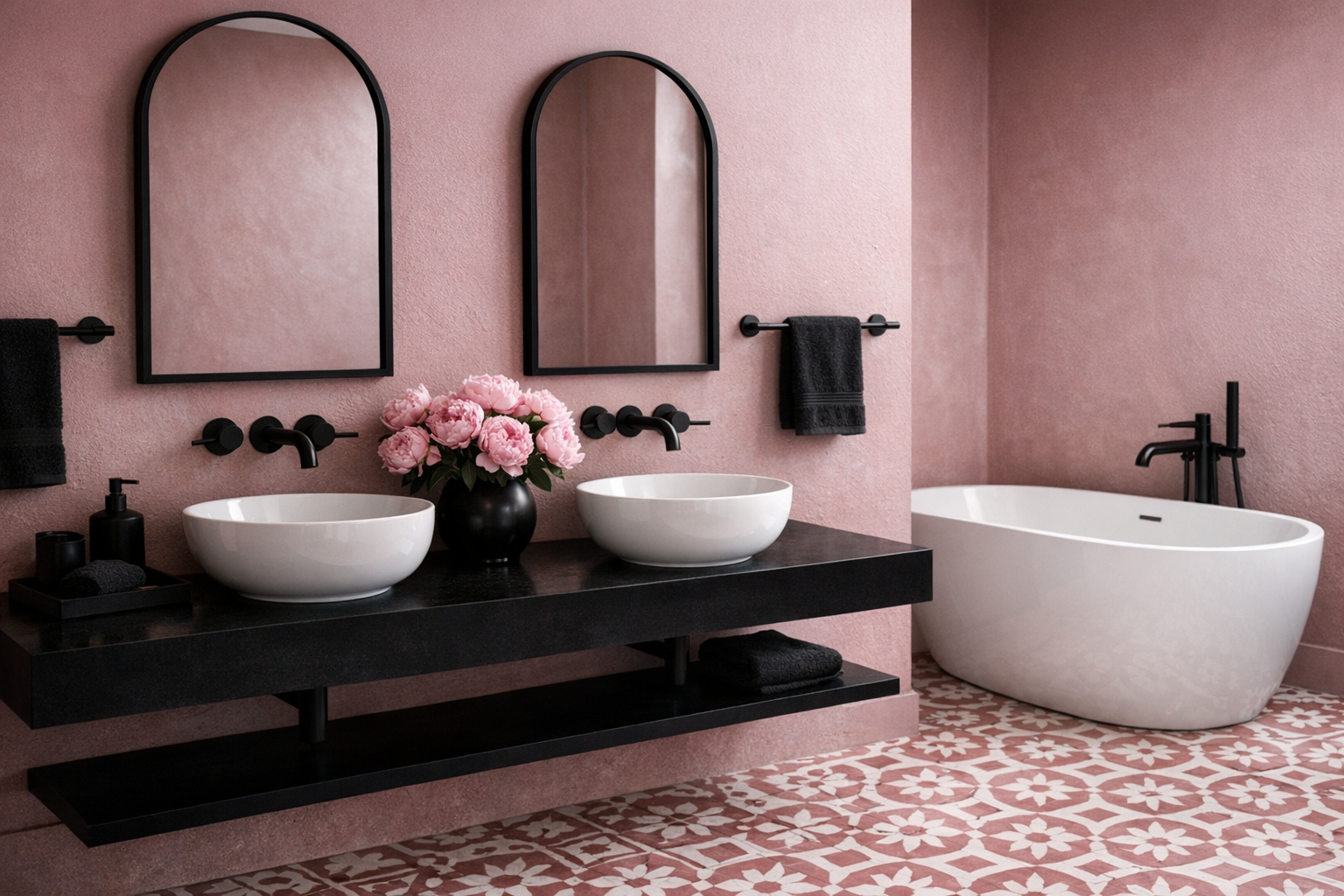
Modern pink and black bathrooms are polarizing, and that’s exactly the point. Matching vessel sinks in an unexpected color palette create a bathroom that feels personal and designed, not catalog-safe.
This isn’t for everyone – and it shouldn’t be. If you’re someone who has always wanted a bathroom that reflects your personality rather than blending into a Zillow listing, bold color is the way to go.
The rule with bold color: Commit to it in elements that are easy to change (paint, accessories, towels) and keep the permanent fixtures (tub, tile, countertops) in neutral tones. That way, you get the personality without the renovation regret.
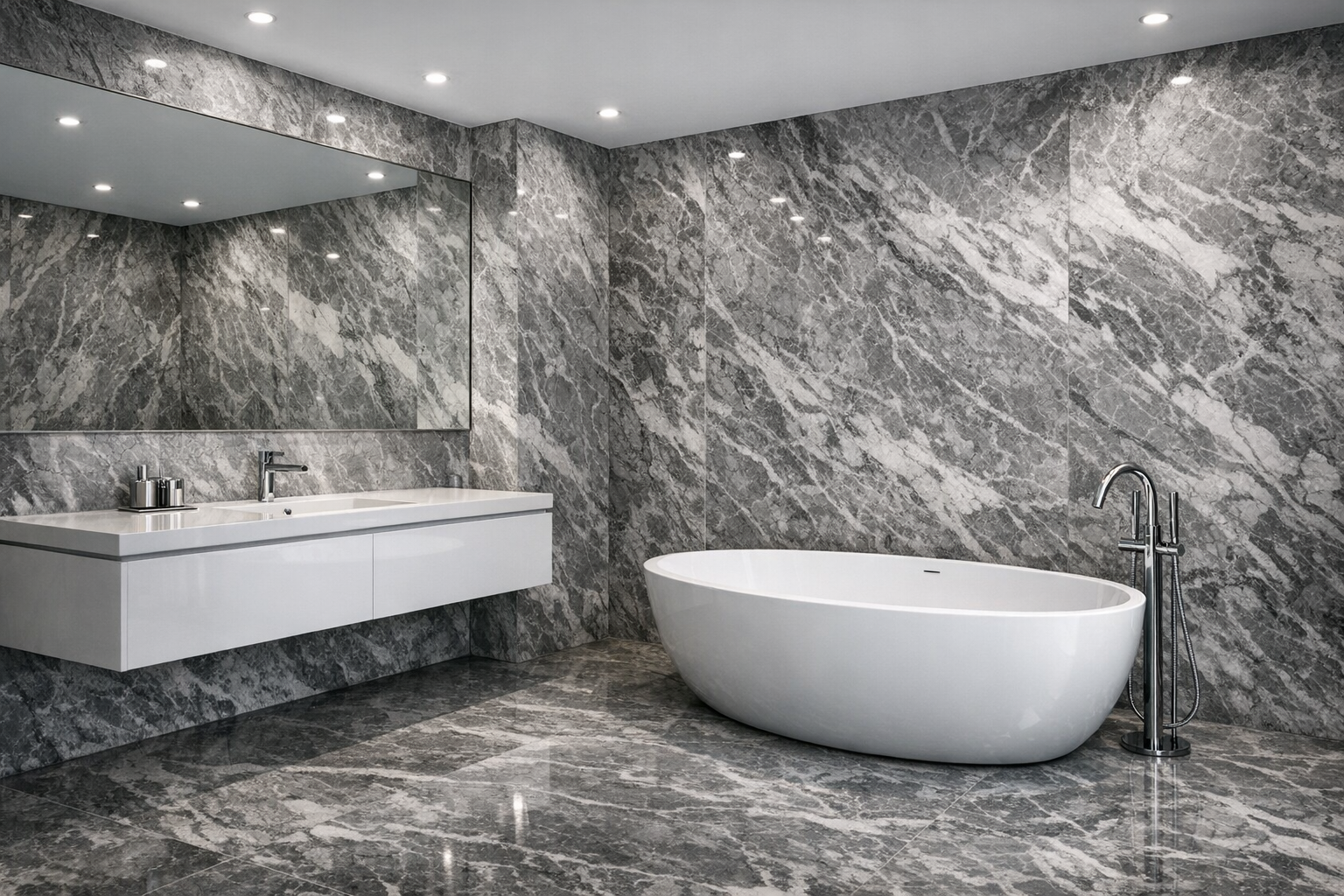
Polished gray marble walls with a white vanity and freestanding bathtub create a bathroom that feels expensive even when the budget is moderate. Marble-look porcelain tile can achieve 90% of the visual impact at a fraction of the cost, and most guests won’t know the difference.
Honest advice from us: Real marble is stunning but high-maintenance. It stains, it etches from acidic products, and it requires sealing. If you’re not willing to maintain it, marble-look porcelain is the smarter choice – and it’s what we recommend to most customers.
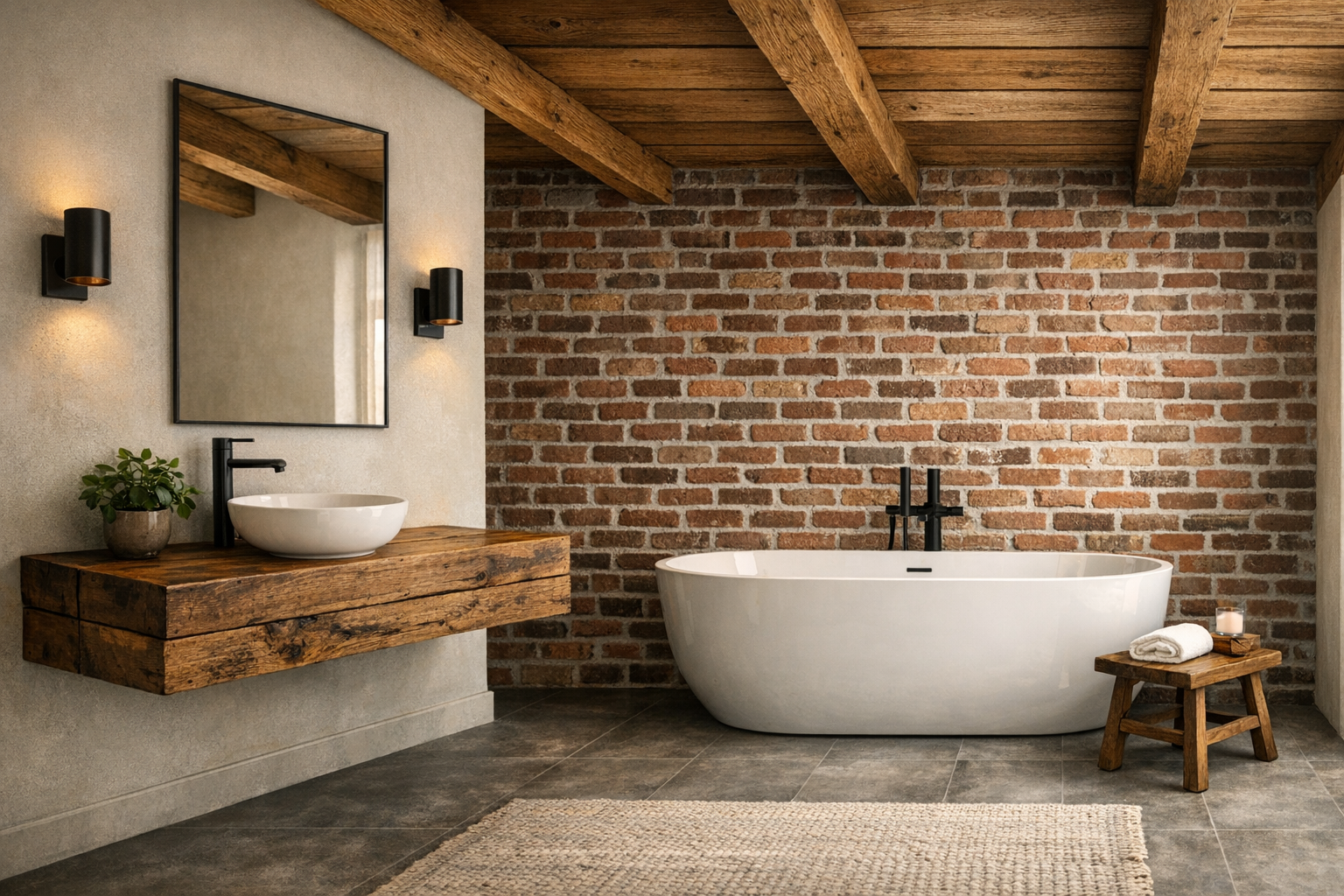
Bathrooms can easily feel cold and clinical. A serene master bathroom with wood and brick elements – a reclaimed wood vanity, exposed brick accent wall, or wooden ceiling beams – injects warmth and character that tile alone can’t achieve.
The freestanding bathtub becomes the bridge between the organic materials and the clean-lined fixtures. It softens the contrast.
Important caveat: Real wood in a bathroom requires proper sealing and ventilation. Without adequate exhaust fans, wood will warp and mold. If your bathroom ventilation is poor, use wood-look porcelain tile to get the aesthetic without the maintenance headaches.
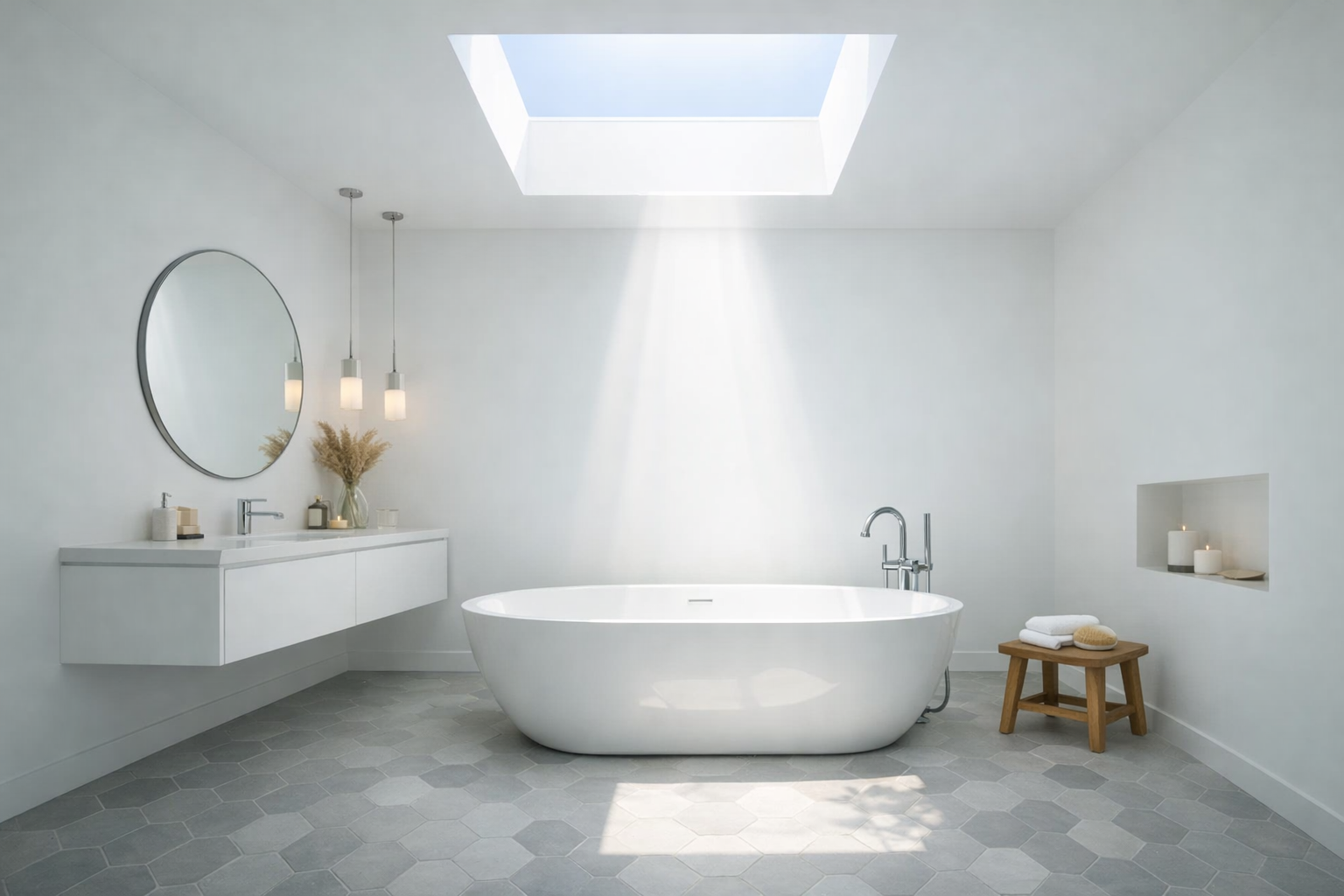
A spacious master bathroom with abundant natural lighting doesn’t need to prove anything with fancy materials or fixtures. The light does the work. Skylights, clerestory windows, and glass block walls are all ways to bring in light without sacrificing privacy.
For anyone renovating a dark bathroom: This is the single most impactful change you can make. Adding a skylight typically costs $1,500–$3,000 installed and transforms the entire feel of the room. It’s the best ROI in bathroom renovation that almost nobody talks about.
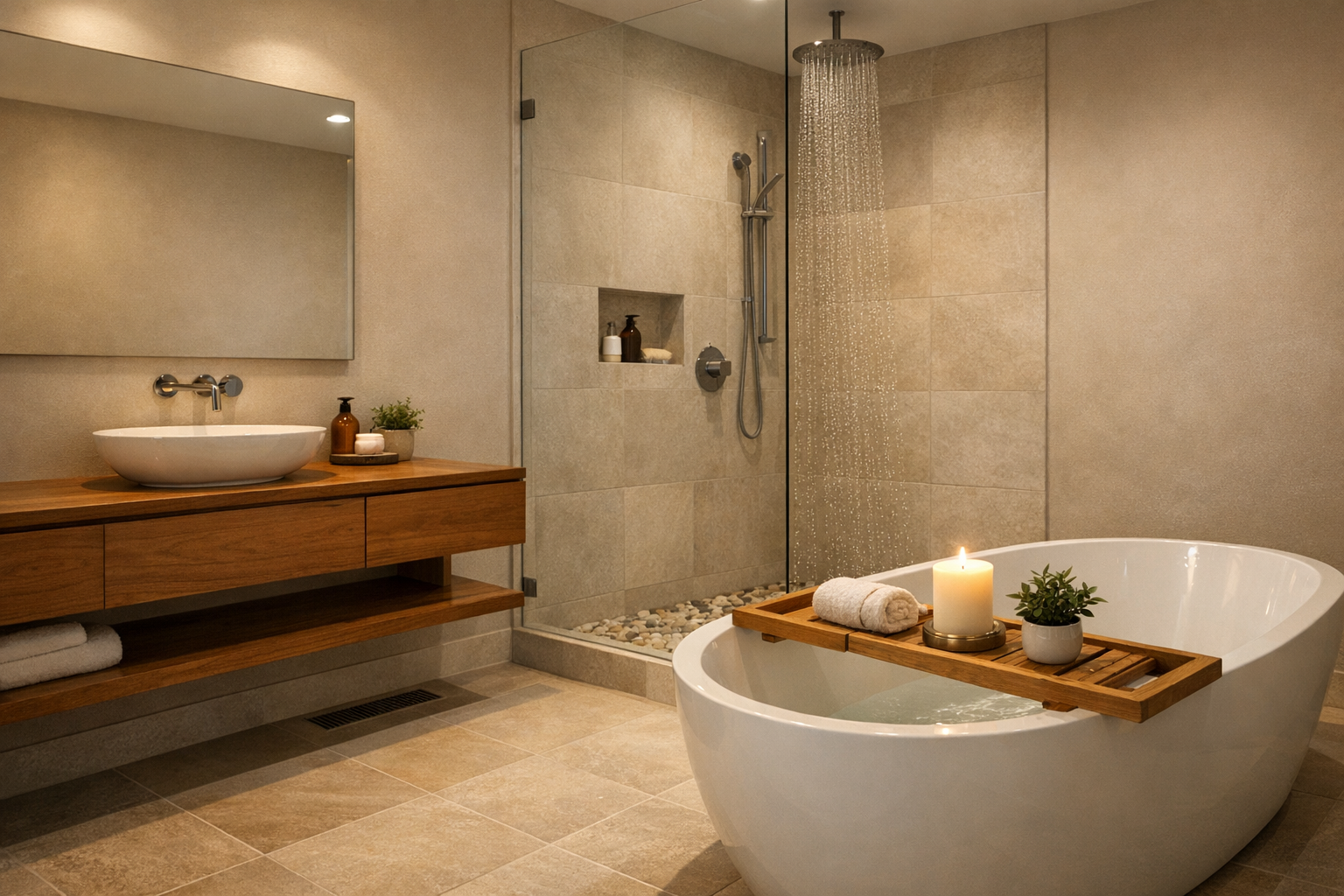
Everyone says they want a “spa-like bathroom,” but most spa-inspired designs miss what actually makes a spa relaxing: simplicity. A spa-like master bathroom with a wooden floating vanity and ceramic vessel sink works because it removes visual clutter, not because it adds bamboo accents and river rocks.
Keep surfaces clean, choose warm neutral tones, and invest in one quality texture (natural stone, teak, or linen) rather than layering multiple “spa” elements.
What actually creates the spa feeling: Consistent warm lighting (no overhead fluorescents), heated floors, and a rainfall showerhead. These three things matter more than any decorative element.
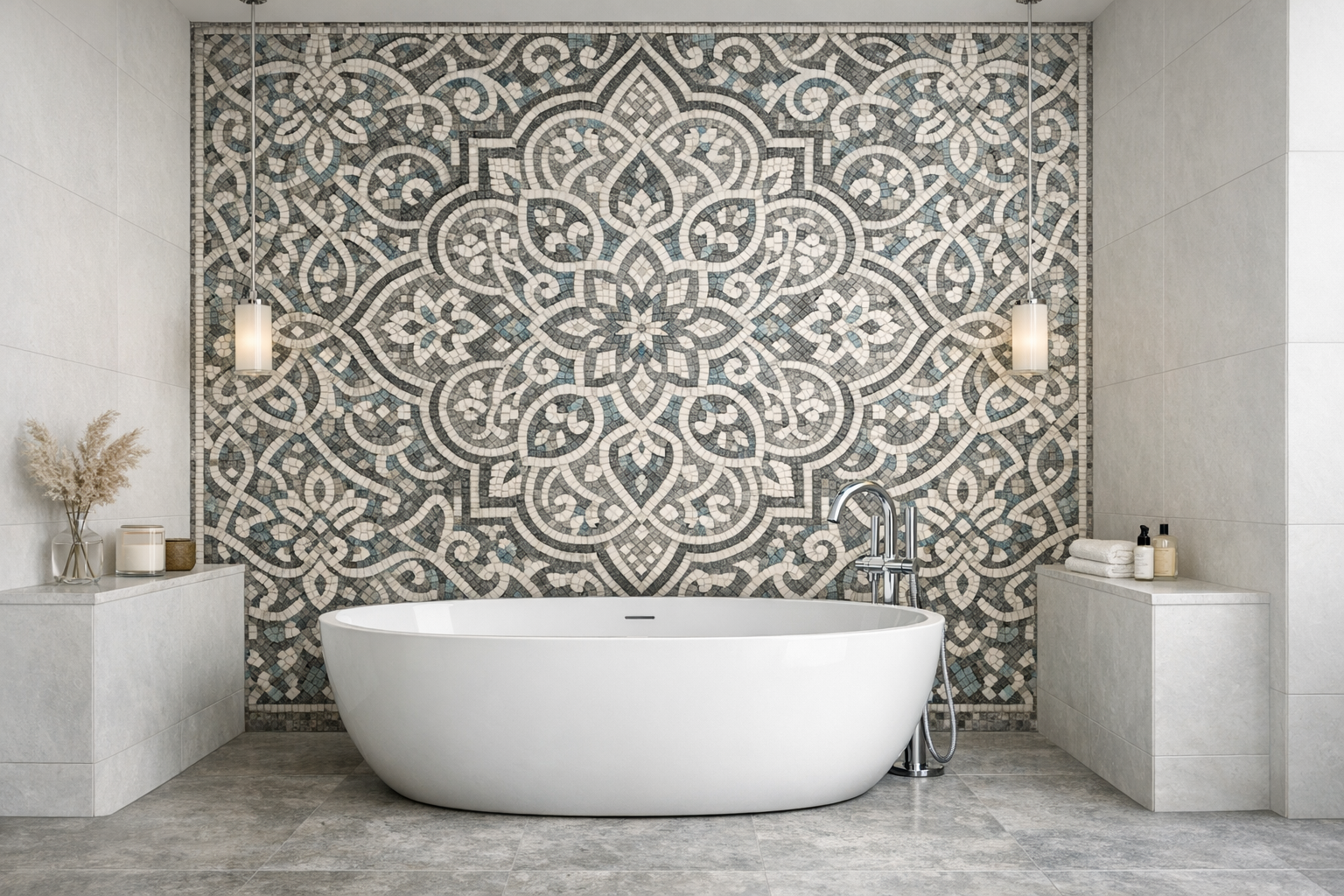
Symmetrical mosaic-styled bathrooms with granite tile are visually stunning but come with a catch: installation cost. Mosaic tile takes significantly longer to install than large-format tile, which means higher labor costs. For a full bathroom, expect to pay 2–3x more in labor compared to standard tile.
Is it worth it? Yes – if it’s the focal point. Use mosaic tile on one accent wall or the shower floor, not everywhere. A single mosaic wall paired with larger tiles elsewhere gives you the statement without the budget shock.
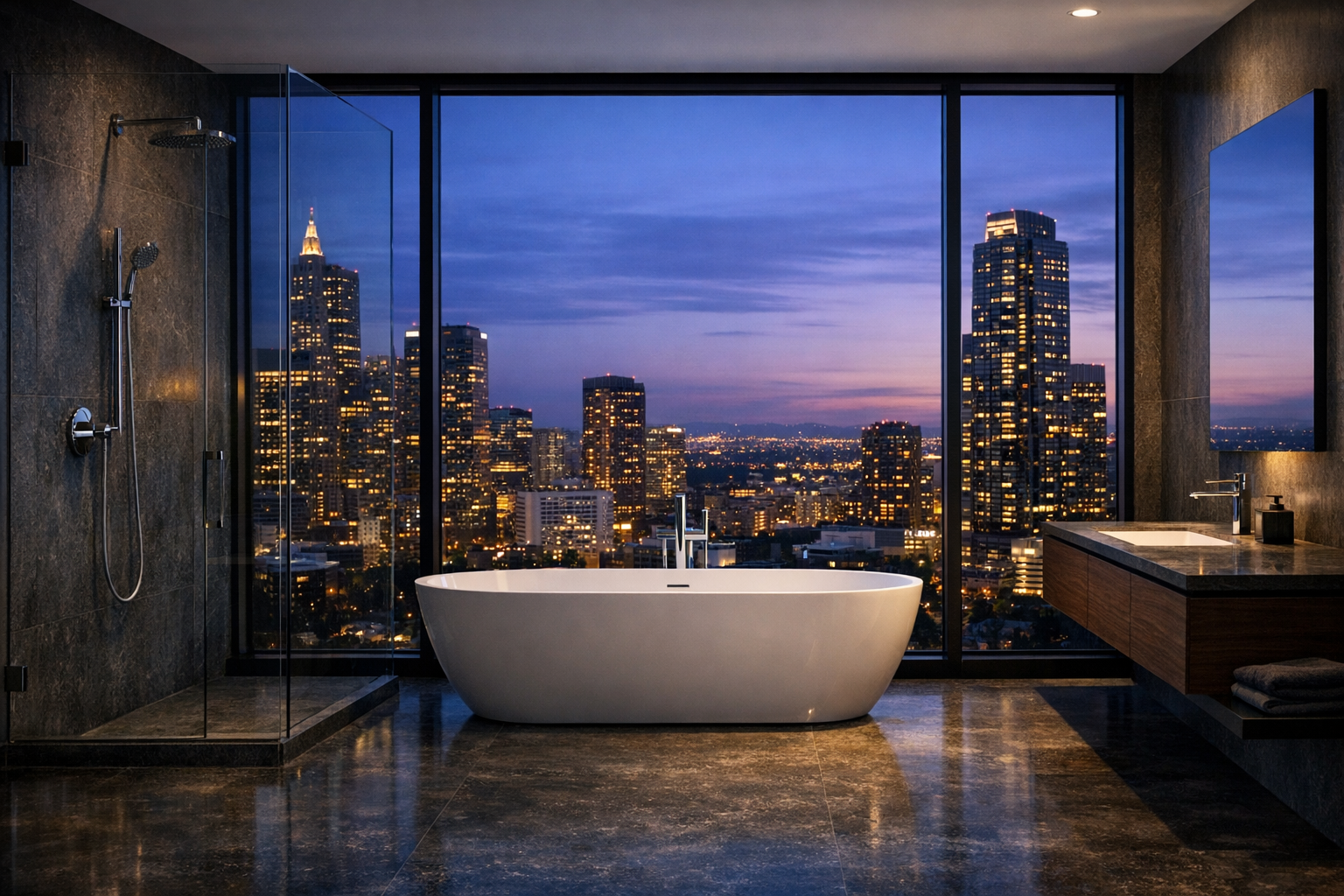
A skyline view master bathroom in a high-rise or urban setting is a category of its own. The design should recede so the view advances. Frameless glass, minimal fixtures, and a freestanding bathtub positioned at the window create a cinematic bathing experience.
For condo and apartment renovators: You often can’t change the window, but you can change everything else. Strip away visual noise – remove shower curtains, replace bulky vanities with floating ones, and use frameless glass enclosures. Let the city be your backdrop.
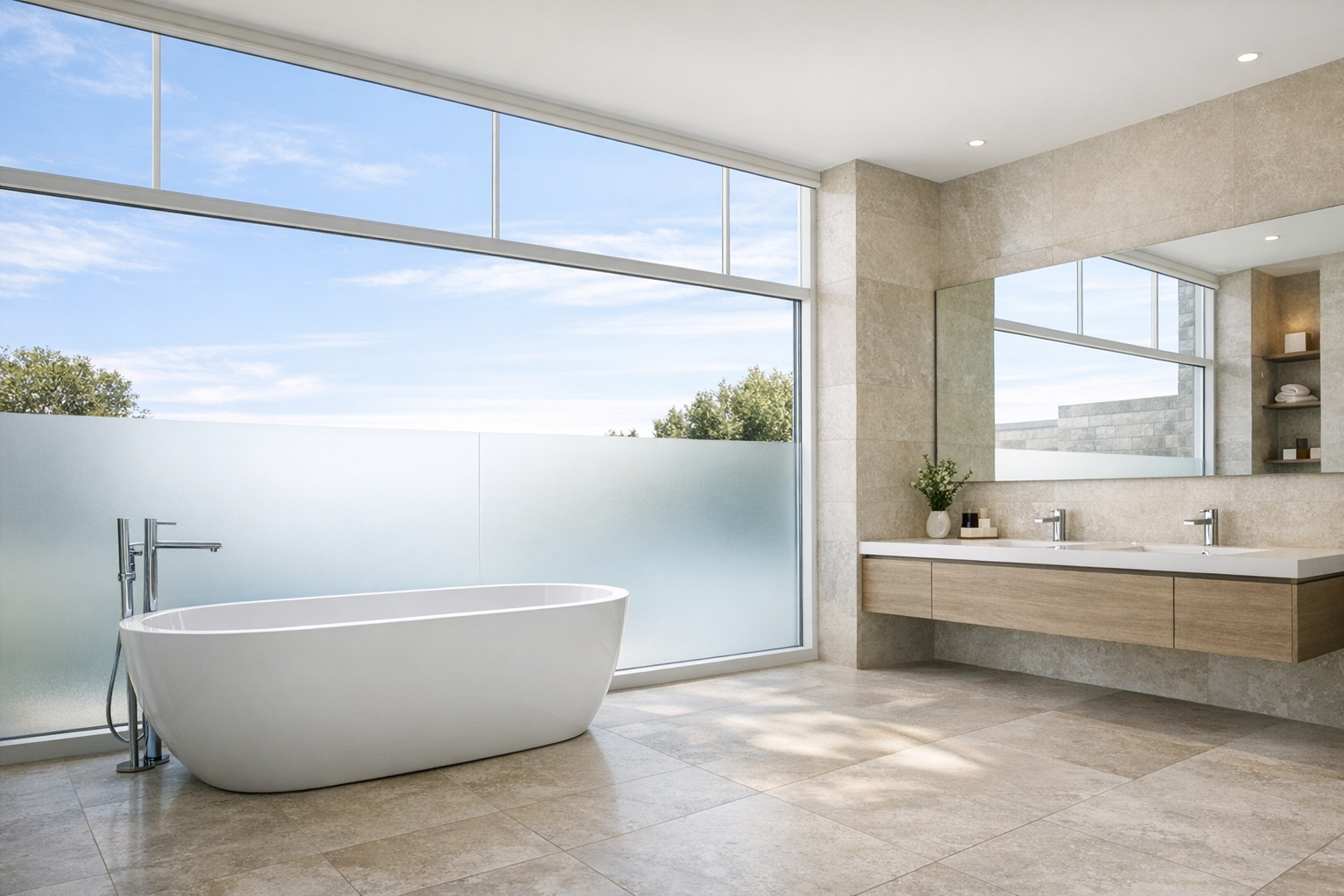
Stylish master bathrooms with large pane windows face the eternal tension: you want the drama of floor-to-ceiling glass, but you also want to shower in peace. The solution isn’t curtains – it’s glass technology. Smart glass (switchable privacy glass), frosted lower panes with clear upper panes, or exterior landscaping that creates a natural screen all solve this without sacrificing the view.
Our recommendation: If you’re investing in large windows for a bathroom, budget for smart glass. It’s more expensive upfront ($50–$100/sq ft) but eliminates the need for any window treatments permanently.
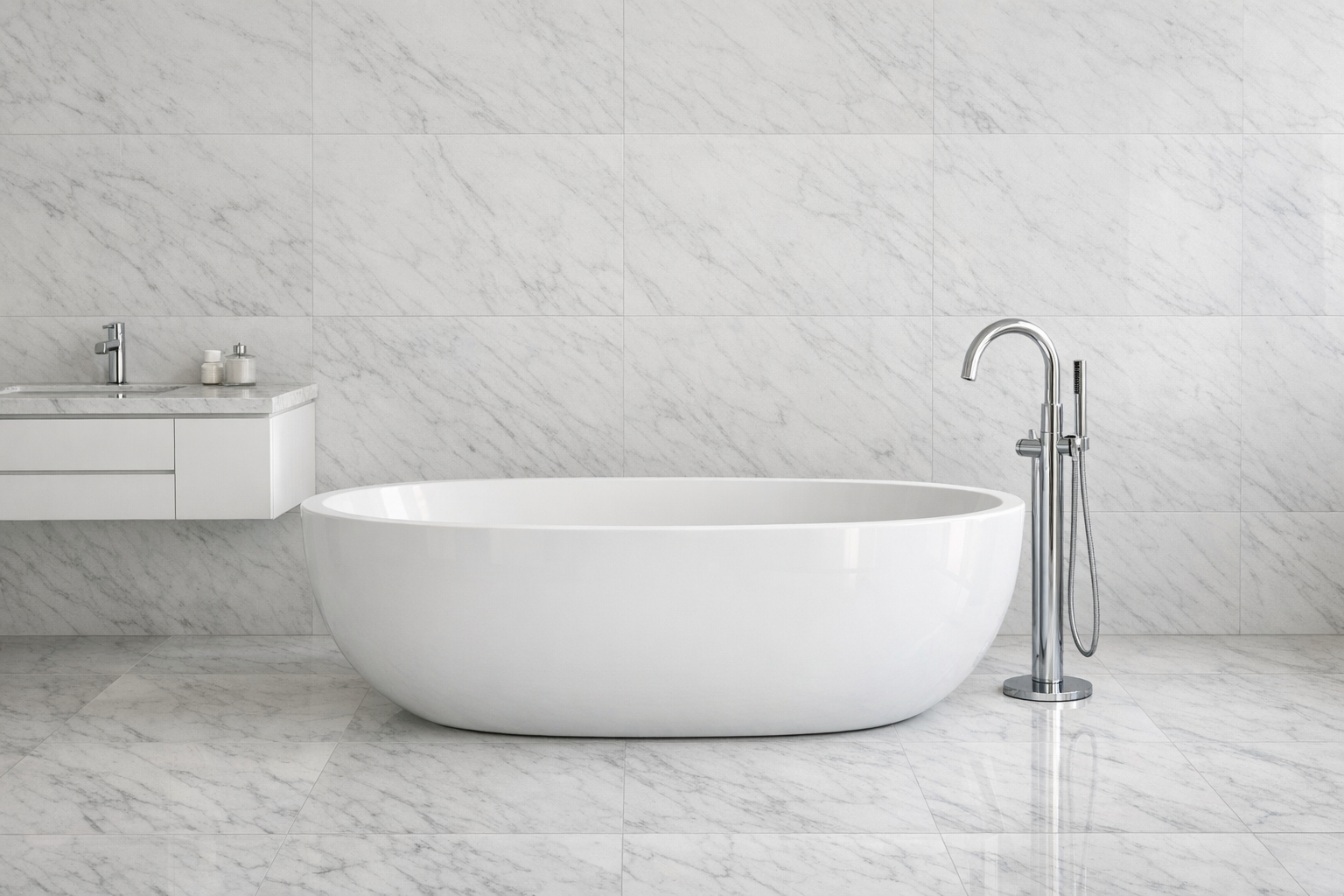
Modern bathrooms with marble tiles and a modern freestanding tub will never go out of style – this is the interior design equivalent of a well-tailored navy suit. The marble provides texture and visual depth; the tub provides the sculptural centerpiece.
Material tip: Large-format marble tiles (24×48 or larger) with minimal grout lines create a more seamless, high-end look than smaller tiles. Fewer grout lines also means less maintenance and a cleaner aesthetic long-term.
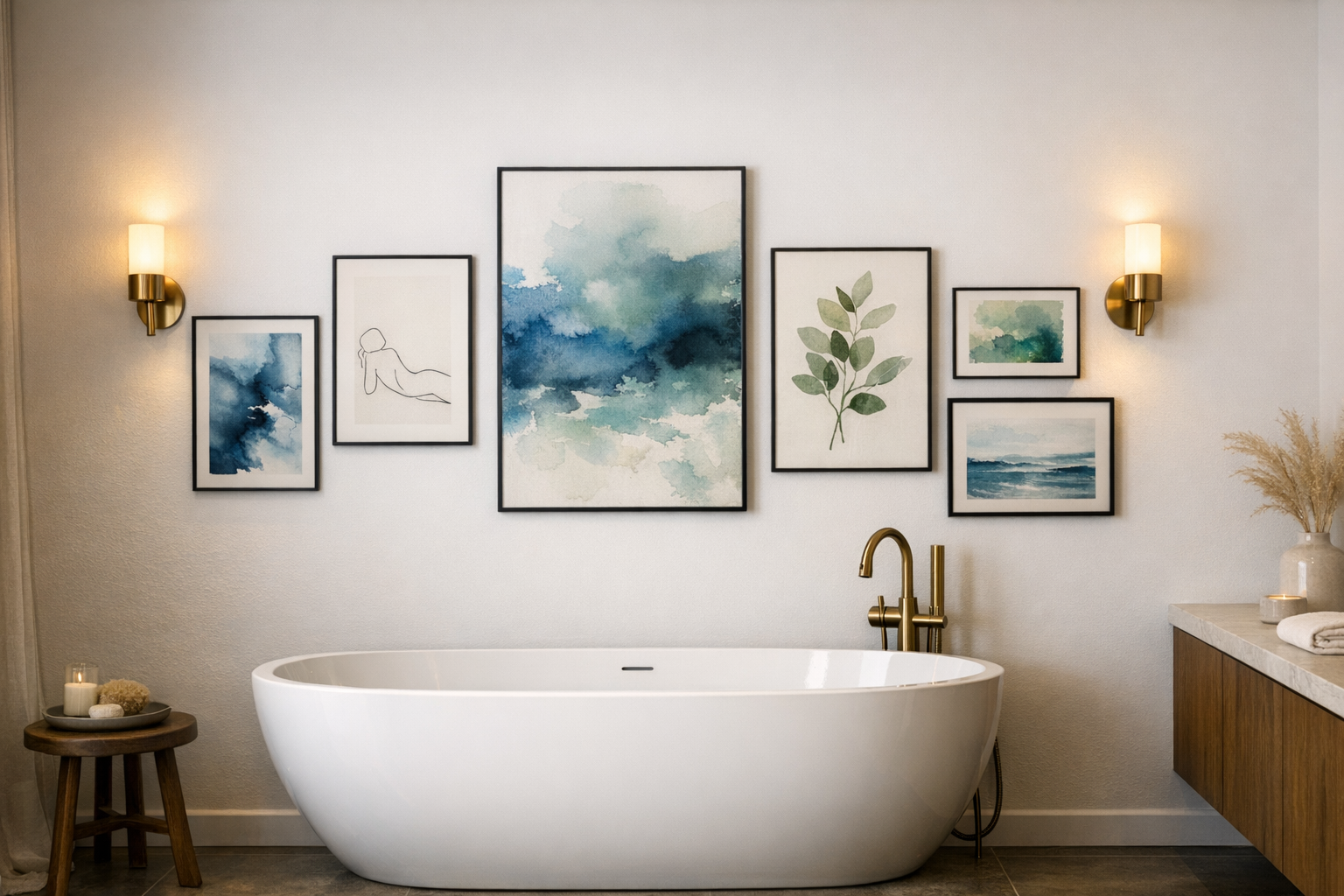
Adding a gallery wall to your bathroom is the fastest way to make it feel like a room instead of a utility space. Framed prints, photography, or even small sculptural pieces on a bathroom wall tell visitors (and yourself) that this space was designed with intention.
Practical tip: Use frames with glass fronts and avoid placing art directly above the tub or shower splash zone. Humidity is fine; direct water contact is not.
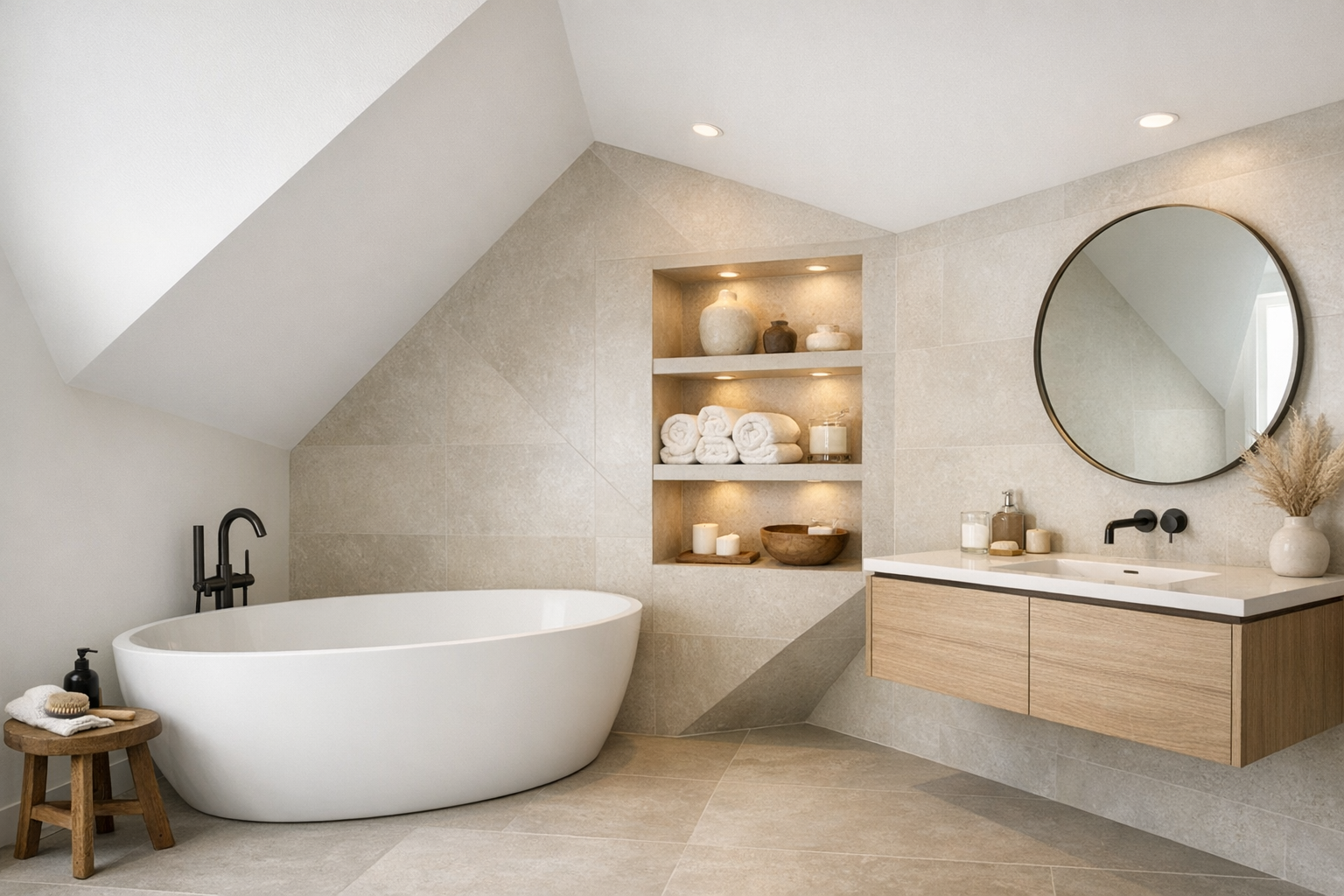
Every bathroom has an awkward corner, an odd angle, or a dead zone that seems unusable. The best master bathroom designs don’t fight these spaces – they leverage them. A narrow niche becomes a built-in shelf. An angled wall becomes a perfect spot for a corner tub. A dead corner becomes a seated vanity area.
If you’re working with an irregular floor plan: Don’t try to force standard fixtures into non-standard spaces. Custom-sized or freestanding pieces that can be positioned freely (like a freestanding bathtub) adapt to weird layouts far better than built-ins.
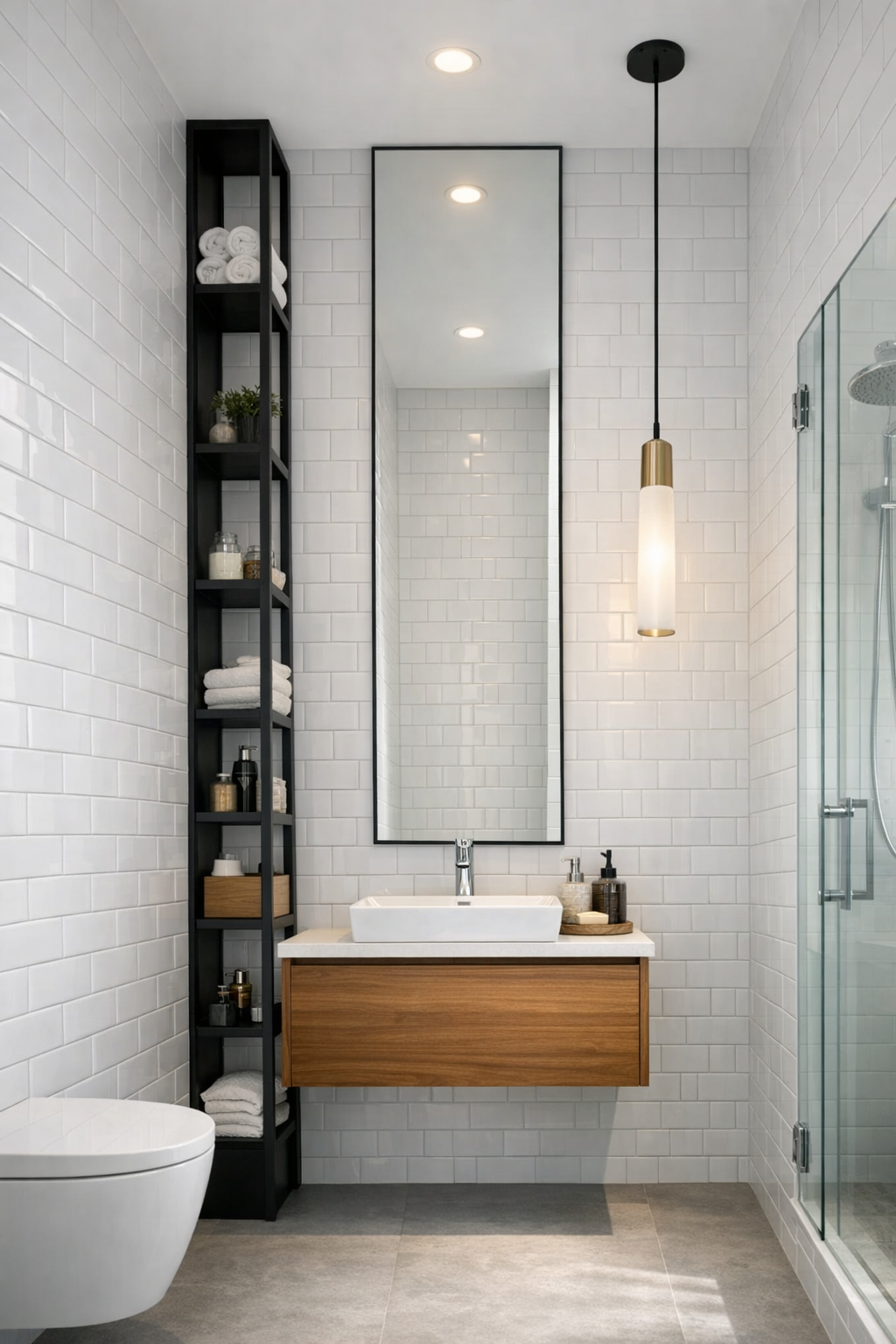
In a small master bathroom, you can’t expand the floor – but you can expand the walls. Floor-to-ceiling tile, tall mirrors, vertical shelving, and pendant lighting all draw the eye upward, creating the feeling of more space without adding square footage.
The most impactful vertical move: A floor-to-ceiling mirror on one wall. It doubles the visual space instantly and costs a fraction of what additional square footage would require.
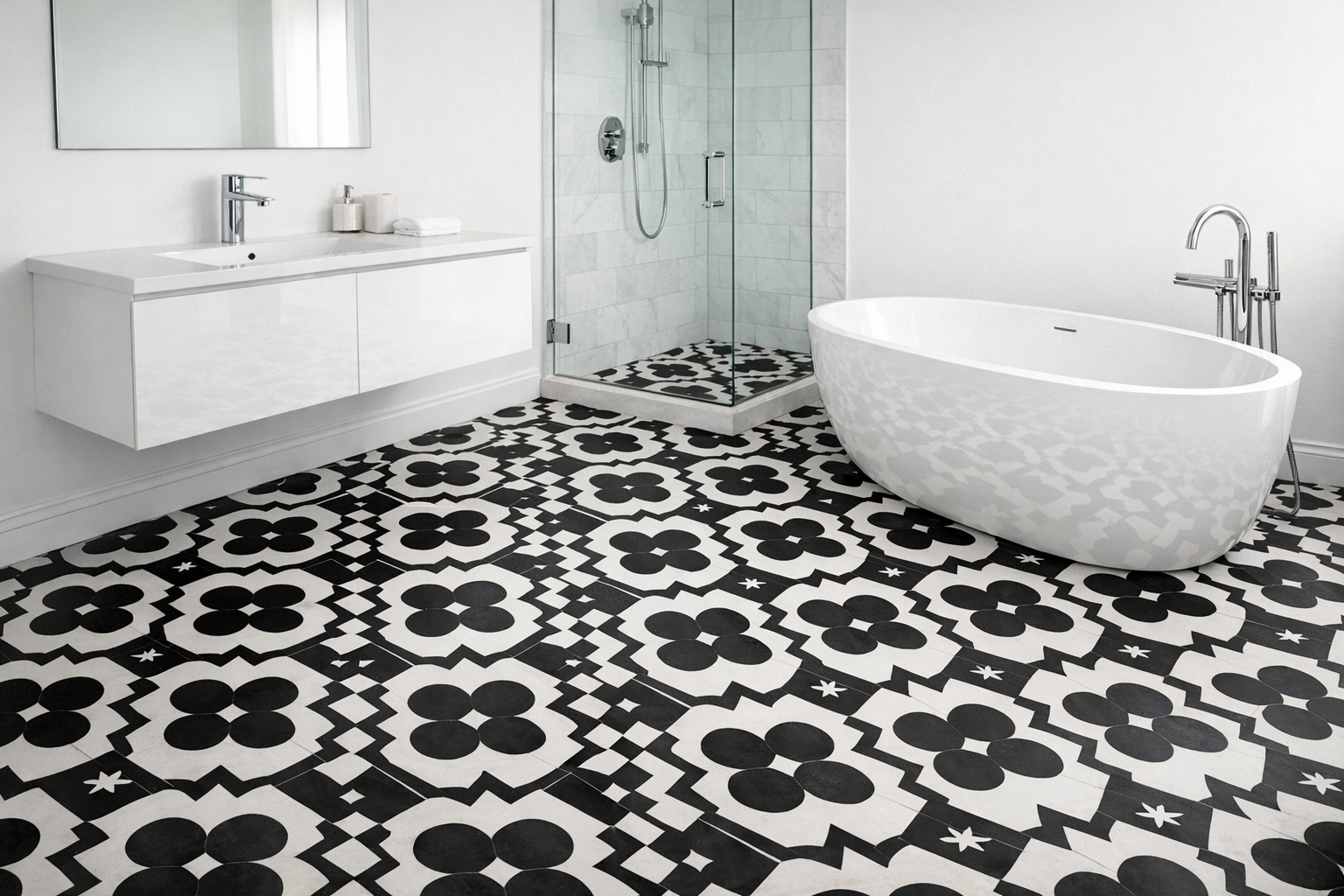
Bold patterns in a bathroom can feel thrilling in a showroom and suffocating six months later. The trick is containment: use bold patterns on the floor (where they’re underfoot, not overwhelming), on a single accent wall, or inside the shower enclosure. Keep the rest of the room quiet.
Pattern longevity rule: Geometric patterns (hexagons, herringbone, chevron) tend to age better than organic or trendy patterns. They feel intentional in year one and classic in year ten.
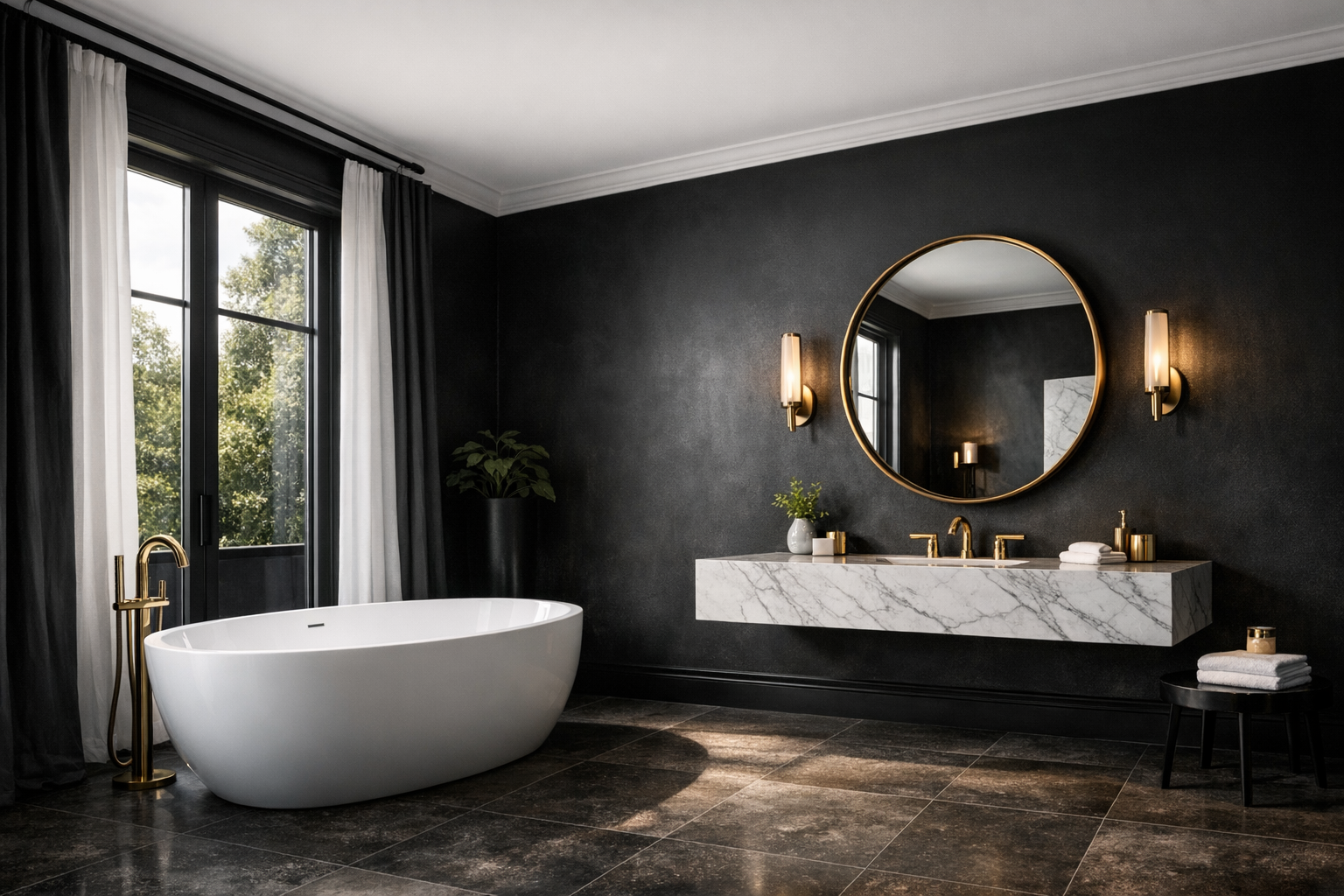
Black bathroom walls are a commitment, but in a large master bathroom with sufficient natural light, they create a dramatic, moody atmosphere that lighter colors simply can’t achieve. The contrast between black walls and white fixtures makes every element pop.
When to avoid it: If your bathroom is under 60 square feet or has limited natural light, black walls will make it feel like a closet. This is a move that requires scale to succeed.
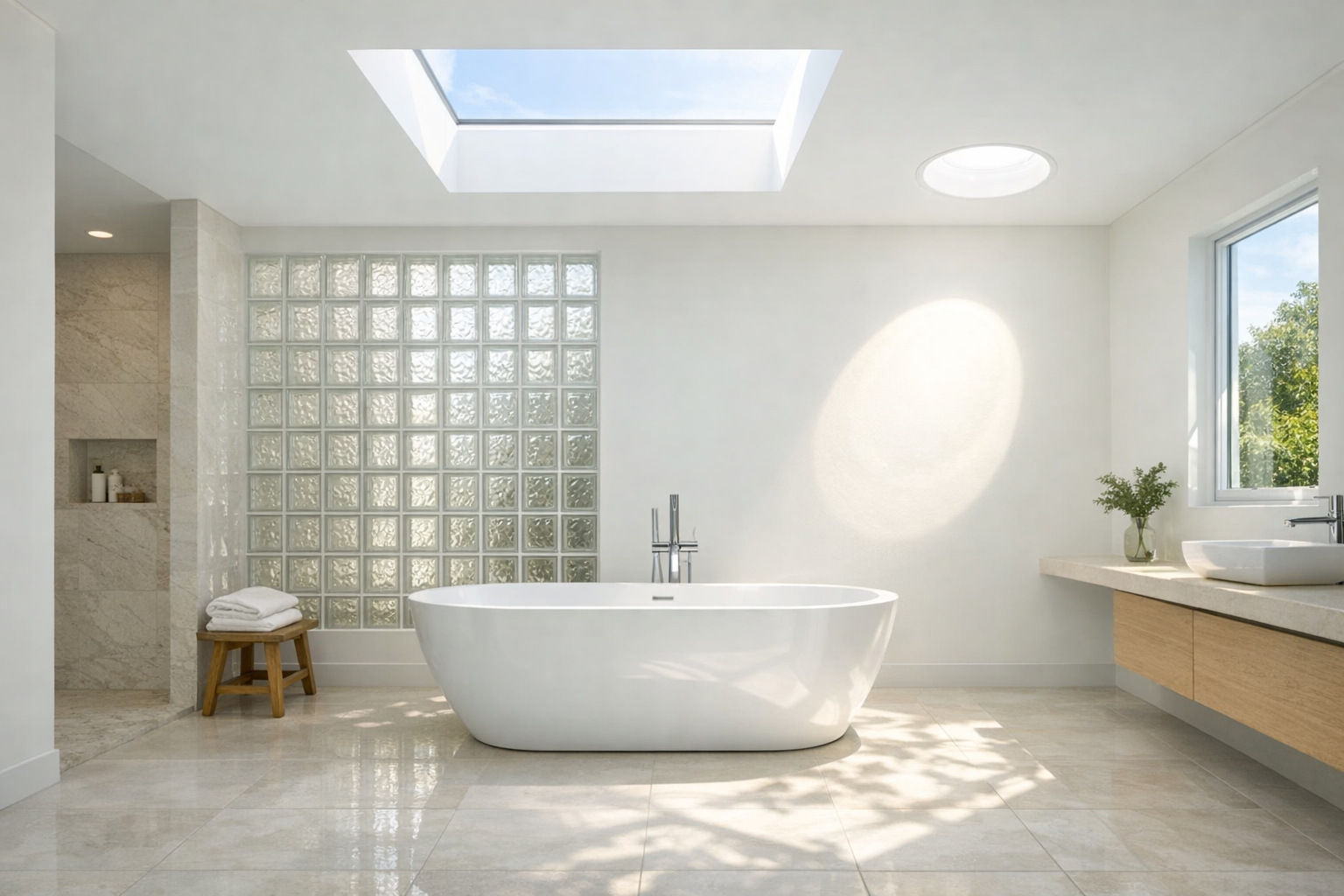
Natural light in a bathroom isn’t just about windows. Skylights, sun tunnels, glass block walls, and even light-colored tile that reflects ambient light all contribute. The goal is reducing your dependence on artificial lighting during the day.
Energy angle: Bathrooms lit primarily by natural light during daytime hours reduce electricity costs and create a healthier, more circadian-friendly environment. It’s a wellness upgrade that costs nothing to operate.
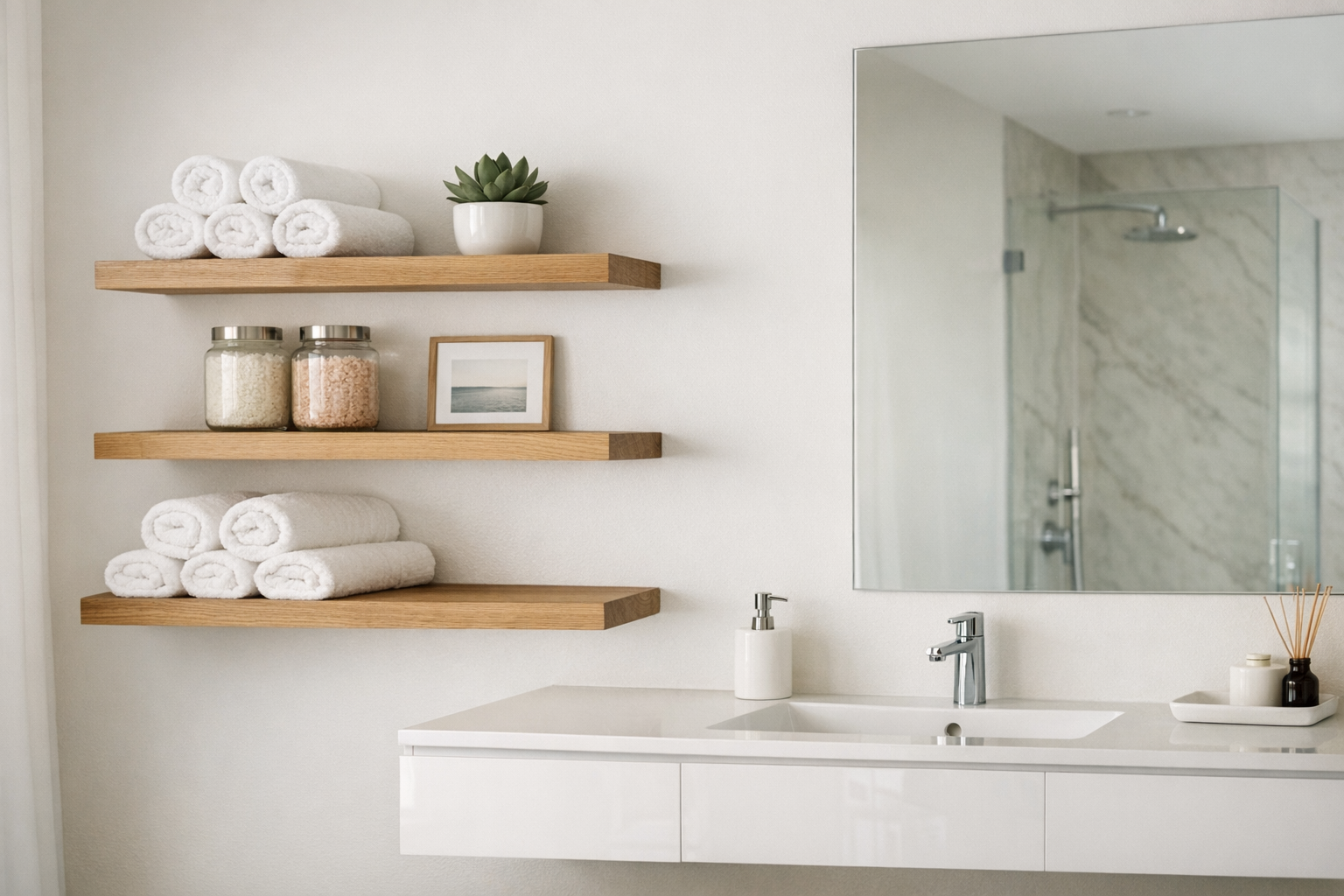
Open shelving in a bathroom forces a discipline that closed cabinets don’t: you keep only what looks good and what you actually use. Floating shelves in a master bathroom hold rolled towels, curated products, and a plant or two – and suddenly your bathroom looks like it belongs in a design magazine.
The rule: If you can’t keep open shelves organized, use closed storage instead. Messy open shelving is worse than no shelving at all.
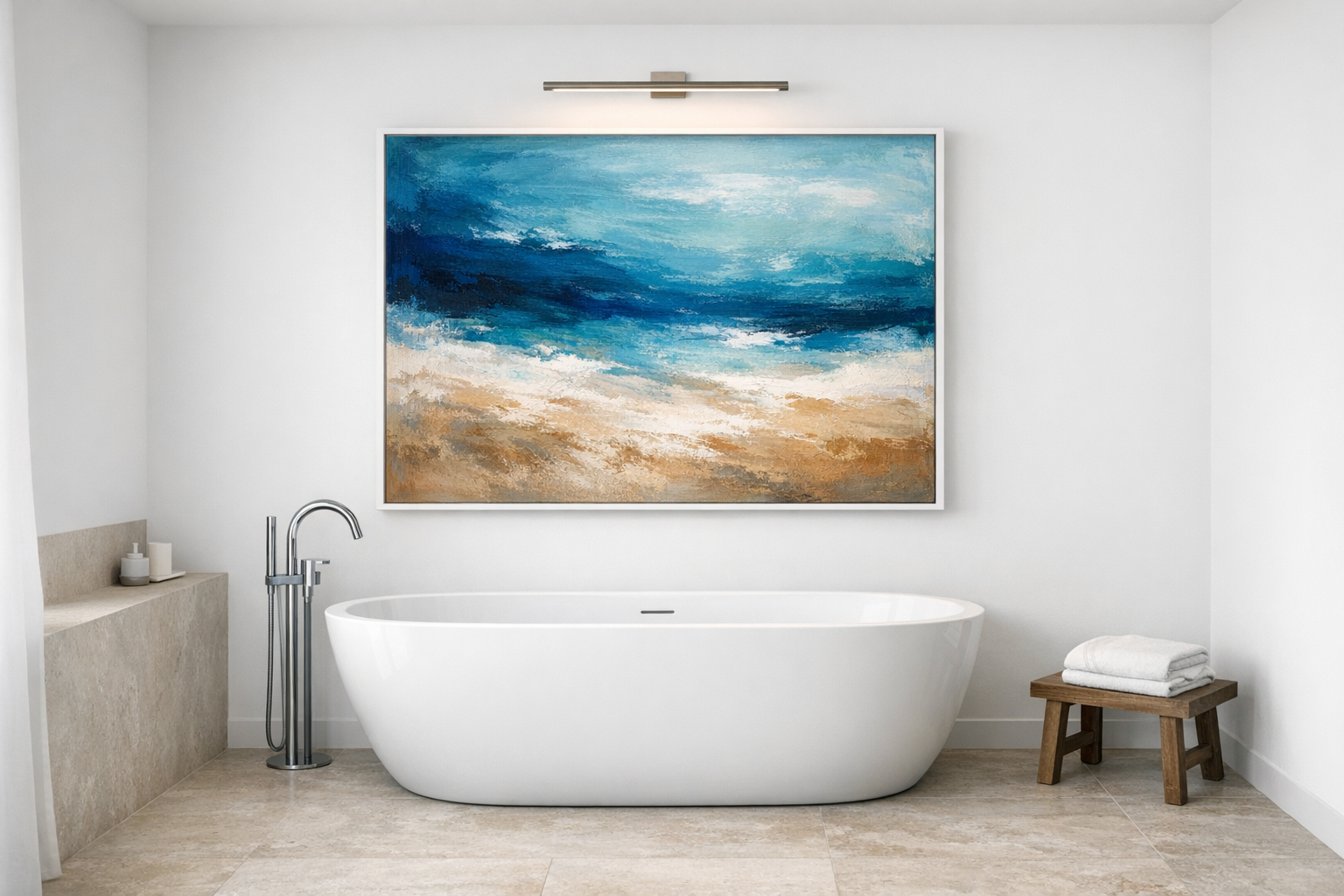
A splash of art in a master bathroom is one of the most underrated design moves. A single large-scale piece above the tub or on the wall opposite the vanity mirror adds personality and creates a conversation piece.
Art selection tip: Choose pieces with subjects or colors that relate to water, calm, or nature – they’ll feel intentional in a bathroom context. Abstract art in bathroom-complementary tones (blues, greens, earth tones) works particularly well.
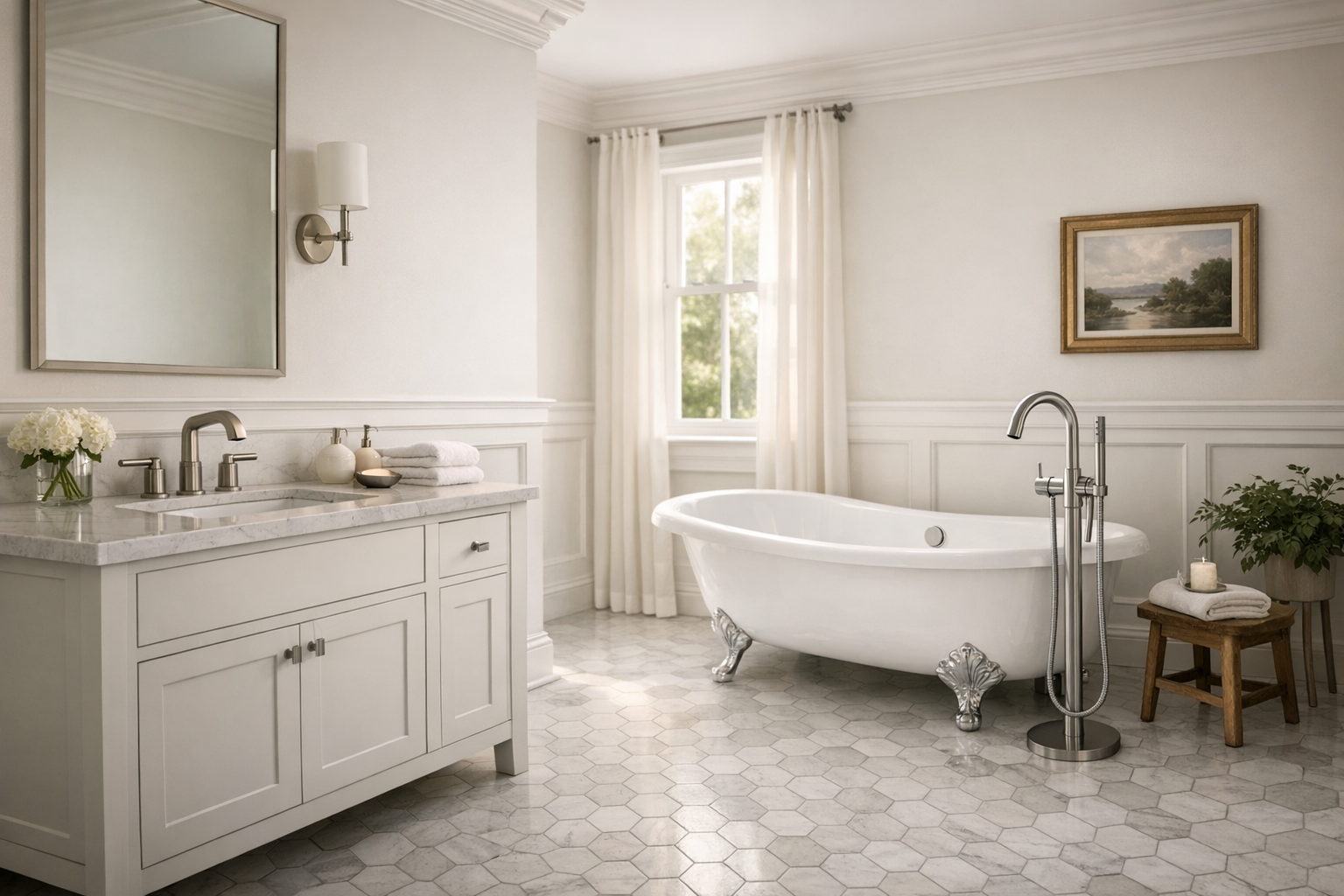
Keeping tradition in mind doesn’t mean designing a dated bathroom. Traditional design elements – crown molding, pedestal sinks, clawfoot tubs, wainscoting – can feel current when paired with modern hardware and clean finishes.
The balance point: Traditional bones (architectural details, classic silhouettes) with modern surfaces (brushed nickel, matte finishes, simple hardware). This combination creates bathrooms that feel both rooted and fresh.
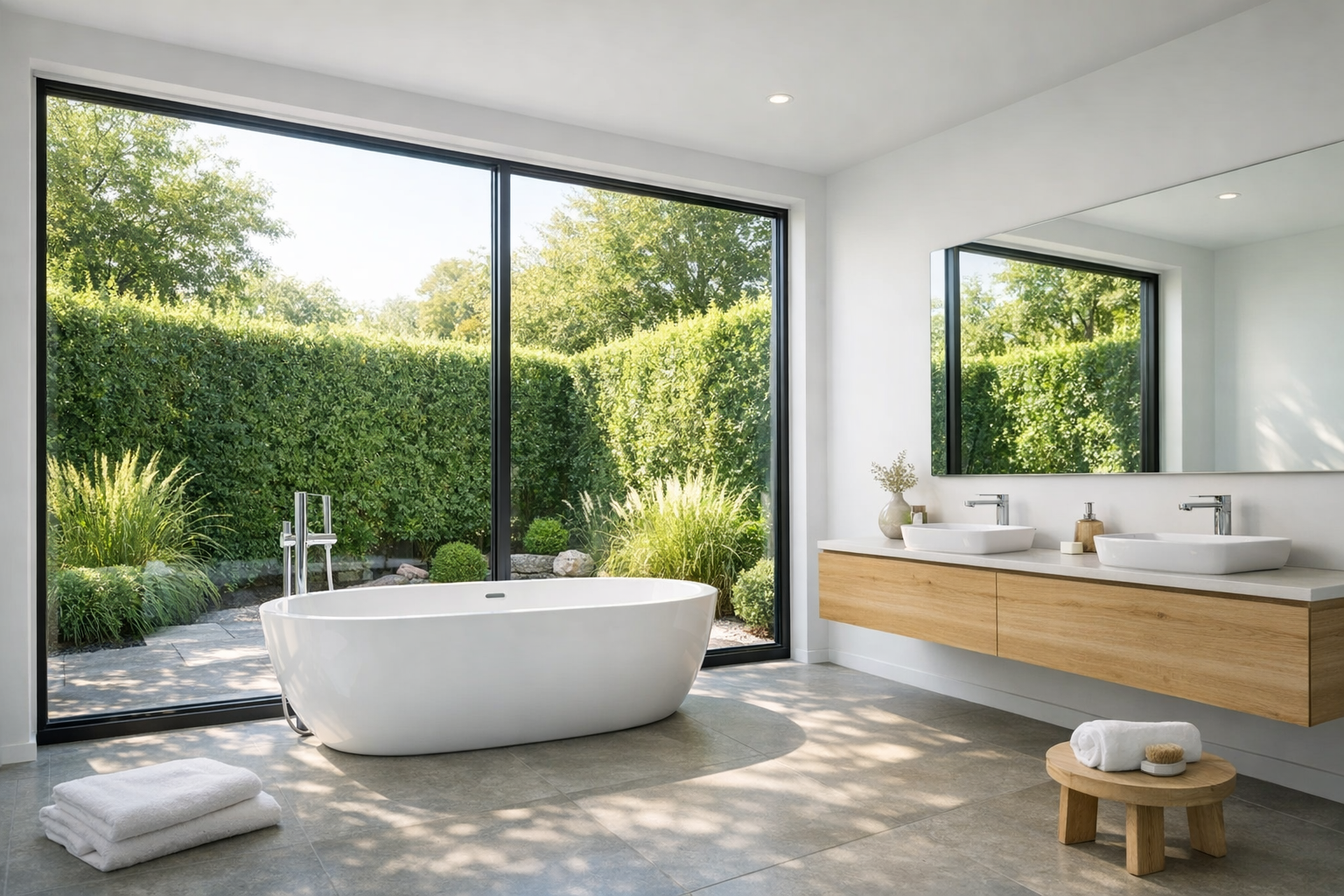
Large windows in a master bathroom are the ultimate statement of luxury. They flood the space with natural light, connect the interior to the landscape, and make even modest bathrooms feel expansive.
Reality check: Large windows require either a private lot, smart glass, or strategic placement above eye level. Before committing to oversized windows, walk through the privacy implications from every angle – including neighboring second stories.
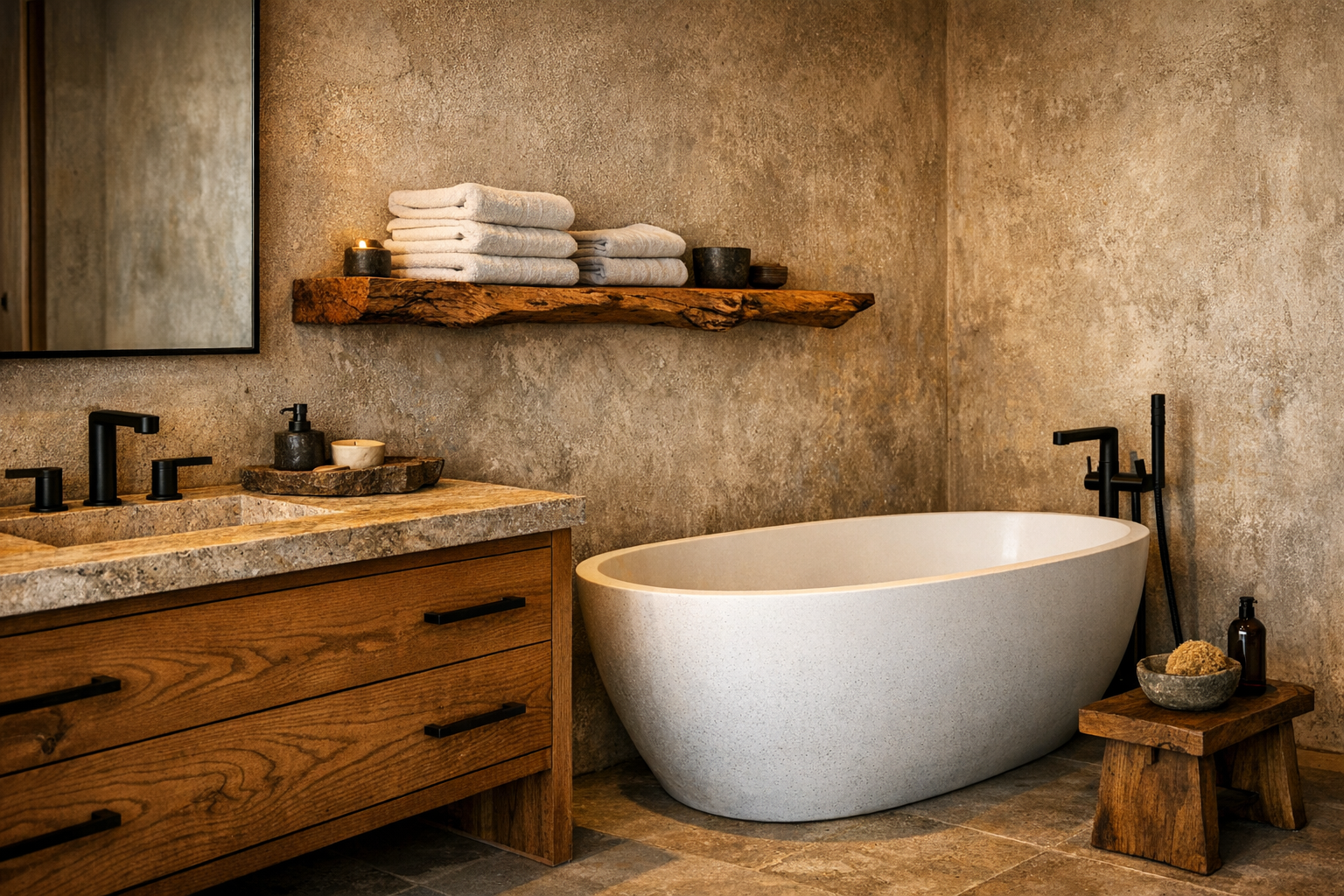
Natural materials – stone, wood, bamboo, concrete – bring an authenticity to bathrooms that manufactured materials can’t replicate. A bathroom built with natural elements develops a patina over time, which means it gets better with age rather than looking worn.
Material pairing that works every time: Natural stone countertops + wood vanity + matte black hardware. This combination has been working for a decade and shows no signs of dating.
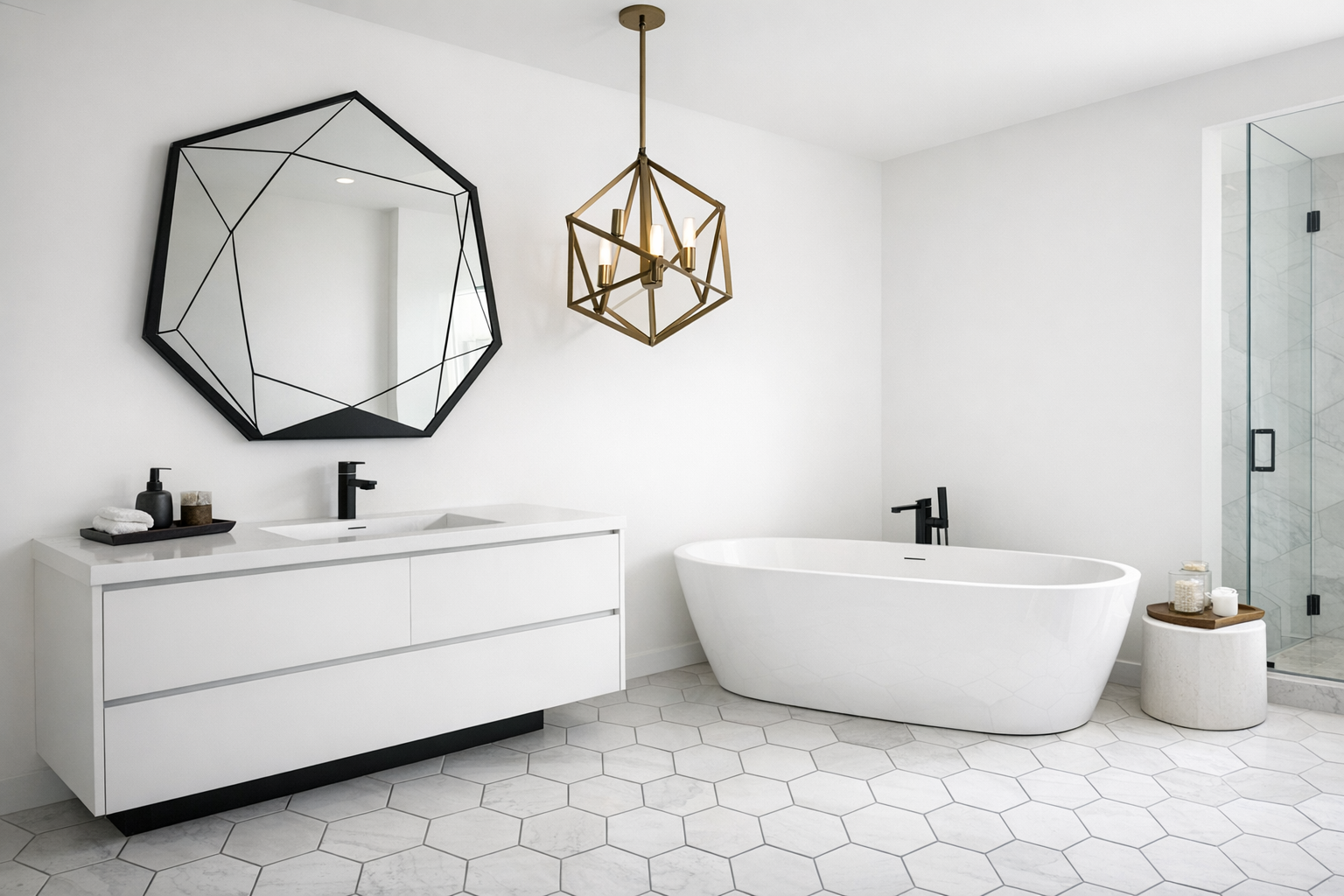
Geometrical designs in a master bathroom – hexagonal tile, angular mirrors, geometric light fixtures – create visual rhythm and modern sophistication. The structured patterns give the eye a satisfying journey around the room.
The starting point: Pick one geometric element as the hero (usually the tile) and keep the fixtures and accessories simple. Multiple competing geometries create visual chaos.
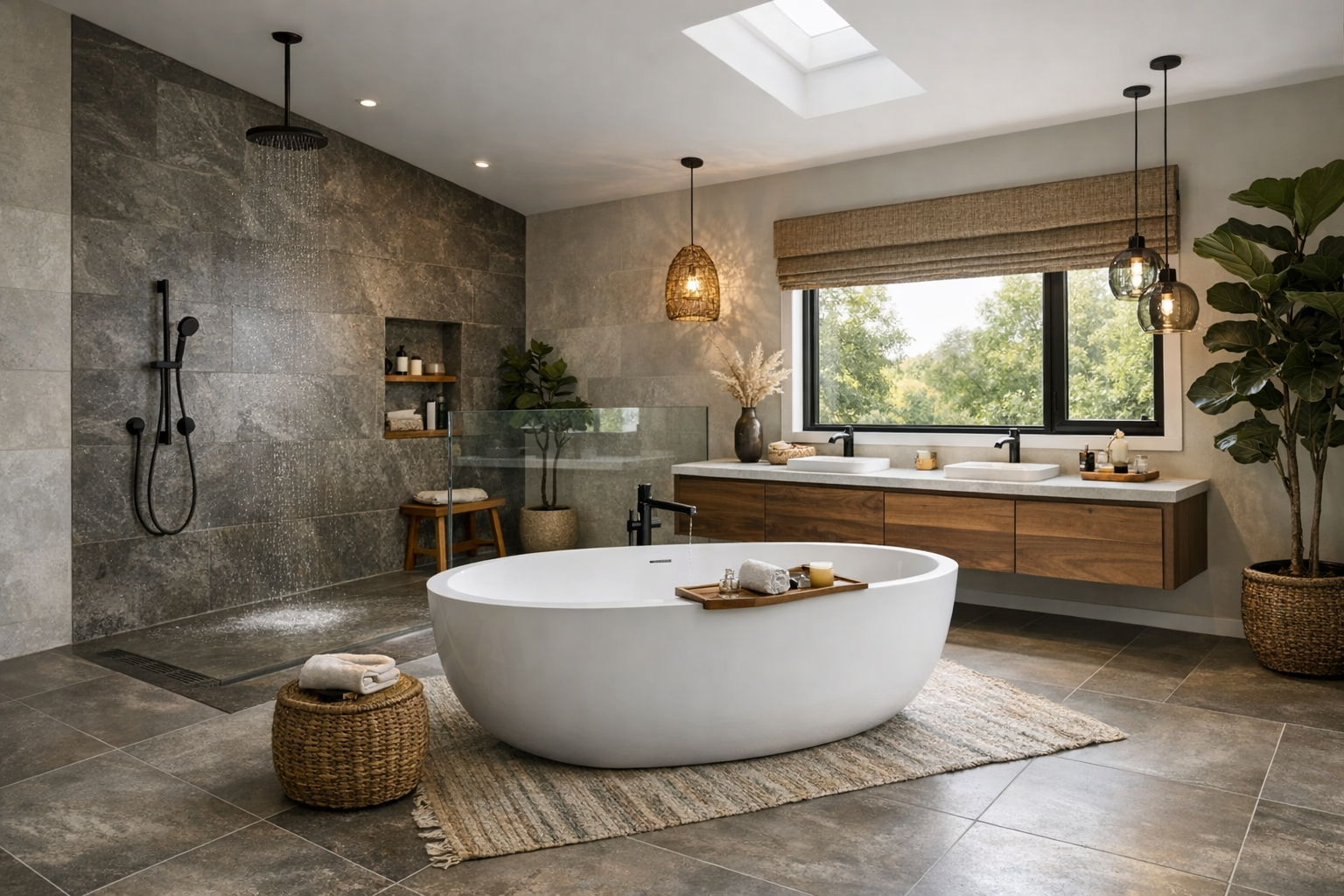
Standard bathroom layouts exist because they’re efficient for builders, not because they’re optimal for homeowners. Experimenting with layouts – moving the tub to the center of the room, placing the vanity under a window, creating a wet room without traditional shower walls – can transform how you experience the space daily.
Before you experiment: Map out your morning and evening routines. Where do you need counter space? Where do you stand longest? Where do you want to look? Let your actual habits drive the layout, not convention.
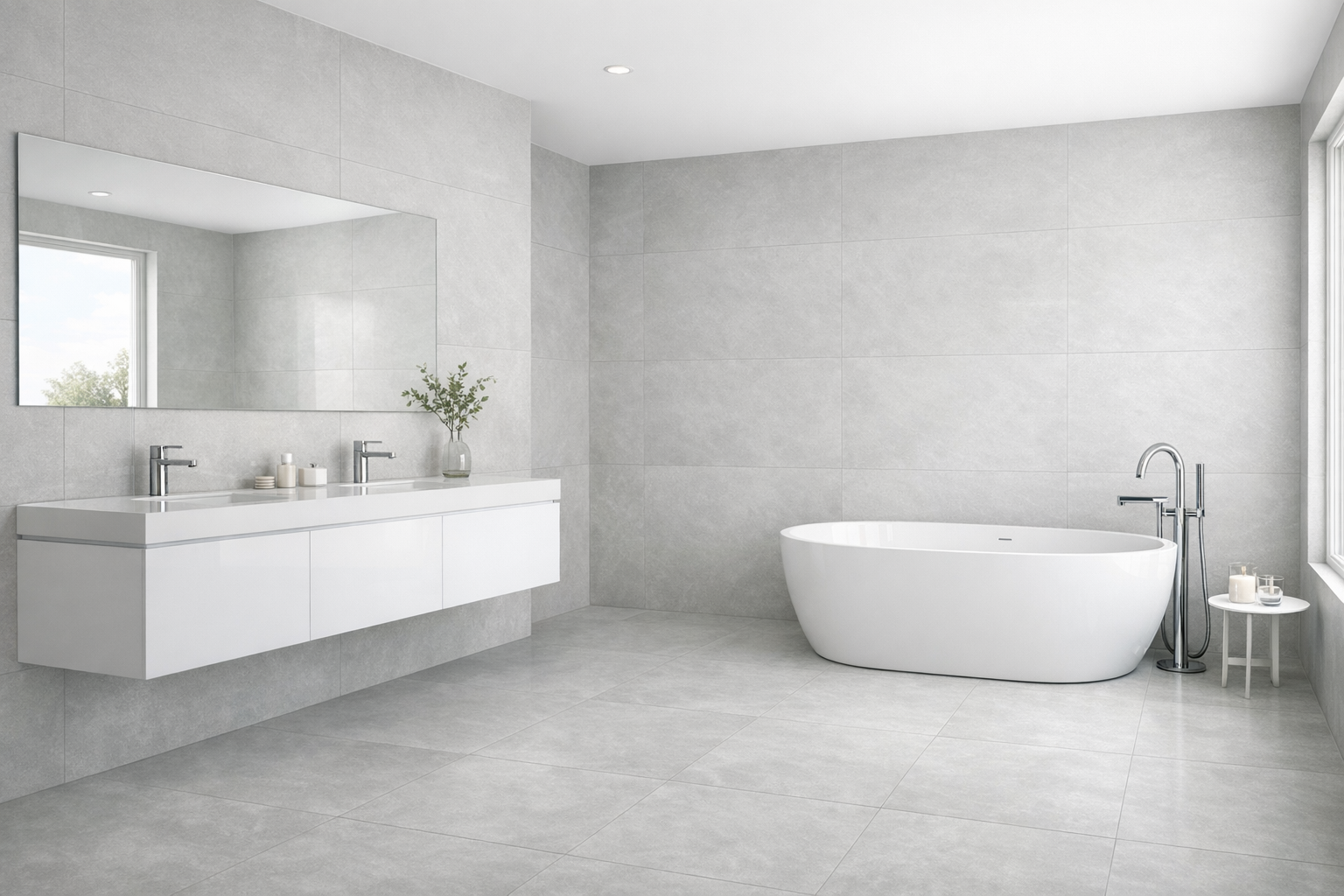
Large tiles (24×24 and above) are one of the most effective upgrades in modern bathroom design. Fewer grout lines create a cleaner, more seamless look, and maintenance drops dramatically. Large-format tiles also make small bathrooms appear bigger by reducing the visual fragmentation that small tiles create.
Installation note: Large tiles require a perfectly flat substrate. If your subfloor or walls aren’t level, the tile installer will need to do leveling work first – factor this into your budget. A cheap install on uneven surfaces leads to lippage (uneven tile edges) that you’ll notice every day.
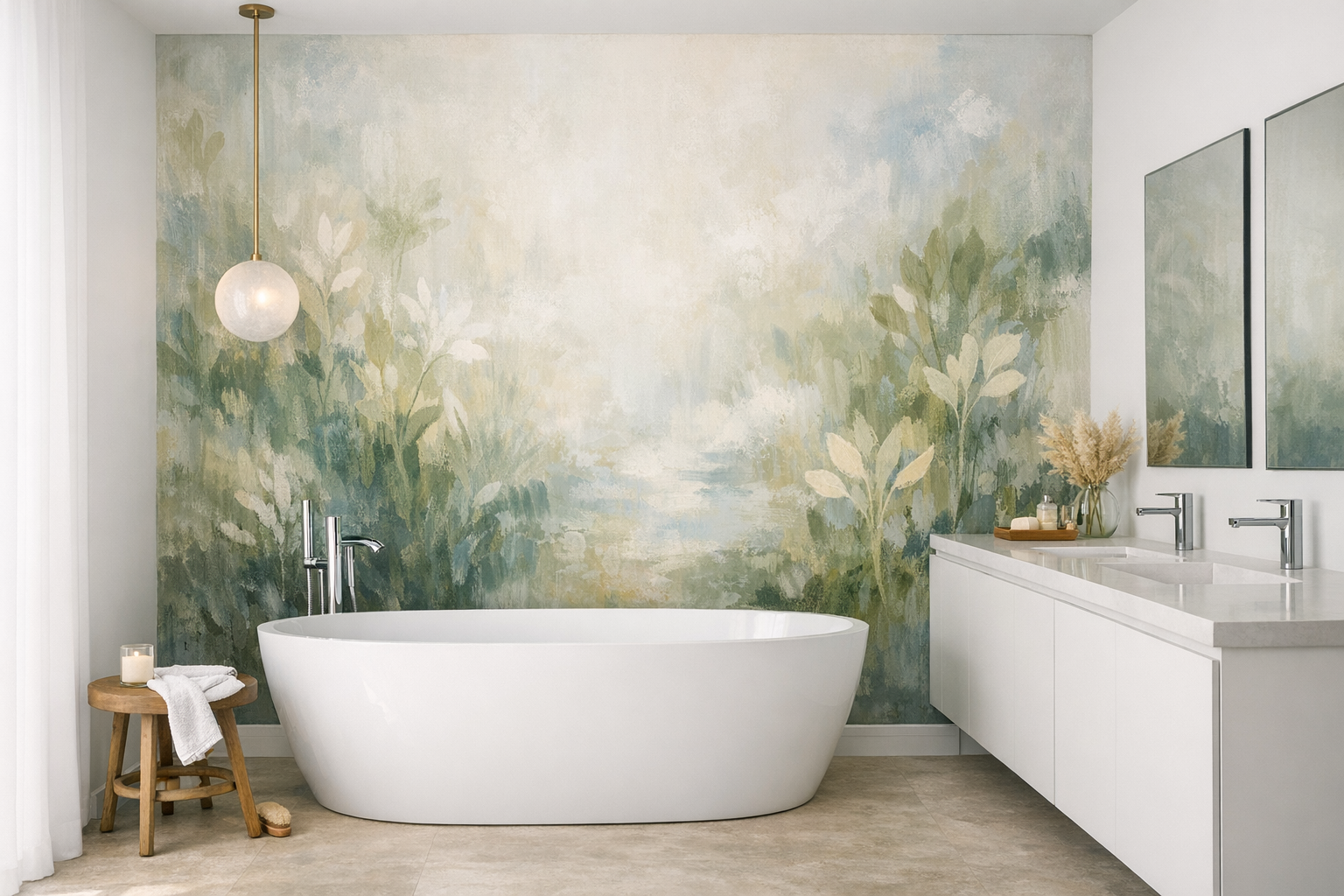
A hand-painted mural, custom illustration, or even a bold paint color on a single wall can transform a bathroom at a fraction of the cost of tile or stone. This is one of the highest-impact, lowest-cost changes you can make.
For budget-conscious renovators: Before committing to expensive tile work, consider what a $200 can of paint and a talented local artist could do for your bathroom. A mural or custom paint treatment on one wall can become the most talked-about feature in your home.
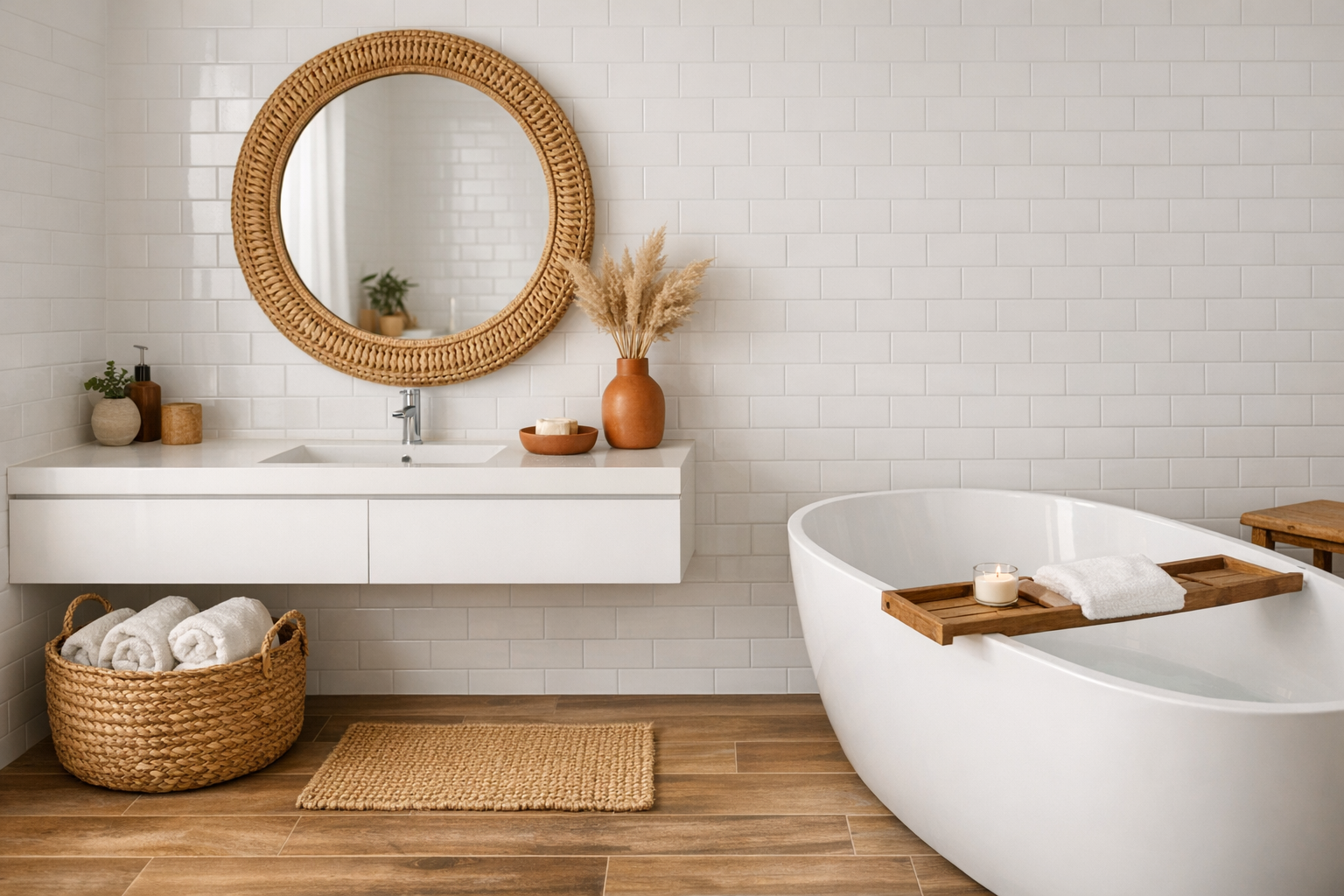
Modern bohemian bathrooms balance warmth and personality with clean lines. The key is restraint: a rattan mirror, a woven basket for towels, and a terracotta or earthy-toned accessory – but on a backdrop of clean white tile and simple fixtures.
The line between boho and cluttered: If you can remove one element and the room still feels complete, you’ve hit the right level. Boho works in bathrooms when every piece earns its spot.
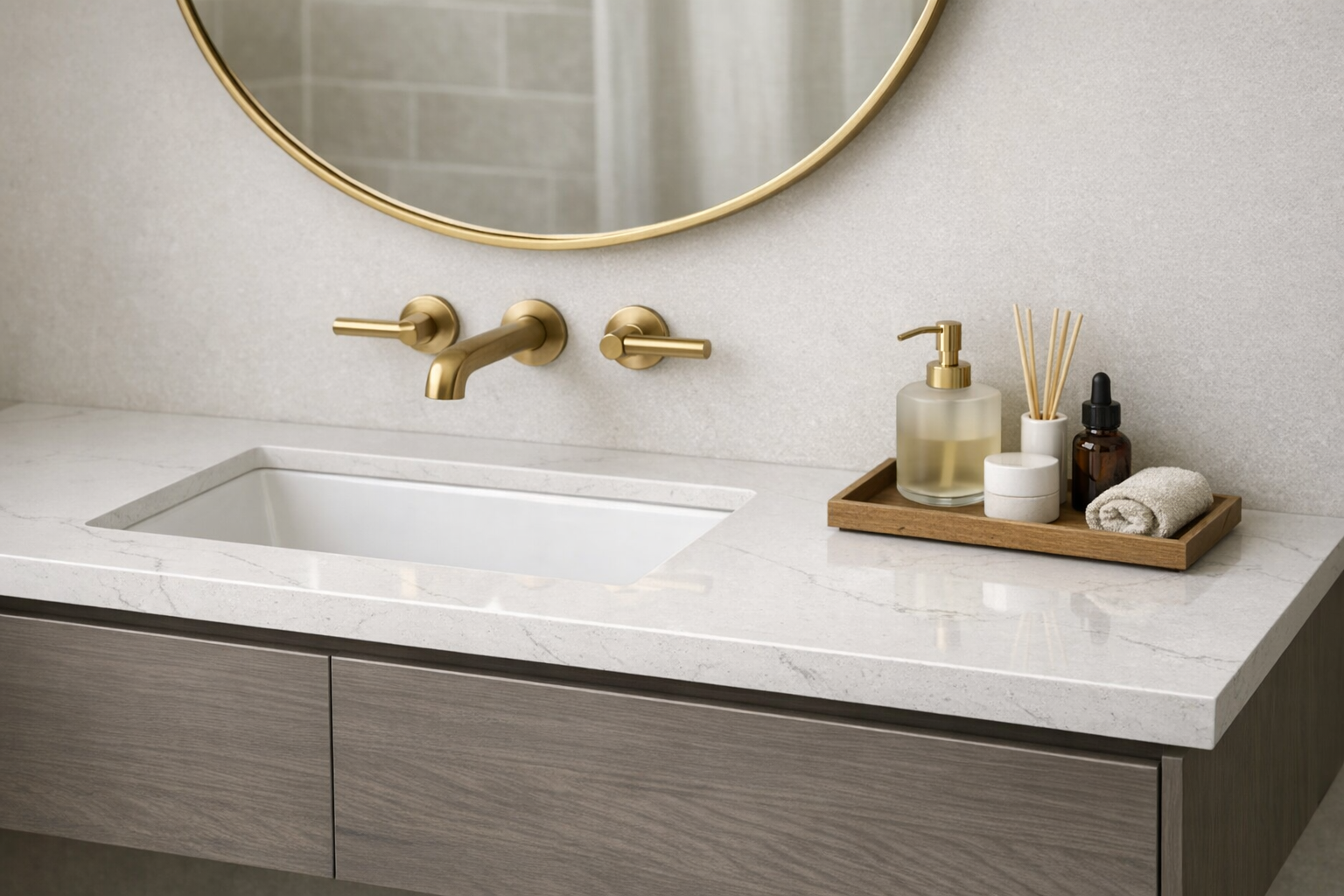
Quartz countertops have surged in bathroom popularity for good reason: they look like natural stone but don’t require sealing, don’t stain from toothpaste or makeup, and resist bacteria growth. With quartz prices up nearly 20% this year, it’s worth noting they’re still cheaper than natural marble over a 10-year lifecycle when you factor in maintenance.
Our recommendation: For bathroom vanity countertops specifically, quartz outperforms marble and granite in every practical dimension. The only reason to choose natural stone is if the authentic veining and imperfection of real marble is something you genuinely value – and you’re willing to maintain it.
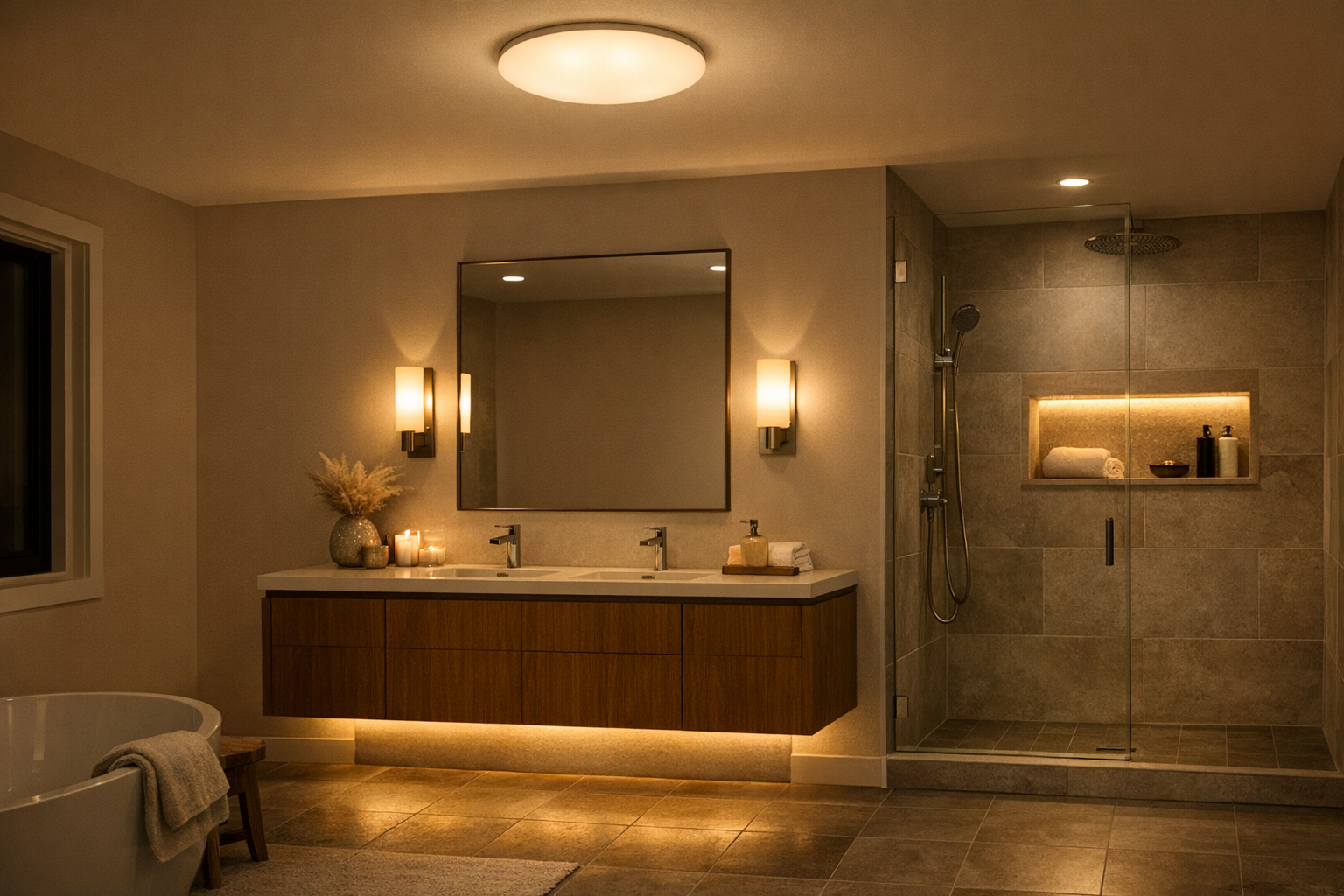
Most bathrooms have one light source. Great bathrooms have three: ambient (overall room light), task (vanity lighting for grooming), and accent (highlighting features like the tub, a niche, or art). This layered approach gives you control over the room’s mood at different times of day.
The most common lighting mistake: Relying solely on overhead recessed lights. They create harsh shadows on your face at the vanity and make the bathroom feel like a hospital. Add sconces flanking the mirror for flattering task light, and consider a dimmer on the ambient lights.
Smart technology worth considering: LED mirrors with built-in lighting and defogging, digital shower controls that let you preset temperature and flow, and motion-activated nightlights for 3 a.m. trips. These aren’t gimmicks – they’re the bathroom equivalent of a dishwasher: once you have one, you can’t imagine going back.
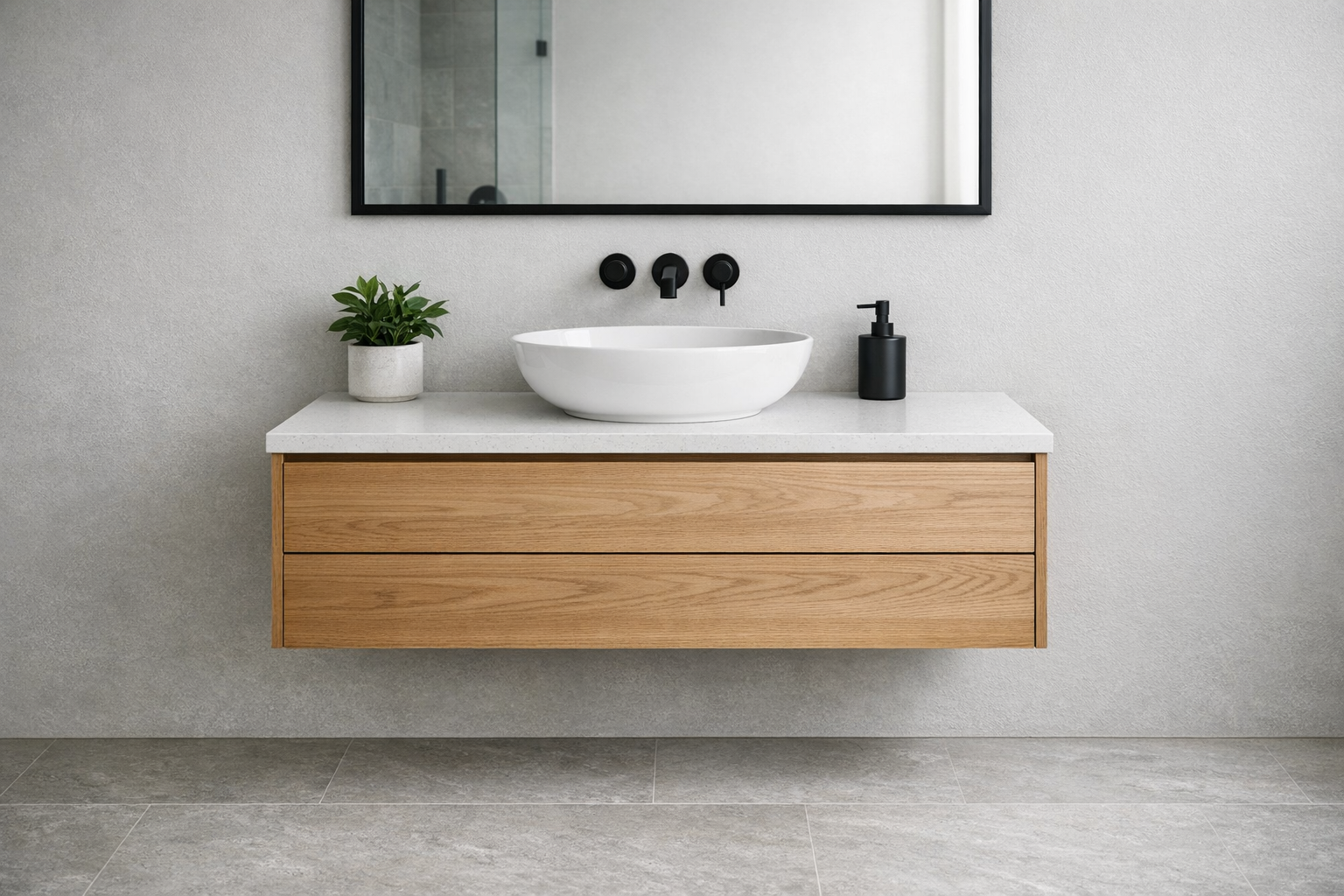
Floating vanities are one of 2026’s strongest bathroom trends, and they deserve the attention. By mounting the vanity to the wall, you gain visible floor space, easier cleaning, and a modern aesthetic that makes the room feel lighter.
They’re also one of the few design choices that works in virtually any size bathroom – from a compact guest bath to a spacious master suite. The visual effect of seeing floor beneath the vanity is universally flattering.
Sizing guidance: For a single-sink floating vanity, 36–42 inches is the sweet spot. For double sinks, you need at least 60 inches to avoid feeling cramped. Measure your wall space and subtract 6 inches on each side for breathing room.
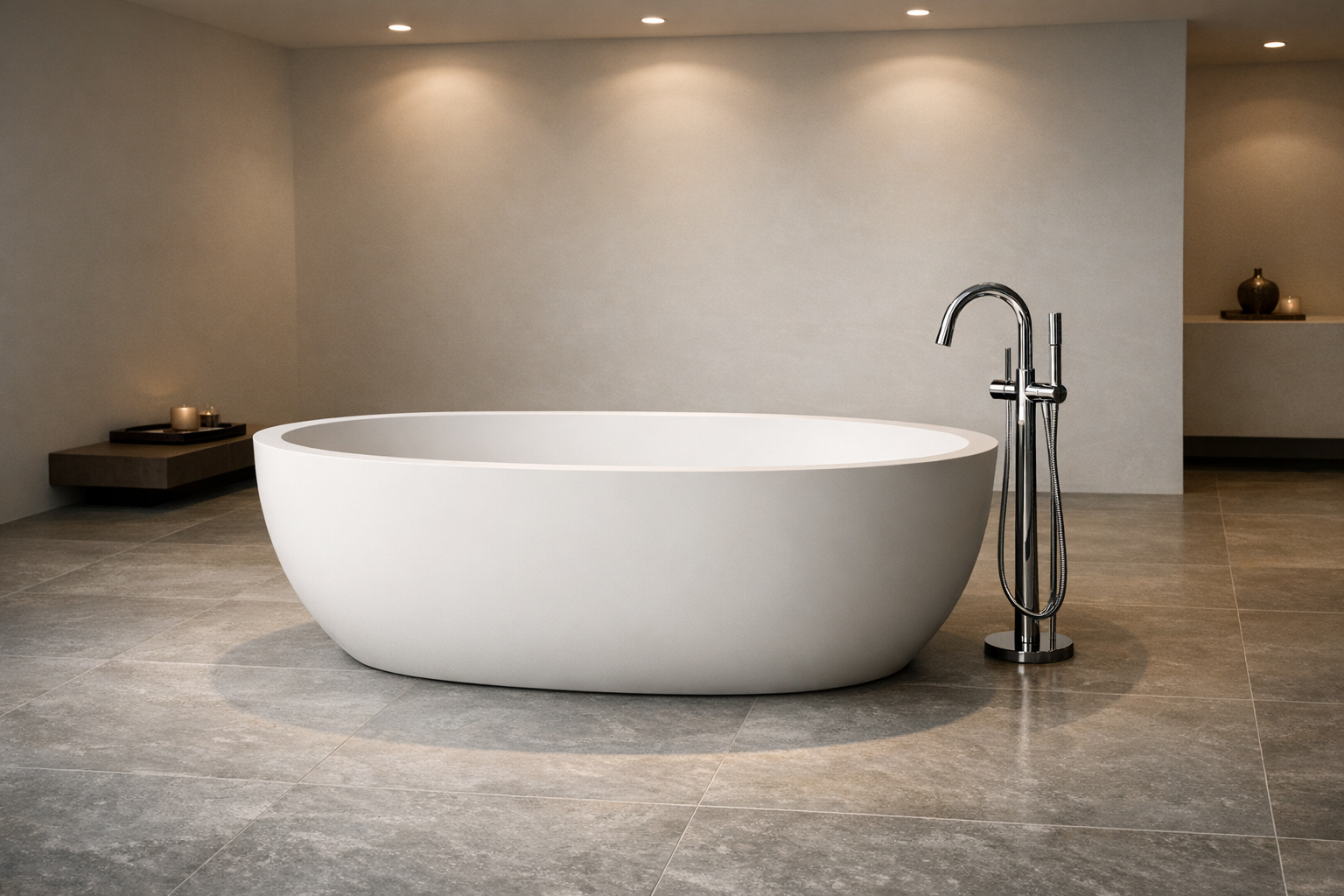
The freestanding bathtub isn’t just trending – it’s the defining fixture of the modern luxury bathroom. According to the NKBA Bath Trend Report, oval freestanding soaking tubs are the most popular shape, and demand for statement tubs with integrated features (headrests, chromotherapy lighting, inline heaters) is growing.
At Badeloft, we’ve built our business around this single conviction: the tub is the soul of the bathroom. A well-chosen freestanding bathtub in stone resin – positioned with space around it, not shoved against a wall – transforms a bathroom from functional to remarkable.
Why stone resin matters: Unlike acrylic (which dominates ~70% of the market), stone resin retains heat longer, has a more substantial feel, and develops no yellowing over time. It’s heavier and more expensive, but for a fixture you’ll use daily for 15+ years, the investment compounds.
Everyone comes to a bathroom renovation from a different place. Here are the situations we see most often – find the one closest to yours.
You don’t need to gut everything to make a real impact – and honestly, you probably shouldn’t. Smaller bathrooms punish bad decisions more than larger ones because there’s nowhere to hide a mismatched element. Focus on two or three changes that punch above their weight.
Here’s what matters most for your situation:
Get these right and your bathroom will feel like it belongs in a home twice the price.
Older bathrooms hide surprises – galvanized pipes, non-standard rough-in measurements, asbestos-containing materials in some cases, and wiring that doesn’t meet current code. This doesn’t mean you shouldn’t renovate – it means you should plan differently than someone building new.
Here’s what matters most for your situation:
With the right prep, older home renovations often produce the most character-rich results. The key is not being caught off guard.
You have the budget – the risk isn’t overspending, it’s overdesigning. The most common mistake in luxury bathrooms is treating every surface as an opportunity for a premium material. The result is a room that feels like a showroom display, not a place where you’d actually unwind.
Here’s what matters most for your situation:
The bathrooms that feel truly remarkable are the ones with restraint.
You’re not designing for yourself – you’re designing for the widest possible range of buyers. This means avoiding anything too personal (bold colors, unusual layouts, niche styles) and investing in the elements that photograph well, signal quality, and appeal universally.
Here’s what matters most for your situation:
The goal is a bathroom that makes every buyer think, “I wouldn’t change a thing.”
You’ve seen 40 ideas – now the question is which ones fit your bathroom, your budget, and how you actually live. Here’s how to move from inspiration to action:
The immediate payoff is clarity – instead of a folder full of saved Pinterest photos, you’ll have a focused plan. The long-term result is a master bathroom that doesn’t just look good in photos but feels right every time you walk into it. That’s the difference between a renovation and a transformation.
Explore our complete collection of freestanding bathtubs, vessel sinks, and bathroom faucets – each designed to be the centerpiece your bathroom deserves.

Eric is the founder and president of Badeloft USA. He has been the president of Badeloft’s US division for over ten years and oversees all marketing and branding aspects of Badeloftusa.com.
His expertise lies in small business development, sales, and home and bathroom industry trends and information.
Contact us with any business related inquiries.
Badeloft is dedicated to helping homeowners make informed decisions about their bathrooms. We adhere to strict editorial guidelines to ensure our content is accurate, trustworthy, and useful.
Request free stone resin and stainless steel material samples. Delivered to your door.
Choosing the right bathtub drain stopper is essential for creating a comfortable and functional bathing experience. With over 20 common
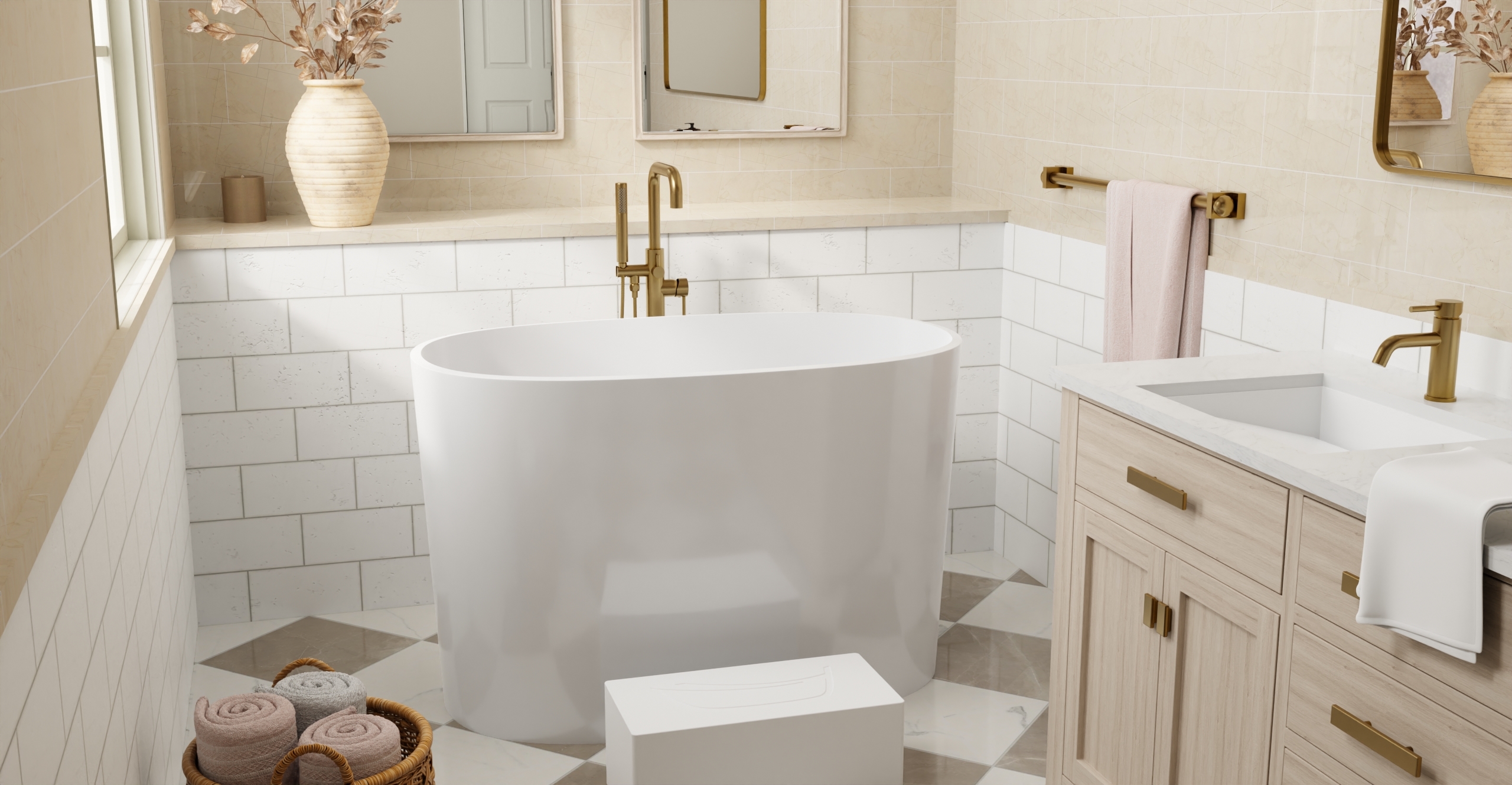
A soaking tub is defined by one thing: depth. Where a standard alcove tub sits around 14 inches deep, a
Spring is when most bathroom remodels get serious. The weather breaks, contractors open up, and that upgrade you have been
A Japanese soaking tub, known traditionally as an ofuro, is designed for one purpose: full-body immersion. Unlike Western bathtubs built
Request your free material sample below. By submitting, you agree to receive occasional product updates and offers from Badeloft. Unsubscribe anytime.
"*" indicates required fields